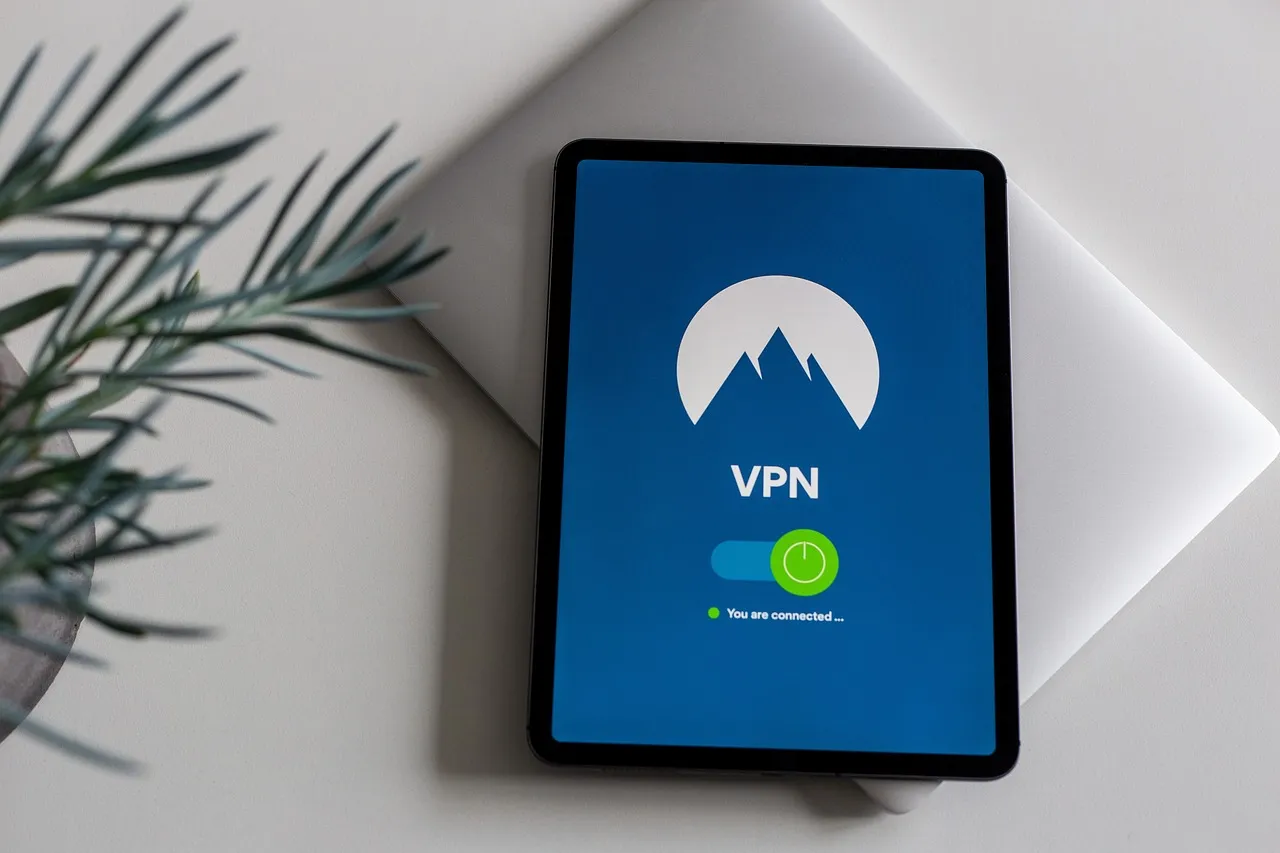
The VPS Control Panel Decision: More Than Just a Graphical Interface
When you provision a virtual private server, the first decision after selecting your CPU cores, RAM allocation, storage capacity, and operating system is whether to install a control panel — and if so, which one. This decision shapes every subsequent interaction with your server: how you create and manage websites, configure email, administer databases, install SSL certificates, monitor resource usage, manage DNS zones, schedule backups, and troubleshoot issues. The vps control panel options landscape in 2026 has consolidated around three primary choices — cPanel, Plesk, and no panel at all (command-line administration) — with DirectAdmin and a growing ecosystem of open-source panels like CloudPanel, HestiaCP, and aaPanel occupying meaningful niches. The decision carries immediate operational consequences: cPanel and Plesk each consume 512 MB to 1 GB of RAM and require monthly licensing fees of $15 to $45, resources that are subtracted from the RAM and budget you allocated for your actual websites. Choosing to forgo a panel entirely preserves every megabyte of RAM and every dollar of your VPS budget for application workloads, but it demands command-line proficiency across the full server administration stack — web server configuration, database management, email server administration, file permissions, firewall rules, and SSL certificate provisioning — tasks that a control panel automates through a browser-based interface.
The control panel decision is also a decision about your VPS's long-term administrative trajectory. A control panel enforces a particular way of organizing websites, databases, email accounts, and DNS zones — a structure that becomes deeply embedded in your server's configuration over months and years of use. Migrating from cPanel to Plesk, or from any panel to a command-line-only configuration, is not a simple software uninstallation; it involves translating every account's configuration, every database user's permissions, every email account's data, and every DNS zone's records into the new system's organizational paradigm. Choosing a control panel that aligns with your anticipated scale — the number of websites, the number of email accounts, the complexity of your DNS configuration, the level of per-site resource isolation you need — prevents the operational disruption of a mid-lifecycle panel migration. The Wikipedia entry on virtual private servers provides historical context on how VPS technology evolved and why control panels became the standard management layer that bridges the gap between raw server access and website administration — context that helps explain why the control panel ecosystem developed the way it did and what design assumptions each panel's architecture reflects.
cPanel: The Industry Standard and Its Trade-offs
What cPanel Does Well: Ecosystem Maturity and Familiarity
cPanel's dominance in the VPS and shared hosting control panel market — powering an estimated 70% to 80% of all hosting accounts managed through a graphical interface — is not a result of technical superiority over every alternative but of ecosystem maturity accumulated over two decades of continuous development. The cPanel interface organizes server administration into a hierarchy that is intuitive for users who have never touched a command line: the WHM (Web Host Manager) interface for server-level configuration — creating hosting accounts, managing IP addresses, configuring the web server, adjusting security policies — and the cPanel interface for account-level management — uploading files, creating databases, managing email accounts, installing applications, viewing resource usage. This separation of concerns maps cleanly to the shared hosting and reseller hosting models where an administrator provisions accounts and delegates account-level management to individual site owners, and it remains useful on a VPS even when you are the sole administrator managing only your own sites, because it enforces a structured approach to multi-site management that prevents the configuration drift that accumulates when sites are managed ad hoc.
cPanel's application installer integration — typically Softaculous, which ships with over 400 applications including WordPress, Joomla, Drupal, Magento, PrestaShop, and hundreds of niche CMS and e-commerce platforms — reduces the time to deploy a new site from an hour of manual database creation, configuration file editing, and file permission setting to a three-minute wizard. cPanel's backup system, which can generate full, incremental, and compressed backups of entire accounts (files, databases, email, DNS zones, SSL certificates) with configurable retention and optional remote destination upload (FTP, SFTP, S3-compatible storage), provides disaster recovery capabilities that would require custom scripting to achieve on a panel-less VPS. cPanel's AutoSSL integration with Let's Encrypt and Sectigo automates SSL certificate provisioning and renewal for every domain on the server, eliminating the manual CSR generation, validation, and installation process that consumed hours of administrator time per certificate in the pre-ACME era. These integrations represent genuine labor savings that justify cPanel's licensing cost for administrators managing multiple sites or serving clients who expect a familiar, well-documented interface.
cPanel's Limitations: Resource Consumption, Licensing Costs, and Configuration Constraints
cPanel's licensing model has been the primary driver of its declining adoption among budget-conscious VPS administrators since the 2019 transition from per-server to per-account pricing. As of 2026, a cPanel license for a VPS costs approximately $15.99 per month for up to 5 accounts, $21.99 per month for up to 30 accounts, $31.49 per month for up to 100 accounts, and $45.99 per month for up to 150 accounts — pricing that can double the effective monthly cost of a $20 per month VPS. For a VPS hosting a single website, the cPanel license alone costs more than the VPS resources, a ratio that makes economic sense only if the value of cPanel's automated management and familiar interface exceeds the value of doubling the server's RAM or storage allocation. The resource consumption of cPanel and its bundled services is similarly consequential: a base cPanel installation with the required services (Apache or LiteSpeed, MySQL or MariaDB, Exim, Dovecot, named, Pure-FTPd, and the cPanel daemon itself) consumes approximately 800 MB to 1.2 GB of RAM before any websites are hosted, representing 40% to 60% of the RAM on a 2 GB VPS and leaving insufficient memory for a performant WordPress site with MySQL and PHP. For VPS administrators evaluating whether cPanel's capabilities justify its cost at their scale, our complete guide to VPS hosting provides the resource budgeting framework that puts cPanel's consumption in the context of total VPS resource allocation.
cPanel also constrains your software stack choices in ways that may conflict with specific application requirements. cPanel's supported operating systems are limited to Red Hat Enterprise Linux derivatives — CloudLinux, AlmaLinux, Rocky Linux — and it does not support Debian, Ubuntu, or other distributions that may be preferred for specific software compatibility or security update cadence. cPanel manages the web server, database server, email server, and DNS server as a tightly integrated stack, and replacing any of these components with a non-standard alternative — substituting Nginx for Apache as the primary web server, replacing Exim with Postfix for email, using PostgreSQL instead of MySQL — is either unsupported or requires configuration workarounds that cPanel updates may overwrite. For VPS administrators whose requirements align with cPanel's supported stack — Apache or LiteSpeed web server, MySQL or MariaDB database, Exim email, BIND DNS — these constraints are transparent. For administrators deploying applications that depend on specific software versions, non-standard configurations, or components outside cPanel's ecosystem, these constraints can become operational friction that accumulates with every cPanel update and every application configuration change. HostingCaptain's VPS plans that include cPanel are provisioned with optimized resource allocations that account for cPanel's overhead, ensuring that the RAM, CPU, and storage you purchase are sufficient for both the control panel and your hosted applications.
Illustration: VPS Hosting Control Panels: cPanel, Plesk, or No Panel at All?Plesk: The Multi-OS, Multi-Platform Alternative
Plesk's Architectural Advantages: Windows Support and Docker Integration
Plesk differentiates itself from cPanel through two architectural capabilities that make it the default choice for specific VPS use cases: native Windows Server support alongside Linux support, and integrated Docker container management. For VPS administrators whose applications require a Windows environment — ASP.NET web applications, Microsoft SQL Server databases, Windows-specific enterprise software, Active Directory integration — Plesk is functionally the only viable commercial control panel, because cPanel is exclusively a Linux platform. Plesk on Windows Server provides a graphical interface for IIS web server management, MS SQL database administration, .NET application deployment, and Windows-specific security and access control configuration, translating Windows server administration concepts into a control panel interface that is accessible to administrators without deep Windows Server expertise.
Plesk's Docker integration — available through the Docker extension — enables VPS administrators to run containerized applications alongside traditional hosting accounts within a unified management interface. This capability is strategically significant because it resolves the tension between standardized hosting environments (where every site runs the same PHP version, the same database version, and the same web server configuration) and application-specific requirements (where one site needs PHP 8.3 with a specific set of extensions, another site needs a Node.js runtime, and a third site needs a Python environment with specific package versions). Through Plesk's Docker extension, each application can run in its own container with its own software stack, while the Plesk interface provides unified monitoring, backup, and domain routing across both traditional hosting accounts and containerized applications. For VPS administrators hosting a diverse portfolio of applications — a WordPress site, a Node.js API, a Python machine learning service, and a static site — Plesk with Docker enables this diversity without the administrative complexity of manually managing Docker Compose files, reverse proxy configurations, and container health monitoring. Our guide to choosing a VPS location for latency optimization provides the geographic context for deploying the server that will host your control panel and applications, because the control panel's responsiveness and your applications' page load times both depend on minimizing network distance to your visitors.
Plesk's Interface Philosophy and WordPress Toolkit
Plesk's interface philosophy differs from cPanel's in ways that reflect the platforms' different origins and target audiences. Where cPanel separates server administration (WHM) from account management (cPanel) into two distinct interfaces — a design optimized for hosting providers who administer servers and delegate account access to customers — Plesk presents a unified interface where server-level and account-level functions coexist within a single navigation hierarchy, a design optimized for server administrators managing their own sites rather than delegating account management. This unified interface can feel more efficient for a single administrator managing a portfolio of sites — there is no context-switching between WHM and cPanel to perform related tasks — but it provides less natural separation when multiple users with different permission levels need to access different subsets of server functionality.
Plesk's WordPress Toolkit is the feature that most directly competes with cPanel's Softaculous integration for WordPress-centric VPS administrators. The WordPress Toolkit goes beyond one-click installation to provide ongoing WordPress site management: bulk plugin and theme updates across all WordPress installations on the server, automated security hardening (disabling file editing in the admin panel, blocking directory browsing, restricting XML-RPC access), staging site creation with one-click synchronization between staging and production, vulnerability scanning that checks installed plugins and themes against a continuously updated CVE database, and cloning of entire WordPress installations — including database content, uploads, and configuration — for site migration or development-to-production deployment. For VPS administrators managing multiple WordPress sites, the WordPress Toolkit's management capabilities can reduce the weekly maintenance burden of logging into each site individually, applying updates, and verifying functionality — a workload that scales linearly with the number of sites and quickly becomes unsustainable without automation. However, the WordPress Toolkit is a paid Plesk extension, and its licensing cost must be factored into the total cost of ownership comparison against cPanel with Softaculous or against manual WordPress management on a panel-less VPS.
No Panel at All: The Command-Line VPS
What You Gain by Forgoing a Control Panel
Administering a VPS entirely through the command line — SSH terminal access, no graphical control panel, no browser-based administration interface — maximizes three dimensions of VPS value: resource efficiency, configuration flexibility, and cost minimization. Every megabyte of RAM that a control panel and its bundled services consume (512 MB to 1.2 GB) is available for your application workloads — your web server workers, your PHP-FPM children, your MySQL buffer pool, your Redis cache, your application code. On a 2 GB VPS, the difference between 800 MB of panel overhead and zero overhead is the difference between 1.2 GB of RAM available for applications and 2 GB available — a 67% increase in usable memory that directly translates to higher concurrent user capacity, larger database caches, and faster page generation. Every dollar of control panel licensing cost ($15 to $45 per month) is available for VPS resource upgrades — doubling your RAM from 4 GB to 8 GB, upgrading from SATA SSD to NVMe storage, or adding additional CPU cores — investments that improve application performance rather than funding a management interface.
Command-line administration also provides configuration flexibility that no control panel can match, because every server software component can be configured directly through its native configuration files without a control panel abstraction layer that mediates, restricts, or overwrites custom settings. You can run Nginx as your primary web server with a custom configuration that includes Brotli compression, HTTP/3 support, dynamic module loading, and per-site rate limiting — configurations that cPanel either restricts or does not support because they fall outside the standardized environment it maintains. You can run PostgreSQL instead of MySQL if your application benefits from its advanced indexing and JSON query capabilities. You can install the latest PHP version directly from the PHP project's repository rather than waiting for the control panel vendor to package and release it. You can configure automatic security updates for the operating system through unattended-upgrades on Debian/Ubuntu or dnf-automatic on RHEL derivatives. You can implement infrastructure-as-code practices where your entire server configuration — packages, users, firewall rules, web server virtual hosts, database users, cron jobs — is defined in Ansible playbooks or shell scripts stored in version control, enabling reproducible server provisioning and eliminating the configuration drift that accumulates when administration is performed through a point-and-click interface without an audit trail. For VPS administrators who deploy game servers, Discord bots, or automation scripts that run continuously rather than responding to HTTP requests, the resource efficiency of a panel-less VPS is particularly compelling — our guide to VPS hosting for Discord bots and automation scripts explains the specific resource profiles that benefit most from a lightweight command-line environment.
What You Lose: Convenience, Automation, and Safety Nets
Command-line administration sacrifices the three capabilities that control panels provide most effectively: automation of complex multi-step operations, interface-mediated safety against destructive mistakes, and accessibility for administrators without deep command-line expertise. Tasks that a control panel performs as a single click — creating a new website with its own directory, virtual host configuration, FTP account, database, database user, and DNS zone — require a dozen or more command-line operations: creating the directory structure with correct ownership and permissions, writing an Nginx or Apache virtual host configuration with proper domain routing, testing the configuration syntax, reloading the web server, creating the database and database user with appropriate privileges, creating the FTP user with chroot jail configuration, and adding DNS zone records. Each of these steps is individually manageable, but the cumulative complexity across dozens of administrative operations — coupled with the fact that omitting a single step can result in a non-obvious misconfiguration that manifests as a subtle error rather than a clear failure — makes command-line administration an ongoing time investment that compounds with every site, every domain, and every administrative task.
The absence of a control panel's safety net is particularly consequential for operations that carry a high cost of error. A control panel's backup and restore workflow validates backup integrity, handles database export with consistent snapshots, manages file permissions during restoration, and provides a rollback option if restoration fails. A command-line backup script must handle each of these considerations explicitly, and a script that works correctly when tested but fails during a real disaster recovery scenario — because of a file permission issue, a database export that silently skipped corrupted tables, or a missing dependency that prevents restoration — provides a false sense of security that is discovered only at the moment of crisis. Similarly, a control panel's SSL certificate provisioning automates the ACME challenge verification, the certificate installation, the web server configuration update, and the renewal scheduling — a sequence that, if any step fails silently during manual command-line execution, leaves the site serving an expired certificate that browsers reject with full-page security warnings. For VPS administrators who value control panel convenience but want to minimize resource overhead, lightweight panels like HestiaCP, CloudPanel, and aaPanel offer a middle ground: they provide browser-based management for the most common administrative tasks while consuming 100 MB to 300 MB of RAM — significantly less than cPanel or Plesk — and they include automation for SSL, backups, and application installation without the licensing costs of commercial panels.
DirectAdmin and the Open-Source Panel Ecosystem
DirectAdmin has emerged as the most credible third option in the commercial control panel market, particularly for VPS administrators who find cPanel's per-account pricing unsustainable at their scale but still want a commercially supported control panel with professional documentation and a predictable development roadmap. DirectAdmin's licensing is per-server rather than per-account: approximately $5 per month for a single-server license with unlimited accounts, making it dramatically cheaper than cPanel for VPS instances hosting more than a handful of sites. DirectAdmin provides the same core functionality as cPanel — account management, file management, database administration, email account creation, DNS zone editing, SSL certificate provisioning, backup generation, one-click application installation — with a lighter resource footprint that consumes approximately 250 MB to 400 MB of RAM for the base installation. The interface is less polished than cPanel's and the third-party plugin ecosystem is smaller, but for VPS administrators whose requirement is functional server management rather than interface aesthetics, DirectAdmin delivers the essential capabilities at a fraction of cPanel's cost.
The open-source control panel ecosystem — HestiaCP, CloudPanel, aaPanel, ISPConfig, Virtualmin — has matured significantly by 2026, with several projects achieving the stability, security, and feature coverage that make them viable alternatives to commercial panels for administrators comfortable with community-supported software. HestiaCP, a fork of the VestaCP project rebuilt with modern security practices, provides a clean, responsive interface for managing web domains, DNS zones, email accounts, databases, and cron jobs, with integrated Let's Encrypt SSL automation and backup scheduling, consuming approximately 100 MB of RAM. CloudPanel, built specifically for cloud VPS environments, supports Nginx, MySQL, and Redis management with a lightweight interface focused on speed and resource efficiency. aaPanel, widely deployed in Asian hosting markets, provides a comprehensive feature set including Nginx and Apache management, one-click application installation, firewall configuration, and system monitoring. The trade-off with open-source panels is that they lack the dedicated security response teams, 24/7 support infrastructure, and liability frameworks of commercial panels — when a critical vulnerability is discovered in an open-source panel, the fix timeline depends on volunteer maintainer availability rather than a contracted SLA, and if a panel update introduces a breaking change, your recourse is community forums and GitHub issues rather than a support ticket with guaranteed response time.
Making the Decision: A Framework for VPS Panel Selection
The VPS control panel decision should be driven by four factors that can be evaluated before provisioning your server: the number and diversity of websites you will host, your Linux administration expertise, your budget allocation between server resources and management tools, and the specific software stack requirements of your applications. A VPS hosting a single WordPress site for an administrator with Linux experience should strongly consider a panel-less configuration: the administrative tasks are infrequent and well-documented (initial WordPress installation, SSL certificate setup with Certbot, automated backups with a cron job, security updates with unattended-upgrades), the resource and cost savings of forgoing a panel are directly available for application performance, and the risk of misconfiguration is limited by the simplicity of the single-site environment. A VPS hosting 5 to 15 client websites for a freelancer or small agency should strongly consider cPanel or DirectAdmin: the multi-site management automation, the client-facing account isolation, the backup automation, and the standardized environment that prevents per-site configuration drift justify the licensing cost through labor savings alone, and the panel's familiarity to clients who may need to manage their own email accounts or view their own resource usage reduces the support burden on the administrator.
A VPS hosting applications with non-standard software requirements — Node.js backends requiring specific versions, Python applications with virtual environments, containerized microservices, specialized databases — should consider either a panel-less configuration or Plesk with Docker integration, because cPanel and DirectAdmin's tightly integrated LAMP-stack architecture may conflict with or restrict these applications' requirements. A VPS with minimal RAM allocation — 1 GB to 2 GB — should avoid cPanel entirely because the panel's overhead leaves insufficient memory for application workloads, and should instead consider a lightweight panel (HestiaCP, CloudPanel) or a panel-less configuration. A Windows VPS has no cPanel or DirectAdmin option; Plesk is the only commercial panel with full Windows Server support, and for some Windows workloads, the native IIS Manager and SQL Server Management Studio provide sufficient graphical administration without a third-party panel. For context on how VPS resources compare to dedicated server resources as your hosting needs scale toward the upper end of the VPS tier, our complete guide to dedicated servers explains the infrastructure tier that follows VPS in the hosting hierarchy and the control panel considerations that apply at that scale.
Frequently Asked Questions
Which VPS control panel has the smallest resource footprint?
Command-line administration (no panel) has zero resource overhead beyond the operating system's baseline memory consumption. Among graphical panels, HestiaCP and CloudPanel are the lightest, consuming approximately 100 MB to 200 MB of RAM for the base installation and its required services. DirectAdmin consumes approximately 250 MB to 400 MB. aaPanel and ISPConfig occupy the middle tier at 300 MB to 500 MB. cPanel consumes 800 MB to 1.2 GB, and Plesk on Linux consumes 600 MB to 1 GB. On a VPS with limited RAM — 1 GB to 2 GB — the choice between a lightweight panel and a panel-less configuration is effectively the choice between a browser-based interface and sufficient memory for your applications. On a VPS with 4 GB or more, the resource consumption differences between panels become less operationally significant, and the decision should be driven by feature requirements, licensing costs, and interface preference rather than resource overhead.
Can I switch control panels after my VPS is already running sites?
Migrating from one control panel to another — or from a control panel to a panel-less configuration — on a live VPS hosting active websites is technically possible but operationally disruptive and carries a significant risk of data loss or service interruption if not executed with meticulous planning. Each control panel organizes account data, configuration files, database credentials, email storage, and DNS zone files in its own proprietary structure, and there is no universal conversion tool that translates between all panel formats. The safest migration approach is to provision a new VPS with the target control panel, migrate each website individually — exporting files and databases from the old server, importing them to the new server, testing thoroughly, and updating DNS — rather than attempting an in-place panel swap. For VPS administrators who anticipate outgrowing their current panel's capabilities or cost structure, selecting a provider that offers easy VPS provisioning (such as HostingCaptain's VPS plans with multiple panel options available at provisioning time) ensures that migration can be executed on a fresh server with zero pressure to complete the migration before the old server's billing cycle ends.
Does HostingCaptain offer VPS plans with control panel options?
HostingCaptain's VPS hosting plans are available with cPanel, DirectAdmin, or no control panel (command-line administration), allowing customers to select the management interface that matches their administrative expertise, budget, and application requirements. Our managed VPS plans include the control panel license in the advertised price, along with server monitoring, security patching, and basic configuration support — the appropriate choice for customers who want VPS-level resources and control panel convenience without the operational burden of server administration. Our unmanaged VPS plans are provisioned with a base operating system installation and SSH root access, enabling customers to install their preferred control panel or manage the server entirely through the command line. For customers uncertain which configuration best matches their needs, our support team can assess your experience level, the applications you plan to host, and your budget to recommend the VPS configuration and control panel choice that will provide the best balance of capability, cost, and operational simplicity.
Emma Larsson is a lead systems developer and virtualization specialist with a decade of expertise in kernel configurations and hypervisor scaling.
Frequently Asked Questions
This guide covers the practical decision points — pricing, performance, and when it makes sense for your situation — based on current 2026 data.
Pricing varies by provider and plan tier; see the cost breakdown section above for current ranges and what's actually included at each price point.
Look closely at uptime guarantees, renewal pricing (not just the first-year discount), and how responsive support actually is — all covered in detail in this article.
Hosting Captain has been exceptional for my e-commerce store in Pune. The NVMe SSD speed is
noticeable, and their support team responds within minutes. Highly recommended for any
Indian business!
Ryan John, Pune
Great Value for Money
Switched from a US-based host to Hosting Captain and my website loads 3x faster for Indian
visitors. The free SSL and cPanel are great, and the pricing is unbeatable. Very satisfied
customer!
Priya Mehta, Mumbai
Reliable VPS Hosting
I've been using their VPS plan for 2 years now. 99.9% uptime is not just a claim — it's
reality. My client projects run without interruption. The KVM virtualization gives me full
control I need.
Amit Kumar, Bangalore
Excellent 24/7 Support
The support team helped me migrate my entire WordPress site at 2 AM without any downtime.
This level of service is rare in Indian hosting. Worth every rupee!
Sunita Patel, Ahmedabad
Perfect for Startups
As a startup, budget matters. Hosting Captain's Business plan covers everything we need —
multiple websites, free SSL, daily backups — at a fraction of what international hosts
charge.
Vikram Singh, Delhi
Professional Dedicated Server
Our high-traffic news portal needed a dedicated server. Hosting Captain's DS Business plan
handles 100K+ daily visitors effortlessly. Their team provisioned everything within 4 hours!
Meena Krishnaswamy, Chennai
Trusted Technologies & Partners
Start Your Website with Hosting Captain
From personal blogs to enterprise solutions, we've got you covered!