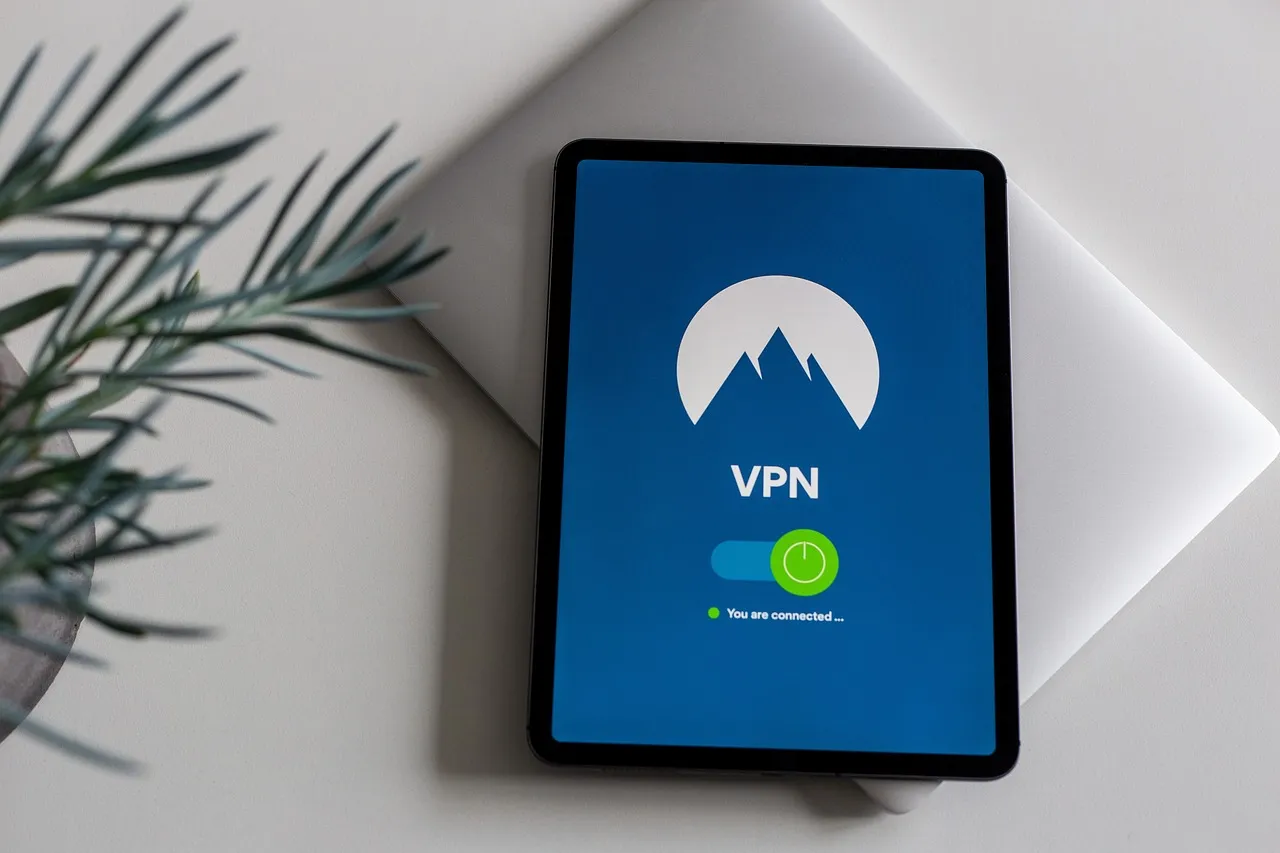
Provisioning a VPS is the beginning of the server management journey, not the end — and the period immediately following deployment, when the server is freshly installed and before production traffic begins hitting it, is the window during which the monitoring infrastructure that will prevent 2:00 AM emergencies must be configured. VPS server monitoring tools are the difference between discovering that your database has been down for six hours because a customer emailed to complain and knowing within 60 seconds of the failure that intervention is needed. For beginners managing their first VPS, the monitoring tool landscape can appear overwhelming — a proliferation of open-source platforms, SaaS services, command-line utilities, and agent-based collectors, each claiming to be the solution to server observability. This guide cuts through that complexity by identifying the specific monitoring tools that every VPS beginner should set up, organized by what they monitor, why that monitoring matters, and how to configure them with sensible defaults that provide maximum protection with minimum configuration complexity. At HostingCaptain, we provision thousands of VPS instances annually and have developed a standardized monitoring stack that every new VPS deployment receives — not because it is the only possible stack, but because it represents the optimal balance of capability, ease of configuration, and resource efficiency for beginner-to-intermediate VPS administrators.
Before discussing specific tools, it is worth establishing what server monitoring actually means in the VPS context, because the term encompasses several distinct activities that are often conflated. Availability monitoring answers the question "is the server reachable and responding to requests?" and is typically implemented through external checks — ping tests, HTTP response checks, TCP port checks — that run from a location outside the server. Resource monitoring answers the question "how much of the server's CPU, memory, disk, and network capacity is being consumed?" and is implemented through agents or daemons running on the server that collect and expose metrics. Service monitoring answers the question "are the specific applications running on the server — web server, database, application process — functioning correctly?" and is implemented through process checks, health endpoint polling, and log analysis. Alerting answers the question "who gets notified, through what channel, and how quickly when something goes wrong?" and connects monitoring data to notification channels — email, SMS, Slack, Discord, PagerDuty — with configurable thresholds and escalation policies. A complete VPS monitoring strategy addresses all four of these questions, because a server that is reachable but whose database has crashed is effectively down, and a monitoring system that detects the crash but does not alert anyone is functionally identical to having no monitoring at all. For the foundational understanding of VPS infrastructure, our complete beginner's guide to VPS hosting covers the virtualization technology, resource allocation, and management responsibilities that monitoring tools support, and the Wikipedia overview of virtual private servers provides technical context for the monitoring concepts discussed here.
External Availability Monitoring: UptimeRobot and HetrixTools
External availability monitoring is the first monitoring layer to configure on any VPS because it provides the most fundamental protection — knowing whether your server is reachable from the public internet — without requiring any software installation on the server itself. External monitors run from geographically distributed locations and periodically check whether your server responds to requests, and if it does not, they send alerts. This architecture provides a critical advantage over server-internal monitoring: if the server crashes entirely — kernel panic, hardware failure, out-of-memory condition that kills the SSH daemon — internal monitoring cannot send alerts because the server that would send them is offline. External monitoring continues functioning because it runs on infrastructure separate from your VPS, and it detects total server failures that internal monitoring is blind to.
UptimeRobot is the most accessible external monitoring service for VPS beginners, and its free tier — which includes 50 monitors at 5-minute check intervals — is sufficient for monitoring a small fleet of VPS instances. Configuration involves adding a monitor for each service you want to check: an HTTP(S) monitor for each website or web application (checking that the server returns a 200 OK status code), a ping monitor for basic server reachability, and a port monitor for specific services (TCP port 3306 for MySQL, port 5432 for PostgreSQL, port 22 for SSH). UptimeRobot's alerting supports email, SMS (with credit purchase), Slack, Discord, Microsoft Teams, and webhook integrations, and the alerting can be configured with escalation — if the primary contact does not acknowledge the alert within a specified time, it escalates to a secondary contact. The 5-minute check interval on the free tier means that in the worst case, up to 5 minutes can elapse between a server going down and the alert being triggered — acceptable for most websites but insufficient for revenue-critical e-commerce or SaaS applications where every minute of downtime costs money. The paid plans reduce the check interval to 30 seconds or 1 minute for faster detection.
HetrixTools provides an alternative to UptimeRobot with a more generous free tier — 15 monitors at 1-minute check intervals — and includes blacklist monitoring that checks whether your server's IP address has been added to email or security blacklists, which is particularly valuable for VPS instances that send email (transactional notifications, password resets, contact form submissions). HetrixTools also includes server resource monitoring through a lightweight agent installed on the VPS that reports CPU, RAM, disk usage, and running processes to the HetrixTools dashboard, combining external availability checks with internal resource metrics in a single service. For VPS beginners who want a single monitoring platform rather than assembling multiple tools, HetrixTools' combination of external and internal monitoring makes it the most efficient path to comprehensive monitoring coverage. Both UptimeRobot and HetrixTools should be configured immediately after the VPS is deployed — before installing web servers, databases, or applications — because availability monitoring protects the investment in server setup time and catches misconfigurations that prevent the server from being reachable.
Server Resource Monitoring: Netdata and Glances
Server resource monitoring provides real-time visibility into how the VPS's CPU, memory, disk, and network resources are being consumed, enabling the administrator to identify performance bottlenecks, capacity constraints, and resource exhaustion before they cause service degradation. For VPS beginners, the ideal resource monitoring tool provides informative, accessible visualizations without requiring complex configuration, and it consumes minimal server resources itself — because a monitoring tool that uses 20% of the server's CPU to generate its dashboards is solving one problem while creating another.
Netdata is the standout choice for VPS resource monitoring in 2026, and it is the tool that HostingCaptain pre-installs on managed VPS deployments. Netdata deploys as a single command (bash <(curl -Ss https://my-netdata.io/kickstart.sh) or through the distribution's package manager) and immediately begins collecting over 1,000 metrics per second across CPU, memory, disks, network interfaces, running processes, and system services — all presented through a web dashboard accessible on port 19999. Netdata's architecture is designed for efficiency: it collects metrics at 1-second granularity, stores them in a memory-mapped database that uses minimal RAM, and automatically detects and visualizes anomalies without requiring manual threshold configuration. The dashboard is accessible from any browser, and Netdata includes alerting capabilities with pre-configured health checks for common failure conditions — disk space running low, CPU utilization sustained above a threshold, memory consumption approaching the limit, specific processes not running. For VPS beginners, Netdata's pre-configured alerts provide immediate protection without requiring the administrator to learn what constitutes a normal versus abnormal metric value for each resource.
Glances provides a complementary approach to resource monitoring: a terminal-based, real-time dashboard that runs over SSH and provides a comprehensive single-screen view of server resource consumption. Unlike Netdata's browser-based interface, Glances runs in the terminal — accessible through any SSH session — which makes it the fastest way to diagnose a performance issue when the administrator is already connected to the server. Glances displays CPU per-core utilization, memory and swap consumption, disk I/O per device, network throughput per interface, and a process list sorted by resource consumption, all updated in real-time and color-coded for quick visual assessment. Installing Glances is straightforward on most Linux distributions (pip install glances or through the package manager), and it can be run in web server mode for browser access if desired, though its terminal interface is its primary value. The combination of Netdata for persistent, browser-accessible monitoring with historical data and Glances for immediate, terminal-based triage provides VPS beginners with both the strategic visibility (what happened over the past 24 hours) and tactical visibility (what is happening right now) that effective server management requires. For guidance on the control panels that integrate with and extend VPS monitoring capabilities, our review of VPS hosting control panels compares the monitoring features included in cPanel, Plesk, and alternative management interfaces.
Illustration: VPS Server Monitoring Tools Every Beginner Should Set UpLog Monitoring and Analysis: GoAccess and Logwatch
Server logs — the text files where the web server, database, operating system, and applications record events, errors, and access patterns — are the richest source of diagnostic information on a VPS, and they are also the most frequently neglected because raw log files are verbose, difficult to read, and easy to ignore until a problem forces their examination. Log monitoring tools transform this raw data into structured, actionable information by parsing logs, extracting meaningful patterns, and presenting summaries that highlight anomalies, errors, and security-relevant events. For VPS beginners, log monitoring does not need to be the elaborate centralized logging pipeline (Elasticsearch, Logstash, Kibana stack) that production SaaS platforms deploy; a lightweight log analyzer that runs daily and emails a summary report provides substantial protection with minimal configuration.
GoAccess is a real-time web log analyzer that runs in the terminal and provides an immediate, interactive view of web server traffic — visitor counts, requested URLs, response status codes, referring sites, visitor countries, and bandwidth consumption — parsed directly from the Apache or Nginx access log files. GoAccess is particularly valuable for VPS beginners because it answers the most common operational questions instantly: "is my site receiving traffic right now?" (the real-time dashboard shows current visitors and requests per second), "are there errors being served to visitors?" (the status code breakdown highlights 404 and 500 errors), "is someone attacking my site?" (the visitor and referrer analysis reveals unusual patterns), and "where is my traffic coming from?" (the geographic and referrer breakdown). Installing GoAccess is a single package manager command on most distributions, and running goaccess /var/log/nginx/access.log --log-format=COMBINED launches the interactive terminal dashboard. For persistent monitoring, GoAccess can generate HTML reports on a schedule (via cron) and write them to a web-accessible directory, providing a browser-based dashboard without requiring a running daemon.
Logwatch is a log analysis and reporting tool that processes system logs — the operating system's syslog, authentication log, kernel messages, and service logs — and generates a daily summary email that highlights unusual events, errors, security-related activity, and resource usage. Logwatch's value for VPS beginners is that it reduces the cognitive burden of server security monitoring to reading a single daily email: if the email shows no unusual authentication failures, no disk space warnings, no service restart events, and no kernel errors, the server is operating normally. If the email shows a spike in failed SSH authentication attempts, a disk partition approaching capacity, or a service that restarted unexpectedly, those events warrant investigation before they become outages. Configuring Logwatch involves installing the package (yum install logwatch or apt install logwatch), editing the configuration file to set the detail level (Low, Medium, or High) and the email recipient, and adding a cron job to run logwatch daily. The default configuration is sensible and catches the most common VPS issues without requiring customization, making Logwatch one of the highest-value, lowest-effort monitoring tools available to beginners.
Process and Service Monitoring: Monit
Process and service monitoring ensures that the critical services running on the VPS — web server, database, SSH daemon, application processes — remain running and responsive, and that if a service crashes or hangs, the monitoring system either restarts it automatically or alerts the administrator. The Linux init system (systemd on modern distributions) provides basic process supervision — it can restart a service that exits unexpectedly — but it cannot detect a service that is running but unresponsive (the web server process exists but is not accepting connections), cannot monitor resource consumption and take action when thresholds are breached, and cannot coordinate monitoring across multiple services with dependencies.
Monit is the tool that fills these gaps, and it is the service monitoring component of HostingCaptain's standard VPS monitoring stack. Monit is a lightweight, open-source process supervision and monitoring daemon that checks the status of configured services at configurable intervals, performs automated recovery actions (restarting a failed service), monitors resource consumption against thresholds (CPU usage, memory usage, disk space), and sends alerts when problems are detected. Configuring Monit involves defining checks in the /etc/monit/conf.d/ directory — for example, a check for the Nginx web server that verifies the process is running, that it is listening on ports 80 and 443, and that an HTTP request to localhost returns a valid response; a check for MySQL that verifies the process is running, that it is listening on port 3306, and that the database engine is accepting connections; a check for filesystem disk space that alerts when usage exceeds 80% and performs emergency cleanup at 95%; and a check for system load average that alerts when the 15-minute load average exceeds the number of CPU cores.
Monit's configuration syntax is designed to be readable and self-documenting, making it accessible to VPS beginners who are not yet comfortable with complex monitoring configuration languages. A typical Monit service check looks like plain English: "check process nginx with pidfile /var/run/nginx.pid; start program = '/usr/bin/systemctl start nginx'; stop program = '/usr/bin/systemctl stop nginx'; if failed port 443 protocol https for 3 cycles then restart". Monit includes a built-in web interface (accessible on port 2812, secured with authentication and optionally SSL) that displays the status of all monitored services, resource usage trends, and the alert history. For VPS beginners, Monit's combination of automatic service recovery (restarting crashed processes without administrator intervention), resource threshold monitoring (alerting before disk space or memory exhaustion causes an outage), and simple configuration makes it the single highest-value monitoring tool to configure after external availability monitoring. A VPS with UptimeRobot or HetrixTools for external monitoring, Netdata for resource visibility, and Monit for service supervision has a monitoring foundation that will catch and alert on the vast majority of issues that a beginner-operated VPS will encounter. For guidance on VPS plan changes and their monitoring implications, our guide to resizing VPS plans without data loss covers the monitoring considerations during and after server upgrades.
Alerting and Notification: Connecting Monitoring to Action
Monitoring data that is not connected to alerting is data that will not be acted upon until a human happens to check the dashboard — and the moments when checking the dashboard is most necessary (2:00 AM, during a weekend, while on vacation) are precisely when humans are least likely to be doing so. Alerting is the mechanism that converts monitoring from a passive, retrospective activity into an active, real-time protection system, and configuring alerting correctly — with the right thresholds, the right channels, and the right escalation paths — is as important as configuring the monitoring tools themselves.
The fundamental alerting principle for VPS beginners is: alert on conditions that require human action, and only on conditions that require human action. A CPU utilization spike that resolves within 60 seconds does not require a 2:00 AM phone call; it requires a dashboard that the administrator can review during business hours to understand the spike's cause. A web server that is returning 500 errors to visitors does require immediate notification, because every minute that 500 errors are being served is a minute that visitors are experiencing a broken website. The alerting configuration should distinguish between informational events (logged for later review), warning events (emailed to the administrator for same-day attention), and critical events (pushed via immediate notification channels — SMS, push notification, phone call — for immediate response). Most monitoring tools support this severity-based alerting model, and configuring it correctly is the difference between a monitoring system that provides timely information and one that generates alert fatigue — where so many non-critical alerts are received that the administrator begins ignoring all alerts, including the critical ones.
The specific alerting channels to configure, in order of priority: email (supported by every monitoring tool, provides a persistent record, and is the appropriate channel for non-urgent alerts), a messaging platform integration (Slack, Discord, or Microsoft Teams — provides push notification to the administrator's devices with lower latency than email, appropriate for warnings and non-critical alerts), and a dedicated incident alerting service (PagerDuty, Opsgenie, or AlertOps — provides phone call, SMS, and push notification escalation for critical alerts, with on-call scheduling and escalation policies that ensure alerts reach a human even if the primary contact is unavailable). For VPS beginners managing a single server for a personal project or small business, email plus a Slack or Discord webhook covers the alerting requirements adequately. For VPS instances supporting revenue-critical applications, a dedicated incident alerting service with on-call rotation is justified, and the monthly cost ($10 to $30 per user for the entry-level PagerDuty or Opsgenie plan) is negligible compared to the cost of undetected downtime. HostingCaptain's managed VPS plans include alerting configuration as part of the server deployment process, with alerts routed to the customer's preferred channels and escalation policies defined during onboarding.
Putting It All Together: The Beginner's VPS Monitoring Checklist
A VPS deployed without monitoring is a server whose operator is flying blind — everything may be fine, or the server may be compromised, overloaded, or offline, and the operator will discover the issue only when a user or customer reports it. The following monitoring stack, configured in the order listed, provides comprehensive protection for a beginner-operated VPS with approximately one to two hours of initial configuration time and near-zero ongoing maintenance. First, configure external availability monitoring with UptimeRobot (or HetrixTools for combined external and internal monitoring): add HTTP(S) monitors for each website, a ping monitor for server reachability, and port monitors for critical services. Configure alerting to email with push notification escalation. This step requires no server software installation and provides protection against total server failure. Second, install and configure Netdata for server resource monitoring: the one-command installation deploys the monitoring agent, the web dashboard, and pre-configured health alerts. Netdata required approximately five minutes to install and configure, and it immediately provides comprehensive resource visibility.
Third, configure Monit for service supervision: define checks for the web server, database server, SSH daemon, and any application-specific processes, with automatic restart on failure and alerting on repeated failures. Configure disk space alerts at 80% warning and 95% critical thresholds. Monit configuration requires approximately 30 minutes for a typical LAMP or LEMP stack and provides automatic recovery for the most common VPS failure mode — a service process crashing. Fourth, configure Logwatch for daily log analysis and reporting. Logwatch requires approximately 10 minutes to install and configure, and the daily email it generates becomes the primary mechanism for staying informed about server health without actively monitoring dashboards. Fifth, install Glances (optional but recommended) for immediate terminal-based resource visibility when SSH'd into the server. Glances requires 30 seconds to install and provides the fastest path to diagnosing performance issues during active troubleshooting sessions.
This five-tool stack — UptimeRobot or HetrixTools, Netdata, Monit, Logwatch, and Glances — represents the monitoring foundation that HostingCaptain configures on every managed VPS deployment, and it is the stack that we recommend to self-managed VPS customers who are building their monitoring capabilities. The total server resource consumption of this stack is modest: approximately 200 MB to 400 MB of RAM and 1% to 3% of CPU utilization on a typical VPS with 2 vCPUs and 4 GB of RAM, leaving the overwhelming majority of server resources available for the applications and services that justify the VPS's existence. The time investment to configure this stack is approximately one to two hours, and the protection it provides against undetected failures, unmonitored resource exhaustion, and unreported security events is worth orders of magnitude more than the time invested. For readers evaluating the next step in their hosting journey, our guide to dedicated server hosting covers the monitoring considerations that change when workloads graduate from VPS to physical server infrastructure.
Frequently Asked Questions
What are the most important VPS monitoring tools for beginners?
The essential VPS monitoring tools for beginners are: (1) an external availability monitoring service (UptimeRobot or HetrixTools) that checks from outside the server whether websites and services are reachable and alerts you when they are not — this does not require any server software installation and is the highest-priority monitoring layer; (2) a server resource monitoring tool (Netdata) that provides real-time visibility into CPU, memory, disk, and network usage through a web dashboard with pre-configured alerts — this catches resource exhaustion before it causes outages; (3) a service supervision tool (Monit) that monitors critical processes (web server, database, SSH) and can automatically restart them if they crash — this provides automatic recovery for the most common VPS failure mode; and (4) a log analysis tool (Logwatch) that generates daily email summaries of server events, errors, and security-relevant activity — this keeps you informed about server health without requiring active dashboard monitoring. These four tools, configured in that order, provide comprehensive monitoring coverage for a beginner-operated VPS with approximately one to two hours of initial configuration time.
Do I need to pay for VPS monitoring tools?
The core VPS monitoring tools recommended in this guide are free and open-source: Netdata (GPL licensed, free for self-hosted deployment), Monit (AGPL licensed, free), Logwatch (free), and Glances (LGPL licensed, free). External availability monitoring services offer free tiers that are adequate for monitoring one to five VPS instances: UptimeRobot's free tier provides 50 monitors at 5-minute check intervals, and HetrixTools' free tier provides 15 monitors at 1-minute check intervals. Paid monitoring typically becomes necessary when: you need faster check intervals for revenue-critical services (30-second or 1-minute checks), you need SMS or phone call alerting rather than email or messaging platform alerts, you need team-based alerting with on-call schedules and escalation policies, or you are monitoring a fleet of servers that exceeds the free tier limits. The total cost of paid monitoring for a single VPS instance is typically $5 to $15 per month for external availability monitoring plus $0 to $15 per month for incident alerting services if on-call rotation is needed. HostingCaptain's managed VPS plans include monitoring infrastructure setup and alerting configuration as part of the management service, with no additional software licensing costs.
How do I set up alerts so I know when my VPS goes down?
Setting up VPS downtime alerts involves two layers: external monitoring that detects when the server is unreachable, and notification channels that deliver the alert to you quickly. For external monitoring, create an UptimeRobot or HetrixTools account, add an HTTP(S) monitor for your website (checking that the server returns a 200 OK status), a ping monitor for basic reachability, and port monitors for critical services. Configure the check interval — 5 minutes is adequate for non-critical sites, 1 minute for business sites where downtime costs money. For notifications, configure at minimum email alerting (always works, provides a persistent record) and at least one push notification channel — the UptimeRobot or HetrixTools mobile app sends push notifications, or integrate with Slack/Discord for message-based alerts. Configure alert escalation: if the primary notification channel (email) has not been acknowledged within a specified time, escalate to a secondary channel (SMS or phone call if available). Test the alerting by temporarily stopping your web server and verifying that alerts are received through all configured channels within the expected time window. The entire configuration — from account creation to tested alerting — takes approximately 30 minutes and provides the fundamental protection of knowing within minutes when your server is down, rather than discovering hours later from a user complaint.
Emma Larsson is a lead systems developer and virtualization specialist with a decade of expertise in kernel configurations and hypervisor scaling.
Frequently Asked Questions
This guide covers the practical decision points — pricing, performance, and when it makes sense for your situation — based on current 2026 data.
Pricing varies by provider and plan tier; see the cost breakdown section above for current ranges and what's actually included at each price point.
Look closely at uptime guarantees, renewal pricing (not just the first-year discount), and how responsive support actually is — all covered in detail in this article.
Hosting Captain has been exceptional for my e-commerce store in Pune. The NVMe SSD speed is
noticeable, and their support team responds within minutes. Highly recommended for any
Indian business!
Ryan John, Pune
Great Value for Money
Switched from a US-based host to Hosting Captain and my website loads 3x faster for Indian
visitors. The free SSL and cPanel are great, and the pricing is unbeatable. Very satisfied
customer!
Priya Mehta, Mumbai
Reliable VPS Hosting
I've been using their VPS plan for 2 years now. 99.9% uptime is not just a claim — it's
reality. My client projects run without interruption. The KVM virtualization gives me full
control I need.
Amit Kumar, Bangalore
Excellent 24/7 Support
The support team helped me migrate my entire WordPress site at 2 AM without any downtime.
This level of service is rare in Indian hosting. Worth every rupee!
Sunita Patel, Ahmedabad
Perfect for Startups
As a startup, budget matters. Hosting Captain's Business plan covers everything we need —
multiple websites, free SSL, daily backups — at a fraction of what international hosts
charge.
Vikram Singh, Delhi
Professional Dedicated Server
Our high-traffic news portal needed a dedicated server. Hosting Captain's DS Business plan
handles 100K+ daily visitors effortlessly. Their team provisioned everything within 4 hours!
Meena Krishnaswamy, Chennai
Trusted Technologies & Partners
Start Your Website with Hosting Captain
From personal blogs to enterprise solutions, we've got you covered!