Arjun Mehta
Dedicated Server SpecialistArjun Mehta is a cloud infrastructure consultant specializing in bare-metal architectures, network routing, and high-traffic database clustering.
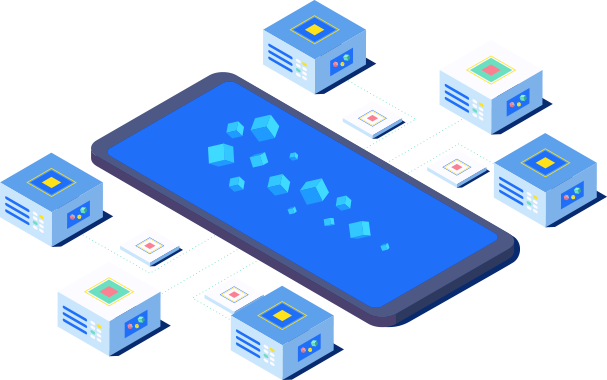

A multi-cloud hosting strategy is the practice of using two or more cloud service providers simultaneously to host applications, store data, and deliver services. Instead of relying on a single vendor such as AWS, Google Cloud, or Microsoft Azure, organizations deliberately distribute workloads across multiple clouds to achieve specific business and technical objectives.
This approach differs from hybrid cloud, which combines on-premises infrastructure with public cloud resources. Multi-cloud focuses entirely on the public cloud layer—leveraging multiple vendors, often alongside each other, to create a resilient and flexible hosting architecture. Some teams adopt multi-cloud accidentally through shadow IT or acquisitions. Others design it intentionally from the ground up as a core architectural principle.
The driving idea behind multi-cloud is simple: no single cloud provider excels at everything. AWS might offer the broadest range of services, Google Cloud may lead in data analytics and machine learning, and Azure often integrates more naturally with Microsoft-centric enterprise environments. A cloud computing model that spans multiple vendors lets you select the best tool for each job rather than contorting your requirements to fit one provider's catalog.
For hosting specifically, multi-cloud can mean running your web application on one provider while using a different provider for object storage, content delivery, database services, or disaster recovery. It can also mean deploying the same application across multiple clouds for geographic redundancy or cost optimization. At Hosting Captain, we see growing interest from businesses that have outgrown single-vendor hosting and need greater control over their infrastructure destiny.
Vendor lock-in is one of the most persistent concerns in cloud hosting. When you build deeply on a single provider's proprietary services—such as AWS Lambda, DynamoDB, or Azure Functions—migrating away becomes technically difficult and financially expensive. A multi-cloud strategy mitigates this risk by keeping your architecture portable. By using open standards, containerization, and infrastructure-as-code tools, you retain the freedom to shift workloads between providers as business needs, pricing, or service quality change.
Lock-in is not just a technical problem. It is also a negotiation problem. When a provider knows you cannot easily leave, you lose leverage during contract renewals. A multi-cloud posture signals that you have alternatives, which often leads to better pricing, dedicated support, and more favorable terms.
Every cloud provider has strengths and weaknesses. Google BigQuery remains a standout for large-scale data warehousing. AWS Lambda and the broader AWS serverless ecosystem offer maturity that competitors are still matching. Microsoft Azure's Active Directory integration makes it a natural fit for identity and access management in enterprises already using Microsoft 365.
A multi-cloud hosting strategy lets you pair each workload with the provider best suited for it. You might host your primary web application on AWS for its global reach and extensive service catalog, run your analytics pipeline on Google Cloud for BigQuery, and use Azure for your .NET-based internal tools. This selectivity improves performance, developer productivity, and ultimately the experience you deliver to your users.
Even the largest cloud providers do not have data centers in every region worldwide. A provider might have strong coverage in North America and Europe but limited presence in Southeast Asia, South America, or Africa. By combining multiple providers, you can place resources closer to your users regardless of where they are located, reducing latency and improving load times.
This geographic diversification also helps with data sovereignty compliance. Regulations such as GDPR, India's data localisation requirements, and Australia's Privacy Act may require data to remain within specific borders. A multi-cloud approach gives you more options to meet those obligations without compromising performance.
Cloud pricing is dynamic. Providers regularly adjust their rates, introduce new instance types, and offer discounts for reserved or spot capacity. A multi-cloud strategy enables pricing arbitrage—the practice of shifting workloads to whichever provider offers the most competitive pricing for a given compute, storage, or bandwidth requirement at a given time.
While real-time workload shifting is not trivial, even periodic reviews of cloud spend across providers can uncover substantial savings. Teams that benchmark pricing across AWS, Google Cloud, and Azure often find that certain workloads are 20–40% cheaper on one platform versus another, depending on the instance family, region, and commitment term.
Relying on a single cloud provider creates a single point of failure at the organisational level. While major cloud outages are rare, they do happen—and when they do, every customer on that provider is affected simultaneously. A multi-cloud architecture allows you to design for provider-level redundancy. If one cloud experiences an outage, traffic can fail over to another provider, preserving uptime for mission-critical services.
This level of resilience is particularly important for e-commerce platforms, financial services, healthcare systems, and any business where downtime directly translates to lost revenue or regulatory penalties. Hosting Captain recommends multi-cloud disaster recovery for businesses that cannot tolerate extended outages from a single provider.
The most significant drawback of multi-cloud is the sheer complexity it introduces. Each cloud provider has its own set of APIs, identity and access management systems, networking models, monitoring tools, and billing dashboards. Managing two or three clouds means your operations team must develop expertise across multiple platforms simultaneously, which increases training costs and the cognitive load on engineers.
This complexity extends to security. Identity policies, firewall rules, encryption standards, and compliance controls must be consistently applied across all providers. A misconfiguration in one cloud—such as an inadvertently public S3 bucket or an overly permissive IAM role—can expose data even if your other environments are locked down.
Cloud engineers who are genuinely proficient across multiple platforms are rare and expensive. Most professionals specialise in one ecosystem—often AWS—and have only passing familiarity with others. Building and retaining a team that can operate effectively in a multi-cloud environment requires significant investment in hiring, training, and continuous learning.
This skills gap often leads to a scenario where one cloud becomes the "primary" platform with deep expertise, while the secondary clouds are managed with less rigour—effectively undermining the benefits the strategy was meant to deliver.
Every additional cloud provider multiplies the management surface area. Instead of a single console, you have three. Instead of one set of monitoring dashboards, you have three different tools with three different query languages. Instead of one billing report, you must reconcile charges from multiple sources to understand your total cloud spend.
This overhead manifests in slower incident response times, longer onboarding for new team members, and increased coordination effort across teams. The management burden is one of the primary reasons organisations abandon multi-cloud strategies or scale them back after an initial trial.
Cloud providers charge for data leaving their networks—known as egress fees. In a multi-cloud architecture, data frequently moves between providers. An application running on AWS that reads from a database on Google Cloud incurs egress charges on both sides: AWS charges for the data coming in, and Google Cloud charges for the data going out.
These costs can accumulate rapidly and are notoriously difficult to forecast. Organisations that do not model egress costs carefully can find their multi-cloud strategy becoming more expensive than sticking with a single provider, even with the pricing advantages described earlier. Minimising cross-cloud data transfer is essential to keeping multi-cloud economically viable.
The multi-cloud ecosystem has produced a proliferation of tools designed to abstract away provider differences—Terraform, Pulumi, Crossplane, Kubernetes, and dozens of monitoring and observability platforms. While these tools help, they also introduce their own learning curves, maintenance requirements, and points of failure.
Tool sprawl can become a problem in its own right. Teams may find themselves managing not just multiple clouds but also multiple abstraction layers, each with its own configuration language, update cadence, and community ecosystem. The promise of simplification through abstraction can paradoxically lead to a more complex operational reality.
Multi-cloud is not the right answer for every organisation. It makes the most sense in the following situations:
For many businesses, particularly small to mid-sized organisations, a single-cloud approach is more practical and cost-effective. You should consider staying with one provider when:
A well-architected single-cloud deployment using multiple availability zones and regions can achieve impressive resilience without the overhead of a full multi-cloud setup. Hosting Captain advises clients to master single-cloud operations before adding a second or third provider. For many growing businesses, starting with a robust dedicated server or single-cloud environment provides the right foundation before expanding to multi-cloud.
In this pattern, each workload or application component is assigned to a specific cloud provider based on its requirements. A web application might run on AWS while its analytics pipeline lives on Google Cloud and its internal tooling on Azure. The workloads are largely independent, communicating through APIs or message queues with minimal real-time data synchronisation.
This is the simplest multi-cloud pattern and the easiest to adopt incrementally. It minimises cross-cloud data transfer and avoids the complexity of real-time synchronisation between providers.
The redundant pattern deploys the same workload across multiple clouds for high availability. In an active-active setup, both environments serve traffic simultaneously, with a global load balancer distributing requests. In an active-passive configuration, one environment is live while the other remains on standby, ready to take over during a failover event.
This pattern requires significant engineering investment. Applications must be stateless or use multi-cloud-capable data replication, and the failover mechanism must be tested regularly to ensure it works under real conditions.
This pattern places data and processing in specific geographic regions to comply with local regulations. A company serving customers in the European Union, India, and Australia might use different cloud providers for each region, based on which provider has compliant data centres and services in those locations. This approach is increasingly common for government cloud deployments and regulated industries.
Regardless of which pattern you choose, several principles increase your probability of success:
Terraform, developed by HashiCorp, is the most widely adopted infrastructure-as-code tool for multi-cloud environments. Its provider model supports AWS, Azure, Google Cloud, and hundreds of other services through a consistent configuration language (HCL). Terraform enables teams to define infrastructure declaratively, version it in Git, and apply changes through a predictable plan-and-apply workflow. Its large community and module registry accelerate adoption.
Pulumi offers a similar value proposition but uses general-purpose programming languages—TypeScript, Python, Go, C#, and Java—instead of a domain-specific language. This appeals to teams that prefer expressing infrastructure in languages they already use for application development. Pulumi's approach to multi-cloud is particularly strong when infrastructure logic needs to incorporate conditional logic, loops, or integration with external APIs.
Crossplane takes a Kubernetes-native approach. It extends the Kubernetes API with custom resources that represent cloud services, allowing teams to manage multi-cloud infrastructure using kubectl and familiar Kubernetes tooling. This is a natural fit if you are already running Kubernetes across multiple clouds.
Kubernetes has become the de facto standard for container orchestration and a powerful multi-cloud enabler. By running Kubernetes clusters on AWS (EKS), Google Cloud (GKE), and Azure (AKS), teams can deploy the same containerised applications across all three providers with minimal modification. Kubernetes abstracts away the underlying compute infrastructure, providing a consistent API for deployment, scaling, and networking.
However, Kubernetes does not eliminate all provider differences. Storage classes, load balancer implementations, and identity integrations remain provider-specific. Tools like Anthos (Google Cloud), Azure Arc, and EKS Anywhere attempt to bridge these gaps, but they also introduce their own complexity and, in some cases, vendor lock-in of a different kind.
Unified observability is critical for multi-cloud. Tools such as Datadog, Grafana (with Prometheus and Loki), New Relic, and Honeycomb aggregate metrics, logs, and traces from multiple providers into a single pane of glass. OpenTelemetry, an open-source observability framework, is increasingly the standard for collecting telemetry data in a vendor-neutral format, making it particularly valuable for multi-cloud environments.
Multi-cloud networking is notoriously difficult. Tools like Consul (HashiCorp), Istio, and cloud-native offerings such as AWS Cloud WAN and Google Cloud Interconnect help manage service discovery, traffic routing, and secure communication across cloud boundaries. A service mesh can provide consistent observability, traffic management, and security policies regardless of which cloud a service runs on.
For simpler use cases, VPN tunnels or dedicated interconnects between cloud providers offer a secure backplane for cross-cloud communication, though they require careful capacity planning and cost monitoring.
A single-cloud deployment has straightforward cost dynamics. You receive one bill, manage one set of reserved instances or commitment discounts, and optimise within one pricing model. Volume discounts and committed-use contracts reward consolidation. The operational team specialises in one platform, which reduces training and tooling costs. For most small and mid-sized businesses, the simplicity and deep discounts of single-cloud hosting produce the lowest total cost of ownership.
Multi-cloud can reduce costs in specific scenarios:
Any cost comparison must account for the indirect expenses of multi-cloud:
| Cost Category | Single Cloud | Multi-Cloud |
|---|---|---|
| Cloud provider bills | Lower per-unit cost due to volume discounts | Potentially higher per-unit cost; offset by arbitrage |
| Egress / data transfer | Minimal (within one provider's network) | Significant; can exceed compute costs |
| Engineering headcount | 1x cloud specialists | 1.5–2x for multi-platform proficiency |
| Training and certification | One platform's certifications | Multiple platforms; ongoing renewal |
| Tooling and licences | Basic monitoring and IaC | Multi-cloud monitoring, networking, and abstraction tools |
| Incident response | Faster root cause identification | Slower due to increased system complexity |
| Compliance and audit | One set of controls to validate | Multiple control sets; increased audit scope |
Organisations should model their specific workloads against this framework rather than relying on generalised claims about multi-cloud savings. At Hosting Captain, we frequently work with clients to build detailed cost models that account for both infrastructure spend and the operational overhead of managing multiple providers.
Newer architectural approaches can shift the cost equation for multi-cloud. Serverless computing models, where you pay only for actual execution time rather than provisioned capacity, can reduce base costs and make multi-cloud more economically viable for bursty or variable workloads. Similarly, AI hosting platforms are beginning to offer specialised hardware and pricing models that may justify multi-cloud strategies for machine learning pipelines.
Multi-cloud is not a product you buy—it is an architectural journey that requires careful planning, the right talent, and a pragmatic assessment of whether the benefits justify the complexity. At Hosting Captain, we help businesses navigate this decision with honest, experience-backed guidance.
Our approach starts with a thorough assessment of your current infrastructure, application architecture, and business requirements. We identify whether multi-cloud delivers meaningful value for your specific situation or whether optimising within a single provider yields better results. When multi-cloud is the right path, we provide the infrastructure planning, migration roadmaps, and ongoing management support to execute it effectively.
Whether you are exploring multi-cloud for resilience, geographic expansion, or cost optimisation, the decision should be driven by clear business objectives—not industry hype. The most successful multi-cloud adopters are those that add complexity only when it serves a specific, measurable purpose.
A multi-cloud hosting strategy offers genuine advantages—resilience against provider outages, freedom from vendor lock-in, access to best-of-breed services, and the potential for cost optimisation through pricing arbitrage. These benefits, however, come at the price of increased complexity, higher management overhead, steeper skill requirements, and the ever-present threat of unexpected egress costs.
The decision to go multi-cloud should not be driven by fear of lock-in alone or by the assumption that more providers automatically means better outcomes. It should be a deliberate architectural choice, backed by a clear understanding of your workloads, your team's capabilities, and your business's tolerance for operational complexity.
For organisations that need provider-level redundancy, operate across multiple geographies with data sovereignty requirements, or have specialised workloads that run materially better on different platforms, multi-cloud is a powerful and increasingly mature strategy. For everyone else, mastering a single cloud first—and squeezing every ounce of performance, reliability, and cost efficiency from it—remains the smarter path.
At Hosting Captain, we meet you wherever you are on that journey. Whether you are evaluating your first cloud provider, optimising an existing single-cloud deployment, or architecting a full multi-cloud environment, our team provides the expertise and honest guidance to help you make the right decision for your business.

Arjun Mehta is a cloud infrastructure consultant specializing in bare-metal architectures, network routing, and high-traffic database clustering.

Hosting Captain has been exceptional for my e-commerce store in Pune. The NVMe SSD speed is noticeable, and their support team responds within minutes. Highly recommended for any Indian business!
Switched from a US-based host to Hosting Captain and my website loads 3x faster for Indian visitors. The free SSL and cPanel are great, and the pricing is unbeatable. Very satisfied customer!
I've been using their VPS plan for 2 years now. 99.9% uptime is not just a claim — it's reality. My client projects run without interruption. The KVM virtualization gives me full control I need.
The support team helped me migrate my entire WordPress site at 2 AM without any downtime. This level of service is rare in Indian hosting. Worth every rupee!
As a startup, budget matters. Hosting Captain's Business plan covers everything we need — multiple websites, free SSL, daily backups — at a fraction of what international hosts charge.
Our high-traffic news portal needed a dedicated server. Hosting Captain's DS Business plan handles 100K+ daily visitors effortlessly. Their team provisioned everything within 4 hours!








From personal blogs to enterprise solutions, we've got you covered!

© 2026 Hosting Captain. All Rights Reserved by 'Apollo Hosting'.