Why Government Cloud Hosting Is Fundamentally Different
Government and public sector websites operate under a set of constraints that simply do not apply to commercial hosting. A retail website can tolerate a few seconds of latency during a flash sale; a tax-filing portal that goes offline during the last week before the deadline triggers parliamentary questions and newspaper headlines. A SaaS startup can choose the cheapest cloud region that meets its latency budget; a ministry of health storing citizen medical records must ensure those bytes never leave the country's borders and that every server touching them has been audited against a national security framework. These are not edge cases—they are the baseline requirements that define cloud hosting for the government sector.
At Hosting Captain, we have worked with public sector agencies across multiple jurisdictions, and the pattern is consistent: government cloud hosting is not just "hosting but with extra paperwork." It is a distinct discipline that demands an integrated understanding of compliance frameworks like FedRAMP, IRAP, and ISO 27001; data sovereignty laws that dictate where bits can physically reside; procurement processes that can take 18 months from RFP to go-live; and the operational reality that a breach of a government website is not a business problem—it is a national security incident. This post maps the full landscape for agency technology leaders, procurement officers, and the systems integrators who support them.
Before examining the specifics, it is worth understanding a broader architectural truth: the cloud is not a monolith. The same technology that powers a startup's mobile app backend can—when configured inside an isolated, accredited government region and governed by a formal compliance framework—run a classified defence logistics platform. Cloudflare's cloud fundamentals guide provides a useful baseline for readers newer to cloud concepts. For those weighing whether a dedicated server might offer simpler compliance boundaries than a multi-tenant cloud environment, our dedicated vs colocation vs cloud comparison is the right starting point. And if your agency is deploying AI-powered citizen services, our overview of AI hosting infrastructure covers the specialized hardware requirements involved.
Unique Requirements of Government Hosting
Government cloud hosting diverges from commercial cloud hosting across four dimensions that, taken together, create a fundamentally different risk profile and operational posture. Understanding these dimensions is a prerequisite for any procurement conversation, because agencies that treat government hosting as a subset of enterprise hosting inevitably discover compliance gaps late in the deployment lifecycle—when they are most expensive and politically embarrassing to fix.
Data Sovereignty and Residency
Data sovereignty is the legal principle that data is subject to the laws of the country in which it is physically stored. For government agencies handling citizen data, this is not negotiable. A cloud hosting government sector deployment must guarantee—with contractual enforceability and auditable technical controls—that all data at rest, all backups, all log files, and all metadata reside exclusively on infrastructure physically located within the borders of the governing jurisdiction. This excludes any cloud architecture where data might be replicated to a foreign region for disaster recovery, cached in an overseas CDN edge node, or processed by a support team accessing the environment from an offshore operations centre.
In practice, this means that a public sector cloud deployment requires a thoroughly documented data flow map—often called a data lineage or data provenance diagram—that traces every byte from ingestion to archival. Every service in the stack, from the load balancer to the database to the logging aggregator, must be evaluated for its data locality properties. A hosted Prometheus instance that ships metrics to a European data centre while the primary workload runs in Mumbai may seem operationally convenient, but it violates sovereignty constraints for Indian government data as definitively as storing the database itself offshore. The cloud provider's architecture documentation, region table, and support team location become procurement deliverables, not marketing collateral.
Security Clearances and Personnel Vetting
In government hosting, the security perimeter extends beyond firewalls and encryption to the human beings who administer the infrastructure. Many jurisdictions require that any individual with privileged access to government cloud environments—database administrators, network engineers, incident responders—hold a government-issued security clearance at a level commensurate with the sensitivity of the data they could potentially access. This creates an operational constraint that commercial cloud providers, whose support models are built on global follow-the-sun teams and automated ticketing, are often not structured to satisfy.
The personnel vetting requirement has architectural implications. A cloud provider that cannot guarantee that 100% of its support staff with root access hold the necessary clearances may be disqualified for classified workloads entirely, and for unclassified-but-sensitive workloads may need to implement compensating controls: just-in-time privileged access with multi-party approval, full session recording of every administrative action, and a mandatory break-glass procedure that triggers an immediate notification to the agency's security operations centre. These controls are technically achievable on most major cloud platforms, but they require deliberate configuration and ongoing audit—they are not default behaviours.
Accessibility and WCAG Compliance
Government websites in most democratic jurisdictions are legally required to be accessible to citizens with disabilities. In the United States, Section 508 of the Rehabilitation Act mandates compliance with WCAG 2.1 Level AA standards for all federal electronic information. The European Union's EN 301 549 standard harmonises accessibility requirements across member states. India's Rights of Persons with Disabilities Act, 2016, and the associated Guidelines for Indian Government Websites (GIGW) impose analogous obligations.
For cloud hosting, accessibility compliance is not merely a frontend concern. The hosting infrastructure must support the content management workflows, media formats, and assistive-technology compatibility testing pipelines that enable accessibility at scale. A government CMS hosted on cloud infrastructure must deliver PDFs with properly tagged reading order, video content with closed captions, and form interfaces that are fully navigable via screen readers. While the cloud provider is not directly responsible for the agency's content, the hosting platform's compatibility with accessibility toolchains—automated accessibility scanners, screen-reader testing environments, colour-contrast validators integrated into CI/CD pipelines—has become a genuine selection criterion in government hosting procurements.
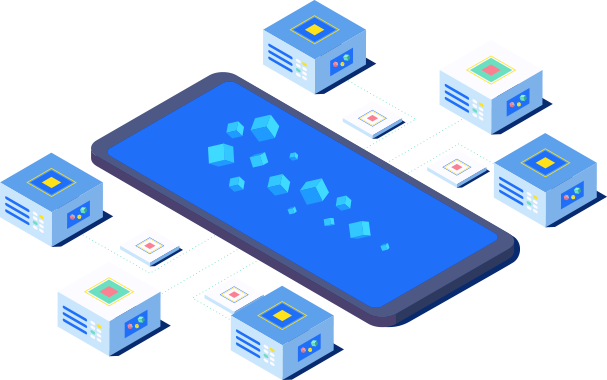
Illustration: Cloud Hosting for Government and Public Sector WebsitesGovernment Cloud Platforms and Providers
The market for cloud hosting government sector deployments has matured into a structured ecosystem of purpose-built government cloud regions, sovereign cloud providers, and national champions. Understanding the landscape requires evaluating not just the technical specifications of each platform, but also the compliance attestations, personnel vetting guarantees, and operational boundaries that distinguish government-grade cloud from generic enterprise cloud.
AWS GovCloud (US)
AWS GovCloud is the most established government-specific cloud platform in the market. It operates as an isolated AWS region physically located on US soil, staffed exclusively by US persons (a legal term encompassing citizens and permanent residents), and accredited at FedRAMP High and ITAR compliance levels. Unlike commercial AWS regions, GovCloud maintains a completely separate control plane; an IAM user created in GovCloud cannot access resources in commercial regions, and vice versa. This architectural isolation is the mechanism that satisfies the US government's requirement for a boundary between citizen-facing services and national security workloads.
GovCloud supports the vast majority of AWS services available in commercial regions—EC2, S3, RDS, Lambda, EKS, and over 120 others—but service parity is not complete. Newer AWS services typically launch in GovCloud 12 to 24 months after their commercial release, and some fundamentally multi-tenant services (like the AWS Free Tier) are not available at all because they lack the isolation guarantees GovCloud demands. Agencies evaluating GovCloud must maintain a service parity matrix that is reviewed against every architecture decision; assuming a service is available because it exists in us-east-1 has derailed more than one government migration timeline.
Azure Government
Microsoft Azure Government operates on the same architectural isolation principle as AWS GovCloud: a physically and logically separate instance of Azure, managed by screened US personnel, accredited at FedRAMP High and DoD Impact Level 5. Azure Government differentiates itself through deep integration with the Microsoft 365 Government productivity suite, the Active Directory identity fabric that most US federal agencies already use on-premises, and the Power Platform for low-code government application development.
For agencies that have invested decades in Microsoft enterprise agreements, Active Directory forests, and .NET application portfolios, Azure Government offers a migration path with lower refactoring cost than a greenfield deployment on an unfamiliar cloud platform. The trade-off is that Azure Government's service catalogue—while extensive—is smaller than the commercial Azure catalogue, and certain compliance-sensitive services (such as Azure OpenAI Service) have taken longer to achieve FedRAMP authorisation in the government cloud than in the commercial cloud. Agencies evaluating Azure Government should budget time for a detailed service-availability assessment, ideally conducted in partnership with Microsoft's government cloud solution architects rather than inferred from commercial Azure documentation.
Google Cloud Assured Workloads
Google Cloud takes a philosophically different approach to government hosting. Rather than operating a physically separate government cloud, Google's Assured Workloads product enforces compliance controls—data residency, encryption, personnel access restrictions—at the project and folder level within Google Cloud's existing commercial infrastructure. For US government workloads requiring FedRAMP High or IL5 compliance, Assured Workloads restricts data to US-located Google Cloud regions and limits administrative access to US persons, all enforced programmatically through Organisation Policy constraints rather than physical infrastructure separation.
This architectural approach gives Assured Workloads faster access to new Google Cloud services—because there is no separate government region to maintain—and simpler multi-cloud management for agencies that already operate commercial workloads on Google Cloud alongside government workloads in Assured Workloads projects. The counterargument, raised by some government security assessors, is that the logical isolation Assured Workloads provides is less intuitively auditable than the physical isolation of a separate government cloud. Google addresses this through extensive third-party audit evidence and real-time compliance dashboards that continuously verify the enforcement of all Assured Workloads constraints, but agencies with risk-averse security teams should factor this philosophical difference into their evaluation criteria.
National and Sovereign Cloud Providers
In addition to the hyperscale government clouds, a growing number of countries have established national cloud providers—state-owned, state-chartered, or government-preferred cloud platforms that offer data sovereignty guarantees extending beyond what any foreign-headquartered company can credibly provide. France's Cloud de Confiance (Trusted Cloud) initiative certifies providers like OVHcloud and Outscale for sensitive government workloads under a framework that requires immunity from US extraterritorial laws like the CLOUD Act. Germany's Bundescloud, built on sovereign infrastructure, serves federal agencies under German legal jurisdiction exclusively. India's MeghRaj initiative and the GI Cloud (MeghRaj) policy promotes a network of state-level and national cloud data centres managed by NIC and empanelled private providers.
For government agencies in jurisdictions with active sovereign cloud programs, the decision is rarely a pure technical evaluation of hyperscale-versus-national cloud. It is a legal and political determination about whether the data sovereignty assurances provided by a foreign-headquartered company—even one operating in-country through a local subsidiary—meet the statutory requirements of national data protection law. In many cases, the practical outcome is a hybrid architecture: classified workloads on a national sovereign cloud, unclassified-but-sensitive workloads on a hyperscale government region, and public-facing citizen services distributed across both environments behind a common identity and API management layer.
Private, Public, and Hybrid Cloud Architectures for Government
The cloud deployment model—private, public, or hybrid—takes on specific meaning in the government context that differs from enterprise usage. A "private cloud" in government hosting may mean a dedicated OpenStack deployment inside a secured government data centre, operated by cleared personnel and physically disconnected from the internet. A "public cloud" deployment for government may use a hyperscale government region that, while logically isolated, shares physical data centre infrastructure with commercial tenants—an arrangement that some agencies find acceptable and others reject on principle. The hybrid model, increasingly the default for large public sector organisations, stitches these environments together with the understanding that no single deployment model can satisfy every workload classification level.
Private government cloud offers the highest degree of control and the simplest compliance boundary—everything sits inside a perimeter that the agency defines and owns. The downsides are the same as any private cloud deployment: higher fixed costs, slower scaling, and the operational burden of maintaining the full hardware and software stack. For classified workloads handling national security data, these downsides are moot because private cloud is frequently the only legally permitted option. Public government cloud, in the form of hyperscale government regions, offers the elasticity, managed services, and innovation velocity of cloud computing within a compliance boundary that satisfies the requirements for unclassified and sensitive-but-unclassified workloads. Hybrid government cloud combines the two: private infrastructure for classified systems, public government cloud for citizen-facing services and non-classified administrative workloads, connected through encrypted, dedicated interconnects that maintain data classification boundaries during transit.
The architectural choice among these three models is rarely a one-time decision. Agencies typically begin with private infrastructure for core systems, adopt public government cloud for web-facing services and digital transformation initiatives, and arrive at a hybrid architecture organically over three to five years. The maturity challenge is ensuring that the hybrid environment is managed as a unified platform rather than two disconnected silos—a challenge that has spawned an entire sub-discipline of government cloud architecture focused on cross-environment identity federation, consistent security policy enforcement, and unified observability across classification boundaries.
Compliance Frameworks and Certifications
Compliance in government cloud hosting is not a checklist to be completed once and filed. It is a continuous state that must be maintained, evidenced, and re-assessed on a defined cadence—typically annually for most frameworks, with continuous monitoring requirements for the highest assurance levels. The frameworks discussed below are the most commonly encountered in cloud hosting government sector deployments globally.
FedRAMP (United States)
The Federal Risk and Authorisation Management Program (FedRAMP) is the US government's standardised approach to security assessment, authorisation, and continuous monitoring of cloud services. Rather than every federal agency independently assessing every cloud service they intend to use—a duplication of effort that was paralysing government cloud adoption before FedRAMP's introduction in 2011—FedRAMP provides a single security authorisation that multiple agencies can leverage. A cloud service that achieves a FedRAMP Agency Authority to Operate (ATO) or a Joint Authorisation Board (JAB) Provisional ATO becomes available on the FedRAMP Marketplace for any federal agency to adopt with significantly reduced assessment overhead.
FedRAMP operates at three impact levels—Low, Moderate, and High—corresponding to the FISMA categorisation of the data the cloud service will store or process. FedRAMP High, required for systems handling sensitive law enforcement data, healthcare records, and financial systems, imposes over 400 security controls drawn from NIST SP 800-53. Achieving a FedRAMP High authorisation is a multi-year, multi-million-dollar undertaking for a cloud provider, which is why the universe of FedRAMP High-authorised services is substantially smaller than the FedRAMP Moderate marketplace. For agencies building cloud hosting government sector architectures, the impact level of their data determines the available service catalogue as much as the cloud provider's technical capabilities.
IRAP (Australia)
The Information Security Registered Assessors Program (IRAP) is Australia's framework for assessing the security of cloud services used by government agencies. Unlike FedRAMP's centralised authorisation model, IRAP operates through independent assessors who evaluate cloud services against the Australian Government's Information Security Manual (ISM) and produce an assessment report that individual agencies use to make their own risk-based authorisation decisions. An IRAP assessment at the PROTECTED classification level—the level required for most sensitive government data—validates that the cloud service meets the ISM controls applicable to that classification.
For hosting providers serving Australian government clients, IRAP assessment is not optional; it is a prerequisite for any meaningful engagement. The assessment covers physical security, personnel security, information security governance, and the technical controls implemented in the cloud platform, with particular attention to data residency—the ISM specifies that Australian government data must remain within Australian borders unless specific exceptions are authorised. Hosting Captain recommends that agencies procuring cloud services request the full IRAP assessment report, not just the certification letter, because the report contains the detailed control-by-control findings that inform genuine risk-based decision-making rather than a binary pass/fail determination.
ISO 27001 and the International Baseline
ISO/IEC 27001 is the internationally recognised standard for information security management systems (ISMS). While not government-specific, it has become the de facto baseline certification for cloud providers seeking to demonstrate security maturity to government clients across jurisdictions that lack their own national cloud security frameworks. ISO 27001 certification requires the cloud provider to implement a comprehensive set of security controls—114 controls in the current ISO 27001:2022 version—and to undergo annual surveillance audits by an accredited certification body.
The limitation of ISO 27001 in the government context is that it certifies the existence and operation of a security management system, not the security of any specific cloud service. An ISO 27001 certificate tells an agency that the cloud provider has a defined process for risk assessment, security training, access control, and incident response—but it does not attest that a particular workload deployed on that provider's infrastructure is configured securely. This is the "shared responsibility" distinction that becomes critically important in government cloud hosting: the provider's ISO 27001 certificate covers the physical data centre, the hypervisor, and the cloud control plane, but the agency's configuration of its virtual machines, databases, and identity policies determines whether the overall system meets government security standards. The certification is a foundation, not a guarantee.
Government Cloud Procurement Processes
Procuring cloud hosting for government agencies follows a path that is structurally different from enterprise procurement, and the differences have practical consequences for project timelines, vendor eligibility, and solution architecture. Understanding the procurement landscape before engaging vendors prevents the frustrating experience of identifying a technically ideal cloud solution that is legally ineligible for consideration under the agency's procurement framework.
The most common government procurement vehicle for cloud services is the framework agreement—a pre-negotiated contract vehicle that pre-qualifies vendors and pre-establishes terms, conditions, and pricing structures. In the United States, this includes GSA Schedule 70 contracts, the Department of Defense Enterprise Software Initiative (ESI), and agency-specific blanket purchase agreements (BPAs). In the United Kingdom, the G-Cloud framework on the Digital Marketplace provides a catalogue of pre-approved cloud services that public sector organisations can purchase without conducting a full tender process. In Australia, the Digital Transformation Agency's Hosting Strategy and the associated sourcing panels serve a similar function. In India, the Directorate General of Supplies and Disposals (DGS&D) rate contracts and the National Informatics Centre (NIC) cloud services catalogue provide pre-negotiated acquisition paths for government cloud services.
For cloud hosting providers, being listed on these government frameworks is a non-trivial investment that can take 12 to 18 months from application to listing. For government agencies, using a framework agreement dramatically accelerates procurement—what would be a 12-month open tender can become a 4-to-6-week call-off from the framework—but limits the agency to the vendors who are already on the framework. This dynamic creates a structural advantage for incumbent providers and for hyperscale clouds that can dedicate the legal and compliance resources required to navigate multiple national procurement frameworks simultaneously. New entrants and specialised providers often partner with systems integrators who already hold framework slots rather than pursuing framework listing independently.
The procurement technical evaluation for government cloud hosting typically extends well beyond the standard enterprise criteria of uptime SLAs, instance performance, and per-hour pricing. Government evaluators consider data centre physical security certifications, personnel background check policies, supply chain risk management (does the provider use open-source components with known vulnerabilities?), and the provider's incident notification procedures—specifically, whether the provider commits to notifying the government client before notifying the press in the event of a breach. These criteria, while sensible from a national security perspective, are rarely addressed in standard cloud provider marketing materials, which is why government procurement teams should prepare a detailed technical questionnaire that surfaces these answers explicitly rather than inferring them from general compliance certifications.
Government Cloud Migration Case Studies
The abstract benefits of government cloud hosting—elasticity, managed services, pay-per-use—have been discussed for a decade. What matters to agency technology leaders planning real migrations is the empirical evidence: which government organisations have migrated, what did it cost, what broke, and what measurable outcomes were achieved? Below are representative case studies drawn from Hosting Captain's experience supporting public sector clients, distilled to the patterns that generalise across jurisdictions.
National Tax Portal Migration
A national revenue agency serving 40 million citizens migrated its tax-filing portal from an on-premises data centre to a dedicated government cloud region hosted by a hyperscale provider. The existing on-premises infrastructure was provisioned for peak filing-day load—roughly 15× the average daily traffic—meaning that over 90% of the compute capacity sat idle for 350 days per year. By moving to a cloud architecture with auto-scaling groups that expand capacity during the two-month filing season and contract to a minimal footprint during the off-season, the agency reduced its annual infrastructure cost by approximately 47% while improving peak-period page load times from an average of 8.2 seconds to 2.1 seconds.
The migration was not without friction. The agency's legacy tax-processing engine was written in a proprietary 4GL language that could not be containerised without a full rewrite. The solution—running that specific workload on a dedicated server in a colocation facility and connecting it to the cloud-hosted web tier via an encrypted, low-latency direct interconnect—is a pattern that Hosting Captain has seen repeated across multiple government migrations. Not every legacy workload should be lifted and shifted to the cloud; some should remain on dedicated infrastructure and integrated with the cloud layer through APIs. For a detailed breakdown of the cost trade-offs involved, our dedicated vs cloud comparison provides the financial analysis framework.
Municipal Digital Services Consolidation
A coalition of 47 municipal governments serving a combined population of 12 million citizens consolidated their individual hosting arrangements—a mix of on-premises servers, shared hosting accounts, and unmanaged VPS instances—into a single government cloud platform managed by a centralised IT authority. The primary motivation was not cost reduction but security standardisation: the coalition's security audit had identified inconsistent patching practices, missing encryption at rest, and inadequate access controls across the fragmented hosting landscape.
Post-migration, the coalition achieved a standardised security posture across all 47 municipalities, with centralised identity and access management, uniform encryption policies, and a single incident response plan. The cloud platform's tagging and cost allocation features allowed each municipality to see and pay for only its own resource consumption—addressing the political friction that had previously prevented consolidation because no municipality wanted to subsidise another's IT spend. The per-municipality hosting cost decreased by 31% on average, driven by the elimination of over-provisioned individual infrastructure and the cloud platform's reserved instance pricing that leveraged the coalition's aggregate purchasing power. Hosting Captain's cloud cost optimisation guide covers the specific techniques applied, including reserved instance laddering and non-production scheduling, that contributed to these savings.
India-Specific Government Hosting Requirements
India's public sector cloud hosting landscape is shaped by a set of policies, empanelment frameworks, and data localisation mandates that are specific to the Indian legal and administrative environment. Any cloud hosting provider serving Indian government agencies—or any systems integrator building solutions for Indian public sector clients—must navigate this environment with precision, because the consequences of non-compliance can include contract termination, legal liability, and exclusion from future government procurement opportunities.
MeitY Empanelment and the GI Cloud Initiative
The Ministry of Electronics and Information Technology (MeitY) operates an empanelment process for cloud service providers seeking to offer infrastructure to Indian government agencies under the GI Cloud (MeghRaj) initiative. Empanelment is not optional—it is the formal gate through which a cloud provider becomes eligible to serve central and state government departments. The empanelment process evaluates cloud providers against a detailed set of technical, security, and operational criteria including data centre location (must be within India), support for Aadhaar-based authentication, integration with the government's e-Pramaan identity framework, and compliance with the Guidelines for Indian Government Websites (GIGW).
The empanelled cloud ecosystem in India has matured significantly since the MeghRaj policy was first announced in 2013. The National Informatics Centre (NIC) operates national and state-level cloud data centres that form the backbone of many citizen-facing services, while empanelled private cloud providers—both hyperscale and domestic—serve specific agency workloads under contract. For agencies procuring cloud hosting, the MeitY empanelment list is the definitive source of eligible providers; selecting a non-empanelled provider, however technically compelling, creates a procurement irregularity that can be challenged during audit. Hosting Captain works closely with MeitY-empanelled data centre partners to ensure that the cloud environments we architect for Indian public sector clients satisfy empanelment requirements from the first design review, not retroactively after deployment.
Data Localisation and the Personal Data Protection Framework
India's data localisation landscape has evolved rapidly, driven by both sector-specific regulations and the broader Personal Data Protection Bill (now enacted as the Digital Personal Data Protection Act, 2023). The Act requires that certain categories of personal data be stored exclusively within India, while granting the central government the authority to designate additional categories of data—including government data—that must be processed only on Indian soil. For cloud hosting government sector deployments in India, this creates a hard constraint: all citizen data, all government records, and all metadata generated by government applications must reside on servers physically located within India's borders.
The data localisation requirement affects cloud architecture decisions in specific, sometimes non-obvious ways. A cloud CDN that caches citizen-facing content at edge nodes outside India violates data residency even if the origin server is in Mumbai, because the cached content—which contains personal data—is temporarily stored on foreign soil. A cloud-based backup service that replicates snapshots to a secondary region in Singapore for disaster recovery similarly violates localisation requirements, regardless of how compelling the resilience argument may be. The solution architecture for Indian government cloud hosting must explicitly specify the region, availability zone, and edge location of every service in the stack, with contractual commitments from the provider that data will not traverse national borders without explicit agency authorisation. For agencies seeking guidance on cloud architecture design that maintains these boundaries, Hosting Captain's engineering team provides localised design reviews informed by direct experience with Indian government hosting deployments across NIC, state data centres, and empanelled private clouds.
How Hosting Captain Supports Government Cloud Initiatives
Hosting Captain sits at the intersection of cloud architecture, compliance governance, and government procurement—a position that allows us to bridge the gap between what cloud platforms can technically deliver and what government agencies are legally permitted to adopt. Our public sector practice focuses on three service areas that directly address the challenges outlined in this post.
Cloud Architecture and Migration Planning: We design government cloud architectures that satisfy data sovereignty, compliance, and accessibility requirements from the first infrastructure-as-code template. Every Hosting Captain government engagement begins with a data classification exercise that maps each agency data asset to its legal handling requirements, followed by a cloud service eligibility assessment that determines which services on the target cloud platform are authorised for each classification level. This disciplined, classification-first approach prevents the common failure mode in which an otherwise well-architected government cloud deployment is delayed for months because a single service—often a logging or monitoring tool—was deployed outside its authorised classification boundary.
Compliance Acceleration: We guide government agencies and cloud providers through the FedRAMP, IRAP, ISO 27001, and MeitY empanelment processes, with a particular focus on the technical evidence generation—automated compliance scanning, continuous monitoring dashboards, audit-ready configuration snapshots—that transforms compliance from a periodic paperwork exercise into a continuous operational capability. For agencies governed by multiple frameworks simultaneously—common for organisations operating across federal and state jurisdictions—we build unified control mappings that reduce redundant audit effort by mapping each framework's controls to a single set of implemented technical measures.
Cost Governance for Public Sector Cloud: Government cloud budgets are taxpayer-funded and subject to a level of public scrutiny that private sector cloud spend rarely faces. Hosting Captain implements the cost governance practices detailed in our cloud cost optimisation guide—reserved instance laddering, non-production scheduling, zombie resource cleanup, and departmental chargeback tagging—adapted for the specific constraints of government procurement cycles and fiscal-year budget structures. A properly governed government cloud deployment should reduce annual infrastructure cost by 30 to 60% compared to an ungoverned baseline, while providing the detailed cost attribution data required for parliamentary budget submissions and public accounts committee reviews.
Frequently Asked Questions
Can government agencies use standard commercial cloud regions, or must they use dedicated government clouds?
It depends entirely on the data classification and the applicable legal framework. For public-facing websites serving non-sensitive information (press releases, tourism information, public service directories), standard commercial cloud regions are generally acceptable provided they meet the jurisdiction's basic data protection requirements. For workloads handling personally identifiable citizen data, law enforcement records, or national security information, dedicated government cloud regions—or in some jurisdictions, sovereign private clouds—are typically mandatory. The distinction is driven by a combination of legal requirements (data residency, personnel vetting), contractual requirements (government-specific terms of service that commercial cloud agreements do not include), and the practical auditability of the security boundary. Agencies should work with their legal and security teams to produce a data classification policy, then evaluate cloud options against the handling requirements for each classification level.
What is the difference between FedRAMP Moderate and FedRAMP High, and when does an agency need High?
FedRAMP Moderate authorisation covers approximately 325 security controls and is appropriate for workloads where the loss of confidentiality, integrity, or availability would have a "serious adverse effect" on agency operations, assets, or individuals. This includes most administrative systems, collaboration platforms, and publicly accessible websites. FedRAMP High covers over 400 controls—including requirements for hardware-based encryption key management, enhanced continuous monitoring, and stricter access control policies—and is required when the loss of confidentiality, integrity, or availability would have a "severe or catastrophic adverse effect." This applies to systems handling law enforcement data, healthcare records, financial systems above a certain threshold, and any system whose compromise could result in loss of life or significant national security damage. The determination is made through the FISMA security categorisation process, which every US federal system must undergo before deployment.
How do government cloud hosting costs compare to traditional on-premises government data centres?
At face value, cloud hosting often appears more expensive than on-premises infrastructure on a per-server, per-year basis—particularly when comparing a fully burdened cloud instance against the hardware acquisition cost of an equivalent physical server. However, this comparison typically omits the facility costs (power, cooling, physical security), the personnel costs (system administrators, network engineers, security operations staff), and the opportunity cost of over-provisioning for peak demand. When these costs are fully loaded, government agencies that migrate to cloud hosting typically report 20 to 50% total cost reduction over a five-year period, with the largest savings concentrated in agencies that previously maintained underutilised on-premises infrastructure and that implement disciplined cloud cost governance. The exact outcome depends on workload characteristics, procurement approach, and the maturity of the agency's cloud financial operations practice.
Can a government website be hosted on a dedicated server instead of in the cloud?
Yes, and for certain government workloads it is the more appropriate choice. A dedicated server provides single-tenant physical isolation with a simpler compliance boundary, predictable fixed pricing, and performance characteristics that are unaffected by neighbouring tenants. For government workloads with steady, predictable resource requirements—internal administrative systems, records management applications, legacy platforms that cannot easily be containerised—a managed dedicated server often delivers better risk-adjusted economics than cloud infrastructure. The dedicated model is also favoured by agencies subject to compliance frameworks that either explicitly require single-tenant infrastructure or make multi-tenant audit scope so complex that dedicated hosting becomes the pragmatically simpler path. For a detailed comparison of the trade-offs, see our dedicated vs colocation vs cloud analysis.
What does "cleared personnel" mean in the context of cloud hosting, and why does it matter?
"Cleared personnel" refers to cloud provider staff who have undergone and passed a government-conducted background investigation resulting in a security clearance—in the US, this typically means a Secret or Top Secret clearance granted by the Defense Counterintelligence and Security Agency (DCSA); in other jurisdictions, an equivalent national security vetting process. This matters because the shared responsibility model of cloud computing means that cloud provider personnel with administrative access to the underlying infrastructure—hypervisor administrators, storage engineers, network operations staff—have a technical capability to access tenant data even if they are not authorised to do so. Requiring that these personnel hold security clearances reduces the insider threat risk and satisfies the personnel security controls in frameworks like FedRAMP High, DoD SRG Impact Level 4 and above, and equivalent frameworks in allied nations. For agencies handling classified data, cleared personnel are non-negotiable; for unclassified but sensitive workloads, they are strongly preferred but may be addressed through compensating controls such as customer-controlled encryption keys held outside the cloud provider's infrastructure.
How long does a government cloud migration realistically take?
A government cloud migration from legacy on-premises infrastructure to a production government cloud environment typically spans 12 to 24 months from project initiation to full operational capability, with the timeline driven more by procurement, security assessment, and compliance authorisation processes than by the technical migration work itself. The technical migration—rehosting, replatforming, or refactoring the applications—may consume only 4 to 6 months of that total. The remaining time is occupied by the procurement vehicle selection (2–4 months), the security assessment and Authority to Operate process (4–8 months for a first-time cloud deployment, shorter for agencies with existing cloud ATOs), data migration validation and user acceptance testing (2–4 months), and the transitional period during which the legacy and cloud environments run in parallel (1–3 months). Agencies should build their project plans around the compliance timeline, not the technical timeline, because the former is the binding constraint in virtually every government cloud migration Hosting Captain has observed.
Does Hosting Captain have experience with Indian government hosting requirements?
Yes. Hosting Captain maintains an active public sector practice that includes engagement with Indian government agencies at both the central and state levels. Our team is fluent in the MeitY empanelment framework, the NIC cloud infrastructure ecosystem, the Digital Personal Data Protection Act's data localisation requirements, and the GIGW accessibility standards that govern Indian government websites. We work with MeitY-empanelled data centre partners to deliver cloud architectures that satisfy Indian data residency requirements without sacrificing the operational benefits of modern cloud infrastructure. Indian public sector clients can contact our government hosting team directly for a consultation that addresses their specific compliance jurisdiction, data classification profile, and procurement timeline.
Arjun Mehta is a cloud infrastructure consultant specializing in bare-metal architectures, network routing, and high-traffic database clustering.
Frequently Asked Questions
This guide covers the practical decision points — pricing, performance, and when it makes sense for your situation — based on current 2026 data.
Pricing varies by provider and plan tier; see the cost breakdown section above for current ranges and what's actually included at each price point.
Look closely at uptime guarantees, renewal pricing (not just the first-year discount), and how responsive support actually is — all covered in detail in this article.
Hosting Captain has been exceptional for my e-commerce store in Pune. The NVMe SSD speed is
noticeable, and their support team responds within minutes. Highly recommended for any
Indian business!
Ryan John, Pune
Great Value for Money
Switched from a US-based host to Hosting Captain and my website loads 3x faster for Indian
visitors. The free SSL and cPanel are great, and the pricing is unbeatable. Very satisfied
customer!
Priya Mehta, Mumbai
Reliable VPS Hosting
I've been using their VPS plan for 2 years now. 99.9% uptime is not just a claim — it's
reality. My client projects run without interruption. The KVM virtualization gives me full
control I need.
Amit Kumar, Bangalore
Excellent 24/7 Support
The support team helped me migrate my entire WordPress site at 2 AM without any downtime.
This level of service is rare in Indian hosting. Worth every rupee!
Sunita Patel, Ahmedabad
Perfect for Startups
As a startup, budget matters. Hosting Captain's Business plan covers everything we need —
multiple websites, free SSL, daily backups — at a fraction of what international hosts
charge.
Vikram Singh, Delhi
Professional Dedicated Server
Our high-traffic news portal needed a dedicated server. Hosting Captain's DS Business plan
handles 100K+ daily visitors effortlessly. Their team provisioned everything within 4 hours!
Meena Krishnaswamy, Chennai
Trusted Technologies & Partners
Start Your Website with Hosting Captain
From personal blogs to enterprise solutions, we've got you covered!