When you trace the history of web hosting over the past thirty years, every consequential architectural shift has been driven by a change in what workloads actually demand from the underlying infrastructure. The transition from static HTML to dynamic applications drove the LAMP stack. The explosion of mobile traffic pushed CDNs from optional acceleration to mandatory delivery architecture. The adoption of containerization and microservices rewired how cloud orchestration layers schedule compute. What is happening right now—the rapid proliferation of AI workloads across every industry vertical—may be the most structurally significant workload shift since the invention of the modern data center. And it is rewriting the assumptions on which both cloud hosting and dedicated server hosting were built.
The central tension is straightforward: the dominant hosting paradigm for three decades has treated the CPU as the universal computational substrate, the resource you optimize around, provision against, and price by. AI workloads treat the CPU as a supporting actor—necessary for data preprocessing, API serving, and orchestration, but fundamentally secondary to the GPU and specialized accelerator hardware where the actual computation happens. This reversal is not incremental. It changes what "performance" means in a hosting context, what hardware procurement cycles look like, what cooling and power infrastructure data centers must support, and ultimately what hosting products providers offer and at what price points. HostingCaptain has been tracking this transformation across every tier of the hosting market, from hyperscale cloud providers investing billions in custom silicon to dedicated server operators retrofitting racks for GPU density that would have been unthinkable five years ago. This article maps exactly how AI workloads are reshaping cloud and dedicated hosting, what the major providers are doing about it, and what every hosting customer—whether they plan to run AI workloads or not—should expect over the next five years. For foundational context on the infrastructure that powers AI serving and training, our guide to AI hosting fundamentals explains the hardware and software stack in detail, while the Cloudflare cloud computing guide provides the broader cloud infrastructure context within which these AI-specific shifts are occurring.
The Shift from CPU-Centric to GPU-Centric Hosting Architecture
For as long as commercial web hosting has existed, the CPU core has been the fundamental unit of compute provisioning. Whether you rented a shared hosting account on a multi-tenant server, a VPS with a guaranteed slice of virtualized cores, a dedicated server with fixed CPU specifications, or cloud instances measured in vCPUs, the implicit assumption was that your application's computational demand would be satisfied by general-purpose x86 processors running conventional instruction sets. Databases were CPU-bound on complex queries. Web servers were CPU-bound under high concurrency. Application logic was CPU-bound during request processing. The entire pricing, capacity planning, and performance engineering discipline of the hosting industry was built around this single assumption—and it was accurate for approximately twenty-five years. AI workloads break this assumption at the architectural level because the computational pattern they present—massive parallel matrix multiplication executed across thousands of cores simultaneously—maps so poorly to CPU microarchitecture that the performance gap between a CPU and a GPU on AI inference or training is measured not in percentages but in orders of magnitude. A modern server CPU with 64 cores might deliver a few hundred gigaflops of sustained FP16 performance; a single NVIDIA H100 GPU delivers nearly 2,000 teraflops at the same precision. That is a 10,000× throughput differential on the specific computational kernel that AI workloads depend on, and no amount of CPU optimization closes a gap that large.
The architectural consequence of this differential is that AI workloads are forcing hosting infrastructure to be reorganized around GPU availability as the primary constraint rather than CPU core count. In a pre-AI data center, you provisioned racks based on CPU density per U, and GPU capacity—if it existed at all—was a niche consideration for visual effects studios and scientific computing labs. In an AI-era data center, GPU slots are the binding constraint, and CPU cores are provisioned at whatever ratio the GPU vendor's reference architecture specifies, typically 2–4 CPU cores per GPU. This inverts the procurement and capacity planning logic that hosting providers have operated under for decades, and it cascades through every downstream decision about power distribution (a single H100 draws up to 700 watts, more than many entire dual-socket CPU servers), cooling architecture (air cooling becomes marginal above 30–40 kW per rack, which a handful of GPU servers can exceed), and networking topology (GPU-to-GPU interconnects require 400 Gbps+ of dedicated east-west bandwidth that CPU-only racks never needed). The hosting providers that are adapting fastest to this shift are those that recognized early that GPU capacity—not CPU capacity, not storage capacity, not bandwidth capacity—would be the scarce resource around which the next decade of hosting product design would be organized. Our GPU cloud hosting guide explains the specific GPU instance types and their workload mappings in greater technical depth.
How Cloud Providers Are Adapting: AWS Trainium, Google TPU, and Azure AI Infrastructure
The hyperscale cloud providers—AWS, Google Cloud, and Microsoft Azure—have responded to the AI workload revolution with the largest coordinated infrastructure investment program in the history of enterprise computing. What distinguishes this investment cycle from previous cloud infrastructure expansions is that the providers are not simply buying NVIDIA GPUs and reselling them as instances; they are designing and fabricating their own custom silicon optimized for their specific AI workload mix, their specific orchestration layer, and their specific cost structure. AWS Trainium represents the most ambitious expression of this strategy. The second-generation Trainium2 chip, announced in late 2024 and entering broad availability through 2025–2026, delivers up to four times the training performance of its first-generation predecessor while integrating directly with the AWS Neuron SDK, which has been optimized for the PyTorch and JAX frameworks that dominate production AI workloads. By controlling the silicon design, AWS can optimize Trainium instances for the exact training and inference patterns that its customer base exhibits, rather than accepting the one-size-fits-all design compromises of merchant silicon. Critically, AWS can also price Trainium instances at a significant discount to NVIDIA GPU instances because it captures the silicon margin internally, a structural cost advantage that intensifies as AI training and inference shift from experimental budgets to production infrastructure line items.
Google Cloud's TPU strategy follows a similar vertical integration logic but with a longer operational history—TPUs have been in production since 2018, giving Google a multi-year head start on optimizing its AI infrastructure stack around custom silicon. The TPU v5p, Google's most capable training chip as of 2025, scales to pods of 8,960 chips connected via Google's proprietary inter-chip interconnect fabric, delivering aggregate performance that competes with the largest NVIDIA H100 clusters. Google's competitive differentiation is not just the silicon itself but the integration with the JAX framework and the Vertex AI platform, which together provide an end-to-end AI development-to-deployment pipeline that is deeply optimized for TPU architecture in ways that third-party hardware cannot match. For hosting customers, this means that the choice of cloud AI infrastructure increasingly involves selecting not just a hardware specification but an entire software ecosystem whose optimization priorities align with the customer's model architecture and development workflow. The lock-in risk is real and acknowledged, but for workloads where the performance differential between a vertically integrated stack and a generic GPU instance is measured in multiples rather than percentages, the ecosystem commitment may be economically rational.
Microsoft Azure's approach to AI infrastructure is distinct from both AWS and Google in that it combines NVIDIA GPU deployment at unprecedented scale—Azure operates some of the largest H100 clusters in the world, in significant part to support OpenAI's training and inference requirements—with an emerging custom silicon strategy through the Maia AI accelerator program. Maia 100, Microsoft's first-generation AI accelerator, is purpose-built for cloud inference and fine-tuning workloads and integrates directly with Azure's software-defined networking fabric and the Azure Machine Learning service. The strategic logic behind Maia mirrors AWS's Trainium: reduce dependence on NVIDIA's supply-constrained GPU pipeline, capture silicon margin internally, and optimize the hardware-software stack for the specific inference and fine-tuning workloads that constitute an increasing share of enterprise AI spending. For hosting customers evaluating cloud AI infrastructure, the key takeaway is that the era of "just pick a GPU instance type" is giving way to a more complex procurement decision in which the silicon architecture, the software ecosystem, and the provider's commitment to a specific AI hardware roadmap are all material variables. The multi-cloud hosting strategy approach becomes especially relevant in this context, as organizations spread AI workloads across providers to access specific silicon capabilities and avoid over-concentration on any single hardware roadmap.
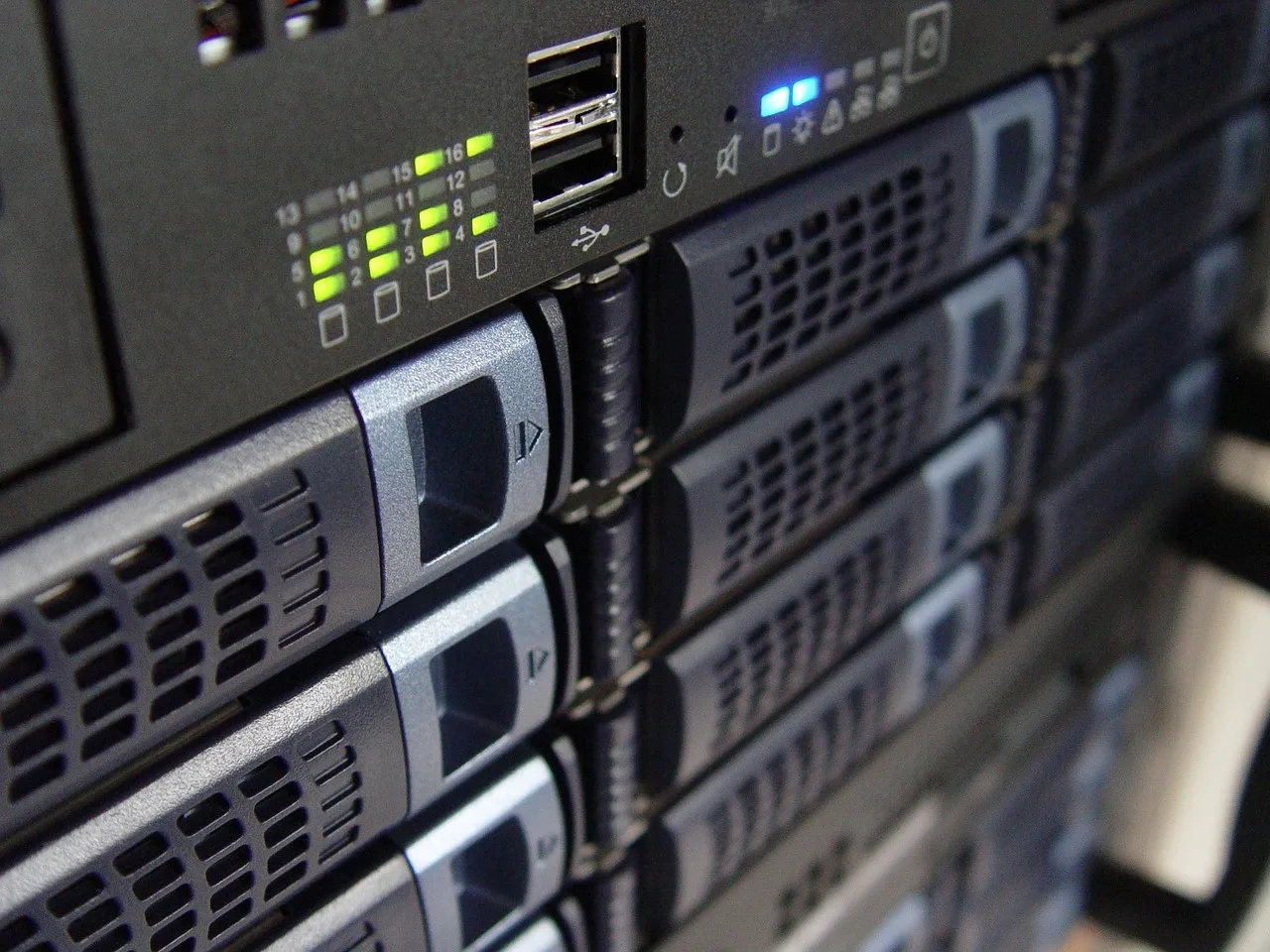
Illustration: How Cloud and Dedicated Hosting Will Change With AI WorkloadsAI-Optimized Data Centers and Inference-First Architectures
The physical infrastructure of hosting—the data centers themselves—is undergoing a transformation driven by the power density, cooling requirements, and networking topology that GPU-accelerated AI workloads demand. A traditional CPU server rack might consume 5–10 kW of power, manageable with conventional hot-aisle/cold-aisle air cooling that has been the data center standard since the 1990s. A rack populated with eight NVIDIA DGX H100 systems—each containing eight H100 GPUs—can draw over 40 kW, and the forthcoming NVIDIA Rubin platform is expected to push per-rack power consumption toward 60–80 kW. At these densities, air cooling physically cannot remove heat fast enough to maintain safe operating temperatures, forcing a transition to direct-to-chip liquid cooling or immersion cooling technologies that most hosting data centers were not designed to accommodate. The retrofit cost is substantial—retrofitting a single megawatt of data center capacity from air cooling to liquid cooling can cost $5–10 million—and the lead time on the specialized plumbing, heat exchangers, and coolant distribution units required is significant enough that providers who did not begin this transition in 2023–2024 will face capacity constraints as GPU-accelerated hosting demand accelerates through the late 2020s.
Beyond the mechanical infrastructure, AI workloads are driving a fundamental rethinking of data center networking topology. Traditional hosting data centers are designed around north-south traffic patterns: requests come in from the internet, hit a load balancer, fan out to web servers, and the responses flow back out. East-west traffic—server-to-server communication within the data center—was secondary, provisioned with enough bandwidth to handle database replication, cache population, and occasional batch data transfers but not optimized as a primary design constraint. Distributed AI training inverts this pattern entirely. When a training job runs across hundreds or thousands of GPUs, those GPUs must exchange gradient updates at every training step, generating east-west traffic volumes that dwarf north-south internet traffic by orders of magnitude. A single all-reduce operation in a 1,000-GPU training cluster can require every GPU to send and receive tens of megabytes of data within microseconds to avoid becoming the bottleneck that stalls the entire training run. This demands non-blocking, low-latency fabric architectures—InfiniBand or RDMA over Converged Ethernet—with per-GPU bandwidth of 400 Gbps or more, a networking requirement that simply did not exist in pre-AI hosting environments. The data centers being built for AI hosting are networking-first facilities where the compute silicon selection is secondary to the question of how efficiently that silicon can communicate with its neighbors.
The concept of inference-first architecture represents perhaps the most consequential shift in hosting infrastructure design philosophy. In the pre-AI era, hosting infrastructure was optimized for request-serving workloads where a single server could handle thousands of concurrent connections, each representing a relatively lightweight computational task—serving a web page, processing an API call, running a database query. AI inference, particularly for large language models and generative image models, inverts this profile: a single inference request may consume tens of gigabytes of GPU memory for the model weights and require billions of floating-point operations spanning seconds of compute time, but the number of concurrent requests a single GPU can handle is limited to single digits or low tens. This creates a capacity planning regime where GPU memory bandwidth rather than CPU core count or network throughput is the binding constraint, and where the economics of inference serving are dominated by how efficiently you can pack multiple inference requests onto a single GPU without exceeding its memory budget. Model quantization, KV-cache optimization, continuous batching, and speculative decoding are not academic optimization techniques; they are the operational disciplines that determine whether an inference hosting deployment is profitable or loss-making. Hosting providers entering the AI inference market must build operational expertise in these techniques because they are as fundamental to AI hosting economics as Apache configuration tuning was to the shared hosting era. The green cloud hosting analysis provides additional perspective on how the energy demands of AI-optimized infrastructure intersect with sustainability commitments that providers have made.
Dedicated Server Evolution for AI Workloads
The dedicated server market, historically defined by CPU-based configurations serving traditional web and database workloads, is undergoing the most dramatic product evolution in its thirty-year history. The demand signal is unambiguous: organizations that have moved AI workloads from experimentation into production are discovering that the cloud GPU premium—which can reach 300–500% over the hardware depreciation cost for sustained, predictable GPU utilization—makes dedicated GPU servers economically compelling once utilization exceeds a threshold of roughly 50–60% on a 24/7 basis. This economic logic has created a new category of dedicated hosting product that did not meaningfully exist five years ago: the dedicated GPU server, a bare-metal machine configured around GPU accelerators rather than CPU cores, with the cooling, power, and networking infrastructure required to operate those accelerators at full throughput continuously.
The dedicated GPU server configurations entering the market in 2025–2026 span a wide range of capability tiers. Entry-level configurations pair a single NVIDIA L40S or A100 GPU with a single-socket server platform, 64–128 GB of system RAM, and fast NVMe storage, targeting inference serving and small-scale fine-tuning workloads at price points typically between $800 and $1,500 per month. Mid-range configurations deploy four to eight NVIDIA A100 or H100 GPUs in a single chassis connected via NVLink and NVSwitch, with 512 GB to 1 TB of system RAM, multiple terabytes of NVMe storage, and high-speed networking, targeting distributed training and high-throughput inference at $4,000–$12,000 per month. At the high end, dedicated GPU clusters—multiple interconnected GPU servers with InfiniBand fabric, shared high-performance storage, and integrated cluster management—serve the frontier training and large-scale inference market at price points that can exceed $50,000 per month but that still represent substantial savings over equivalent cloud GPU capacity for sustained workloads. The critical operational challenge for dedicated GPU hosting is not the hardware specification—the components are well-understood—but the management layer that makes GPU infrastructure accessible to organizations that lack the specialized system administration expertise required to manage GPU drivers, CUDA versions, container runtimes, and distributed training frameworks at scale. This is where the managed dedicated server model, in which the hosting provider handles operating system provisioning, GPU driver management, security patching, and hardware monitoring, becomes the bridge that makes dedicated GPU hosting viable for organizations whose core competency is model development rather than infrastructure operations. HostingCaptain's dedicated server guide explains how the managed dedicated model has evolved and what organizations should evaluate when selecting a provider for AI-era dedicated infrastructure.
The GPU procurement dynamics that shape dedicated server availability deserve explicit attention because they differ fundamentally from CPU procurement. CPU server processors are commodity products with multiple vendors (Intel, AMD, Ampere), predictable roadmaps, short lead times, and pricing that declines steadily over a generation's lifecycle. Data center GPUs, by contrast, are effectively a single-vendor market (NVIDIA controls over 80% of the data center GPU segment), with constrained supply, long lead times that can stretch to 6–12 months for large orders, and pricing that has remained elevated due to demand outstripping even NVIDIA's aggressive manufacturing expansion. Dedicated server providers that can source GPU inventory reliably—through direct NVIDIA partnerships, large-scale purchase commitments, or relationships with distributors who receive priority allocation—have a structural competitive advantage that is as important as their data center footprint or network architecture. The providers that are winning in the dedicated GPU hosting market are those that invested in GPU inventory and capacity planning 12–24 months before the demand materialized, and the lead-time dynamics mean that providers entering the market in response to current demand signals will not have meaningful capacity until 2027 or later. This supply-side constraint is one reason HostingCaptain expects the dedicated GPU hosting market to remain supply-constrained through at least 2027, with pricing reflecting scarcity rather than purely the underlying hardware cost.
GPU Becoming Standard: What This Means for Traditional Hosting Customers
For the millions of website owners, small business operators, and application developers whose hosting needs are entirely satisfied by traditional CPU-based infrastructure—WordPress sites, e-commerce platforms, business SaaS tools, and line-of-business applications—the GPU revolution in hosting raises an obvious and important question: does any of this affect me, or is AI hosting infrastructure a parallel universe that operates alongside my shared, VPS, or dedicated CPU server without intersecting it? The answer is that the effects will be indirect but ultimately material for every hosting customer, even those who never provision a GPU instance or run a machine learning model, because the infrastructure investment and operational transformation that AI workloads are driving through the hosting industry will reshape the cost structure, hardware availability, and product offerings of every hosting tier.
The most immediate effect is on hardware refresh cycles and pricing for traditional CPU-based hosting. When hosting providers invest billions of dollars in GPU infrastructure, data center liquid cooling retrofits, and high-speed networking fabrics for AI clusters, they must recover those investments through their overall product portfolio. This means that the era of continuously declining per-unit compute costs for traditional hosting—a secular trend that had benefited hosting customers for two decades as Moore's Law and storage density improvements were passed through as lower prices or more generous resource allocations—may pause or slow. The capital that might have gone into refreshing shared hosting server fleets with the latest generation of cost-efficient CPUs is instead being allocated to GPU procurement. The data center capacity that might have housed additional CPU server racks is being reserved for GPU clusters with their higher power density requirements. The engineering talent that might have been optimizing the multi-tenant hosting platform is being redirected to building GPU orchestration layers and inference serving infrastructure. The cost of this strategic pivot will not be borne entirely by AI customers; it will be amortized across the provider's entire product portfolio, meaning traditional hosting customers will experience a slower rate of price-performance improvement than the historical trend would have predicted. This economic dynamic is one reason that cloud cost optimization has become an increasingly critical discipline for hosting customers across all workload types.
The second-order effect is on the hosting products and plans available to traditional customers. As GPU acceleration hardware becomes standard in new server deployments—driven by the need to run the AI operations layers that handle predictive scaling, anomaly-based security monitoring, and natural language management interfaces—the baseline specification of even entry-level hosting plans will shift. By 2028–2030, HostingCaptain expects that any professionally operated hosting server will include some form of AI acceleration hardware, whether an integrated NPU block on the CPU die or a dedicated inference accelerator. This hardware will primarily be used by the hosting provider's own operations layer, not directly exposed to customers, but its presence will enable capabilities—continuous security monitoring that actually catches zero-day exploitation attempts in real time, performance tuning that continuously adapts to workload patterns, management interfaces that understand natural language instructions—that become baseline expectations rather than premium differentiators. Traditional hosting customers will receive a more capable, more secure, and more self-optimizing infrastructure without necessarily understanding the GPU-powered AI systems operating behind the scenes. This is isomorphic to the transition from HDD to SSD storage: customers experienced dramatically faster page load times without needing to understand the storage technology, and within a few years, SSD became the default such that its absence was a competitive liability. GPU-accelerated AI operations will follow the same adoption curve, initially a premium feature and eventually a baseline requirement for any hosting provider claiming to offer managed or business-grade service.
The third effect, and the one with the longest time horizon, is that the definition of "traditional hosting" will itself expand to include AI capabilities that are currently considered specialized. Just as SSL certificates, CDN integration, and automated backups transitioned from premium add-ons to baseline inclusions over the past fifteen years, AI-powered features—content personalization, intelligent search, automated image optimization, chatbot integration, voice-search compatibility—will gradually become standard components of hosting plans rather than features that require separate AI infrastructure. When a hosting provider can run lightweight inference on an integrated NPU that is already present in every server, the marginal cost of offering AI-powered features to customers drops toward zero, and competitive pressure will ensure those capabilities are bundled into plans rather than sold as add-ons. By 2030, HostingCaptain expects that a hosting plan described as "suitable for business websites" will include AI-powered features by default, in the same way that such a plan today includes SSL by default—not because every business website needs AI features, but because the infrastructure makes them available at trivial marginal cost and their absence signals a provider that has not kept pace with infrastructure modernization. For more context on how hosting infrastructure is evolving to support AI-native features, our AI hosting explainer and the multi-cloud strategy analysis provide additional strategic framing.
Predictions for 2026–2030: The Five-Year Trajectory
Forecasting infrastructure evolution over a five-year window is inherently speculative, but the current trajectory of AI workload growth, hardware roadmaps, and data center investment patterns makes several developments highly probable between 2026 and 2030. The first prediction is that the share of hosting industry capital expenditure allocated to GPU and AI accelerator hardware will exceed the share allocated to traditional CPU server hardware by 2028. This is not a prediction that GPU servers will outnumber CPU servers—the installed base of CPU servers serving traditional web workloads is enormous and will persist for many years—but that the marginal investment dollar, the new capacity being brought online, will be majority-GPU by the end of this decade. The implication for hosting customers is that providers' product development roadmaps, pricing strategies, and operational investments will increasingly be organized around GPU infrastructure, and the quality of traditional hosting products will depend on how effectively providers manage the transition without starving their CPU-based offerings of investment and attention.
The second prediction is that the dedicated GPU server market will mature from a fragmented, inelastic niche into a structured, competitive market with standardized product tiers, transparent pricing, and managed service levels that make GPU hosting accessible to organizations without specialized infrastructure teams. The hyperscale clouds will continue to dominate the high-end training market where the scale requirements—thousands of interconnected GPUs with the networking and storage infrastructure to match—exceed what most dedicated hosting providers can economically offer. However, the inference serving market, the fine-tuning market, and the small-to-medium training market—workloads that require one to eight GPUs rather than hundreds—will see dedicated GPU hosting emerge as a price-competitive alternative to cloud GPU instances, particularly for workloads with predictable, sustained utilization patterns. This market structure mirrors the broader dedicated-vs-cloud dynamic that has existed in CPU hosting for two decades but with GPU supply constraints and the specialized operational requirements of AI infrastructure adding friction to the transition. HostingCaptain expects that by 2029, a business evaluating hosting options for a production inference endpoint or a recurring fine-tuning pipeline will find a well-structured dedicated GPU server market with multiple credible providers, managed service levels, and pricing that makes the dedicated option economically compelling at sustained utilization levels above 50%.
The third prediction is that the AI operations layer—the set of machine learning systems that hosting providers use to optimize, secure, and manage their infrastructure—will become a primary differentiator between hosting tiers and between competing providers. By 2030, AI-driven server optimization that continuously tunes kernel parameters, resource allocations, and cache policies based on real-time telemetry will be the default operating mode for any managed hosting plan. AI-driven security operations that detect and neutralize threats based on behavioral anomaly analysis rather than signature databases will be a baseline requirement for cyber insurance coverage and compliance certification. Natural language server management interfaces will be available on most hosting platforms, though with varying degrees of capability, safety guardrails, and user experience quality. The hosting providers that will lead the market by 2030 are those that invested earliest and most deeply in the telemetry pipelines, data infrastructure, and machine learning engineering talent required to build effective AI operations layers—not those that purchased the most GPUs or built the largest inference clusters. The competitive moat in hosting is shifting from hardware procurement scale to data and AI operations capability, and this shift will accelerate through the late 2020s as the hardware itself becomes increasingly commoditized.
The fourth prediction, and the one that affects the broadest population of hosting customers, is that AI infrastructure requirements will cascade from hyperscale cloud providers into the mid-market and small-business hosting tiers within the 2026–2030 window. In 2026, AI hosting infrastructure is predominantly a hyperscale and specialized-provider phenomenon; small and mid-size hosting providers serving local businesses, content websites, and basic e-commerce lack the capital, expertise, and customer demand to justify GPU infrastructure investment. By 2028, as AI acceleration hardware becomes integrated into standard server CPUs (Intel's Xeon with integrated NPU, AMD's EPYC with AI acceleration), the incremental cost of AI-capable infrastructure will drop to the point where even budget hosting providers can field AI-enhanced platforms. By 2030, the absence of AI capabilities in a hosting plan—whether those capabilities are consumed directly by the customer for their own AI workloads or indirectly through the provider's AI operations layer—will be a competitive disadvantage analogous to a hosting provider in 2020 that did not support HTTPS or offer automated backups. The diffusion of AI infrastructure from the hyperscale frontier to the small-business mainstream will be one of the defining dynamics of the hosting industry in the second half of this decade, and it will reshape expectations about what a hosting plan at any price point should deliver. The green cloud hosting analysis examines the energy and sustainability dimensions of this infrastructure transition, which will become increasingly important as AI hardware's power density concentrates in an industry already under scrutiny for its environmental footprint.
At HostingCaptain, we approach these predictions with the caution that comes from watching hosting industry forecasts age poorly when they underestimate the inertia of installed infrastructure or the gap between what is technically demonstrated and what is commercially available at scale. The timeline we have outlined is an aggressive but plausible trajectory given the investment volumes, hardware roadmaps, and competitive dynamics currently visible in the market. The single largest risk to this timeline is not a deficiency in AI technology but a shortfall in the energy infrastructure required to power AI-accelerated data centers at the scale that current investment plans assume—a risk we examine in our broader analysis of AI and web hosting in 2030. For hosting customers making procurement decisions today, the actionable implication is that every infrastructure commitment with a horizon beyond 2027 should assume that AI workloads will be a material factor in the hosting landscape, even if your own organization has no immediate plans to deploy them. The providers best positioned for the AI era are those whose hardware refresh cycles, data center infrastructure, and product roadmaps reflect this assumption, and evaluating providers on their AI readiness is becoming as important as evaluating them on traditional criteria like uptime history and support quality.
Frequently Asked Questions
Do I need GPU hosting if I am just running a WordPress site or e-commerce store?
No. Standard web workloads—WordPress, WooCommerce, Shopify storefronts, business brochure sites, and most line-of-business applications—do not contain GPU-accelerated code paths and will see zero performance benefit from GPU instances. These workloads are efficiently served by traditional CPU-based shared, VPS, or dedicated hosting. The GPU infrastructure transformation will affect you indirectly through improvements in your hosting provider's AI operations layer (better security monitoring, more responsive support systems, more efficient resource allocation) but you should not pay a premium for GPU hardware you do not need. If a hosting provider tries to sell you GPU hosting for a standard website, that is a strong signal they are marketing hype rather than matching infrastructure to workload requirements.
When does it make financial sense to use dedicated GPU servers instead of cloud GPU instances?
The crossover typically occurs when your GPU utilization exceeds 50–60% on a 24/7 basis, at which point the dedicated GPU server's fixed monthly cost becomes cheaper than the equivalent cloud GPU instance hours plus associated data egress, storage, and networking charges. For sustained inference serving—an API endpoint that processes requests continuously—or for training runs that span weeks or months, dedicated GPU servers can reduce costs by 40–70% versus on-demand cloud pricing. The trade-off is that you lose the cloud's elasticity: you cannot release dedicated GPU capacity during idle periods and stop paying for it, and you cannot instantly provision additional GPUs during demand spikes. The optimal strategy for many organizations combines a baseline of dedicated GPU capacity for predictable workloads with cloud GPU burst capacity for variable demand, creating a blended cost structure that balances price-performance with flexibility.
How are cloud providers like AWS, Google, and Azure differentiating their AI hosting?
The hyperscale providers are differentiating on three dimensions. First, custom silicon: AWS Trainium, Google TPU, and Azure Maia are proprietary AI accelerators designed for each provider's specific infrastructure and workload mix, offering price-performance advantages over merchant NVIDIA GPUs for optimized workloads but introducing ecosystem lock-in. Second, platform integration: each provider's AI infrastructure is deeply integrated with their broader cloud services—data storage, model registries, MLOps pipelines, monitoring, and identity management—creating switching costs that extend beyond hardware pricing. Third, scale and availability: the hyperscalers can provision clusters of thousands of GPUs in a single availability zone, a scale that no dedicated hosting provider can match, making them the default choice for frontier model training and the largest inference deployments. For most hosting customers, the choice between cloud AI providers will be driven more by ecosystem fit and workload characteristics than by per-GPU-hour pricing alone.
Will traditional CPU-based hosting become obsolete?
No. The enormous installed base of websites, applications, and services that are efficiently served by CPU-based infrastructure—which constitutes well over 90% of all hosted workloads—will continue to run on CPU servers for the foreseeable future. What will change is that CPU servers will increasingly incorporate AI acceleration hardware (integrated NPUs or inference accelerators) that the hosting provider uses for operational purposes, and hosting plans across all tiers will include AI-powered features enabled by that hardware. Traditional CPU hosting will not disappear; it will be augmented by AI capabilities that improve security, performance, and manageability without requiring customers to understand or provision GPU resources. The hosting industry will remain a heterogeneous mix of CPU and GPU infrastructure for at least the next decade, with workloads placed on the appropriate hardware based on their computational requirements rather than migrating en masse to GPU.
What should I look for in a hosting provider that is prepared for the AI era?
Look for concrete, verifiable indicators rather than marketing claims: whether the provider has published technical documentation about their AI operations architecture, whether their hardware refresh roadmap includes AI-accelerated server configurations, whether their data center infrastructure supports the power density and cooling requirements of GPU hardware, and whether they employ dedicated machine learning engineering talent rather than simply reselling GPU instances. Providers that are genuinely prepared for the AI era can describe their AI operations layer in technical detail—what telemetry they collect, how their models are trained, what specific operational outcomes (mean time to detection, configuration optimization improvements, support deflection rates) they have measured. Providers that use "AI-powered" as a marketing label without substantive technical details are unlikely to have made the infrastructure investments required to deliver AI-era hosting capabilities at scale. For additional evaluation criteria specific to AI hosting providers, our best AI hosting providers analysis provides a structured assessment framework.
How will the energy consumption of AI hosting affect the broader hosting market?
The power density of GPU-accelerated infrastructure—with individual GPU servers drawing 2–10 kW and densely packed GPU racks exceeding 40 kW—is concentrating energy demand in ways that will affect hosting costs, data center siting, and regulatory compliance across the industry. Hosting providers with access to affordable, reliable power (particularly renewable sources that satisfy corporate sustainability commitments) will have a structural cost advantage, and data center construction will increasingly be sited based on power availability rather than network proximity. The energy demands of AI infrastructure may also accelerate regulatory scrutiny of data center power consumption, potentially leading to efficiency standards or carbon pricing that affects hosting costs across all tiers. Customers evaluating hosting providers with a multi-year horizon should assess the provider's energy strategy—their power purchase agreements, their cooling technology roadmap, their renewable energy commitments—because energy cost and availability will be a differentiating factor between providers as AI infrastructure scales. Our analysis of cloud hosting sustainability claims examines these environmental dimensions in detail.
Arjun Mehta is a cloud infrastructure consultant specializing in bare-metal architectures, network routing, and high-traffic database clustering.
Frequently Asked Questions
This guide covers the practical decision points — pricing, performance, and when it makes sense for your situation — based on current 2026 data.
Pricing varies by provider and plan tier; see the cost breakdown section above for current ranges and what's actually included at each price point.
Look closely at uptime guarantees, renewal pricing (not just the first-year discount), and how responsive support actually is — all covered in detail in this article.
Hosting Captain has been exceptional for my e-commerce store in Pune. The NVMe SSD speed is
noticeable, and their support team responds within minutes. Highly recommended for any
Indian business!
Ryan John, Pune
Great Value for Money
Switched from a US-based host to Hosting Captain and my website loads 3x faster for Indian
visitors. The free SSL and cPanel are great, and the pricing is unbeatable. Very satisfied
customer!
Priya Mehta, Mumbai
Reliable VPS Hosting
I've been using their VPS plan for 2 years now. 99.9% uptime is not just a claim — it's
reality. My client projects run without interruption. The KVM virtualization gives me full
control I need.
Amit Kumar, Bangalore
Excellent 24/7 Support
The support team helped me migrate my entire WordPress site at 2 AM without any downtime.
This level of service is rare in Indian hosting. Worth every rupee!
Sunita Patel, Ahmedabad
Perfect for Startups
As a startup, budget matters. Hosting Captain's Business plan covers everything we need —
multiple websites, free SSL, daily backups — at a fraction of what international hosts
charge.
Vikram Singh, Delhi
Professional Dedicated Server
Our high-traffic news portal needed a dedicated server. Hosting Captain's DS Business plan
handles 100K+ daily visitors effortlessly. Their team provisioned everything within 4 hours!
Meena Krishnaswamy, Chennai
Trusted Technologies & Partners
Start Your Website with Hosting Captain
From personal blogs to enterprise solutions, we've got you covered!