What Edge AI Hosting Actually Means: Inference at the Network's Edge
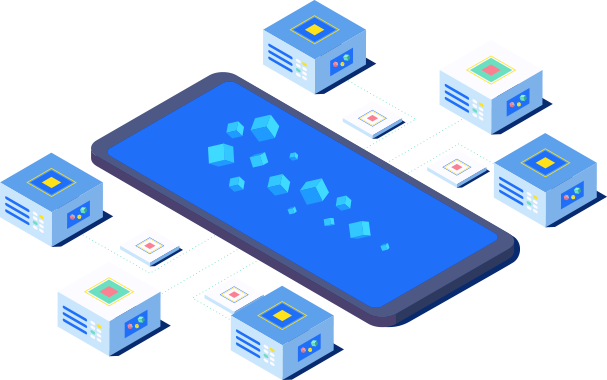
Edge AI hosting represents a paradigm shift in artificial intelligence infrastructure — moving model inference from centralized cloud data centers to geographically distributed edge locations that sit physically closer to the end users generating requests. In a traditional AI hosting architecture, a user in Mumbai opens an application that sends data to a GPU server in Virginia, where a neural network processes it and returns a result across 12,000 kilometers of fiber optic cable, incurring the speed-of-light propagation delay — roughly 80 ms to 120 ms round-trip for that distance, before the model's actual computation time is added. In an edge AI hosting architecture, that same inference request is routed to a GPU-equipped edge node in Mumbai or Singapore, reducing network latency to 2 ms to 10 ms and enabling real-time AI features — voice assistants that respond without awkward pauses, augmented reality overlays that track head movements without perceptible lag, autonomous systems that make safety-critical decisions within milliseconds — that centralized architectures cannot deliver regardless of how powerful the data-center GPUs are. Edge AI hosting is not simply cloud AI hosting with smaller servers; it is a fundamentally different infrastructure topology that redistributes compute, memory, and model storage across dozens or hundreds of points of presence, creating a distributed inference fabric that prioritizes latency over throughput and that requires rethinking how models are deployed, updated, monitored, and secured.
The driver behind edge AI hosting's rapid growth from niche research concept to commercial infrastructure category is the proliferation of latency-sensitive AI applications that cannot tolerate the 100 ms to 300 ms round-trip times inherent in centralized cloud inference. Autonomous vehicles processing camera and LiDAR data to make steering and braking decisions need inference latencies under 10 ms — a requirement that physically mandates compute within the vehicle or at roadside edge nodes, because the speed of light alone imposes 6.7 ms of round-trip delay per 1,000 kilometers of fiber distance. Industrial quality-control systems using computer vision to inspect products on assembly lines moving at several meters per second need inference results within single-digit milliseconds to reject defective items before they proceed further down the line. Multiplayer gaming servers running AI-powered anti-cheat detection, real-time translation of player voice chat, or dynamic NPC behavior generation need inference that completes within a single frame time — 16.67 ms at 60 fps — making centralized cloud inference unworkable. The edge AI hosting market in 2026 includes platforms like Cloudflare Workers AI running on GPUs distributed across Cloudflare's 330+ data centers, Fastly Compute with inference at the edge, AWS Local Zones and Wavelength with GPU-equipped edge infrastructure, and specialized edge AI providers deploying NVIDIA Jetson and L40S nodes in colocation facilities within 10 ms of major population centers. The W3C's web standards work on Web Neural Network API (WebNN) and WebGPU is creating the browser-side infrastructure that will eventually allow edge AI inference to execute directly on user devices through web applications, pushing the edge even closer to the user than physically deployed edge nodes.
The Edge AI Hosting Stack: Hardware, Middleware, and Orchestration
Edge-Optimized Hardware: GPUs and Accelerators Built for Distributed Deployments
The hardware that powers edge AI hosting differs from data-center GPU hardware in dimensions that reflect the constraints of edge deployment environments: power consumption, physical size, thermal tolerance, and the inability to assume climate-controlled rack environments with redundant power and cooling. NVIDIA's Jetson platform — particularly the Jetson Orin series — has become the dominant edge AI hardware platform, delivering 100 to 275 TOPS of INT8 inference performance within a 15W to 60W power envelope that can be passively cooled or operated in environments where ambient temperatures exceed standard data-center ranges. The Jetson Orin AGX, as of 2026, packs 2048 CUDA cores, 64 Tensor cores, and 2 Deep Learning Accelerator engines into a module the size of a credit card, running the full NVIDIA AI software stack — CUDA, cuDNN, TensorRT — in an embedded form factor that can be deployed in roadside cabinets, factory floors, retail backrooms, and cell tower base stations. For edge locations that can support higher power budgets, the NVIDIA L40S and L4 data-center GPUs can be deployed in short-depth 1U or 2U chassis designed for colocation edge environments, delivering data-center-class inference throughput at edge latency.
Custom AI accelerators purpose-built for edge deployment are an active area of hardware innovation in 2026, driven by the realization that general-purpose GPUs are over-provisioned for many edge inference workloads that run small, quantized models on narrow input types. Google's Edge TPU, an ASIC designed for INT8 inference at under 2W of power consumption, can execute a MobileNet v2 image classification model in under 4 ms — sufficient for real-time video analytics on security camera feeds — while fitting within the power budget of a USB port or a PoE-powered device. Hailo's Hailo-8 and Hailo-15 AI processors target the same edge inference niche with 26 TOPS at 2.5W, and they have been integrated into network appliances, smart cameras, and industrial controllers that need AI inference without the cost, power, and thermal footprint of a full GPU. Qualcomm's Snapdragon platforms with Hexagon AI engines extend edge AI hosting into mobile and IoT form factors, enabling inference on devices that are battery-powered, intermittently connected, and physically mobile. The diversity of edge AI hardware creates both opportunity and complexity: edge AI hosting providers must maintain heterogeneous hardware fleets — Jetsons, L4s, Edge TPUs, custom accelerators — and orchestrate model deployment across them, ensuring that the same model can execute correctly on different hardware architectures with different precision characteristics and different inference throughput profiles. Our guide to AI hosting fundamentals explains the broader AI infrastructure landscape, including how edge hardware relates to the GPU servers and TPU pods that dominate centralized AI hosting.
Model Deployment at Scale: Containerization, Versioning, and Canary Rollouts
Deploying AI models to a cluster of a dozen data-center GPU servers is an orchestration challenge that tools like Kubernetes with GPU plugin support have largely solved. Deploying AI models to hundreds or thousands of geographically distributed edge nodes — each with different hardware capabilities, different network conditions, different available storage for model weights, and different peak load patterns — introduces orchestration complexity that the first generation of MLOps tooling was never designed to handle. Edge AI hosting platforms solve this through a combination of: containerized model packaging where models and their inference runtimes (TensorRT, ONNX Runtime, OpenVINO) are bundled into OCI containers that can be pulled and executed on any edge node with a compatible container runtime; tiered container registries that push model images to regional registries close to edge clusters, reducing the latency and bandwidth cost of pulling multi-gigabyte model images across intercontinental links; and canary deployment strategies that roll out new model versions to a subset of edge nodes first, monitor inference quality and latency metrics, and automatically roll back the deployment if performance degrades — all without the centralized coordination bottleneck that would make a centrally orchestrated edge deployment unworkable at scale.
Model storage at the edge introduces a capacity management challenge that centralized AI hosting does not face. A large language model like Llama 3 70B requires approximately 140 GB of storage for its FP16 weights; deploying that model to 500 edge nodes means provisioning 70 TB of distributed NVMe storage, and updating that model every month means transferring 140 GB to each edge node across potentially bandwidth-constrained links. Edge AI hosting solutions address this with model quantization — reducing FP16 weights to INT8 or INT4 precision, which can shrink model size by 4x with minimal accuracy loss for many inference workloads — and with delta updates that transfer only the changed weights between model versions rather than the full model. Model caching strategies where frequently accessed models remain "warm" in edge node memory while less frequently accessed models are evicted to local NVMe storage and loaded on demand further optimize the use of limited edge storage and memory. HostingCaptain's edge hosting consultation services help teams evaluate whether their specific AI workloads justify the architectural complexity of edge deployment, or whether a well-located centralized GPU hosting solution with CDN integration can deliver latency and throughput that meet the application's requirements without the overhead of distributed edge orchestration.
Illustration: Edge AI Hosting: Running AI Closer to Your UsersLatency, Bandwidth, and the Economics of Edge vs. Cloud Inference
The decision to deploy AI inference at the edge versus in a centralized cloud is fundamentally an economic trade-off between latency, bandwidth costs, and infrastructure utilization, and understanding the break-even points for different workload profiles is essential to avoiding infrastructure overinvestment. Consider a video analytics application that processes 30 frames per second from 1,000 deployed cameras, each generating a 2 Mbps video stream. Sending all 1,000 streams to a centralized cloud GPU cluster for inference consumes 2 Gbps of sustained uplink bandwidth at an annual bandwidth cost of $120,000 to $360,000 depending on cloud provider egress pricing, plus the cost of the GPU instances performing the inference. Moving inference to edge nodes co-located with the cameras — processing each stream on a Jetson Orin at the camera site and transmitting only metadata (object detections, event alerts, aggregated analytics) — reduces uplink bandwidth to a few Mbps of text data, eliminates the cloud GPU instance cost, and delivers inference latency under 10 ms that centralized processing cannot achieve. The edge deployment requires capital expenditure on the edge hardware, ongoing costs for edge node management, and the operational complexity of maintaining a distributed fleet, but at a certain scale — roughly 200 to 500 camera streams in this example — the bandwidth savings alone exceed the additional hardware and operational costs of the edge deployment.
The countervailing economic force is infrastructure utilization: a centralized cloud GPU cluster can achieve 70% to 90% utilization by aggregating inference requests from thousands of geographically distributed users whose peak usage times are staggered across time zones. Edge GPU nodes serving a single geographic region experience peak loading during the region's business hours and near-zero utilization during the region's nighttime — a utilization pattern that makes the effective cost per inference significantly higher than the hardware's rated throughput would suggest, because the hardware sits idle for half of each day. Edge AI hosting providers address this through workload orchestration that assigns multiple tenants or multiple applications to the same edge hardware, or through edge-to-cloud tiered architectures where edge nodes handle latency-sensitive requests during peak hours and overflow to centralized cloud GPU clusters during off-peak periods when latency tolerance is higher. The operational maturity of edge AI orchestration platforms in 2026 — including Cloudflare Workers AI, which deploys models across GPUs in Cloudflare's global network and routes inference requests to the nearest available GPU — has made edge AI hosting accessible to teams that would have been unable to manage a self-operated distributed GPU fleet, reducing the operational barrier while preserving the latency advantages of edge deployment.
Security and Privacy: Data Sovereignty at the Edge
Edge AI hosting addresses a growing class of data sovereignty and privacy requirements that centralized cloud AI hosting cannot satisfy without architectural compromises. Regulations like GDPR in the European Union, the Personal Data Protection Act in India, and sectoral regulations covering healthcare (HIPAA), financial services (PCI DSS), and government data (FedRAMP, ITAR) impose data residency requirements that prohibit transferring certain categories of user data across national borders for processing. When a centralized AI inference API receives a user query containing personally identifiable information, processes it on a GPU in a data center in a different jurisdiction, and returns a response, every hop of that data's journey must comply with both the origin and destination jurisdiction's data protection laws — a compliance burden that edge AI hosting eliminates by processing data on edge nodes physically located within the same jurisdiction as the user. An EU citizen's medical imaging analysis AI request processed on an edge GPU node in Frankfurt never leaves the European Economic Area, satisfying GDPR's data residency requirements without the legal and contractual scaffolding that cross-border data transfers require. A financial services AI application processing transaction fraud detection on edge nodes in Mumbai keeps Indian financial data within Indian borders, complying with the Reserve Bank of India's data localization mandates that would prohibit sending that data to a US-based cloud GPU cluster.
The security model of edge AI hosting differs from cloud AI hosting in ways that create both advantages and new attack surfaces. Centralized cloud AI hosting concentrates security risk: a compromised cloud management plane, a misconfigured S3 bucket containing model weights, or a vulnerable API endpoint can expose data from thousands of customers simultaneously. Edge AI hosting distributes the attack surface across hundreds of nodes, reducing the blast radius of any single compromise but increasing the number of potential entry points that must be secured, monitored, and patched. Edge nodes deployed in physically accessible locations — retail stores, factory floors, roadside cabinets — face physical security threats (tampering, theft, hardware keylogging) that data-center GPU servers protected by biometric mantraps and 24/7 security personnel do not. Edge AI hosting platforms address these threats through hardware root-of-trust modules that verify firmware and software integrity at boot, full-disk encryption that renders data inaccessible if physical storage is removed, secure enclaves (Trusted Execution Environments like Intel SGX or AMD SEV) that encrypt model weights and inference data within the processor's protected memory region, and remote attestation protocols that allow a central controller to cryptographically verify that edge nodes are running unmodified software before distributing model weights to them. The security architecture of edge AI hosting is an active area of research and standardization, and the security model you adopt must reflect the sensitivity of your inference data, the physical security of your edge deployment environments, and the regulatory framework governing your application domain.
Use Cases: Where Edge AI Hosting Delivers Transformative Value
Real-time video analytics represents the largest and most mature edge AI hosting use case, with deployments spanning retail customer behavior analysis, manufacturing quality inspection, traffic management and license plate recognition, security surveillance with anomaly detection, and agricultural crop monitoring from drone and fixed-camera feeds. In a retail deployment, edge AI nodes process in-store camera feeds locally, counting foot traffic, measuring dwell time at product displays, detecting queue formation at checkout, and triggering staff alerts — all without transmitting video of identifiable shoppers across the internet to a cloud processing center, satisfying both privacy regulations and bandwidth constraints. The same edge nodes can run multiple models simultaneously — one for person detection and counting, one for product interaction tracking, one for safety incident detection — on the same video streams, multiplexing the camera feeds across inference pipelines that share the GPU's compute resources through NVIDIA's Triton Inference Server or similar multi-model serving frameworks. For e-commerce applications that use AI-powered recommendation engines to personalize product suggestions in real time as shoppers browse, our guide to hosting AI-powered e-commerce recommendation engines explains how inference latency directly impacts conversion rates — and why edge deployment can be the difference between a recommendation that arrives before the shopper scrolls past and one that arrives after they have already made a purchase decision.
Autonomous systems — self-driving vehicles, delivery drones, warehouse robots, agricultural machinery — represent the latency-critical frontier where edge AI hosting is not merely beneficial but physically mandatory. An autonomous vehicle at highway speeds covers 1.5 meters in the 50 ms that a round-trip to a cloud inference endpoint requires; that 1.5 meters can be the difference between stopping before an obstacle and colliding with it. Autonomous systems deploy AI inference directly on the vehicle or robot's onboard compute — typically a Jetson Orin or a custom automotive-grade AI accelerator — reducing inference latency to single-digit milliseconds and eliminating the network dependency that would make the system's safety contingent on cellular coverage quality. Edge AI hosting for autonomous systems operates in a networked edge architecture where: onboard inference handles the latency-critical perception, planning, and control loop; roadside edge nodes (mounted on traffic signals, light poles, and highway gantries) provide supplementary inference for cooperative perception, sharing object detections and trajectory predictions across vehicles at an intersection; and centralized cloud infrastructure handles model training, fleet-wide analytics, and over-the-air model updates. This three-tier architecture — device edge, network edge, cloud core — is the pattern that defines edge AI hosting as a distinct infrastructure category rather than a simple relabeling of on-premises GPU servers.
The Relationship Between Edge AI Hosting and VPS Infrastructure
Edge AI hosting and virtual private server hosting occupy different positions in the infrastructure landscape but increasingly intersect as GPU-equipped VPS offerings become available at edge locations. Traditional VPS hosting provisions virtualized CPU, RAM, and storage resources on shared physical servers, providing a cost-effective platform for web applications, databases, development environments, and automation scripts. VPS infrastructure without GPU acceleration is unsuitable for AI inference workloads that require the parallel floating-point throughput unique to GPU architectures — running a transformer model on a CPU-only VPS results in inference times measured in seconds rather than milliseconds, making it appropriate only for batch processing workloads where latency is irrelevant. However, the emergence of GPU-equipped VPS offerings — where a virtual private server includes a fraction of a physical GPU's compute capacity through NVIDIA's vGPU or Multi-Instance GPU (MIG) partitioning — is creating a new middle tier between shared CPU hosting and dedicated GPU servers. A MIG-partitioned A100 GPU can be carved into seven isolated GPU instances, each with approximately 10 GB of GPU memory and proportional compute throughput, enabling VPS-like pricing for GPU inference capacity that would previously have required leasing an entire physical GPU server. Our complete guide to VPS hosting explains the VPS architecture fundamentals that make GPU provisioning within a virtualized environment technically feasible and economically viable for teams exploring edge AI hosting without committing to dedicated GPU hardware.
The Future of Edge AI Hosting: Federated Learning and Autonomous Edge
The five-year trajectory of edge AI hosting points toward increasingly autonomous edge infrastructure that not only performs inference but participates in model improvement through federated learning — a technique where edge nodes train model updates on locally collected data and transmit only the model weight updates (not the training data itself) to a central aggregator that merges updates from thousands of nodes into an improved global model. Federated learning at the edge addresses the privacy and bandwidth constraints that make centralized training on edge-collected data impractical: a keyboard's next-word prediction model can improve by learning from typing patterns across millions of devices without any individual's typed text ever leaving their device. Extending this paradigm to edge AI hosting nodes — retail stores training product recognition models on their local inventory without sharing sales data, hospitals training diagnostic imaging models on local patient data without transmitting protected health information, industrial facilities training defect detection models on proprietary manufacturing processes — represents the convergence of edge AI hosting with privacy-preserving machine learning, creating infrastructure value that extends beyond inference latency into continuous model improvement at the edge.
Web standards are evolving to support this future, with the W3C's Web Neural Network API enabling browser-based AI inference on client devices and WebGPU providing the low-level GPU access that web applications need to execute compute shaders for model inference. As these standards mature and achieve cross-browser adoption, edge AI hosting will extend into the browser itself — the ultimate edge location, executing on the user's own device with effectively zero network latency. This progression does not eliminate the need for edge AI hosting infrastructure; rather, it creates a continuum from device-side inference for the most latency-sensitive operations, through edge-node inference for workloads requiring more compute than a user device can provide, to centralized cloud inference for workloads requiring model sizes or throughput that only data-center GPU clusters can deliver. HostingCaptain is actively evaluating edge GPU hosting configurations and partnerships to ensure that our customers have access to the infrastructure tiers appropriate for their AI workloads as the edge AI hosting market matures from early adoption into mainstream infrastructure availability. For a broader analysis of how AI is transforming hosting infrastructure across all tiers, our analysis of AI's impact on hosting infrastructure in 2026 examines the technology trends that are reshaping the hosting industry.
Frequently Asked Questions
What is the minimum latency improvement edge AI hosting provides over cloud AI hosting?
The latency improvement depends on geographic distance between the user and the cloud inference endpoint. For a user in Southeast Asia accessing a cloud GPU in Virginia (approximately 200 ms round-trip network latency), moving inference to an edge node in Singapore reduces network latency to 5–10 ms — a 95% reduction that transforms AI features from noticeably laggy to perceptibly instantaneous. For a user in the same city as the cloud data center, edge deployment provides minimal latency improvement — perhaps 5 ms versus 10 ms — and the additional cost and complexity of edge infrastructure is not justified by latency gains alone, though data sovereignty, bandwidth cost reduction, or offline operation requirements may still motivate edge deployment. The economic decision to deploy at the edge should be based on measured end-to-end latency of cloud inference from your actual user locations, not on assumed latency improvements.
Can edge AI hosting handle large language models like GPT-4 or Llama 3 70B?
Large language models at the 70B+ parameter scale push the limits of current edge hardware. A Llama 3 70B model in FP16 precision requires approximately 140 GB of GPU memory, exceeding the capacity of edge-oriented GPUs like the L40S (48 GB) or Jetson Orin (64 GB unified memory). Running these models at the edge requires quantization to INT4 precision (reducing memory requirements to approximately 35 GB) and potentially tensor parallelism across multiple edge GPUs. Smaller models in the 7B to 13B parameter range (Llama 3 8B, Mistral 7B, Phi-3) are well-suited to edge deployment, fitting within the memory of a single L40S or L4 GPU with room for KV cache and batch processing overhead. For applications requiring the full capability of frontier-scale models, a hybrid architecture where edge nodes handle common queries with smaller, fine-tuned models and escalate complex queries to centralized cloud GPUs running full-scale models is the practical deployment pattern in 2026.
How does HostingCaptain fit into the edge AI hosting landscape?
HostingCaptain's current hosting infrastructure spans shared, VPS, and dedicated server tiers with multiple data center locations, providing the traditional hosting foundation that many AI-powered applications rely on for their web frontends, APIs, and database layers. While edge AI hosting — GPU nodes distributed across dozens of edge locations — is a specialized infrastructure category distinct from general-purpose web hosting, HostingCaptain is actively expanding its infrastructure partnerships to offer GPU hosting capabilities that can serve as the centralized training and batch inference tier in a broader edge-plus-cloud AI architecture. For teams building AI-powered applications, HostingCaptain's VPS and dedicated server plans provide the reliable, high-performance hosting foundation for the application servers, databases, and API gateways that surround AI inference infrastructure, while our consulting resources help teams evaluate whether their latency requirements genuinely demand edge deployment or can be satisfied by well-provisioned centralized infrastructure with CDN optimization. The hosting industry's integration of AI capabilities is accelerating rapidly, and HostingCaptain's engineering team continuously evaluates the infrastructure configurations that will best serve customers building the next generation of AI-augmented web applications.
Arjun Mehta is a cloud infrastructure consultant specializing in bare-metal architectures, network routing, and high-traffic database clustering.
Frequently Asked Questions
This guide covers the practical decision points — pricing, performance, and when it makes sense for your situation — based on current 2026 data.
Pricing varies by provider and plan tier; see the cost breakdown section above for current ranges and what's actually included at each price point.
Look closely at uptime guarantees, renewal pricing (not just the first-year discount), and how responsive support actually is — all covered in detail in this article.
Hosting Captain has been exceptional for my e-commerce store in Pune. The NVMe SSD speed is
noticeable, and their support team responds within minutes. Highly recommended for any
Indian business!
Ryan John, Pune
Great Value for Money
Switched from a US-based host to Hosting Captain and my website loads 3x faster for Indian
visitors. The free SSL and cPanel are great, and the pricing is unbeatable. Very satisfied
customer!
Priya Mehta, Mumbai
Reliable VPS Hosting
I've been using their VPS plan for 2 years now. 99.9% uptime is not just a claim — it's
reality. My client projects run without interruption. The KVM virtualization gives me full
control I need.
Amit Kumar, Bangalore
Excellent 24/7 Support
The support team helped me migrate my entire WordPress site at 2 AM without any downtime.
This level of service is rare in Indian hosting. Worth every rupee!
Sunita Patel, Ahmedabad
Perfect for Startups
As a startup, budget matters. Hosting Captain's Business plan covers everything we need —
multiple websites, free SSL, daily backups — at a fraction of what international hosts
charge.
Vikram Singh, Delhi
Professional Dedicated Server
Our high-traffic news portal needed a dedicated server. Hosting Captain's DS Business plan
handles 100K+ daily visitors effortlessly. Their team provisioned everything within 4 hours!
Meena Krishnaswamy, Chennai
Trusted Technologies & Partners
Start Your Website with Hosting Captain
From personal blogs to enterprise solutions, we've got you covered!