The phrase cloud VPS gets thrown around in hosting sales copy with the same casual confidence as "enterprise-grade" and "military-grade encryption," and in far too many cases it means exactly nothing. A provider rebrands its existing single-server VPS product as "cloud VPS," changes the CSS on the pricing page, and suddenly the same KVM virtual machine running on the same physical node with the same single point of failure is being sold as a next-generation cloud product. The underlying architecture did not change; only the marketing label did. At Hosting Captain, we have spent years reverse-engineering provider infrastructure claims against their actual deployment topologies, and the gap between what a genuine cloud vps platform delivers and what a repackaged traditional VPS provides is not a matter of nuance — it is a structural difference that affects your site's resilience during hardware failures, your ability to scale without migrating to a new server, and whether you pay for idle resources or only for what you actually consume. This article explains exactly what separates the two architectures, where each performs best, and how to verify which one a provider is actually selling you before you commit to a contract.
We structured this comparison around the dimensions that determine whether your hosting bill translates into genuine infrastructure redundancy or just a nicer control panel. You will find architectural breakdowns of distributed block storage clusters, hypervisor-level live migration mechanics, API-driven provisioning pipelines, and the operational consequences of each design choice — not marketing abstractions but the actual engineering trade-offs that determine whether your VM survives a rack-level power failure or stays offline until a technician physically replaces a failed power supply. If you are still building your foundational understanding of virtual private servers, our complete VPS hosting guide for beginners covers the virtualization fundamentals — hypervisors, vCPU scheduling, and storage allocation — that this article builds upon. For readers evaluating VPS options specifically for the Indian market, our Mumbai VPS guide benchmarks providers by latency to Indian ISPs, a dimension where traditional and cloud VPS architectures produce measurably different results due to peering and regional node distribution.
What a Traditional VPS Actually Is: Single-Node Architecture
A traditional VPS is exactly what it sounds like: a virtual machine carved out of a single physical server by a hypervisor — typically KVM, occasionally Xen or VMware — that runs on that one piece of hardware and nowhere else. The physical server sits in a rack in a data center, equipped with a certain number of CPU cores, a fixed amount of RAM installed in DIMM slots, a RAID array built from locally attached NVMe or SSD drives, and one or two network uplinks connected to a top-of-rack switch. The hypervisor partitions those physical resources into multiple virtual machines, each receiving a slice of CPU time, a dedicated or burstable RAM allocation, and a portion of the local disk array. The VM's entire state — its virtual disk image, its memory pages, its CPU register state at any given moment — lives on that specific physical node. If the node's power supply fails, or its RAID controller dies, or its motherboard develops a fault, every VM on that node goes dark simultaneously, and recovery depends entirely on how quickly a technician can diagnose and replace the failed component. This architecture has been the backbone of the VPS industry for over two decades, and when the hardware is reliable and the provider maintains spare parts on site, it works well enough for thousands of production workloads. The Wikipedia VPS article traces this model back to the early 2000s when VMware and Xen first made server partitioning economically viable for hosting companies, and the fundamental single-node dependency has not changed in the traditional model since.
The performance characteristics of a traditional VPS follow directly from its single-node architecture. Because the VM's virtual disk is stored on locally attached storage — NVMe drives connected directly to the host's PCIe bus — read and write operations travel a short, predictable path: from the guest's virtio-blk driver through the hypervisor's block layer to the physical NVMe controller, all within the same chassis. There is no network hop between the compute layer and the storage layer. This local-storage path delivers the lowest possible latency for disk I/O, routinely achieving sub-100-microsecond random read latency and hundreds of thousands of IOPS on modern NVMe hardware. CPU access is similarly direct: the hypervisor schedules the VM's vCPU threads on physical cores within the same NUMA node, meaning cache-coherent memory access with minimal cross-socket traffic. For workloads that are single-VM in nature — a lone WordPress site, a MySQL instance serving a modest query volume, a development environment — this local-everything architecture often outperforms equivalently specced cloud VPS instances because there is no network abstraction layer adding microseconds of latency to every disk operation. The trade-off, of course, is that all of this performance is hostage to a single physical chassis that represents a single point of failure for everything running inside it.
Traditional VPS providers mitigate the single-point-of-failure risk through backup strategies, not architectural redundancy. A typical traditional VPS provider runs nightly or weekly backups of your virtual disk image to an external NAS or backup server, allowing restoration to a different physical node in the event of catastrophic hardware failure — but that restoration takes time, often measured in hours, during which your website or application is completely offline. Some providers offer "semi-managed" failover where their support team manually restores your backup to a spare node after confirming the hardware failure, a process that can stretch into business-hours-only response windows if the failure occurs on a weekend. The crucial distinction is that restoration is a reactive, human-involved process, not an automated system response. If your business cannot tolerate multi-hour recovery windows for a single server failure, traditional VPS architecture is fundamentally insufficient regardless of how many nines the provider's marketing SLA claims. This limitation is precisely why cloud VPS platforms were built, and understanding how they solve the single-node dependency problem is the subject of the next section.
What a Cloud VPS Actually Is: Distributed Infrastructure
A genuine cloud VPS platform differs from a traditional VPS at a foundational architectural level: your virtual machine does not live on any single physical server. Instead, it runs on a cluster of hypervisor nodes that share access to a distributed storage system, typically built on Ceph, GlusterFS, or a proprietary block storage fabric that replicates your virtual disk across multiple physical storage nodes simultaneously. The hypervisor nodes — often numbering in the dozens or hundreds within a single availability zone — form a compute pool where any node can run any VM because the VM's persistent state (its disk image) is not stored locally on any one hypervisor. When a cloud VPS boots, the hypervisor node assigned to host it connects to the distributed storage cluster over a high-speed internal network (typically 25 Gbps or faster), retrieves the VM's disk blocks, and begins executing. If the physical server running your VM experiences a hardware failure, the cloud platform's control plane detects the node failure within seconds, selects a healthy hypervisor node from the compute pool, reattaches the same distributed storage volumes to the new node, and restarts your VM — all without any human intervention and typically within 60 to 180 seconds. This is live migration's less glamorous but more important cousin: automated failover, the mechanism that turns a single-server failure from a downtime crisis into a brief service interruption measured in minutes rather than hours or days.
The distributed storage layer deserves deeper examination because it is the component that makes every other cloud VPS capability possible. In a Ceph-based deployment — the most common open-source distributed storage backend for cloud VPS platforms — your virtual disk is divided into 4 MB objects, each of which is replicated three times across three different physical storage nodes in different racks (or even different data center halls within the same campus). A write operation from your VM traverses the internal storage network to the primary copy, which synchronously replicates to two secondary copies before acknowledging the write as complete. This triple-replication means that any two of the three storage nodes can fail simultaneously and your data remains intact and accessible from the surviving copy. The compute layer — the hypervisor nodes — are completely stateless from a storage perspective: they cache recently accessed blocks in local RAM or NVMe for performance, but the authoritative copy of your data lives on the storage cluster, not on the compute node. This separation of compute and storage is the architectural signature of a genuine cloud VPS platform. If a provider cannot describe how their storage layer achieves redundancy independent of the compute node, you are almost certainly looking at a traditional VPS with cloud-themed branding rather than a distributed cloud platform.
Live migration — the ability to move a running VM from one physical hypervisor to another with zero or near-zero downtime — is the capability that most visibly distinguishes cloud VPS from traditional VPS. On a cloud platform, the hypervisor can copy the VM's memory pages from the source node to the destination node over the internal network while the VM continues running, iteratively transferring only the pages that changed since the last copy pass (dirty page tracking), until the remaining memory delta is small enough to transfer in a brief freeze window of 50 to 200 milliseconds. The VM's CPU state, network connections, and device states are then transferred, the storage attachment is moved to the destination node (which is trivial because storage is network-attached and not local), and the VM resumes execution on new hardware. From the perspective of an application running inside the VM, the migration manifests as a single TCP retransmission or a momentary latency spike, not a service restart. Cloud providers use live migration for hardware maintenance, load balancing across the compute cluster, and proactive evacuation of VMs from a node showing early signs of hardware degradation — reducing the mean time to recovery from hardware issues from hours (waiting for a technician) to seconds (automated migration). Traditional VPS platforms cannot perform live migration because the VM's disk image is stored locally on the source node; moving the VM would require copying hundreds of gigabytes over the network, which would take longer than the VM could remain paused without triggering application-level timeouts.
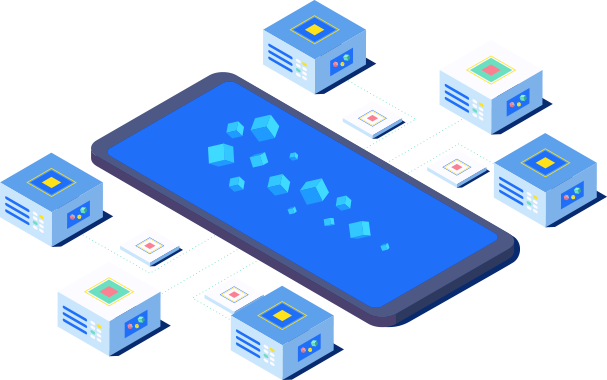
Illustration: Cloud VPS vs Traditional VPS: What's Actually Different?API-Driven Provisioning: Infrastructure as Code vs Manual Configuration
The provisioning experience exposes another fundamental architectural divide. On a traditional VPS, ordering a new server typically involves selecting an OS template from a dropdown in a control panel, waiting 2 to 10 minutes for the VM to be created on whichever physical node has available capacity, and receiving an IP address and root password via email. Scaling up — moving to a larger plan with more CPU and RAM — usually requires either a manual migration to a new VM or, at best, a shutdown-resize-reboot cycle that involves several minutes of downtime. Scaling down is frequently impossible without migrating to an entirely new plan and reconfiguring your application stack. The operational interface is a web control panel or a ticketing system, not a programmable API, and infrastructure-as-code workflows with Terraform, Pulumi, or Ansible are either unsupported or limited to basic start/stop/reboot operations. For a small business VPS running a single website that rarely changes, this manual provisioning model is adequate. For a SaaS platform that needs to spin up staging environments on demand, autoscale application servers in response to traffic, or programmatically clone production databases for analytics workloads, it is a non-starter.
A cloud VPS platform exposes every provisioning operation through a REST API — and usually through official SDKs in Python, Go, Ruby, and Node.js, plus Terraform and Pulumi providers — that allows you to create, resize, snapshot, clone, and destroy virtual machines programmatically in seconds. Resizing a cloud VPS typically involves a single API call that changes the VM's vCPU count and RAM allocation, followed by a brief reboot (often under 30 seconds) to apply the new resource limits, with no data migration required because the storage is network-attached and independent of the compute allocation. Block storage volumes can be created, attached, detached, and resized independently of compute instances, enabling patterns like mounting a 500 GB data volume to a small instance for processing and then detaching it and reattaching it to a larger instance when more CPU is needed — all programmatically without human intervention. Floating IPs — public IP addresses that can be reassigned between VMs via API call — enable blue-green deployment patterns where you spin up a new VM with updated software, test it, and then move the production IP address from the old VM to the new VM in a single operation that takes effect in seconds. These API-driven capabilities are not conveniences; they are the building blocks of modern operational practices like continuous deployment, automated disaster recovery, and cost-optimized scheduling where non-production environments are automatically shut down outside business hours. If your hosting decision factors in whether you will outgrow manual server management within the next two years, the API surface of your chosen platform deserves as much scrutiny as the vCPU count.
Performance Comparison: Where Raw I/O Meets Distributed Overhead
The performance story is not one-sided, and honest benchmarks reveal that both architectures win different battles. A traditional VPS with locally attached NVMe storage and dedicated CPU cores typically delivers higher single-instance disk throughput and lower storage latency than a cloud VPS of equivalent specs, for the straightforward reason that its block device driver talks directly to a local NVMe controller rather than traversing a TCP-based storage protocol over a network fabric. Sequential read throughput on a traditional VPS can reach 3,000 to 7,000 MB/s with modern Gen4 NVMe drives, and random 4K read latency often sits in the 70-to-120-microsecond range. A cloud VPS accessing Ceph RBD block storage over a 25 Gbps internal network typically achieves 500 to 2,000 MB/s sequential read throughput and 200-to-500-microsecond random read latency, because every I/O operation must travel from the hypervisor node to at least one storage node and back, with the replication protocol adding additional round trips for writes. This 2x-to-5x latency penalty is real and measurable, and for latency-sensitive workloads — high-throughput OLTP databases, real-time analytics engines, and anything doing synchronous disk flushes in a hot path — it can translate into noticeably slower query execution and higher CPU utilization from I/O wait cycles.
However, the raw I/O comparison misses two factors that matter more in production. First, the traditional VPS's local storage advantage is fragile: it lasts only as long as your VM is the sole tenant placing sustained I/O load on the physical NVMe drives. If the hypervisor host runs 20 VMs and three of them are running nightly backups, batch processing jobs, or log rotation simultaneously, the aggregate I/O contention degrades performance for every tenant in a way that is invisible to any single VM's monitoring — you see increased latency and decreased throughput but cannot attribute it to a specific neighbor. Cloud VPS platforms mitigate noisy-neighbor I/O contention through distributed storage architectures that spread the aggregate I/O load across dozens of storage nodes, and through QoS mechanisms at the hypervisor level that enforce per-volume IOPS and throughput limits. Second, cloud VPS platforms typically deploy significantly newer and more powerful hardware across their compute cluster because they refresh nodes on a rolling basis without service interruption — your VM gets live-migrated to a new-generation server with faster CPUs and higher memory bandwidth without any downtime on your end. A traditional VPS that was provisioned on a 2019-era Xeon remains on that 2019-era Xeon until either the provider replaces the hardware (which may take years) or you manually migrate to a new plan.
CPU performance tells a more balanced story. Both traditional and cloud VPS platforms that use KVM with hardware virtualization extensions (Intel VT-x / AMD-V) deliver within 2% to 5% of bare-metal CPU throughput for most workloads, because the CPU virtualization overhead of modern hardware-assisted hypervisors is minimal once the VM is running. The difference emerges under sustained multi-tenant load. A traditional VPS host that oversubscribes physical CPU cores — assigning 40 vCPUs across 10 VMs on a 16-core host, for example — experiences CPU scheduling contention that degrades per-VM throughput non-linearly as aggregate demand increases. Cloud VPS platforms also oversubscribe CPU (the economics require it), but their larger compute pools and live-migration-based load balancing allow them to redistribute VMs across nodes to smooth out hot spots, reducing the frequency and severity of CPU contention events. For most web hosting workloads — PHP request processing, Node.js event loops, Python WSGI workers — the CPU performance difference between traditional and cloud VPS is undetectable in the common case. It becomes material for CPU-bound workloads like video transcoding, compiled-language build systems, and machine learning inference running on CPU, where the traditional VPS's dedicated-core plans may offer slightly more consistent throughput at a given price point.
Reliability and High Availability: The Auto-Failover Divide
Reliability is the dimension where cloud VPS and traditional VPS diverge most dramatically, and it is the primary reason organizations with revenue-dependent uptime requirements overwhelmingly choose cloud platforms. A traditional VPS has a reliability ceiling determined by the physical server it runs on. If the provider maintains high-quality hardware with redundant power supplies, ECC RAM, hardware RAID with hot spares, and proactively monitors SMART disk health metrics and ECC error rates to replace components before they fail, a single traditional VPS node can achieve 99.9% uptime — roughly 8.8 hours of downtime per year, mostly concentrated in rare but impactful hardware failure events. Many traditional VPS providers deliver within this range, and for non-critical workloads or websites where an hour of downtime costs hundreds rather than thousands of dollars, 99.9% is a perfectly acceptable SLA. The problem is that 99.9% is also the practical ceiling: no amount of high-quality hardware eliminates the single-chassis failure domain, and no monitoring system can restore a VM whose physical host has suffered a catastrophic power supply, motherboard, or RAID controller failure except by restoring from backup to a different node — a process measured in hours, not minutes.
A cloud VPS platform's distributed architecture breaks through the single-chassis reliability ceiling by eliminating the physical server as a failure domain for persistent state. Because your VM's disk image exists as replicated objects on a storage cluster independent of any compute node, the failure of a hypervisor node is a transient compute event rather than a data-loss or extended-downtime event. The platform's control plane detects the node failure — typically through a combination of heartbeat monitoring (is the hypervisor agent responding?), storage I/O timeout detection (has the node stopped issuing I/O to the storage cluster?), and switch-port status monitoring (did the top-of-rack switch port go down?) — and initiates an automated recovery workflow: fence the failed node to prevent split-brain scenarios, select a target hypervisor from the available pool based on current resource utilization, reattach the VM's storage volumes and network interfaces, and boot the VM. End-to-end recovery time on a well-engineered cloud VPS platform ranges from 60 seconds to 3 minutes, and the only data loss is whatever was in the VM's volatile memory at the moment of failure — typically the last few seconds of in-flight database transactions that were committed in memory but not yet flushed to the replicated storage layer. This is not zero-downtime failover; it is fast automated recovery, which is a different and less expensive engineering challenge. True zero-downtime architectures require application-level redundancy — database replication, load-balanced application servers, session state externalization — that neither traditional nor cloud VPS provides at the infrastructure layer alone. But the difference between a 3-minute automated recovery and an 8-hour manual backup restoration is the difference between a minor operational incident and a revenue-impacting outage that triggers customer support calls and reputational damage.
Network redundancy follows a similar architectural pattern. A traditional VPS node typically has one or two bonded network uplinks to a single top-of-rack switch. If that switch fails, or if the upstream router it connects to fails, every VM on the node loses network connectivity regardless of whether the compute hardware is healthy. Cloud VPS platforms invest in network fabrics where each hypervisor node connects to multiple top-of-rack switches in an MLAG or EVPN-VXLAN configuration, with the overlay network providing redundant paths that converge in under a second when a link or switch fails. The distributed storage network is typically built on a dedicated, non-oversubscribed fabric separate from the public-facing network, ensuring that storage I/O continues uninterrupted even if the public network experiences a DDoS attack or a BGP route flap. These network-level investments are expensive — a proper leaf-spine fabric with 25 Gbps or 100 Gbps interconnects costs millions of dollars per data center — which is why they are concentrated among the larger cloud VPS providers and essentially absent from traditional VPS hosts operating a few racks of servers. When you evaluate a provider's uptime SLA, the network architecture behind that SLA matters at least as much as the compute hardware, because network failures account for a disproportionate share of total downtime in multi-tenant hosting environments.
Pricing Models: Pay-As-You-Go vs Fixed Monthly Plans
Pricing is where the traditional VPS model has historically held a clear advantage, and for fixed-budget workloads, that advantage remains real. A traditional VPS plan with 4 vCPUs, 8 GB RAM, and 200 GB NVMe storage costs $20 to $50 per month at mainstream providers, while a cloud VPS with equivalent specs typically runs $40 to $80 per month — a 40% to 100% premium. The premium reflects the infrastructure cost of maintaining a distributed storage cluster with triple replication (which requires 3x the raw storage capacity for the same usable capacity), the network fabric connecting dozens or hundreds of nodes, and the engineering team required to build and operate the control plane that orchestrates automated failover, live migration, and API-driven provisioning. For a small business running a single website with predictable traffic that can tolerate a few hours of downtime per year in the worst case, the traditional VPS price advantage translates into real savings that compound over a three-to-five-year horizon. When we at Hosting Captain model total cost of ownership for small business clients, a traditional VPS at $30 per month versus a cloud VPS at $60 per month saves $1,080 over three years — enough to cover a year of domain renewals, SSL certificates, and backup storage with money left over.
The pricing dynamic shifts when you introduce variable workloads and the hidden cost of over-provisioning. Cloud VPS platforms bill by the hour, allowing you to spin up a large instance for a batch processing job, run it for three hours, and pay only for those three hours — a pattern that is impossible on traditional VPS fixed-monthly plans. Development and staging environments that are only needed during business hours can be programmatically shut down at 7:00 PM and restarted at 8:00 AM, reducing their monthly cost by 55% to 65% compared to running them 24/7. The pay-as-you-go model also eliminates the "round up to the next plan size" waste that plagues traditional VPS provisioning: if your application needs 5 GB of RAM but the traditional VPS provider only offers plans at 4 GB and 8 GB, you pay for 8 GB and waste 3 GB. Cloud VPS platforms generally offer more granular resource increments with the ability to independently scale CPU, RAM, and storage, so you pay for exactly the resources you configure. For workloads with variable demand, the total cost of a cloud VPS approach — paying for what you use when you use it — can undercut the apparent savings of a fixed-monthly traditional VPS once you account for the resource waste built into rigid plan tiers.
Data transfer pricing is the dimension where cloud VPS costs can surprise the unprepared. Traditional VPS plans typically include 4 to 32 TB of monthly bandwidth in the base price, and even providers that meter bandwidth charge modest overage rates of $0.01 to $0.05 per GB. Cloud VPS providers, particularly the hyperscale-affiliated ones, often include a modest free transfer allowance (1 to 5 TB) and then charge $0.01 to $0.12 per GB for outbound data transfer beyond the allowance. A website serving 20 TB of content per month — not uncommon for a media-heavy site with modest traffic — would pay $0 in bandwidth overages on a traditional VPS with a 32 TB allowance but potentially $150 to $1,800 per month in cloud VPS data transfer charges depending on the provider. This bandwidth pricing delta is the single most common reason we see clients migrate from cloud VPS platforms back to traditional VPS or dedicated servers: they optimized compute costs beautifully but failed to model data transfer costs, and the bandwidth bill ate all the compute savings and more. Always request the provider's data transfer pricing schedule — not just the headline allowance — and model your expected monthly transfer volume before comparing plans across architectures.
Scalability: Vertical, Horizontal, and Geographic Expansion
Scalability is the cloud VPS model's strongest selling point and the area where traditional VPS faces structural limitations that no amount of plan-tier expansion can overcome. On a cloud VPS platform, vertical scaling — increasing a VM's vCPU count, RAM allocation, or storage capacity — is typically a single API call followed by a brief reboot to apply the new resource limits. The storage is network-attached and independent of the compute allocation, so increasing storage capacity does not require migrating data to a new physical node. Some cloud VPS platforms support live vertical scaling for RAM without a reboot, using memory hotplug kernel features to add RAM to a running VM. Horizontal scaling — adding more VM instances behind a load balancer — is also API-driven and can be automated through the platform's autoscaling features, which monitor CPU utilization or request rate metrics and provision or deprovision instances in response. Geographic expansion — deploying VMs in multiple regions — is supported through the same API and tooling, allowing a SaaS platform to add a European or Asian presence by changing a single region parameter in a Terraform configuration.
Traditional VPS scaling is constrained by the physical node's remaining capacity. Vertical scaling is possible only if the node has spare CPU cores, RAM slots, and disk bays — and if it does not, the provider must migrate your VM to a different node, a manual process involving downtime and IP address changes. Horizontal scaling is theoretically possible (you can order multiple VPS plans) but operationally cumbersome without API automation — you provision each instance through a control panel, configure each one manually or through post-provisioning SSH scripts, and manage load balancer configuration separately. Geographic expansion is limited to the data center locations where the provider has deployed physical servers; traditional VPS hosts typically operate in 1 to 5 locations, while cloud VPS platforms often offer 15 to 30 regions globally. For a business with a three-year growth plan that includes international expansion, the traditional VPS scaling model becomes a bottleneck that forces either a painful migration to a cloud platform mid-growth or an acceptance of operational limitations that constrain business velocity. The right time to choose your scaling architecture is before you need to scale, not during a growth spike when every hour of delay costs revenue.
The scaling dimension that is easiest to overlook is the operational scaling of your team's workflows. On a cloud VPS platform, every server configuration — firewall rules, installed packages, application deployments, monitoring agents — can be codified in infrastructure-as-code templates and applied consistently across dozens or hundreds of VMs. A new team member can provision a production-identical staging environment with a single command, test a change, and destroy it, all without touching a web control panel or memorizing provider-specific workflows. On a traditional VPS, each server tends to become a snowflake — a unique configuration that drifts over time as ad-hoc SSH sessions apply patches and tweaks that are never captured in version control. The operational overhead of managing five traditional VPS instances without infrastructure-as-code tooling is manageable. Managing twenty is painful. Managing fifty is a full-time job that pulls your engineering team away from building product features. The cloud VPS premium buys not just infrastructure redundancy but operational efficiency, and for growing teams, that efficiency translates into faster feature delivery and fewer production incidents caused by configuration drift. For guidance on the transition path from VPS to dedicated infrastructure as you continue to grow, our dedicated server guide walks through the thresholds where bare-metal hardware becomes the right next step.
When Cloud VPS Is the Clear Winner
Cloud VPS is the right choice when the cost of downtime exceeds the cloud premium by a wide margin. For e-commerce stores processing orders throughout the day, SaaS platforms with paying customers who expect sub-second response times 24/7, and any application where a three-hour outage triggers customer support calls, chargebacks, or SLA penalty clauses, the automated failover capability of a cloud VPS platform is not a luxury — it is insurance against a failure mode that is statistically guaranteed to occur at some point over a multi-year hosting relationship. Hardware fails. Power supplies blow. RAID controllers corrupt. On a traditional VPS, each of these events means hours of downtime; on a cloud VPS, it means a two-minute blip that most users will not even notice. If your business processes $1,000 per day in online transactions, a single eight-hour outage costs roughly $333 in lost revenue, plus the harder-to-quantify cost of customer trust erosion and abandoned carts that do not return. At that revenue level, the cloud VPS premium of $20 to $40 per month is less than the expected cost of a single annual outage, making the cloud platform the economically rational choice before even accounting for the operational benefits of API-driven provisioning and infrastructure-as-code compatibility.
Cloud VPS is also the clear winner for teams that need to move fast and iterate on infrastructure. If your development workflow involves spinning up staging environments to test pull requests, running automated integration tests against production-like infrastructure, or deploying canary releases to a subset of traffic before rolling out globally, the API-driven nature of cloud VPS platforms enables automation patterns that are simply not possible on traditional VPS. The Terraform provider for DigitalOcean, Vultr, or Linode allows you to define your entire infrastructure topology — VMs, block storage volumes, load balancers, firewalls, DNS records — in version-controlled configuration files and apply changes through a CI/CD pipeline with review and approval gates. This infrastructure-as-code workflow treats server configuration with the same rigor as application code, eliminating the class of production incidents caused by ad-hoc SSH changes that nobody documented and nobody can reproduce. If your team's operational maturity roadmap includes infrastructure-as-code, automated testing of infrastructure changes, and GitOps-style deployment workflows, starting on a cloud VPS platform rather than a traditional VPS avoids a painful tooling and process migration later.
Geographic distribution requirements also tilt the decision toward cloud VPS. If your user base spans multiple continents and you need low-latency presence in North America, Europe, and Asia-Pacific, a cloud VPS provider with 15-plus global regions allows you to deploy VMs in each region through the same API, same tooling, and same operational workflows. Traditional VPS hosts rarely operate in more than a handful of locations, and managing VMs across three different traditional VPS providers — one for each continent — creates operational fragmentation that eats the cost savings in engineering time. The cloud VPS model's global region footprint is particularly relevant for content-heavy sites that benefit from serving static assets close to users, for API services where cross-continent latency of 200-plus milliseconds degrades mobile app responsiveness, and for any application subject to data residency regulations that require user data to be stored and processed within specific geographic boundaries. Our Mumbai VPS guide benchmarks how different cloud VPS providers perform from Indian ISPs, a region where the choice between traditional and cloud infrastructure directly affects page load times for one of the world's largest internet user populations.
When Traditional VPS Is the Smarter Choice
Traditional VPS makes more sense when predictable costs on a fixed budget are the dominant constraint. For a freelance developer hosting a portfolio site and a few client projects, for a local business whose website generates leads rather than direct revenue, and for hobbyist projects where downtime is an annoyance rather than a financial event, the traditional VPS price advantage of 40% to 100% at equivalent specs translates into real savings that can be directed toward more impactful investments — better content, paid marketing, or simply keeping the project alive on a shoestring budget. A traditional VPS at $12 to $25 per month provides root access, a dedicated IP address, and enough compute capacity to run a LAMP or LEMP stack serving tens of thousands of monthly visitors — capabilities that were priced at $100-plus per month a decade ago. The hosting industry's relentless hardware cost deflation has made traditional VPS an extraordinary value proposition for fixed-workload use cases, and walking away from that value to pay a cloud premium for features you will never use is poor capital allocation.
Traditional VPS is also the right call for workloads where raw single-instance disk I/O performance is the bottleneck and you are willing to accept the single-point-of-failure trade-off in exchange for maximum storage throughput per dollar. A traditional VPS with locally attached NVMe storage delivering 500,000 random read IOPS and 3,000 MB/s sequential throughput at a $40-per-month price point simply cannot be matched by a cloud VPS at the same budget, because the cloud platform's distributed storage overhead — network latency, replication write amplification, storage node contention — consumes a portion of the performance budget that the traditional VPS applies entirely to your workload. Database servers running heavy OLTP workloads with strict latency SLOs, real-time data processing pipelines that ingest and transform streaming data, and high-traffic content management systems with complex page caching that invalidates frequently all benefit from the lowest possible storage latency, and that lowest possible latency comes from local NVMe, not network-attached block storage. The operational trade-off is clear — you get better performance per dollar in exchange for accepting that a hardware failure means hours of downtime while the provider restores from backup — and as long as that trade-off is made consciously rather than discovered after the fact, it is a perfectly rational infrastructure decision.
There is also a class of use cases where the traditional VPS model aligns better with the operational reality of a small team or solo operator. If you are the sole developer and system administrator for your project, the additional complexity of cloud-native workflows — infrastructure-as-code, API-driven provisioning scripts, automated scaling policies, distributed storage performance tuning — may represent overhead that slows you down rather than capabilities that accelerate you. A traditional VPS with a straightforward control panel, a familiar cPanel or Plesk interface, and a support team that answers tickets about server configuration (rather than pointing you to API documentation) can be the more productive choice when your goal is to ship and maintain a website, not to build a cloud operations skillset. The right infrastructure is the one that matches your team's current operational capacity, not the one that sounds most impressive in a job posting. Many of the most profitable small web properties on the internet run on traditional VPS infrastructure that was set up once, configured well, and maintained with periodic updates — and the owners spend their time on content, marketing, and customer relationships rather than on infrastructure optimization. For readers in this operational profile, our small business VPS buying guide walks through the plan selection and initial configuration decisions that matter most, whether you ultimately choose a traditional or cloud VPS platform.
Top Providers in Each Category
The cloud VPS market in 2026 is dominated by a handful of providers that have built genuine distributed platforms with automated failover, API-driven provisioning, and global region footprints. DigitalOcean remains the reference implementation: every Droplet runs on a KVM-based hypervisor cluster with Ceph-backed distributed block storage, live migration for maintenance events, and a REST API that is widely considered the gold standard for developer experience. DigitalOcean operates 15-plus regions globally with consistent pricing across all locations. Vultr offers a similar cloud VPS stack with KVM virtualization and distributed storage, distinguished by a larger number of edge locations (30-plus) and a broader range of instance types including bare-metal cloud servers that combine the API-driven provisioning of cloud with the dedicated hardware of traditional hosting. Linode (Akamai Connected Cloud) provides KVM-based cloud VPS with distributed block storage, a mature API and Terraform provider, and the advantage of Akamai's global network backbone for inter-region connectivity and CDN integration. Hetzner Cloud has gained significant traction in the European market with a KVM-based cloud VPS platform that undercuts competitors on price by 30% to 50% while maintaining strong performance, though with fewer global regions. AWS Lightsail and Google Cloud Compute Engine represent the hyperscale entry points into cloud VPS, offering the same distributed infrastructure that powers enterprise cloud deployments but packaged in simpler, fixed-price VPS-like plans.
The traditional VPS market has consolidated around providers that compete primarily on price, support quality, and plan flexibility rather than architectural sophistication. KnownHost has built a reputation for premium managed traditional VPS hosting with fully redundant hardware, proactive monitoring, and U.S.-based support that responds to tickets in minutes rather than hours. InterServer offers traditional VPS plans on KVM with locally attached SSD storage at aggressive price points, with the unusual feature of allowing customers to provision custom resource slices rather than being locked into fixed plan tiers. Hostinger operates a large-scale traditional VPS platform on KVM with locally attached NVMe storage, targeting the budget-to-mid-range segment with aggressive first-year pricing. InMotion Hosting and A2 Hosting both offer managed traditional VPS plans with cPanel licensing included, targeting the segment of customers who prioritize support-assisted management over infrastructure programmability. The common thread across traditional VPS providers is that they invest in hardware quality, support staffing, and control panel usability rather than in distributed storage clusters and automated failover orchestration — and for the fixed-workload, budget-constrained use cases described in the previous section, that investment allocation directly aligns with customer needs. The key diligence step before selecting any provider in either category is verifying that their infrastructure claims match their actual deployment architecture. Ask the specific question: "If the physical server running my VM loses power, what is the automated recovery process and the expected time to recovery?" A cloud VPS provider will describe an automated failover workflow measured in seconds or minutes. A traditional VPS provider will describe a manual backup restoration process measured in hours. Any answer that is vague, evasive, or redirects to SLA percentages rather than recovery mechanics is a signal that the provider is selling cloud-themed marketing on traditional infrastructure.
Frequently Asked Questions
What is the main difference between cloud VPS and traditional VPS?
The main difference is at the storage and resilience layer. A traditional VPS runs on a single physical server with locally attached storage — if that server fails, your VM goes down until the hardware is repaired and your data is restored from backup, which typically takes hours. A genuine cloud VPS runs on a cluster of servers with network-attached distributed storage that replicates your data across multiple physical nodes — if the server running your VM fails, the platform automatically restarts your VM on a different server within 60 to 180 seconds using the same replicated storage volumes. This architectural difference extends to provisioning (cloud VPS is API-driven and programmable; traditional VPS is control-panel-driven), scaling (cloud VPS can resize or clone instances programmatically; traditional VPS requires manual migration), and pricing (cloud VPS is typically pay-as-you-go with hourly billing; traditional VPS is fixed monthly).
Is cloud VPS faster than traditional VPS?
Not necessarily — and in raw single-instance disk I/O, traditional VPS often wins. A traditional VPS with locally attached NVMe storage achieves lower storage latency (70 to 120 microseconds) and higher throughput (3,000 to 7,000 MB/s sequential read) than a cloud VPS accessing distributed block storage (200 to 500 microsecond latency, 500 to 2,000 MB/s throughput) because the traditional VPS's storage path avoids network traversal and replication overhead. CPU performance is comparable between both architectures when using the same hypervisor technology (KVM with hardware virtualization). The performance advantage of cloud VPS is consistency under multi-tenant load — distributed storage architectures and live-migration-based load balancing reduce the frequency and severity of noisy-neighbor contention events that can degrade traditional VPS performance unpredictably.
Why is cloud VPS more expensive than traditional VPS?
Cloud VPS is more expensive because the infrastructure required to deliver automated failover, live migration, and API-driven provisioning costs significantly more to build and operate. A distributed storage cluster with triple replication requires three times the raw storage hardware for the same usable capacity. The high-speed internal network fabric connecting compute and storage nodes costs millions per data center. The engineering team required to build and maintain the orchestration control plane — automated failover logic, live migration scheduling, API gateways, identity and access management — represents an ongoing operational expense that traditional VPS providers avoid. These infrastructure investments translate into a 40% to 100% price premium at equivalent specs, which buys you resilience against hardware failures, programmability through APIs, and the ability to scale resources without manual migration.
How can I tell if my provider is offering genuine cloud VPS or just rebranded traditional VPS?
Ask the provider three specific questions. First: "If the physical server running my VM loses power, what is the exact automated recovery process and the expected time to recovery?" A genuine cloud VPS provider will describe an automated failover to a different physical node within 60 to 180 seconds. A traditional VPS provider will describe a manual backup restoration process measured in hours. Second: "Do you support live migration of running VMs between physical hosts for maintenance?" A genuine cloud VPS provider will say yes and describe the migration process. A traditional VPS provider will say no or describe a shutdown-migrate-reboot process. Third: "Can I resize my VM's CPU and RAM through an API call without migrating to a new server?" A genuine cloud VPS provider will describe a single API call with a brief reboot. A traditional VPS provider will describe a plan upgrade that involves provisioning a new VM and manually migrating data. Vague answers to any of these questions are a strong signal that the provider is using cloud branding on traditional single-node infrastructure.
When should I choose traditional VPS over cloud VPS?
Choose traditional VPS when predictable costs on a fixed budget are your primary constraint, when your workload can tolerate a few hours of downtime per year without significant revenue impact, when you need maximum raw disk I/O performance per dollar and are willing to accept the single-point-of-failure trade-off, and when your team's operational capacity is better served by a straightforward control panel and support-assisted management rather than API-driven infrastructure-as-code workflows. Traditional VPS at $12 to $50 per month provides exceptional value for fixed-workload use cases — portfolio sites, local business websites, development environments, hobby projects — where the cloud VPS premium would buy resilience and programmability features that you will never actually use. Our small business VPS buying guide provides a structured decision framework for evaluating your specific needs against the capabilities of each architecture.
Does cloud VPS guarantee zero downtime?
No. Cloud VPS automated failover reduces recovery time from hours to minutes, which dramatically improves uptime in the event of hardware failure, but it does not provide zero-downtime failover. When a hypervisor node fails, the VMs running on it crash — their in-memory state, including unflushed database transactions and active network connections, is lost. The cloud platform detects the failure and restarts the VM on a healthy node within 60 to 180 seconds, but that is a restart from the last consistent state on the replicated storage, not a seamless continuation. True zero-downtime architectures require application-level redundancy: database replication with automatic failover, load-balanced application servers, and externalized session state. Cloud VPS provides the infrastructure foundation that makes building application-level high availability easier — floating IPs for blue-green deployments, API-driven provisioning for autoscaling, distributed storage for data durability — but it is not a substitute for architecting your application to tolerate individual instance failures.
Can I migrate from traditional VPS to cloud VPS without downtime?
A migration with near-zero downtime is possible but requires careful planning and execution, not a single automated tool. The standard approach involves setting up your new cloud VPS instance, configuring your application stack identically, syncing your database and files to the new server using tools like rsync or database replication, testing the new environment thoroughly with a temporary hostname or IP, then updating your DNS records to point to the new server and waiting for DNS propagation (typically a few minutes to a few hours depending on TTL settings). During the DNS propagation window, some visitors will reach the old server and some will reach the new server, so both environments must be kept in sync or the old environment placed in a read-only maintenance mode. For database-heavy applications, the safest approach uses database replication: configure the cloud VPS database as a replica of the traditional VPS database, let replication catch up, then perform a brief maintenance window where you promote the replica to primary and switch DNS. For a structured walkthrough of server setup and migration fundamentals, our VPS guide for beginners covers the prerequisites that apply regardless of your source and target platforms.
Is traditional VPS the same as unmanaged VPS?
No. Traditional VPS describes the underlying architecture (single physical server with local storage), while unmanaged vs. managed describes the support level (who is responsible for operating system updates, security hardening, and software configuration). You can have a traditional VPS that is fully managed — the provider handles patching, monitoring, and backup — or a cloud VPS that is completely unmanaged — you get API access and infrastructure resilience but handle everything above the hypervisor layer yourself. The architecture decision (traditional vs. cloud) and the management decision (managed vs. unmanaged) are independent dimensions. In practice, cloud VPS platforms tend to skew unmanaged (targeting developers comfortable with infrastructure-as-code and self-service operations) while traditional VPS platforms offer a wider range of managed support tiers, but this is a market segmentation pattern rather than a technical constraint. Always verify the management scope separately from the infrastructure architecture when comparing plans.
Emma Larsson is a lead systems developer and virtualization specialist with a decade of expertise in kernel configurations and hypervisor scaling.
Frequently Asked Questions
This guide covers the practical decision points — pricing, performance, and when it makes sense for your situation — based on current 2026 data.
Pricing varies by provider and plan tier; see the cost breakdown section above for current ranges and what's actually included at each price point.
Look closely at uptime guarantees, renewal pricing (not just the first-year discount), and how responsive support actually is — all covered in detail in this article.
Hosting Captain has been exceptional for my e-commerce store in Pune. The NVMe SSD speed is
noticeable, and their support team responds within minutes. Highly recommended for any
Indian business!
Ryan John, Pune
Great Value for Money
Switched from a US-based host to Hosting Captain and my website loads 3x faster for Indian
visitors. The free SSL and cPanel are great, and the pricing is unbeatable. Very satisfied
customer!
Priya Mehta, Mumbai
Reliable VPS Hosting
I've been using their VPS plan for 2 years now. 99.9% uptime is not just a claim — it's
reality. My client projects run without interruption. The KVM virtualization gives me full
control I need.
Amit Kumar, Bangalore
Excellent 24/7 Support
The support team helped me migrate my entire WordPress site at 2 AM without any downtime.
This level of service is rare in Indian hosting. Worth every rupee!
Sunita Patel, Ahmedabad
Perfect for Startups
As a startup, budget matters. Hosting Captain's Business plan covers everything we need —
multiple websites, free SSL, daily backups — at a fraction of what international hosts
charge.
Vikram Singh, Delhi
Professional Dedicated Server
Our high-traffic news portal needed a dedicated server. Hosting Captain's DS Business plan
handles 100K+ daily visitors effortlessly. Their team provisioned everything within 4 hours!
Meena Krishnaswamy, Chennai
Trusted Technologies & Partners
Start Your Website with Hosting Captain
From personal blogs to enterprise solutions, we've got you covered!