Emma Larsson
VPS Technical LeadEmma Larsson is a lead systems developer and virtualization specialist with a decade of expertise in kernel configurations and hypervisor scaling.

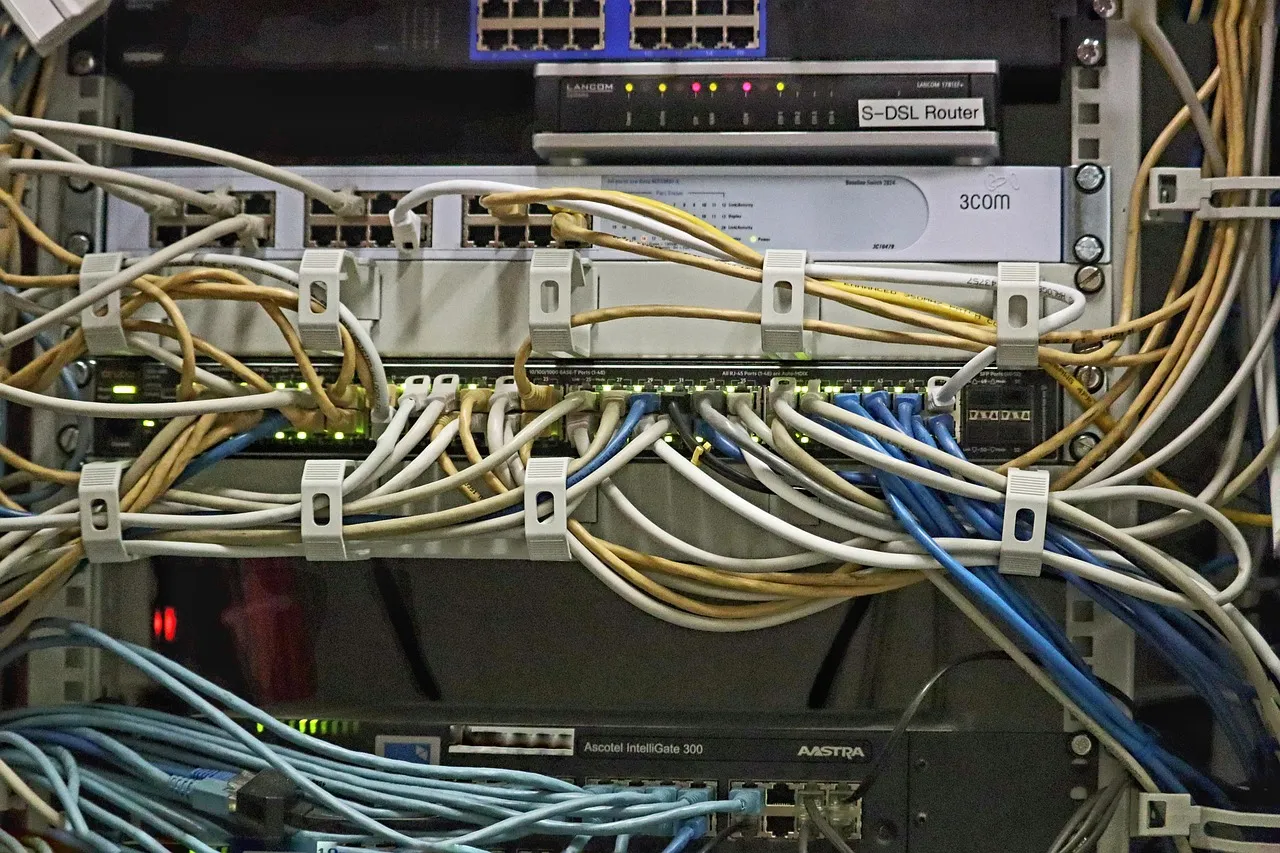
Before we can understand why hosting quality matters so much for WordPress—and so little for website builders—we need to grasp one architectural truth that separates these two worlds entirely.
WordPress is open-source software you download, install, and run yourself. When you visit WordPress.org, you are not buying a service. You are obtaining a piece of software—the same way you might download Firefox, Photoshop, or a code editor. That software needs a computer to live on. It needs storage for your files, a database to hold your content, and a web server to respond to visitor requests. That computer—whether it is a shared server in a data centre, a cloud VPS, or a managed WordPress platform—is your web hosting. Without it, your WordPress site simply does not exist online.
Website builders like Wix, Squarespace, and Shopify operate on an entirely different model. They are SaaS (Software as a Service) products. When you create an account, you are renting access to software that the company already runs on its own infrastructure. The hosting, the server configuration, the database layer, the content delivery network—all of it is bundled, managed, and abstracted away. You never see a cPanel login. You never touch an FTP client. You never even know what server your site lives on, because you do not need to.
This distinction—self-hosted software versus managed SaaS—is the single most important concept in understanding the WordPress hosting conversation. It is why our WordPress vs builders comparison always starts with architecture, not features. You cannot evaluate cost, performance, or maintenance burden until you understand who is responsible for running the software.
With a builder, the company employs teams of DevOps engineers, database administrators, and security specialists whose entire job is keeping the platform fast and available. With WordPress, that responsibility lands on you—or more accurately, on the hosting provider you choose to trust.
WordPress is a PHP application backed by a MySQL (or MariaDB) database. Every time a visitor lands on your site, the following happens: the web server receives an HTTP request, hands it to PHP, which loads WordPress core, runs your active theme and plugins, queries the database for content, assembles the page, and returns HTML to the browser. That entire chain—often called the "request-response cycle"—is governed by your hosting environment.
The speed at which PHP processes each request depends on several hosting-level variables: the PHP version and its opcode cache configuration, the CPU cores and clock speed allocated to your account, the amount of RAM available for PHP workers, and whether the server uses a modern process manager like PHP-FPM or an older, slower model. Cheap shared hosting often runs outdated PHP versions—sometimes two or three major releases behind—on overcrowded servers where hundreds of accounts compete for the same limited CPU and memory. The result is simple: your WordPress site runs at the speed of the slowest neighbour on the box.
Managed WordPress hosting providers, by contrast, tune their PHP configurations specifically for WordPress workloads. They allocate dedicated resources per site, keep PHP versions current, and configure opcache to cache compiled PHP bytecode in memory, eliminating redundant compilation on every request. The difference in Time to First Byte (TTFB) between a poorly hosted WordPress site and a well-hosted one can be measured in full seconds—which, in web performance terms, is an eternity.
WordPress stores everything in a database: posts, pages, user accounts, plugin settings, theme customisations, revision histories, and—critically—the metadata that connects all of these. A typical WordPress page load can trigger dozens of database queries. On budget hosting, the MySQL server is often shared among hundreds or thousands of accounts, running on spinning hard drives with no query caching. Under those conditions, a query that should complete in milliseconds can stretch to hundreds of milliseconds. Multiply that by thirty queries per page, add a modest traffic spike, and the database becomes the bottleneck that brings your site to a crawl.
Quality hosting providers invest in database performance at the infrastructure level: NVMe SSD storage for low-latency reads and writes, generous buffer pool allocations so frequently accessed data stays in RAM, dedicated database resources instead of shared instances, and proper indexing and query monitoring. Some managed WordPress hosts even implement object caching (Redis or Memcached) at the server level, bypassing the database entirely for repeated queries.
WordPress is a dynamic application—every page is generated on the fly. Without caching, your server must execute the full PHP-and-database cycle for every single visitor, even if they are viewing the exact same page someone else loaded two seconds ago. This is catastrophically inefficient. Caching solves it by storing a pre-rendered version of each page and serving that static copy instead of rebuilding it.
There are multiple layers of caching that a good host provides or enables: page caching (storing full HTML output), object caching (storing database query results), opcode caching (storing compiled PHP), and edge caching (storing content on a CDN close to visitors). Cheap hosts provide none of these by default—or worse, they disable server-side caching because it consumes memory they prefer to sell to more accounts. You are left installing third-party caching plugins that can only partially compensate for the absence of server-level optimisation. If you want to understand the foundations better, our web hosting basics guide breaks down how these server components work together.
If you have used Wix, Squarespace, or a similar builder, you may have noticed something: you never worry about TTFB, you never configure a caching plugin, and you certainly never SSH into a server to restart PHP-FPM. This is not because builders are magically immune to performance problems—it is because the platform handles all of it behind a curtain you cannot open.
Wix and Squarespace do not run on generic shared hosting. They operate massive, proprietary cloud infrastructures purpose-built for their specific platforms. Wix, for instance, runs on its own data centres and cloud architecture, with every server running identical, highly optimised configurations that the company's engineers have refined over nearly two decades. Squarespace similarly controls its entire stack from the application layer down to the physical hardware.
Because the platform owner controls every variable—the exact PHP version (if PHP is used at all), the database configuration, the server software, the caching layer—there are no surprises. The engineering team does not need to support forty different PHP versions or five different web servers. They optimise for one environment, and they optimise relentlessly.
Every major website builder includes a content delivery network as part of the base subscription. When a visitor in Sydney loads a Squarespace site whose origin server is in the United States, they are not actually connecting to that distant server. They are hitting a CDN edge node in Sydney that already has the site's static assets—and often full page caches—ready to serve. This global distribution of content is configured, maintained, and paid for by the builder. You get the performance benefit without knowing a CDN exists.
On WordPress, a CDN is almost always a separate service you must configure yourself—Cloudflare, BunnyCDN, KeyCDN, or something similar. Getting it right requires DNS changes, SSL certificate coordination, and cache invalidation rules. A good managed host may handle much of this for you, but it is never as seamless as the builder experience where CDN integration is a checkbox that was ticked before you even signed up.
Builders abstract away the entire server administration layer. You do not choose between Apache and Nginx. You do not set PHP memory limits or configure MySQL buffer sizes. You do not manage SSL certificate renewals, firewall rules, or DDoS protection. All of this is the platform's responsibility, and it is executed by teams whose full-time job is infrastructure reliability. This is the core trade-off we explore in our Wix vs Squarespace comparison: both handle hosting for you, so the hosting quality ceases to be a differentiator between them.
This does not mean builders are always faster than WordPress. A well-optimised WordPress site on enterprise-grade hosting can outperform a builder site. But the builder gets to "good enough" performance with zero effort from the user, whereas WordPress demands informed hosting choices to reach the same baseline—and can far exceed it with the right investment.
We have diagnosed thousands of sluggish, broken, and compromised WordPress sites at Hosting Captain, and the root cause is almost never WordPress itself. It is the hosting environment. Here is what bad hosting looks like in practice.
TTFB measures the delay between a browser requesting your page and receiving the first byte of data. On quality hosting, WordPress TTFB should be under 200 milliseconds on a cached page and under 600 milliseconds on an uncached one. On bad hosting, we routinely see TTFB values of 2,000 to 5,000 milliseconds. That is multiple seconds before the browser can even begin rendering your content. Google's Core Web Vitals research shows that pages taking longer than 2.5 seconds to become interactive see significantly higher bounce rates. A 4-second TTFB guarantees that a large percentage of your visitors leave before seeing anything.
The infamous "Error Establishing a Database Connection" message is the WordPress equivalent of a storefront with a padlocked door. It means the MySQL server is either down, overloaded, or rejecting connections because it has hit its maximum. On budget shared hosting, MySQL servers frequently buckle under the combined load of thousands of poorly optimised sites. When one account runs a runaway query—perhaps a broken plugin executing an unindexed search across a massive postmeta table—every site on that server suffers. Your site goes offline not because of anything you did, but because your hosting provider packed too many tenants onto a single database instance.
A 503 Service Unavailable error on WordPress usually means the server has run out of PHP workers or memory. Each visitor to your site consumes one PHP worker process for the duration of their request. If your hosting plan allocates only a handful of workers and you receive a modest traffic spike—even ten or fifteen simultaneous visitors—new requests queue up and eventually time out. Visitors see a blank white page or a 503 error. On bad hosting, this can happen with as few as five concurrent users if your site runs memory-heavy plugins like page builders or backup tools.
WordPress core is secure, but its security depends on the server environment. Bad hosting providers run outdated software stacks with known vulnerabilities: end-of-life PHP versions that no longer receive security patches, unpatched operating systems, MySQL instances with default credentials, and file systems with permissive permissions that allow one compromised account to read files from neighbouring accounts. We have seen malware spread laterally across entire shared servers because the hosting provider did not isolate accounts properly. When your host cuts corners on server security, no amount of WordPress hardening—two-factor authentication, security plugins, strong passwords—can fully protect you. The server itself becomes the attack surface.
Flipping the lens, good hosting does not just prevent disasters—it actively enables capabilities that make WordPress the most powerful publishing platform on the web.
A WordPress site on properly configured hosting can achieve sub-second page loads, 100/100 Lighthouse performance scores, and Core Web Vitals that pass with room to spare. This requires the hosting stack to deliver: PHP 8.x with JIT compilation and opcache, NVMe storage with sufficient I/O throughput, Redis or Memcached object caching at the server level, full-page caching with intelligent cache invalidation, and HTTP/3 support with Brotli compression. When these pieces are in place, WordPress is not merely "fast enough"—it is genuinely fast, often faster than builder sites that must serve every visitor through the same monolithic application layer regardless of caching logic.
Good hosting providers implement defence in depth. They isolate accounts at the container or virtual machine level so one compromised site cannot infect another. They deploy Web Application Firewalls (WAF) that block malicious requests before they reach WordPress. They perform automated malware scanning and offer free cleanup if an infection occurs. They enforce secure file permissions, disable dangerous PHP functions, and keep every component of the stack patched and current. They provide free SSL certificates with auto-renewal so your site never shows a security warning. This is not marketing fluff—it is a material difference between hosting that treats security as a checklist item and hosting that treats it as a core competency.
A small business site might receive 500 visitors a month today and 50,000 visitors a month in two years. Bad hosting cannot handle the transition—you hit resource limits, your site slows to a crawl, and you are forced to migrate mid-growth, which is disruptive and risky. Good hosting scales with you. Cloud-based and managed WordPress platforms can allocate additional CPU and RAM on demand, sometimes automatically during traffic spikes. A site that starts on a basic plan can scale to handle hundreds of thousands of monthly visitors without ever changing platforms or enduring a painful migration. This scalability is one reason WordPress remains the backbone of sites that eventually outgrow builders altogether.
Pushing untested changes to a live site is a recipe for disaster. Good WordPress hosting includes one-click staging environments—clones of your live site where you can test plugin updates, theme changes, and custom code before deploying to production. Equally important, automated daily backups stored off-site (not on the same server as your live site) ensure that if something does go wrong, you can restore your site to its last known good state in minutes. These are not luxuries; they are operational necessities for any business that depends on its website. Good hosting bakes them into the plan. Bad hosting sells them as overpriced add-ons—or does not offer them at all.
One of the most persistent misconceptions about WordPress is that it is "free." Yes, the software itself costs nothing to download. But a functional, secure, performant WordPress site involves costs: a domain name (roughly $10–$20 per year), hosting (anywhere from $5 to $150+ per month depending on quality and tier), any premium theme or plugin licences, and potentially developer or maintenance time. When we break down the numbers, hosting consistently represents the smallest line item that produces the largest impact.
Consider a typical small business WordPress site. Domain: $15 per year. A premium theme: $60 per year. A handful of premium plugins (SEO, backup, security, forms): $200–$400 per year. Hosting on a reputable managed WordPress platform: $25–$35 per month, or $300–$420 per year. Hosting accounts for roughly 35–45% of total annual costs. Now consider what you get for that percentage: the server that delivers every page to every visitor, the storage that holds every image and piece of content, the database that powers every dynamic feature, the security infrastructure that blocks thousands of attack attempts, and the performance optimisation that keeps your site fast enough to rank in search results and convert visitors into customers.
Compare this to a builder subscription. Wix's business plan with ecommerce runs approximately $27–$35 per month. Squarespace's comparable plan sits in a similar range. Those prices include hosting, but they do not represent cheaper hosting—they represent a bundled product where you cannot separate the hosting cost from the software cost. Our pricing comparison across WordPress, Wix, and Squarespace shows that when you account for the total cost of ownership over three to five years, WordPress on quality hosting is often less expensive than a builder subscription, especially for content-heavy sites that would hit builder plan limits. And critically, you own the WordPress site outright—you are renting space on a server, but the site itself, its content, and its data are yours to move, modify, or monetise without platform restrictions.
The false economy is opting for $3.99-per-month shared hosting and then wondering why the site is slow, insecure, and unreliable. The difference between bottom-tier and mid-tier hosting is often $20 per month. That $20 buys you the difference between a site that drives customers away and one that converts them. For any business where the website generates revenue—even indirectly through leads, bookings, or credibility—quality hosting is the highest-ROI expense in the WordPress budget.
If you build WordPress sites for clients, you have almost certainly had this conversation: the client compares your quote—which includes a line item for quality managed hosting—to a builder's advertised price and concludes that WordPress is "more expensive." Here is how to reframe the conversation around value rather than cost.
Tell your client: a website builder is like leasing a car. The monthly payment covers everything—maintenance, insurance, roadside assistance—but you never own the car, you cannot modify it beyond what the lease allows, and when you stop paying, you have nothing. WordPress on good hosting is like owning a car. You pay separately for the garage (hosting), the mechanic (developer), and the fuel (maintenance), but the car is yours. You can modify it however you like. You can move it to a different garage. And when your needs change, you are not forced to trade in for an entirely different model.
Clients understand slow websites because they have experienced them. Ask them to recall the last time they waited more than three seconds for a page to load on their phone—did they stay, or did they hit the back button? Explain that hosting quality is the single largest determinant of whether their WordPress site loads in under one second or over five. This is not an abstract technical specification; it is the difference between a visitor who becomes a customer and one who becomes a bounce statistic.
With a builder, security is the platform's problem. If Wix gets hacked, Wix's security team handles it. With WordPress, security is shared between the client, the developer, and the host. A quality host shoulders the majority of that burden—firewall, malware scanning, patching, isolation—but a bad host leaves the client exposed. Frame good hosting as an insurance policy: the monthly cost is trivial compared to the cost of a hacked site, which can include ransom payments, blacklisting by Google, data loss, and reputational damage that takes years to repair.
This is the argument that wins more deals than any other: with a builder, you cannot leave. Your site is built on proprietary technology that only works on that platform. If Wix raises its prices, changes its feature set, or simply no longer meets your needs, your only option is to rebuild from scratch on another platform—an expensive and time-consuming proposition. With WordPress, you can take your entire site—every post, every page, every image, every setting—and move it to any hosting provider in the world. You are never locked in. Good hosting enables that portability; bad hosting makes you want to leave, but WordPress makes it possible to do so without starting over.
No. WordPress.org provides the free open-source software, but it does not include hosting. You must purchase hosting separately from a provider that supports WordPress. WordPress.com (the commercial service by Automattic) does include hosting, but it is a different product with more limited customisation than the self-hosted WordPress.org software.
Technically yes, but practically no—not if you care about performance and security. While any hosting plan that supports PHP and MySQL can run WordPress, the quality difference between a generic shared hosting plan and a WordPress-optimised plan is substantial. WordPress-specific hosting includes server configurations, caching layers, and support teams that understand the platform's unique requirements.
Your friend's Wix site benefits from Wix's globally distributed infrastructure, built-in CDN, and server configurations optimised by full-time engineers. Your WordPress site's speed is determined by your hosting provider's infrastructure. If you are on budget shared hosting, your site is almost certainly slower than it would be on quality managed WordPress hosting—and may be slower than an equivalent builder site. The bottleneck is not WordPress; it is the server.
For a business site that you depend on for revenue, leads, or professional credibility, budget $25–$50 per month for managed WordPress hosting. For a high-traffic or ecommerce site, expect $50–$150+ per month. Avoid the $3–$8 per month shared hosting tier entirely for any site you care about—the performance ceiling is too low, and the security risks are too high.
Plugins can mitigate some symptoms of bad hosting—a caching plugin will reduce server load, an image optimisation plugin will shrink page weight—but they cannot fix the underlying problem. If your server has insufficient CPU, slow storage, or an overloaded database instance, no plugin can manufacture resources that do not exist. Caching plugins on bad hosting are like a bandage on a broken leg: they help marginally, but the injury remains.
Rarely, but yes. Builder platforms can and do experience outages—Wix had a multi-hour global outage in 2020, and Squarespace has had its share of incidents. The difference is that when a builder goes down, every site on that platform goes down simultaneously, and you are entirely powerless to do anything about it. With WordPress on independent hosting, your site's uptime is decoupled from every other WordPress site. A problem at one hosting provider does not affect sites hosted elsewhere.
For any site that matters to your business, unequivocally yes. Managed WordPress hosting includes WordPress-specific server tuning, automatic updates for core and sometimes plugins, built-in caching, staging environments, daily backups, and support teams that actually understand WordPress. The cost difference between unmanaged shared hosting and managed WordPress hosting is typically $15–$25 per month—less than the cost of one hour of developer time to fix a problem that managed hosting would have prevented.

Emma Larsson is a lead systems developer and virtualization specialist with a decade of expertise in kernel configurations and hypervisor scaling.

Hosting Captain has been exceptional for my e-commerce store in Pune. The NVMe SSD speed is noticeable, and their support team responds within minutes. Highly recommended for any Indian business!
Switched from a US-based host to Hosting Captain and my website loads 3x faster for Indian visitors. The free SSL and cPanel are great, and the pricing is unbeatable. Very satisfied customer!
I've been using their VPS plan for 2 years now. 99.9% uptime is not just a claim — it's reality. My client projects run without interruption. The KVM virtualization gives me full control I need.
The support team helped me migrate my entire WordPress site at 2 AM without any downtime. This level of service is rare in Indian hosting. Worth every rupee!
As a startup, budget matters. Hosting Captain's Business plan covers everything we need — multiple websites, free SSL, daily backups — at a fraction of what international hosts charge.
Our high-traffic news portal needed a dedicated server. Hosting Captain's DS Business plan handles 100K+ daily visitors effortlessly. Their team provisioned everything within 4 hours!








From personal blogs to enterprise solutions, we've got you covered!

© 2026 Hosting Captain. All Rights Reserved by 'Apollo Hosting'.