A Web Server Is Just a Computer That Serves Web Pages
Strip away every layer of jargon, every technical diagram, every networking textbook chapter, and a web server is simply a computer connected to the internet that runs a program designed to listen for requests and respond with web pages. That computer can be a $50,000 enterprise server with 128 processor cores sitting in a climate-controlled data center in Amsterdam, or it can be a $35 Raspberry Pi sitting on a desk in Mumbai. The hardware does not define a web server — the software and the job it performs do. When you type a website address into your browser and press enter, your browser sends a request across the internet to the specific computer where that website's files live. The web server software running on that computer receives your request, figures out which file or which dynamically generated content you are asking for, packages it up, and sends it back to your browser, which then renders it as the visual webpage you see. This entire exchange typically completes in under two seconds and happens billions of times per day across millions of web servers worldwide. This is the most fundamental definition of what is a web server: a machine that serves content over the web using the HTTP or HTTPS protocol, responding to requests from browsers, mobile apps, and other clients that speak the same protocol language.
The software that actually does the serving is also called a web server — a naming collision that causes confusion but is standard throughout the industry. Apache HTTP Server, Nginx, LiteSpeed, Microsoft IIS, and Caddy are all web server software programs. They run as background processes on the server computer, binding to port 80 for HTTP traffic and port 443 for HTTPS traffic, and waiting in an endless loop for incoming connections. When a connection arrives, the web server software parses the HTTP request headers to determine which resource the client wants (the URL path), which domain they are requesting (the Host header, which allows one physical server to host hundreds of different websites through virtual hosting), what type of content they can accept, and any cookies or authentication tokens they are presenting. The web server then either retrieves the requested file from the server's filesystem (for static content like images, CSS, and JavaScript files) or passes the request to an application server (like PHP-FPM for WordPress, or Gunicorn for Python applications) that generates dynamic content by querying databases and assembling HTML pages on the fly. The server packages the response into an HTTP response with status codes (200 OK, 404 Not Found, 500 Internal Server Error), headers, and the content body, and sends it back across the network. For a deeper dive into how domain names connect to these servers, Mozilla's explanation of domain names provides the DNS fundamentals that link human-readable addresses with the numeric IP addresses web servers use to communicate.
The distinction between a web server and other types of servers is worth clarifying because the term "server" is used so broadly that it loses precision without context. A database server runs software like MySQL or PostgreSQL and responds to queries for structured data rather than web pages. A mail server runs software like Postfix or Microsoft Exchange and handles email messages using protocols like SMTP and IMAP. A game server runs software like Minecraft Server and manages real-time game state and player positions. Each of these servers may run on the same physical computer or on separate computers, and in modern hosting environments, they often run in isolated containers or virtual machines on the same physical hardware. A web server specifically deals in HTTP — the Hypertext Transfer Protocol — which is the protocol that browsers and web servers have spoken since Tim Berners-Lee invented the World Wide Web at CERN in 1989. HTTP is a remarkably simple protocol at its core: a client opens a TCP connection to port 80 on the server, sends a text-based request like "GET /index.html HTTP/1.1" followed by headers, and the server responds with "HTTP/1.1 200 OK" followed by headers and the content. The simplicity of this protocol is what made the web scale to billions of users — any device that can open a network connection and send text can participate as a client, and any computer that can listen on a port and respond with text can serve as a web server.
How a Web Server Handles One Page Request Step by Step
Step 1: DNS Resolution — Finding the Server's Address
Before your browser can even begin talking to a web server, it must discover the server's IP address — the numeric identifier like 192.0.2.42 that computers use to route traffic across the internet. Your browser does not know this address when you type a domain name like example.com; it only knows the human-readable name. The translation from name to number is the job of the Domain Name System, the internet's global, distributed, hierarchical phonebook. Your browser first checks its own DNS cache. If it has not recently looked up this domain, it asks your operating system, which checks its cache. If that also produces no result, the operating system contacts a DNS resolver — typically operated by your internet service provider or a public DNS service like Google's 8.8.8.8 or Cloudflare's 1.1.1.1 — which traverses the DNS hierarchy from the root nameservers down through the top-level domain nameservers (.com, .org, .net) to the authoritative nameservers for the specific domain, finally returning the IP address. This entire multi-step resolution process typically completes in 20 ms to 100 ms thanks to aggressive caching at every level. If DNS resolution fails — because the domain is misspelled, the registration has expired, or the DNS records are misconfigured — the browser cannot find the web server at all, and you see an error like "This site can't be reached." For a complete walkthrough of web hosting concepts that build on this foundation, our simplest explanation of web hosting connects the dots between domain names, web servers, and the hosting services that make websites accessible.
Step 2: TCP Connection and TLS Handshake
With the server's IP address in hand, your browser opens a TCP connection to the server on port 443 (the standard port for HTTPS). TCP — the Transmission Control Protocol — provides a reliable, ordered stream of data between your browser and the server, ensuring packets arrive in the correct sequence and lost packets are retransmitted. The connection establishment is a three-step handshake: SYN, SYN-ACK, and ACK. This round trip takes approximately the network latency between you and the server — 5 ms to 100 ms for most internet connections — and is the unavoidable minimum overhead for establishing any TCP-based internet communication.
If the connection is HTTPS (which it almost certainly is for any modern website), the TCP handshake is immediately followed by a TLS handshake establishing an encrypted channel. The TLS handshake involves: the client and server agreeing on encryption algorithms and TLS version, the server presenting its digital certificate proving its identity, the client verifying the certificate against trusted certificate authorities, the client and server performing a key exchange (using Diffie-Hellman) to agree on a shared session key without ever transmitting it over the network, and both parties confirming the encrypted channel works. TLS 1.3, widely deployed as of 2026, reduces this handshake to a single round trip — a significant improvement over TLS 1.2's two round trips — with typical TLS overhead of 10 ms to 50 ms. After the TLS handshake completes, all subsequent communication between your browser and the server is encrypted, preventing anyone intercepting the network traffic from reading your pages, passwords, or credit card numbers.
Step 3: The HTTP Request and Response
With the encrypted connection established, your browser sends an HTTP request through that encrypted tunnel. A typical browser request looks like: "GET /blog/what-is-a-web-server HTTP/1.1" followed by Host: www.example.com (telling the server which website you want, since one server can host thousands), User-Agent identifying your browser, Accept: text/html, Accept-Encoding: gzip (telling the server it can decompress compressed responses), and Cookie: session=abc123... (sending stored cookies). This entire request is a few hundred bytes of text, and it arrives at the server in under a millisecond once connections are established.
The web server receives this request and determines how to handle it. For a static file — an image, a pre-built HTML page, a CSS file — the server locates the file on its filesystem, checks permissions, reads the file's contents, and sends it back. For dynamic content — a WordPress blog post, a Django application page, a Node.js API endpoint — the server passes the request to the appropriate application processor. In a typical LAMP-stack configuration (Linux, Apache, MySQL, PHP), Apache forwards the request to PHP-FPM, which executes the WordPress PHP code that queries the MySQL database for the blog post content, assembles an HTML page by combining the post content with the site's theme template, and returns the finished HTML to Apache, which sends it back to the browser. This dynamic generation step is where performance bottlenecks most commonly appear — a poorly optimized database query, an inefficient PHP script, or an overloaded server can turn what should be a 50 ms operation into a 2-second operation. It is precisely this step that caching technologies (page caching, object caching, opcode caching) are designed to bypass by storing and serving previously generated results.
Illustration: What Is a Web Server? A Plain-English ExplainerWeb Server Software: Apache, Nginx, LiteSpeed, and Others
Apache HTTP Server: The Veteran Workhorse
Apache HTTP Server, first released in 1995, is the oldest continuously maintained web server software still in widespread production use, and it has served as the backbone of the web through the entirety of its commercial growth. Apache's architecture is process-based: when Apache starts, it creates a pool of child processes (or threads, in the event MPM variant) that wait for incoming connections. Each incoming connection is assigned to one child process, which handles that connection from start to finish — reading the request, processing it (potentially executing PHP or another dynamic handler), and sending the response. This one-connection-per-process model is simple to understand and debug, but it has a fundamental scalability limitation: each child process consumes memory (typically 10 MB to 50 MB depending on loaded modules and PHP integration), and the number of simultaneous connections Apache can handle is bounded by the number of child processes multiplied by the available RAM. A server with 16 GB of RAM running Apache with mod_php can typically handle 200 to 400 concurrent connections before exhausting memory. For this reason, Apache in its traditional configuration is well-suited to moderate-traffic websites and remains popular in shared hosting environments where the one-site-per-account model limits any single tenant's ability to exhaust server resources, but it is generally not the best choice for high-traffic sites needing thousands of concurrent connections.
Nginx: The Event-Driven Challenger
Nginx, created by Igor Sysoev and first released in 2004, was designed specifically to solve the C10K problem — handling 10,000 concurrent connections on a single server — that Apache's process-based model could not efficiently address. Nginx uses an event-driven, asynchronous architecture: instead of creating a separate process or thread for each connection, Nginx maintains a small number of worker processes (typically one per CPU core) that each use non-blocking I/O and an event notification mechanism (epoll on Linux, kqueue on BSD) to handle thousands of connections simultaneously within a single thread. When a connection arrives, Nginx registers it with the event loop and immediately moves on to handle other connections, returning to that connection only when data is ready to be read or written. This architecture means that Nginx's memory consumption grows very slowly with the number of concurrent connections — a server handling 10,000 mostly idle connections might show Nginx consuming only 20 MB to 50 MB of RAM, whereas Apache in a process-based configuration would require hundreds of megabytes or gigabytes. As of 2026, Nginx powers approximately 34% of all websites globally, making it the most widely deployed web server software by raw count, and it is particularly dominant in high-traffic, reverse-proxy, and load-balancing roles. For non-technical website owners who find these architectural distinctions overwhelming, our no-jargon web hosting guide translates these concepts into practical decision criteria.
LiteSpeed: Drop-In Apache Replacement With Built-In Caching
LiteSpeed Web Server occupies a commercially strategic position in the web server market: it is designed as a drop-in replacement for Apache — supporting Apache's configuration syntax, .htaccess files, and mod_rewrite rules natively — while delivering Nginx-like event-driven performance and including a built-in page cache that eliminates the most common performance bottleneck in dynamic website hosting. For shared hosting providers, LiteSpeed's compatibility with Apache configurations means migrating thousands of customer accounts requires no configuration changes on the customer side, while the event-driven architecture reduces per-connection memory consumption by 60% to 80%, allowing the same physical server to host significantly more accounts without degradation. LiteSpeed's integrated LSCache plugin for WordPress and other CMS platforms stores fully rendered HTML pages in memory or on NVMe storage and serves them directly from the web server without invoking PHP or MySQL — turning dynamic websites into static-file-serving workloads for any request hitting the cache. In benchmark comparisons, a WordPress site on LiteSpeed with LSCache enabled typically serves cached pages 2x to 4x faster than the same site on Apache with an external caching plugin, because the cache is integrated at the web server level rather than operating through PHP hooks. LiteSpeed is a commercial product with per-server licensing fees, which is why it appears primarily in hosting environments where the provider absorbs the licensing cost as part of the overall platform investment.
The Physical Side: Where Web Servers Actually Live
Data Centers: The Buildings That House the Internet
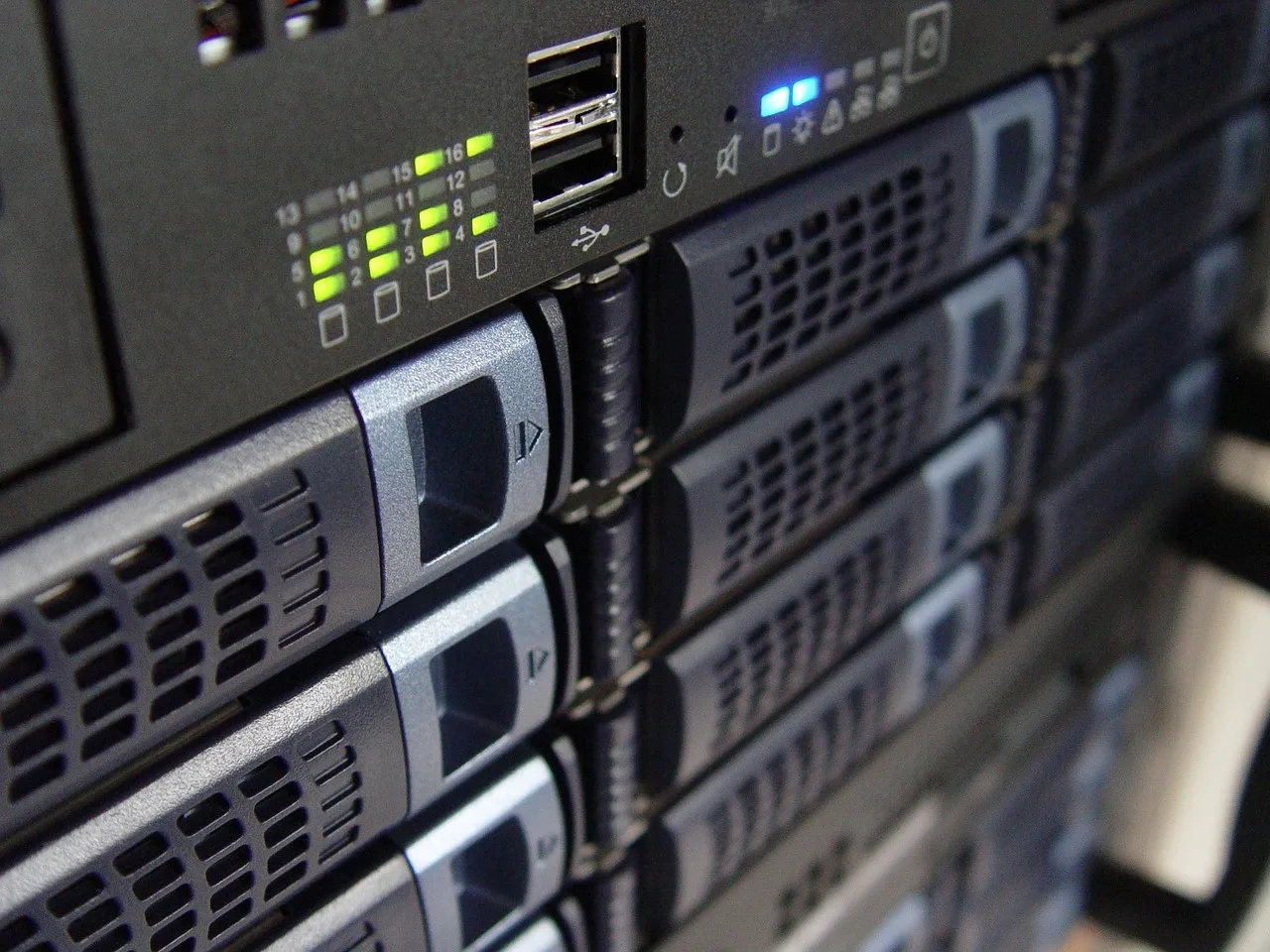
The web servers that power the internet live in data centers — specialized buildings designed and operated for the sole purpose of housing computing equipment at massive scale, with infrastructure that addresses the core physical threats to server reliability: power interruption, overheating, network disconnection, physical intrusion, and fire. A modern Tier III or Tier IV data center is an engineering marvel: the building is fed by multiple independent connections to the electrical grid, with on-site diesel generators capable of running for days on stored fuel, and battery-based uninterruptible power supplies that bridge the gap between grid failure and generator startup without a millisecond of power interruption. The cooling infrastructure is equally redundant, with precision air conditioning systems or liquid cooling loops maintaining server intake temperatures between 18°C and 27°C regardless of outdoor weather, because server CPUs that overheat will automatically throttle clock speeds, degrading performance for every hosted website. The network infrastructure connects the data center to multiple internet backbone providers through physically diverse fiber paths entering the building at different points, ensuring that a severed fiber bundle on one side of the city does not disconnect the data center. Physical security involves perimeter fencing, mantraps requiring biometric authentication, video surveillance covering every square foot, and on-site security personnel 24/7. This is the physical reality behind the abstraction of "the cloud" or "a web server" — vast, expensive, meticulously engineered facilities making possible the expectation of websites being available instantly, continuously, and reliably from anywhere in the world.
Server Hardware: CPUs, RAM, Storage, and Networking
The servers installed in data center racks are purpose-built for 24/7 operation under sustained load, and their hardware differs from consumer computers in ways that directly affect website performance and reliability. Server CPUs — typically Intel Xeon Scalable or AMD EPYC processors — prioritize core count and memory bandwidth over single-thread clock speed, because a web server's workload is inherently parallel: it simultaneously handles hundreds or thousands of independent requests that can be distributed across many cores without shared state. A typical hosting server in 2026 might have a single AMD EPYC 9754 processor with 128 cores and 256 threads, allowing it to process thousands of simultaneous PHP requests or serve static files to tens of thousands of concurrent visitors. Server RAM uses Error-Correcting Code memory, which can detect and correct single-bit memory errors caused by cosmic radiation or electrical interference — a capability that consumer RAM lacks and that prevents silent data corruption that would otherwise cause website errors or database corruption over months of continuous operation.
Server storage has transitioned almost entirely to NVMe solid-state drives in 2026, configured in RAID arrays that provide both performance and redundancy. A RAID-1 configuration mirrors data across two identical drives so that if one drive fails, the server continues operating from the surviving drive without data loss or downtime. A RAID-10 configuration stripes data across mirrored pairs, providing both redundancy and improved read performance because the server can read from multiple drives simultaneously. Enterprise NVMe drives are rated for several drive writes per day — meaning you can overwrite the entire capacity of the drive multiple times daily for five years without exhausting its write endurance — and deliver random read performance of 500,000 to 1,000,000 IOPS, compared to roughly 100,000 IOPS for consumer NVMe drives. Network connectivity to each server is typically provided by a 10 Gbps or 25 Gbps fiber connection to a top-of-rack switch that aggregates traffic from dozens of servers and connects upstream to the data center's core network. For the simplest explanation of how these hosting technologies come together in practice, see our complete guide to shared hosting, which shows how server hardware is partitioned to serve multiple customers simultaneously.
Static vs Dynamic: The Two Ways Web Servers Generate Content
Static Content: Ready-to-Serve Files
A static website consists of pre-built files — HTML documents, CSS stylesheets, JavaScript code, images, fonts, and videos — that sit on the web server's filesystem in exactly the form they will be delivered to visitors. When a browser requests a static page, the web server simply locates the corresponding file on disk, reads it, and sends it. There is no computation involved, no database query, no template rendering, no server-side code execution. This is the fastest possible way to serve a web page, and it is also the most reliable and the most scalable: a properly configured web server can serve millions of static file requests per hour from a single machine without breaking a sweat. Static websites are typically built using static site generators like Hugo, Jekyll, Eleventy, or Astro, which take content written in Markdown, apply templates, and generate a complete set of HTML, CSS, and JavaScript files that can be uploaded to any web server, including the most basic shared hosting plan. The trade-off is that static websites cannot provide personalized content, user accounts, real-time data, or interactive features requiring server-side processing — every visitor sees the same pages, and any content change requires rebuilding and redeploying the site.
Dynamic Content: Generated on Demand
A dynamic website generates pages at the moment they are requested, assembling content from databases, personalizing the output based on who is requesting it, and incorporating real-time data like current stock prices, weather conditions, or live sports scores. When you visit a WordPress blog and see the latest posts, a comments section with recent reader submissions, a sidebar showing your logged-in username, or a search results page responding to your specific query, you are interacting with a dynamically generated page. The web server receives your request, passes it to an application server or scripting engine, which queries one or more databases, executes business logic, renders templates, and returns a complete HTML page that was assembled specifically for you, at that moment, based on the current state of the database and your session context. This dynamic generation is computationally expensive compared to serving a static file — a WordPress page might execute 20 to 100 database queries and run hundreds of lines of PHP code — but it enables the personalized, interactive, data-driven web experiences that define modern internet usage. The performance challenge of dynamic content is why caching is the most important optimization in web hosting: if a dynamic page is identical for all anonymous visitors, caching it as a static HTML file after the first generation means the server only does the expensive work once, serving subsequent visitors from the cache with near-static-file performance. Hosting Captain's shared and VPS hosting plans include pre-configured caching layers specifically tuned for dynamic CMS platforms, ensuring that even database-driven websites deliver static-level performance for the vast majority of visitor traffic.
Common Misconceptions About Web Servers
"The Cloud" Is Not a Replacement for Web Servers
A persistent misconception, particularly among non-technical website owners, is that "the cloud" has somehow rendered web servers obsolete — that instead of a server, your website now lives in some amorphous digital space that requires no physical hardware. The reality is that the cloud is simply a different model for provisioning and managing web servers: instead of leasing a specific physical machine in a specific data center rack, you are using virtual servers that run on large clusters of physical machines managed by a cloud provider. Your website still runs on web server software executing on physical hardware located in physical data centers. The cloud model adds layers of abstraction — virtual machines, containers, auto-scaling groups, load balancers — that make it easier to scale capacity up and down, but at the bottom of every cloud stack is a physical server humming in a rack, running an operating system, executing web server software, and responding to HTTP requests exactly as it has for the past thirty years. Understanding this continuity is essential because it demystifies the cloud and reveals that the fundamental skills and knowledge associated with what is a web server remain as relevant in 2026's cloud-dominated landscape as they were when Apache first started serving pages in 1995.
A Web Server Is Not the Same as a Website
Another common confusion conflates the web server (the machine and software that delivers content) with the website itself (the content that gets delivered). A web server can host hundreds or thousands of different websites simultaneously — this is called virtual hosting and is the standard operating model for shared hosting providers. Each website has its own domain name, its own directory of files on the server, its own database, and its own configuration, but they all share the same web server software, the same physical CPU and RAM, and the same network connection. This distinction matters practically because it means the performance and security of your website can be affected by other websites on the same server (the "noisy neighbor" problem in shared hosting), and it means that moving your website from one hosting provider to another — a migration — involves copying your website's files and database to a different web server, not moving the server itself. Our web hosting myths guide addresses this and nine other common misconceptions that cause beginners to make expensive and avoidable mistakes when purchasing hosting.
Web Servers Can Run on Almost Anything, But Shouldn't
It is technically true that you can run a web server on almost any computing device — a ten-year-old laptop, a smartphone, a Raspberry Pi, even some smart refrigerators with modified firmware. The software requirements are minimal: a TCP/IP network stack, the ability to listen on a port, and enough storage to hold your website files. This technical accessibility sometimes leads beginners to think they can save money by hosting from home on repurposed hardware. The practical problems with this approach are immediate and severe: residential internet connections are not designed for reliable inbound traffic and most ISPs prohibit running servers in their terms of service; the upload speeds on residential connections are typically a fraction of download speeds, bottlenecking your visitors' experience; your home IP address may be dynamically reassigned, breaking your DNS configuration; and exposing a device on your home network to inbound internet traffic creates a security vulnerability that professional hosting providers spend millions of dollars securing against. The economics of professional hosting — where a $5 per month shared hosting plan provides a server in a climate-controlled, generator-backed, multi-homed data center with 24/7 security monitoring — make self-hosting from home a false economy that saves a trivial amount of money in exchange for dramatically worse reliability, speed, and security.
Frequently Asked Questions
What exactly is a web server in simple terms?
A web server is a computer connected to the internet that runs software designed to receive requests from browsers and respond with web pages. When you type a website address into your browser, the browser sends a request to that website's web server, which locates the requested page (either as a pre-built file or by generating it dynamically from a database) and sends it back to your browser to display. The term can refer to either the physical computer or the software program (like Apache or Nginx) that handles the requests, a dual meaning that can cause confusion but is standard throughout the industry.
What is the difference between a web server and web hosting?
A web server is the actual machine and software that delivers web pages. Web hosting is the service of providing access to a web server — the hosting company owns and operates the servers in a data center and rents space on them to customers who want their websites to be accessible on the internet. When you purchase web hosting, you are essentially renting a portion of a web server's resources (storage space, processing power, memory, bandwidth) without having to buy, configure, secure, or maintain the physical server yourself. Hosting Captain offers web hosting plans across shared, VPS, and dedicated server tiers, each providing different levels of web server resource allocation to match different website requirements and traffic volumes.
Do I need to understand web servers to host a website?
No. This is one of the primary value propositions of managed web hosting: the hosting provider handles all server-level configuration, maintenance, security patching, and troubleshooting, while you manage your website content through a graphical control panel or content management system like WordPress. You do not need to know what an Nginx worker process is or how to configure PHP-FPM pools to successfully run a website on shared or managed hosting. However, understanding the basics covered in this article — what a web server does, how requests flow, the difference between static and dynamic content — will help you make better hosting decisions, troubleshoot common issues more effectively, and communicate more productively with your hosting provider's support team when problems arise.
How many websites can one web server host?
A single web server can host anywhere from one to thousands of websites, depending on the server's hardware specifications, the traffic and resource consumption of each website, and whether the server uses shared hosting architecture (many websites sharing resources) or is dedicated to a single high-traffic site. A typical shared hosting server in 2026 hosts between 200 and 1,000 websites, using resource isolation technologies like CloudLinux to prevent any single website from consuming enough CPU, memory, or I/O to degrade performance for others on the same machine. At the other extreme, a website like Netflix or Amazon operates across tens of thousands of web servers distributed globally, with each server handling a fraction of total traffic. The appropriate hosting configuration for your website depends on its traffic volume, resource requirements, and growth trajectory, which Hosting Captain's support team can help assess during plan selection.
Billy Wallson is a senior operations director with over 15 years of experience scaling remote teams and implementing lean business strategies.
Frequently Asked Questions
This guide covers the practical decision points — pricing, performance, and when it makes sense for your situation — based on current 2026 data.
Pricing varies by provider and plan tier; see the cost breakdown section above for current ranges and what's actually included at each price point.
Look closely at uptime guarantees, renewal pricing (not just the first-year discount), and how responsive support actually is — all covered in detail in this article.
Hosting Captain has been exceptional for my e-commerce store in Pune. The NVMe SSD speed is
noticeable, and their support team responds within minutes. Highly recommended for any
Indian business!
Ryan John, Pune
Great Value for Money
Switched from a US-based host to Hosting Captain and my website loads 3x faster for Indian
visitors. The free SSL and cPanel are great, and the pricing is unbeatable. Very satisfied
customer!
Priya Mehta, Mumbai
Reliable VPS Hosting
I've been using their VPS plan for 2 years now. 99.9% uptime is not just a claim — it's
reality. My client projects run without interruption. The KVM virtualization gives me full
control I need.
Amit Kumar, Bangalore
Excellent 24/7 Support
The support team helped me migrate my entire WordPress site at 2 AM without any downtime.
This level of service is rare in Indian hosting. Worth every rupee!
Sunita Patel, Ahmedabad
Perfect for Startups
As a startup, budget matters. Hosting Captain's Business plan covers everything we need —
multiple websites, free SSL, daily backups — at a fraction of what international hosts
charge.
Vikram Singh, Delhi
Professional Dedicated Server
Our high-traffic news portal needed a dedicated server. Hosting Captain's DS Business plan
handles 100K+ daily visitors effortlessly. Their team provisioned everything within 4 hours!
Meena Krishnaswamy, Chennai
Trusted Technologies & Partners
Start Your Website with Hosting Captain
From personal blogs to enterprise solutions, we've got you covered!