Billy Wallson
Senior DirectorBilly Wallson is a senior operations director with over 15 years of experience scaling remote teams and implementing lean business strategies.
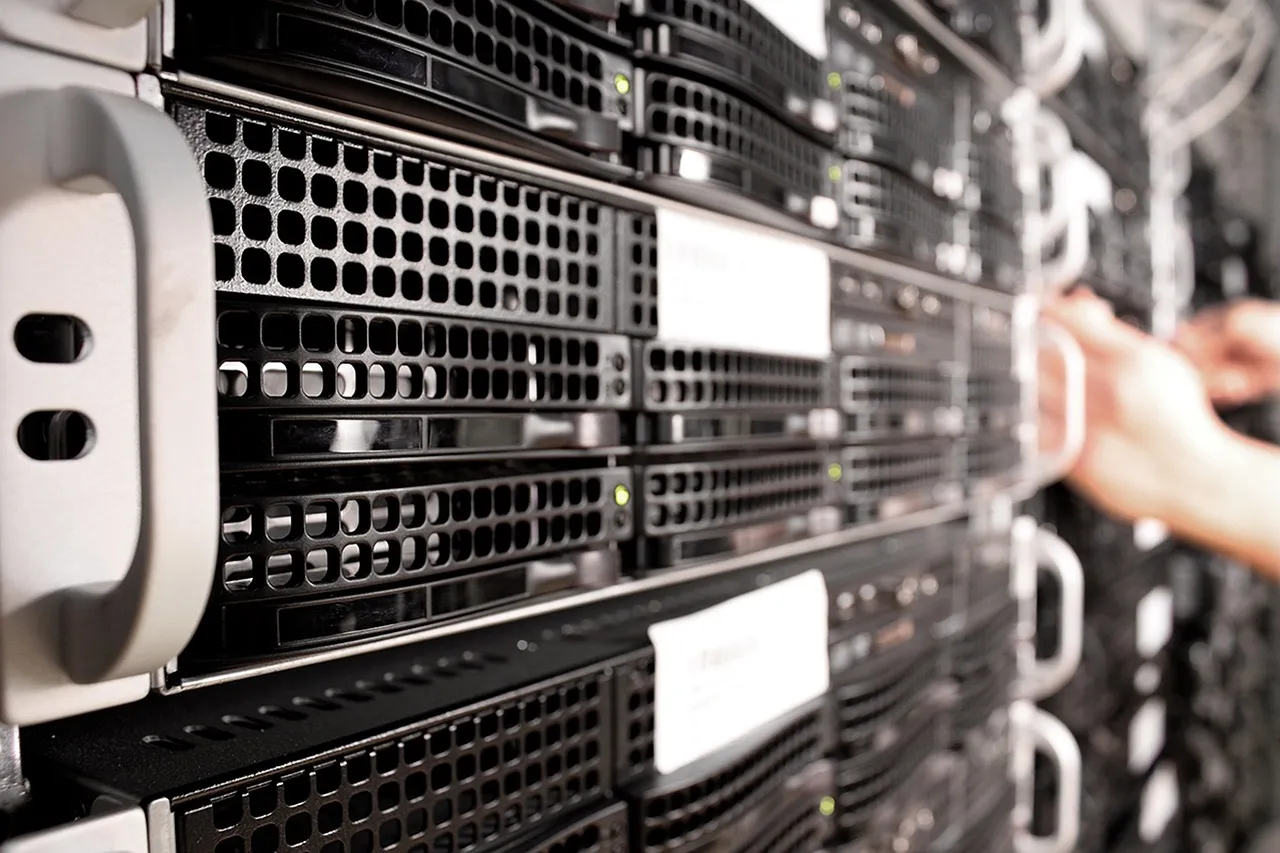
When you sign up for a shared hosting plan, you are renting space on a server that lives inside a physical data center somewhere — possibly across town, possibly on another continent. Most shoppers focus on the monthly price, the storage limit, and whether the plan includes a free SSL certificate, but very few pause to ask what kind of facility houses their website. That facility's design, redundancy, and fault tolerance have a direct, measurable impact on how often your site stays online, how long it takes to recover from a power failure, and whether a routine maintenance event knocks your business offline for six hours or six minutes. The framework used to classify these facilities is the Uptime Institute's Tier Standard — a four-level system that ranks data centers by their infrastructure resilience, from Tier I (basic, single-threaded) to Tier IV (fully fault-tolerant, no single point of failure). Understanding what each tier means gives you a sharper lens for evaluating hosting providers who bury their data center specifications behind vague marketing phrases like "world-class infrastructure" and "enterprise-grade facilities."
At Hosting Captain, we have reviewed hundreds of shared hosting plans across dozens of providers, and we consistently find that data center tier is one of the most under-discussed factors in hosting purchase decisions. Most consumers assume all data centers are essentially the same — a cold room with racks of servers and backup generators — but the engineering gap between a Tier I facility and a Tier IV facility is roughly equivalent to the gap between a bicycle and a commercial airliner in terms of the redundancy, testing, and fault isolation built into the design. This guide walks through the Uptime Institute classification system in detail, explains what each tier means in practical terms for shared hosting reliability, and answers the question that matters most to a website owner writing a monthly hosting check: does your provider's data center tier actually affect your site's uptime, speed, and data safety?
We also cover how to investigate what tier your current or prospective host actually uses — a task that is harder than it sounds, because few shared hosting companies advertise their data center tier on their pricing pages — and what certifications beyond the tier system (SOC 2, ISO 27001, PCI DSS) tell you about physical security, operational maturity, and data handling practices. If you are still building your foundational understanding of shared hosting, our complete beginner's guide to shared hosting is the best starting point before diving into the infrastructure-level details covered here. For readers concerned specifically with uptime promises and how they are enforced, our deep dive into shared hosting uptime guarantees and the fine print complements this article by examining the contractual side of the reliability equation. And if your site has outgrown shared hosting entirely and you are evaluating the next step, our complete guide to VPS hosting for beginners explains how the infrastructure equation changes when you move to a virtual private server environment.
The Uptime Institute, founded in 1993, developed the Tier Classification System as a standardized methodology for evaluating data center infrastructure independently of vendor marketing claims. Unlike generic auditor checklists that verify basic operational practices, the Tier Standard evaluates the physical topology of a data center — the actual arrangement of power distribution paths, cooling circuits, network connectivity, and mechanical systems that determine whether a facility can survive component failures without interrupting IT operations. The system defines four tiers (I through IV), each representing a progressively higher level of infrastructure redundancy, concurrent maintainability, and fault tolerance. A facility does not earn a Tier certification by self-declaring; the Uptime Institute sends professional services engineers to conduct on-site validation of design documents, installed equipment, and operational procedures before issuing either a Tier Certification of Design Documents (TCDD), a Tier Certification of Constructed Facility (TCCF), or a Tier Certification of Operational Sustainability (TCOS) — three distinct certifications that verify different lifecycle stages of the data center.
The distinction between these three certifications matters because a data center can be designed to Tier III specifications on paper but fail to meet the standard in its constructed form due to installation errors, equipment substitutions, or value engineering that removed redundant components after the design phase. A TCCF certification confirms that the facility as built matches the Tier-certified design, while a TCOS certification goes a step further and verifies that the operational behaviors — staffing levels, maintenance schedules, spare parts inventory, training programs — support the tier's intended uptime objectives over the long term. When a shared hosting provider says their data center is "Tier III equivalent" or "built to Tier III standards" without displaying an actual Uptime Institute certificate, you are looking at a marketing claim that has not been independently validated. The hosting industry is full of such claims, and we will cover how to distinguish genuine certifications from marketing language later in this guide.
It is also important to understand that the Tier Standard measures infrastructure availability — the mechanical and electrical systems that supply power and cooling to IT equipment — and explicitly does not measure the reliability of the servers, storage arrays, or network switches inside the racks. A Tier IV data center can still experience an outage if the server your shared hosting account lives on suffers a CPU failure, a memory error, or a misconfigured software update, because those failures occur at the IT equipment layer rather than the facility infrastructure layer. This distinction is fundamental to understanding why a Tier IV data center does not automatically translate to 100% uptime for your $3.99 per month shared hosting plan. The facility's infrastructure may be bulletproof, but your site's availability also depends on the host's server hardware quality, software configuration management, DDoS mitigation capability, and support response procedures — none of which the Tier Standard evaluates.
The Uptime Institute's methodology has become the de facto global standard for data center classification precisely because it is rigorous, independently verified, and focused on measurable infrastructure topology rather than marketing narratives. However, the certification process is expensive and time-consuming — design certification alone can cost tens of thousands of dollars and take months of engineering review — which means that many well-engineered data centers operated by smaller regional hosting companies are genuinely built to a specific tier's requirements but never pursue formal certification because the cost would be passed through to customers in the form of higher hosting prices. This creates a gray area where an uncertified facility may deliver Tier III levels of reliability in practice, but a customer has no independent verification of that claim beyond trust in the provider's word and reputation. At Hosting Captain, we encourage readers to weigh certifications as an important signal but not the only signal; operational track record, third-party monitoring data, and transparent incident reporting often reveal more about a provider's actual reliability than a certificate on a website footer.
A Tier I data center represents the most basic level of infrastructure design recognized by the Uptime Institute classification system. The defining characteristic of Tier I is a single, non-redundant path for power distribution and cooling — one utility feed, one uninterruptible power supply (UPS) system, one set of cooling units, and one distribution path that carries electricity from the utility entrance to the server racks without any alternative routing if a component fails. When any piece of equipment along that single path requires maintenance, is taken offline by a fault, or fails unexpectedly, the entire data center — and every server inside it — loses power or cooling until the issue is resolved. The Uptime Institute's benchmark availability for a Tier I facility is 99.671%, which translates to approximately 28.8 hours of downtime per year, or roughly 2.4 hours of unscheduled outages every single month.
In practice, a Tier I data center looks like a well-built server room rather than a hardened commercial data center. It typically has engine generators for backup power — usually a single generator with a manual or automatic transfer switch — but lacks the redundant generator capacity, paralleling switchgear, and dual electrical pathways that higher tiers require. The cooling system is similarly single-threaded: one set of computer room air conditioning (CRAC) units or air handlers, with no capacity to maintain temperature and humidity if a unit fails or is taken offline for filter replacement. Scheduled maintenance at a Tier I facility requires a complete shutdown window — meaning every shared hosting server in that data center goes dark while technicians service the UPS batteries, test the generator, or clean the cooling coils. For a shared hosting customer, this means planned outages that your hosting provider may or may not communicate clearly in advance.
Tier I facilities are not necessarily dangerous or negligent — they are designed for applications where downtime causes inconvenience rather than revenue loss or safety risks. A small regional hosting company serving a few hundred local business websites might operate perfectly adequately from a Tier I facility, provided the company is transparent about the downtime trade-off and prices its plans accordingly. The issue, from a consumer perspective, is that shared hosting companies operating from Tier I data centers almost never advertise that fact on their sales pages. The pricing page shows "99.9% uptime guarantee" in bold text, but the underlying infrastructure — with its single power path and mandatory shutdowns for maintenance — is physically incapable of delivering 99.9% uptime over a full year without significant luck and tightly scheduled maintenance during the lowest-traffic hours. This gap between advertised promises and physical reality is where the data center tier becomes a consumer protection issue, not merely a technical classification.
For shared hosting customers, the practical implication of hosting on a Tier I infrastructure is that you should expect periodic unplanned outages — not just the scheduled maintenance windows — because any single component failure anywhere in the electrical or mechanical chain drops the entire facility. A UPS battery failure, a utility power fluctuation that the generator fails to catch, a cooling pump seizure on a hot summer day — any of these events will take your site offline, and the recovery time depends entirely on how quickly the data center's on-site or on-call staff can diagnose the problem, source replacement parts, and bring the equipment back online. Tier I facilities are not required by the standard to have 24/7 on-site staffing, which means a failure at 3 AM on a Sunday morning might not be addressed until the first-shift technician arrives on Monday. If your business depends on weekend traffic — an e-commerce store, a restaurant site, an event ticketing page — the staffing gap at a Tier I facility alone is reason to consider whether the hosting plan is appropriate for your use case.
Tier II data centers improve upon Tier I by introducing redundant capacity components — additional UPS modules, backup generators, and cooling units that can take over if a primary component fails — while still maintaining a single distribution path for power and cooling to reach the IT equipment. In a Tier II facility, the utility feed enters the building, passes through a single set of switchgear and distribution panels, and follows one electrical pathway to the server racks, but each piece of equipment along that pathway (the UPS, the generator, the cooling pumps) has a backup unit that can be brought online, either automatically or manually, when the primary unit fails. The Uptime Institute benchmark availability for Tier II is 99.741%, which corresponds to approximately 22.7 hours of downtime per year — a meaningful improvement over Tier I's 28.8 hours, but still far from the near-perfect uptime that most consumers assume they are buying when a hosting plan advertises "99.9% uptime."
The single distribution path that defines both Tier I and Tier II is the critical constraint that limits these facilities, because it means that any maintenance activity on the shared electrical or mechanical pathway requires taking that pathway offline — shutting down the servers served by that path. If a Tier II data center has a single power distribution unit (PDU) feeding an entire row of racks, replacing that PDU or even retorquing its electrical connections requires a shutdown of every server connected to it. The redundant components in a Tier II facility protect against unplanned equipment failures — a UPS module that dies unexpectedly, a generator that fails to start — but they do not enable concurrent maintenance, the ability to service infrastructure without interrupting IT operations. This distinction between component redundancy and path redundancy is the single most important concept in the entire Tier classification system, and it is the dividing line between facilities where maintenance requires downtime (Tier I and Tier II) and facilities where maintenance can be performed without ever powering down a server (Tier III and above).
Shared hosting companies operating from Tier II facilities are far more common than those operating from Tier I facilities, particularly among mid-market providers that run their own servers in colocation data centers rather than building and certifying their own facilities. A typical Tier II colocation data center might house dozens of hosting companies, each renting a few racks or a private cage, with the facility operator responsible for power, cooling, and physical security while the hosting companies manage their own servers, switches, and storage inside their rented space. For the shared hosting customer, this arrangement introduces an additional layer of complexity: your hosting provider might maintain redundant server hardware — dual power supplies, RAID storage arrays, clustered hypervisors — but those servers are ultimately plugged into a facility whose power and cooling infrastructure has a single distribution path and cannot sustain concurrent maintenance. The hosting provider's infrastructure redundancy is a partial mitigation, but it cannot fully compensate for the facility-level constraint.
The maintenance shutdown requirement at Tier II facilities is a real operational issue that affects shared hosting customers more than the raw uptime statistics might suggest. A Tier II data center must schedule maintenance windows — typically quarterly or semi-annually — during which portions of the electrical and mechanical infrastructure are taken offline for inspection, testing, and repair. Some hosting companies mitigate this by migrating virtual instances or shared hosting accounts to servers in a different data center before the maintenance window, but shared hosting accounts are not virtual machines that can be live-migrated; they are directories and databases on a physical server, and moving them requires a migration process that itself involves downtime or at least a DNS propagation delay. If your shared hosting provider does not have a secondary data center to shift workloads into during Tier II maintenance windows — and most budget providers do not — your site will be offline for however long the facility maintenance takes, usually measured in hours rather than minutes. A Mozilla web server guide explains the physical infrastructure dependencies that make web servers inherently vulnerable to such facility-level maintenance events.
Tier III represents a fundamental architectural leap beyond Tier II — not an incremental improvement but a completely different approach to infrastructure topology. The defining characteristic of Tier III is concurrent maintainability: every component in the power and cooling infrastructure can be taken offline for planned maintenance, replacement, or testing without interrupting IT operations. This is achieved by providing multiple independent distribution paths for power and cooling — typically dual electrical pathways from separate switchgear panels, each capable of carrying the full design load — so that one path can be completely de-energized for maintenance while the other path continues supplying power to the servers without any interruption, transfer switching, or voltage fluctuation. The Uptime Institute benchmark availability for Tier III is 99.982%, corresponding to approximately 1.6 hours of downtime per year. That 1.6 hours represents only unplanned failures — scheduled maintenance contributes zero downtime because, by definition, the infrastructure is designed to be maintained while live.
The multi-path architecture of a Tier III facility manifests physically as redundant electrical infrastructure from the utility service entrance all the way to the server rack. A Tier III data center typically has two independent utility feeds or one utility feed plus on-site generation capable of carrying the full load indefinitely, multiple paralleled UPS systems each connected to a separate distribution bus, dual power distribution units feeding each rack, and two or more independent cooling loops with chillers, pumps, and air handlers sized such that any single cooling unit can be taken offline without exceeding thermal thresholds. The servers themselves need dual power supplies to take advantage of this redundancy — a server with a single power supply plugged into a Tier III facility's dual PDU setup still has a single point of failure at the power supply itself — but modern server hardware almost universally includes dual redundant power supplies as a standard configuration, and any hosting company operating in a Tier III facility should be deploying servers that can leverage the dual-path infrastructure.
For shared hosting customers, the practical benefit of a Tier III data center is that planned maintenance events — generator load bank testing, UPS battery replacement, cooling tower cleaning, electrical switchgear inspection — happen transparently in the background while your website continues serving visitors without any interruption. Your hosting provider no longer needs to send you a maintenance notification warning that your site will be offline from 2 AM to 6 AM on a Sunday for "scheduled infrastructure upgrades." The facility absorbs the maintenance activity without impacting the hosted services. This capability is particularly valuable for businesses that operate internationally across multiple time zones, where there is genuinely no "low traffic" window during which a maintenance shutdown would be acceptable — someone, somewhere, is always trying to access the site. Our guide on multilingual shared hosting considerations explores the time zone challenge in more detail, but the infrastructure-level takeaway is that Tier III's concurrent maintainability eliminates the need to find a maintenance window that works for every audience segment.
It is worth noting that Tier III certification requires not just dual-path infrastructure but also specific operational procedures that the Uptime Institute verifies during certification. The facility must have 24/7 on-site staffing, documented maintenance procedures for every piece of infrastructure equipment, a spare parts inventory sufficient to replace any single failed component without waiting for a shipment, and a formal training program that ensures staff can execute maintenance activities without accidentally taking down the live path while working on the offline path. These operational requirements are arguably as important as the physical infrastructure design, because a Tier III facility with dual electrical paths but poorly trained staff who inadvertently de-energize the wrong bus during maintenance will experience exactly the kind of unplanned outage that the tier is designed to prevent. The TCOS (Tier Certification of Operational Sustainability) specifically validates these operational behaviors, and a facility that holds only a TCDD or TCCF without TCOS may have the right equipment in place but lack the operational rigor to use it correctly.
The cost differential between a Tier II and Tier III data center is substantial — roughly 30% to 50% more per square foot for construction and 20% to 40% more for ongoing operations — because the dual-path architecture literally doubles much of the electrical and mechanical equipment while adding complexity in the control systems, switchgear, and automated failover logic. These costs flow through to the hosting companies that lease space in the facility, who in turn must charge higher prices to their shared hosting customers. A hosting company operating in a Tier III data center simply cannot match the pricing of a competitor running servers in a Tier II facility, because their infrastructure costs are structurally higher. This is why the cheapest shared hosting plans on the market — particularly those under $2.50 per month — are almost never hosted in Tier III or Tier IV data centers. The economics do not work. If you see a $1.99 per month shared hosting plan, you can be reasonably confident that the underlying data center is Tier I or Tier II, regardless of what the marketing copy says about "redundant power" and "enterprise infrastructure."
Tier IV is the highest classification in the Uptime Institute system and represents a data center that is not just concurrently maintainable — like Tier III — but also fault tolerant, meaning that the infrastructure can sustain at least one worst-case, unplanned failure event without any impact to IT operations. In a Tier III facility, a fire in an electrical room, a major water leak from a cooling pipe, or an equipment failure during an already-active maintenance event can still cause an outage because the dual-path architecture is designed to handle planned maintenance, not cascading failures. A Tier IV facility adds additional layers of compartmentalization, automated fault detection, and physical isolation such that a failure in any single system — even a catastrophic one — is contained before it affects the servers. The Uptime Institute benchmark availability for Tier IV is 99.995%, which translates to approximately 26.3 minutes of downtime per year, with the explicit requirement that none of that downtime be caused by infrastructure failures — only by IT equipment failures outside the scope of the Tier Standard.
The engineering that makes Tier IV fault tolerance possible involves physically separating redundant systems into distinct fire compartments, installing automated fault detection and isolation systems that can disconnect a failed component within seconds, and implementing continuous cooling — the requirement that the data center's cooling systems maintain stable temperature and humidity for at least 96 hours without any external utility power or water supply. That 96-hour outage protection is a Tier IV-specific requirement not present in Tier III: the facility must have enough on-site fuel storage, generator capacity, and cooling water reserves to operate entirely independently of the outside world for four full days, assuming a worst-case scenario where both utility power and municipal water are completely unavailable. The generators and cooling systems must also be able to start and assume the full data center load without any interruption — no transfer switch delay, no brief power sag, no momentary loss of cooling — which requires sophisticated flywheel UPS systems, static transfer switches, and automated load-shedding controls that add significant cost and complexity.
Shared hosting companies operating from Tier IV data centers are relatively rare, and when they do exist, they tend to position their plans at the premium end of the shared hosting market — typically $8 to $15 per month for an entry-level shared plan — because the cost of Tier IV colocation space is proportionally higher. The primary users of Tier IV facilities are financial services firms, healthcare organizations subject to HIPAA, government agencies, and hyperscale cloud providers (AWS, Azure, Google Cloud) that build their own facilities and pursue Tier IV certification for availability zones where a regional outage would have systemic economic consequences. For a shared hosting company serving small businesses and personal websites, the incremental reliability gain from Tier III to Tier IV is difficult to justify economically, because the customers who genuinely need 99.995% uptime — and are willing to pay for it — have typically already moved beyond shared hosting to dedicated servers, managed VPS clusters, or cloud-native architectures. Our VPS hosting guide for beginners explains the infrastructure options available when shared hosting no longer meets your reliability requirements.
The 26.3 minutes of annual downtime that Tier IV permits may sound impressively small, but it is important to remember that this figure represents only infrastructure-caused downtime. The servers running your shared hosting account — the physical machines, their operating systems, the web server software, the database engine, the control panel — all sit outside the Tier IV infrastructure boundary and can fail independently. A Tier IV data center can supply perfect power and perfect cooling indefinitely, but if the Apache or LiteSpeed process on your shared server crashes due to a memory leak triggered by a neighboring account's poorly coded plugin, your site is down regardless of how many redundant generators are running in the basement. This is the fundamental limitation of evaluating shared hosting reliability through the lens of data center tier alone: the tier covers the facility's electromechanical infrastructure, which is responsible for a minority of real-world shared hosting outages. The majority come from software failures, resource exhaustion, configuration errors, and denial-of-service attacks — all of which occur above the infrastructure layer that the Tier Standard evaluates.
The honest answer — and one that the hosting industry does not make easy to discover — is that the vast majority of budget and mid-market shared hosting plans are served from Tier II or uncertified Tier III-equivalent facilities. The economics of shared hosting at the $2.99 to $5.99 price point simply cannot support Tier III certification costs, and the customers at that price point are not demanding facility tier transparency in the way that enterprise procurement teams do. A hosting company paying $800 per month for a full rack in a Tier II colocation facility can profitably sell shared hosting at $3 per account. That same hosting company paying $1,400 per month for a comparable rack in a certified Tier III facility must either charge $5 per account, accept lower margins, or increase server density — packing more accounts onto each physical machine — which degrades per-account performance and partially negates the reliability benefit of the higher-tier facility.
Among the shared hosting providers we have reviewed at Hosting Captain, a clear pattern emerges based on price point. The ultra-budget segment — plans under $2.50 per month — almost universally operates from Tier I or Tier II facilities, often using colocation space in regional data centers that were built before the Uptime Institute certification process existed and have never been retroactively certified. The mid-market segment — plans from $3 to $7 per month — often operates from Tier II or Tier III-equivalent facilities, with some providers holding a Tier III design certification (TCDD) but few holding the constructed facility certification (TCCF) or operational sustainability certification (TCOS). The premium shared hosting segment — plans above $8 per month, including managed WordPress hosting positioned as "shared" infrastructure — is where you begin to find providers operating from certified Tier III facilities with published certification documents. Tier IV is essentially absent from the shared hosting market; if a shared hosting provider claims Tier IV infrastructure, scrutinize whether they are referring to their own facility (unlikely) or a cloud provider's availability zone that they use as underlying infrastructure (more common, but not the same as operating your shared hosting servers directly in a Tier IV facility).
Large shared hosting brands — the companies you see advertised on podcast sponsorships, YouTube pre-roll ads, and affiliate review sites — often lease capacity from major colocation providers like Equinix, Digital Realty, CyrusOne, or NTT Communications rather than building and certifying their own data centers. These colocation providers do operate certified Tier III and Tier IV facilities, but the hosting company's presence inside that facility may not leverage the full tier capability. A hosting company renting a single cage in a Tier III Equinix facility is receiving Tier III power and cooling at the cage boundary, but the internal power distribution within the cage — the PDUs, the rack-level cabling, the switchgear — is the hosting company's responsibility and may not be configured with the dual-path topology that Tier III requires. The hosting company's servers may also have single power supplies, single network connections, or single storage arrays that reintroduce single points of failure even though the facility infrastructure is multiply redundant. The tier of the colocation building does not automatically translate to the tier of the hosting service operating inside it.
The practical takeaway for a shared hosting shopper is that you should not assume any particular tier based on brand recognition, price point, or marketing language. A hosting company that prominently displays "Tier III data center" on their website without linking to an actual Uptime Institute certificate or at least a colocation provider attestation is making a claim that, in our experience, is unverifiable by the customer and often refers to the colocation provider's facility certification rather than the hosting company's specific deployment within that facility. The most honest providers are those that either publish their Uptime Institute certification documents directly or acknowledge that they operate from "Tier III-equivalent" facilities and explain what that means in terms of power redundancy, cooling redundancy, and maintenance practices. The providers that say nothing at all about their data center tier are, by omission, telling you that the tier is not a selling point — and in the shared hosting market, that usually means Tier I or Tier II.
Investigating your shared hosting provider's data center tier requires a combination of direct inquiry, public documentation review, and third-party research, because the information is rarely presented clearly on the pricing or features pages where purchase decisions are made. The most straightforward approach is to ask the provider directly — through pre-sales live chat, a support ticket, or an email to their sales team — with a specific question: "What Uptime Institute tier certification does your primary data center hold, and can you provide the certification document or the name of the colocation provider?" A provider that answers with a specific tier and a certifying body within minutes is demonstrating operational transparency. A provider that responds with a vague phrase like "we use top-tier data centers" or "our facilities are built to Tier III standards" without providing any verifiable detail is giving you an answer that has no substance. The quality of the answer you receive to this question is, in itself, a useful signal about how the company handles infrastructure transparency more broadly.
If you already have a hosting account and want to determine where your server resides, a technical approach is to look up the IP address of your website — which you can find in your hosting control panel — and run a WHOIS or IP geolocation query to identify the IP block owner. Shared hosting providers often lease IP addresses from their colocation provider, and the IP block's registration data may reveal the colocation company (Equinix, Digital Realty, CyrusOne, etc.) and the specific data center facility. Once you know the colocation provider and facility name, you can search that provider's website for certification documentation. Major colocation providers publish their Uptime Institute certifications, SOC reports, and ISO certificates on their compliance pages, and those documents often list specific facilities by address along with their certified tier. This approach requires some technical comfort with WHOIS tools and reading infrastructure documentation, but it yields independently verifiable information rather than relying on the hosting company's marketing claims.
A simpler, though less direct, method is to search for news articles, press releases, and case studies that mention your hosting provider's infrastructure. Hosting companies that have invested in certified Tier III or Tier IV facilities typically issue press releases about those investments — they are legitimate differentiators worth publicizing — and those announcements often include specific facility names, certification levels, and colocation partners. If your provider has been operating for five years and has never published any information about their data center infrastructure, the absence of information is itself informative. Companies that operate from uncertified Tier I or Tier II facilities have a rational incentive to avoid the topic entirely, because drawing attention to their infrastructure would prompt comparisons with competitors who operate from higher-tier facilities, and those comparisons would not favor the lower-tier operator.
For readers evaluating shared hosting plans before purchasing, we recommend adding "What Uptime Institute tier certification does your data center hold?" to your pre-sales questions checklist. Our guide on how to choose a web host based on twelve factors that actually matter includes infrastructure transparency as one of its core evaluation criteria, and the tier question fits squarely within that framework. You can also cross-reference your findings with our analysis of cheap shared hosting plans to see how providers in the budget segment handle data center disclosure — the pattern, as we noted earlier, is that the cheapest plans are almost never hosted in certified Tier III or Tier IV facilities, and providers in this segment tend to deflect or avoid the tier question entirely.
The answer is nuanced, because data center tier addresses only one dimension of a multi-dimensional reliability equation. For a shared hosting customer running a personal blog that receives 200 visitors per day and generates no direct revenue, a Tier II facility that experiences 8 hours of unplanned downtime over a year — roughly the Tier II benchmark performance — is an inconvenience, not a business crisis. The site is unavailable for a handful of hours, visitors see an error page, and the world continues spinning. For a small e-commerce store generating $3,000 per month in revenue, those same 8 hours of downtime during business hours could mean $400 in lost sales, customer trust erosion, and abandoned carts that never return. The data center tier matters proportionally to the cost of downtime for your specific use case, and many shared hosting customers are in the first category — low traffic, low revenue, low downtime cost — where Tier II infrastructure is entirely adequate for their needs.
The tier matters most in three scenarios: when your website processes financial transactions and every minute of downtime costs measurable revenue, when your site is subject to a service-level agreement with your own clients that penalizes you for outages, and when your audience is geographically distributed across time zones such that there is no "off-peak" window to absorb planned maintenance shutdowns. In these scenarios, the ability of a Tier III facility to conduct maintenance without taking servers offline is the single most valuable infrastructure characteristic, because it eliminates the scheduled downtime that Tier I and Tier II facilities must periodically impose. The 1.6 hours of annual downtime that Tier III permits versus the 22.7 hours of Tier II is not just a statistical difference; it represents a fundamentally different operational model where planned maintenance does not require telling your customers that the site will be unavailable.
However, it would be misleading to suggest that data center tier is the primary determinant of shared hosting uptime. At Hosting Captain, we have tracked uptime across dozens of shared hosting providers over multiple years, and the correlation between advertised data center tier and actual measured uptime is weaker than most consumers would expect. We have seen hosting companies in Tier II facilities deliver 99.95% uptime over 12-month measurement periods because their server hardware, software configuration, and operational practices were excellent, and their Tier II facility experienced few unplanned outages during that window. We have also seen hosting companies in certified Tier III facilities deliver 99.85% uptime because their servers were overloaded, their software was misconfigured, or their support team responded slowly to application-layer failures. Data center tier reduces the probability of facility-caused outages, but it does nothing to prevent software crashes, resource exhaustion, DDoS attacks, or human configuration errors — and in our observation, these causes collectively account for the majority of real-world shared hosting downtime.
The honest assessment is that data center tier matters, but less than server hardware quality, software stack maintenance, per-account resource isolation (CloudLinux or similar), support team responsiveness, and DDoS mitigation capability — all of which exist above the facility infrastructure layer. If you are choosing between two shared hosting plans at similar prices and one provider discloses a certified Tier III facility while the other is vague or silent about its data center, the tier disclosure is a positive signal that tips the scale. But if you are choosing between a well-reviewed host in a Tier II facility and a poorly reviewed host in a Tier III facility, the host's operational track record should outweigh the facility tier every time. For readers who want to understand the uptime guarantees that hosting companies attach to their plans and how those guarantees intersect with the underlying infrastructure reality, our deep dive into shared hosting uptime guarantees is the logical next read after this article.
The relationship between the Uptime Institute's tier benchmarks and the uptime guarantees that shared hosting providers advertise is less direct than most consumers assume. The Uptime Institute benchmark of 99.671% for Tier I is a statistical expectation based on the infrastructure topology, not a contractual commitment, and a hosting company operating from a Tier I facility is free to advertise a 99.9% uptime guarantee as long as their terms of service define uptime in a way that excludes enough outage causes to make the promise mathematically achievable — or as long as they are willing to pay the compensation credits when they fail to meet it. The benchmark and the guarantee are independent numbers derived from different methodologies, calculated by different parties, and enforced through different mechanisms. A hosting company's marketing department chooses the guarantee number; the data center's physical infrastructure determines the actual achievable uptime. These two numbers may have no relationship whatsoever.
A hosting provider operating from a Tier II facility who advertises a 99.9% uptime guarantee is making a promise that the facility's physical infrastructure, on its own, cannot meet — the Tier II benchmark is 99.741%, which permits approximately 22.7 hours of downtime annually versus the 8.76 hours that 99.9% allows. The host can still achieve 99.9% in practice if the facility performs better than its benchmark, if the host's server-level redundancy (dual power supplies, RAID storage, failover clustering) mitigates facility-level failures, or if the host excludes enough downtime causes from the uptime calculation to make the guarantee easier to satisfy. The third strategy is, in our experience, the most common approach: shared hosting companies define uptime narrowly, exclude scheduled maintenance, DDoS attacks, customer-caused errors, and force majeure events, and then measure uptime using their own internal monitoring tools that may or may not detect brief outages lasting under five minutes. The result is a guarantee that appears robust on the pricing page but covers only a narrow slice of potential outage scenarios, and the underlying data center tier — whether Tier I or Tier III — is largely irrelevant to whether the guarantee is enforceable in practice.
Enterprise cloud providers and managed hosting companies at the premium end of the market offer service-level agreements (SLAs) that are structurally different from the uptime guarantees on budget shared hosting plans. An SLA typically defines uptime with reference to an external monitoring agent, includes automatic credit mechanisms that do not require the customer to file a claim, and sets compensation at a meaningful percentage of the monthly bill — often 10% to 100% depending on the severity and duration of the outage. These enterprise SLAs are backed by the infrastructure tier: a provider operating a Tier III or Tier IV facility can commit to 99.95% or 99.99% uptime with confidence because their facility infrastructure is engineered to deliver that level of availability before accounting for server-level failures. A budget shared hosting provider cannot credibly offer the same SLA structure because their facility cannot deliver the uptime and their margins cannot absorb the compensation payments. The gap between a shared hosting guarantee and an enterprise SLA is as much about the underlying infrastructure tier as it is about the business model and target customer, and consumers who conflate the two are setting themselves up for disappointment.
The practical advice for shared hosting shoppers is to treat the advertised uptime guarantee as a floor, not a ceiling, and to verify actual uptime independently using external monitoring tools like UptimeRobot, Better Uptime, or Pingdom. These tools check your site from geographically distributed locations every one to five minutes and provide an impartial record of availability that you can compare against the host's own status page and incident reports. If your monitoring data consistently shows lower uptime than the guarantee, you have the evidence needed to request compensation — and, more importantly, to evaluate whether the host is delivering the level of reliability that your site requires, regardless of what the data center tier or the marketing guarantee claims. At Hosting Captain, we consider independent uptime monitoring to be a standard practice for any site owner whose website matters to their business, and we recommend setting it up within the first week of launching on any shared hosting plan. The data center tier provides context for understanding why outages occur; the monitoring data tells you whether they are occurring at a frequency that warrants action.
Data center tier is one dimension of facility quality, but it is not the only dimension, and for many shared hosting customers — particularly those handling customer data, payment information, or content subject to regulatory requirements — other certifications and security practices may matter more than the tier classification. SOC 2 (Service Organization Control 2) is an auditing standard developed by the American Institute of CPAs (AICPA) that evaluates a service organization's controls related to security, availability, processing integrity, confidentiality, and privacy. A SOC 2 Type II report — which examines the operational effectiveness of controls over a sustained period, typically six to twelve months, rather than just their design at a single point in time — is the gold standard for demonstrating that a data center or hosting provider actually follows the security and operational procedures that their documentation describes. For a shared hosting customer, a provider's SOC 2 Type II report provides independent assurance that physical access to the data center is controlled and logged, that changes to production systems follow a documented change management process, that incident response procedures are tested and effective, and that customer data is handled according to stated policies. None of these controls are evaluated by the Uptime Institute tier certification.
ISO 27001 is the international standard for information security management systems (ISMS), published by the International Organization for Standardization and the International Electrotechnical Commission. An ISO 27001 certification demonstrates that the hosting provider or data center operator has implemented a systematic approach to managing sensitive information — including risk assessment methodologies, security policies, asset management procedures, access control policies, cryptography standards, and incident management processes — and has had that system audited by an accredited third-party certification body. Unlike SOC 2, which is primarily a North American framework, ISO 27001 is recognized globally and is often required by European clients subject to GDPR, by financial services regulators, and by enterprise procurement policies that mandate specific security certifications from infrastructure vendors. A shared hosting provider that holds ISO 27001 certification is signaling a level of organizational maturity around information security that goes beyond racking servers in a well-cooled room with backup generators.
Physical security measures — the on-the-ground controls that protect the data center from unauthorized access, theft, vandalism, and environmental threats — are another layer of facility quality that the tier classification addresses only partially. The Uptime Institute tier requirements include physical security elements such as perimeter fencing, mantraps, and access control systems, but the specificity and verification of these measures vary by tier and by certification scope. A comprehensive physical security posture for a data center hosting shared servers should include multi-factor authentication for all facility access (biometric plus access card plus PIN), 24/7 on-site security personnel with documented patrol schedules, video surveillance with at least 90 days of retention covering all entry points, loading docks, and equipment corridors, visitor logging and escort policies, and environmental monitoring for fire, water, temperature, and humidity with automated alerting. During our evaluation of shared hosting providers, we look for published physical security documentation that goes beyond boilerplate language; the providers that are genuinely proud of their physical security investments tend to describe specific measures rather than generic claims.
PCI DSS (Payment Card Industry Data Security Standard) compliance is relevant for shared hosting customers whose websites process, store, or transmit credit card data — even if the payment processing is handled by a third-party gateway like Stripe or PayPal that offloads much of the compliance burden. A shared hosting provider that maintains PCI DSS compliance at the infrastructure level has implemented network segmentation, access controls, vulnerability management, and logging practices that protect cardholder data, and their compliance status is verified by a Qualified Security Assessor (QSA) through annual audits. If your e-commerce site on shared hosting captures credit card numbers on your own checkout page — rather than redirecting to a hosted payment page — the hosting environment must be PCI DSS compliant, and most generic shared hosting plans do not meet that standard. The hosting provider's PCI DSS Attestation of Compliance (AOC) is the document to request when evaluating shared hosting for a payment-processing site, and it is a separate consideration from the data center tier. A Tier IV facility with no PCI DSS compliance is less suitable for an e-commerce store than a Tier II facility that holds a current PCI DSS AOC.
The combination of certifications that matters most depends on your site's specific requirements, but as a general guideline for shared hosting shoppers, prioritize as follows: if you process payments, PCI DSS compliance is non-negotiable and should be verified before signup. If you collect customer personal data (names, emails, addresses, phone numbers), ISO 27001 or SOC 2 Type II provides assurance that the host has audited data-handling controls. If your site is subject to GDPR, HIPAA, or other regulatory frameworks, verify that the host's certifications explicitly cover the relevant control domains — not all ISO 27001 certifications include the same scope of controls, and the Statement of Applicability (SoA) document defines exactly which controls are within scope. And if your primary concern is uptime and reliability rather than data security, the data center tier and independent uptime monitoring data should carry the most weight in your evaluation. In an ideal scenario, a shared hosting provider would transparently publish their data center tier certification, SOC 2 report, ISO 27001 certificate, and PCI DSS AOC — but in the real shared hosting market, providers that disclose even one of these documents are in the minority. This transparency gap is one of the reasons we created Hosting Captain: to surface the infrastructure and operational details that the industry's marketing pages systematically obscure.
A data center tier is a standardized classification of a facility's infrastructure resilience, defined by the Uptime Institute, an independent advisory organization founded in 1993. The four-tier system — Tier I through Tier IV — evaluates the physical topology of a data center's power distribution, cooling systems, network connectivity, and mechanical infrastructure to determine how well the facility can withstand component failures, sustain concurrent maintenance, and protect against unplanned outages. Tier I provides a single non-redundant path for power and cooling with a benchmark availability of 99.671%. Tier II adds redundant capacity components but retains a single distribution path, achieving 99.741%. Tier III introduces multiple independent distribution paths that enable concurrent maintainability — infrastructure can be serviced without shutting down IT equipment — with 99.982% availability. Tier IV adds fault tolerance, compartmentalization, and automated failure isolation, achieving 99.995% availability and requiring 96 hours of outage protection without external utility power or water. The Uptime Institute issues three types of certifications — Tier Certification of Design Documents (TCDD), Tier Certification of Constructed Facility (TCCF), and Tier Certification of Operational Sustainability (TCOS) — each verifying a different lifecycle stage of the data center.
Most shared hosting plans priced between $2.50 and $6 per month are hosted in Tier II or uncertified Tier III-equivalent facilities. Ultra-budget plans under $2.50 per month are typically hosted in Tier I or Tier II facilities where the economics do not support higher-tier certification. Premium shared hosting plans above $8 per month — including managed WordPress hosting — are more likely to operate from certified Tier III facilities, though even in this segment, formal Uptime Institute certification is not universal. Tier IV facilities are extremely rare in the shared hosting market because the cost premium cannot be justified by the price sensitivity of shared hosting customers. If a shared hosting provider does not disclose their data center tier, it is reasonable to assume Tier II or uncertified Tier III-equivalent infrastructure, because providers with genuine Tier III or Tier IV certifications almost always publicize that investment. You can verify by asking the provider directly, checking their website's legal or compliance pages, or looking up the colocation provider behind their IP address range.
No — data center tier reduces the probability of facility-caused outages (power failures, cooling failures, maintenance shutdowns) but does not prevent server-level failures (software crashes, resource exhaustion, misconfigurations) that cause the majority of shared hosting downtime. A Tier IV facility with perfect infrastructure can still experience an outage if the server running your shared hosting account suffers a software failure. In our monitoring across dozens of shared hosting providers, we have observed hosting companies in Tier II facilities delivering better real-world uptime than companies in Tier III facilities because the former invested more heavily in server hardware quality, software stack maintenance, and support team responsiveness. Data center tier is one contributing factor to overall reliability, not a standalone guarantee, and it should be evaluated alongside the provider's server hardware, per-account resource isolation technology, DDoS mitigation capability, and operational track record.
Ask the provider directly for their Uptime Institute certification document or the name of the colocation provider whose facility they use. A provider with a genuine certification will typically provide the certificate or direct you to the Uptime Institute's public directory of certified facilities. If the provider deflects with language like "Tier III equivalent" or "built to Tier III standards" without providing verifiable documentation, the claim has not been independently validated. An alternative approach is to look up your website's IP address through a WHOIS tool, identify the IP block owner (often the colocation provider), and search that provider's compliance page for facility-specific certifications. Major colocation companies like Equinix, Digital Realty, and CyrusOne publish their Uptime Institute certifications, SOC reports, and ISO certificates by facility address.
A Tier I facility is suitable for a small business website only if the business can tolerate approximately 29 hours of downtime per year — the Uptime Institute benchmark for Tier I — and the associated planned maintenance shutdowns that Tier I infrastructure requires. A local restaurant site, a personal portfolio, or a hobby blog that does not generate revenue directly can absorb this level of downtime without material harm. However, a small e-commerce store, a service business that relies on appointment booking, or any site where downtime during business hours loses revenue should consider Tier II at minimum, and preferably a provider operating from a Tier III facility that eliminates planned maintenance shutdowns entirely. The key variable is not the size of the business but the cost of downtime: if an hour of website unavailability costs you measurable money or customer trust, the hosting plan's infrastructure tier becomes an investment decision rather than a cost-minimization exercise.
Tier III introduces concurrent maintainability — every infrastructure component can be serviced without shutting down servers — achieved through dual independent power and cooling distribution paths. Tier IV adds fault tolerance on top of concurrent maintainability, meaning the facility can sustain at least one worst-case unplanned failure (fire in an electrical room, major water leak, equipment explosion) without any impact to IT operations, through physical compartmentalization and automated fault isolation. Tier IV also requires 96-hour outage protection — enough on-site fuel and cooling water to operate independently of external utilities for four days — which Tier III does not mandate. The benchmark availability difference is 99.982% for Tier III versus 99.995% for Tier IV, translating to roughly 1.6 hours versus 26 minutes of annual downtime. For shared hosting, the practical difference between the two is minimal because server-level failures dominate the uptime equation, and the cost premium of Tier IV pushes hosting plans into price ranges where most customers have already migrated to VPS or dedicated server environments.
Data center tier should be one factor in your evaluation, not the deciding factor. Server hardware quality (NVMe vs. SSD storage, CPU generation, RAM allocation), software stack (LiteSpeed vs. Apache, PHP version, caching architecture), per-account resource isolation (CloudLinux or similar), support responsiveness, backup frequency, and renewal pricing transparency collectively have a larger impact on your day-to-day hosting experience than the data center tier. Use the tier as a screening question to gauge the provider's infrastructure transparency: a provider that can clearly and verifiably answer "What tier is your data center?" is more likely to be transparent about other aspects of their service. A provider that deflects or gives a vague answer to the tier question is likely to be similarly opaque about server specifications, resource limits, and renewal pricing. For a deeper framework on evaluating these trade-offs, our guide on how to choose a web host based on twelve factors that actually matter provides a structured methodology that weighs data center quality alongside the other variables that determine hosting quality. And if your site is approaching the limits of shared hosting reliability, our complete guide to VPS hosting for beginners explains how the infrastructure equation shifts when you upgrade to a virtual private server environment.

Billy Wallson is a senior operations director with over 15 years of experience scaling remote teams and implementing lean business strategies.

Hosting Captain has been exceptional for my e-commerce store in Pune. The NVMe SSD speed is noticeable, and their support team responds within minutes. Highly recommended for any Indian business!
Switched from a US-based host to Hosting Captain and my website loads 3x faster for Indian visitors. The free SSL and cPanel are great, and the pricing is unbeatable. Very satisfied customer!
I've been using their VPS plan for 2 years now. 99.9% uptime is not just a claim — it's reality. My client projects run without interruption. The KVM virtualization gives me full control I need.
The support team helped me migrate my entire WordPress site at 2 AM without any downtime. This level of service is rare in Indian hosting. Worth every rupee!
As a startup, budget matters. Hosting Captain's Business plan covers everything we need — multiple websites, free SSL, daily backups — at a fraction of what international hosts charge.
Our high-traffic news portal needed a dedicated server. Hosting Captain's DS Business plan handles 100K+ daily visitors effortlessly. Their team provisioned everything within 4 hours!








From personal blogs to enterprise solutions, we've got you covered!
© 2026 Hosting Captain. All Rights Reserved by 'Apollo Hosting'.