Private Cloud vs Public Cloud: Defining the Two Models
The phrase private cloud vs public cloud gets reduced to ownership semantics in too many boardroom discussions — "public cloud means someone else's data centre, private cloud means ours" — but the distinction runs far deeper than who holds the purchase order for the servers. A public cloud is a multi-tenant infrastructure platform operated by a third-party provider (AWS, Google Cloud, Microsoft Azure, and hundreds of regional and niche providers) where compute, storage, and networking resources are shared across thousands or millions of customers, isolated by software-defined boundaries rather than physical separation. You provision virtual machines, databases, and object storage through an API or a web console, and the provider handles everything from the physical server hardware up to the hypervisor layer. Your application runs alongside other tenants' workloads on the same physical silicon, separated by the hypervisor's isolation guarantees and the provider's access control systems. This model has powered the cloud revolution of the past fifteen years and remains the default infrastructure choice for the majority of new digital businesses.
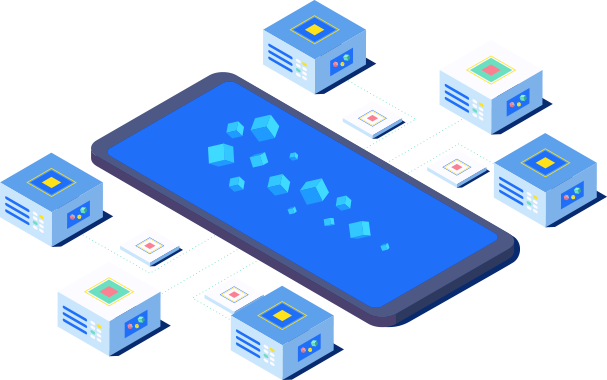
A private cloud, by contrast, is a single-tenant infrastructure environment where the compute, storage, and networking resources are dedicated to one organisation. The hardware may sit in your own on-premises data centre, in a colocation facility you lease, or in a hosting provider's cage where the provider manages the physical layer but the servers themselves are reserved exclusively for your use. The defining characteristic is not the physical location but the tenancy model: no other organisation's workloads run on your private cloud's hardware, and you control the full stack from the hypervisor level upward. Private clouds are built using the same virtualisation and orchestration technologies that power public clouds — VMware vSphere, OpenStack, Nutanix, or cloud-platform software like Azure Stack HCI and AWS Outposts — but the infrastructure is yours alone. The trade-off is that you absorb the capital expenditure, hardware lifecycle management, and capacity planning that the public cloud provider shoulders in the multi-tenant model. Understanding this foundational tenancy difference is essential because every other comparison point — cost, security, compliance, scalability, and operational burden — flows downstream from the question of who owns and operates the physical infrastructure.
The architectural similarity between the two models is often greater than the ownership difference suggests. A well-implemented private cloud running VMware vSAN on a cluster of enterprise servers delivers virtual machines, software-defined networking, and block and object storage through APIs and self-service portals that look remarkably similar to the public cloud experience. Organisations that adopt private cloud are not retreating to the era of manually racking servers and configuring RAID arrays through IPMI consoles — they are building or renting a single-tenant version of the same cloud primitives they would consume from AWS or Azure. The distinction is not cloud versus no-cloud; it is multi-tenant cloud versus single-tenant cloud. This nuance matters because the decision framework for private cloud vs public cloud is not about whether to adopt cloud-native practices — you can and should adopt infrastructure-as-code, CI/CD pipelines, and immutable deployments on either model — but about which tenancy model delivers the right balance of cost, control, compliance, and operational overhead for your specific workload profile. For a foundational primer on cloud infrastructure fundamentals that underpin both models, this Cloudflare cloud overview provides an accessible explanation of compute virtualisation, storage abstraction, and network overlays — the building blocks that both public and private cloud platforms are constructed upon.
It is also worth addressing a common terminological confusion: the phrase "private cloud" is sometimes used by hosting providers as a marketing label for what is essentially a managed dedicated server with a control panel, not a genuine cloud platform with API-driven provisioning, automated failover, and elastic resource pools. A true private cloud runs on a cluster of hypervisor nodes with shared, redundant storage — not a single server — and provides the orchestration layer that lets you provision, resize, and decommission virtual machines programmatically. When evaluating private cloud offerings, the key question is whether the infrastructure provides the API surface, automation, and resilience characteristics that justify the "cloud" label, or whether it is a managed dedicated server wearing cloud branding. The same applies in reverse: a public cloud that provisions your instances on a single physical host without distributed storage or automated failover is not delivering the resilience that the cloud model promises. The label matters less than the architecture underneath it, and the architecture is what determines whether your hosting choice will meet your availability requirements — a subject we explore in detail in the context of dedicated server infrastructure, which occupies an important middle ground between public and private cloud that deserves consideration in any comprehensive hosting strategy.
Cost Comparison: Capex, Opex, and the Numbers That Actually Matter
The cost dimension of the private cloud vs public cloud equation is where theory and practice diverge most dramatically, and where the financial models that work beautifully in spreadsheets collide with the operational reality of running infrastructure. The conventional narrative — public cloud converts capital expenditure into operational expenditure, private cloud requires upfront hardware investment — is directionally correct but so incomplete as to be misleading in isolation. The real cost comparison must account for hardware utilisation rates, the staffing required to operate each model, the cost of over-provisioning versus the cost of elasticity, data egress charges, software licensing, and the financial risk of capacity forecasting errors. When all of these factors are weighted honestly, the cost crossover point between public and private cloud is not a fixed threshold but a function of workload characteristics, scale, and operational maturity.
Public cloud operates on a pure opex model: you pay for compute by the hour or second, storage by the gigabyte-month, and data transfer by the gigabyte egressed. There is zero upfront capital commitment beyond potentially purchasing reserved instances or savings plans to secure discounts on long-term usage. For a startup or a new project with uncertain resource requirements, this zero-capex model is financially transformative — you can launch a production application on enterprise-grade infrastructure for less than the cost of a single office chair, and you only pay for the capacity you actually consume. A modest public cloud deployment — two compute instances, a managed database, 500 GB of block storage, and a load balancer — might run $400 to $800 per month for a workload serving tens of thousands of users. The challenge is that public cloud costs scale approximately linearly with usage, which means that a workload that costs $800 per month at 100 GB of data egress might cost $4,000 per month at 500 GB and $20,000 per month at 2.5 TB — not because compute or storage costs increased proportionally, but because data egress charges, which are among the most expensive line items in any public cloud bill, accumulate relentlessly with traffic growth. Bandwidth-intensive workloads — video streaming platforms, content delivery networks, large-file distribution services — can generate public cloud bills that are 5× to 10× higher than private cloud or dedicated alternatives for equivalent throughput.
Private cloud economics invert the capex-opnex balance. Building a private cloud requires either purchasing servers, storage arrays, and networking hardware outright (a capital expenditure that can range from $50,000 for a modest three-node cluster to over $500,000 for an enterprise-grade deployment with redundant storage, multiple racks, and high-availability networking) or leasing dedicated hardware from a hosting provider at a fixed monthly cost that bundles the hardware, data centre power and cooling, and basic hardware replacement into a predictable recurring expense. The monthly cost of a leased private cloud cluster — say, three servers with dual Xeon or EPYC processors, 256 GB to 512 GB of RAM each, and shared NVMe storage — typically ranges from $1,500 to $5,000 per month depending on the hardware generation, storage configuration, and managed service level. At first glance, $3,000 per month for a private cloud looks dramatically more expensive than $800 per month for a public cloud deployment. But the private cloud's $3,000 per month buys you a fixed pool of substantial capacity — often dozens of CPU cores, hundreds of gigabytes of RAM, and tens of terabytes of storage — that you can utilise at 100% around the clock without incremental charges. If your workload can fill that capacity, the per-unit compute cost on the private cloud may be one-quarter to one-third of the equivalent public cloud cost. The economic question is not "which is cheaper?" but "can you utilise the private cloud's capacity efficiently enough to amortise its fixed cost below the public cloud's variable cost for equivalent resources?"
Utilisation rate is the variable that makes or breaks private cloud economics. A private cloud cluster that runs at 25% average CPU utilisation — common in environments where capacity is provisioned to handle peak loads that only occur for a few hours per day — is wasting 75% of the capital or monthly lease cost on idle hardware. At that utilisation level, the per-effective-compute-unit cost of the private cloud approaches or exceeds public cloud on-demand pricing, and you would have been better served by a public cloud deployment that scales down during off-peak hours. Conversely, a private cloud running at 70% to 85% average utilisation — achievable when the workload is predictable and the capacity planning is accurate — delivers per-unit compute costs that public cloud cannot economically match. The staffing dimension further complicates the comparison. A private cloud requires either an internal team with expertise in hypervisor management, storage clustering, and network orchestration, or a managed service contract with a provider like HostingCaptain that handles the infrastructure operations. The cost of that expertise — whether in salaries or in managed service fees — must be added to the private cloud's total cost of ownership. Public cloud reduces but does not eliminate this staffing requirement; you still need engineers who understand cloud architecture, security groups, IAM policies, and cost optimisation, but you do not need engineers who can replace failed DIMMs or rebuild a degraded Ceph OSD. For organisations with an existing DevOps team that is already proficient in cloud-native tooling, the staffing delta between public and private cloud may be negligible. For organisations that would need to hire specialised infrastructure engineers to operate a private cloud, the staffing cost can erase the hardware savings for deployments below a certain scale.
Software licensing adds another layer to the cost comparison that is frequently overlooked in high-level analyses. Public cloud providers include the cost of the hypervisor and basic operating system licences in their instance pricing; you pay one hourly rate that covers the virtual hardware and the right to run a specific OS image. Private cloud deployments must separately license the virtualisation platform — VMware vSphere licensing can add $5,000 to $15,000 per socket in perpetual licensing costs plus annual support, while open-source alternatives like OpenStack, Proxmox, and oVirt eliminate the licensing line item but impose a higher operational expertise requirement. Windows Server licensing on private cloud is particularly expensive due to Microsoft's per-core licensing model, which can add thousands of dollars per server per year. Public cloud providers absorb these licensing costs into their instance pricing through volume agreements that individual organisations cannot match, which means that Windows-heavy workloads often tilt the cost equation toward public cloud even when the raw compute economics would otherwise favour private infrastructure. The cost analysis must therefore be workload-specific: a Linux-based microservice architecture running on open-source middleware may justify private cloud economics at a lower scale than a Windows-based .NET monolith that triggers per-core licensing premiums on every physical server in the cluster.
Illustration: Private Cloud vs Public Cloud Hosting: Which Fits Your Business?Security and Compliance Differences: The Real Boundaries
Security and compliance represent the dimension where the private cloud vs public cloud decision most frequently overrides purely financial considerations, because regulatory requirements create hard constraints that no amount of cost optimisation can negotiate around. The fundamental security difference between the two models is not about which is "more secure" in absolute terms — both can be hardened to standards that satisfy all but the most extreme threat models — but about the attack surface, the audit boundary, and the degree of control you retain over the infrastructure stack. Public cloud introduces a shared responsibility model where the provider secures the physical facilities, the hardware, the hypervisor, and the network fabric, while you secure everything in the guest operating system and above: OS patches, application code, firewall rules, IAM policies, encryption keys, and data access controls. The boundary between the provider's responsibility and yours is well-documented and heavily audited — the major hyperscale clouds maintain dozens of compliance certifications including SOC 1/2/3, ISO 27001, PCI DSS Level 1, HIPAA eligibility, and FedRAMP — but the boundary nonetheless exists, and misconfigurations on your side of it remain the leading cause of cloud security incidents.
Private cloud eliminates the multi-tenancy dimension of the attack surface. When your virtual machines run on physical hardware that no other organisation's workloads share, the hypervisor escape attack vector — the scenario where a vulnerability in the virtualisation layer allows one tenant's VM to access another tenant's memory or storage — is removed from your threat model entirely. This is not a purely theoretical concern: hypervisor vulnerabilities are discovered and patched regularly (Intel, AMD, and the hypervisor vendors publish multiple CVEs per year involving side-channel attacks, privilege escalation, and guest-to-host breakout), and while the major cloud providers patch these vulnerabilities aggressively, the window between disclosure and patch deployment represents a period of elevated risk that private cloud operators can close more rapidly because they control the patching schedule. For organisations handling data subject to national security classifications, trade secrets with existential business value, or regulated data where a multi-tenancy breach would trigger mandatory disclosure obligations and regulatory penalties, the elimination of the multi-tenancy attack surface can be a decisive factor in favour of private cloud regardless of the cost premium.
Data sovereignty and locality requirements interact with the public-versus-private decision in jurisdictionally specific ways. Public cloud providers offer an expanding roster of geographic regions — AWS alone operates in 30+ regions with announced plans for more — and generally support data residency commitments that keep customer data within a specified region. However, the provider's corporate structure, the nationality of its support personnel who may have administrative access to the infrastructure, and the legal frameworks of the provider's home country all create potential vectors through which foreign governments might assert legal access to data stored in the cloud. The US CLOUD Act, for instance, creates a legal framework under which US law enforcement can compel US-based cloud providers to produce data stored on their infrastructure regardless of where in the world that data physically resides. For organisations operating in jurisdictions with strict data localisation laws — Russia, China, certain Middle Eastern countries, and increasingly the EU under evolving digital sovereignty frameworks — a private cloud operated by a locally incorporated hosting provider whose personnel, corporate structure, and legal obligations sit entirely within the relevant jurisdiction may be not just preferable but mandatory. The dedicated server guide we maintain includes a detailed treatment of jurisdictional considerations for teams navigating multi-country compliance environments, many of which apply equally to private cloud infrastructure decisions.
Compliance audit scope represents a practical consideration that shapes the private-versus-public decision even when both models can technically achieve the required certifications. A public cloud's compliance certifications cover the provider's infrastructure layer; your auditor can accept the provider's SOC 2 report and ISO 27001 certificate as evidence that the physical and virtualisation layers meet the standard, reducing the scope of your own audit to the guest OS, application, and data layers. This shared audit model significantly reduces the cost and duration of compliance assessments — a PCI DSS assessment for an application running on AWS typically costs 30% to 50% less than the same assessment for an application running on self-managed infrastructure because the auditor can scope out the physical security, environmental controls, and hypervisor configuration. However, the shared audit model also introduces dependency risk: if your cloud provider's certification lapses, or if the provider refuses to share audit evidence in sufficient detail to satisfy your auditor, your own compliance posture is compromised through no fault of your own. A private cloud that you (or your managed hosting provider) control end-to-end eliminates this dependency but expands the audit scope to cover the full infrastructure stack, increasing audit costs. For organisations in heavily regulated industries — financial services, healthcare, defence contracting — the decision often hinges on whether the expanded audit scope of private cloud is worth the elimination of provider dependency risk for the specific compliance frameworks that govern their operations.
Scalability: Reserved Capacity vs Elastic Bursting
Scalability represents the public cloud's strongest competitive advantage and the dimension where private cloud faces its most fundamental structural limitation. Public cloud platforms are built on pools of hardware so vast that any individual customer's resource requirements are a rounding error against the aggregate capacity: AWS provisions more server capacity every day than the company operated in total during its first five years of existence. For a customer, this translates into the experience of infinite, instant elasticity — you can provision a thousand virtual machines in minutes, run them for the duration of a batch processing job, and terminate them when the work is complete, paying only for the hours they existed. Private cloud scalability, by contrast, is bounded by the physical hardware you have purchased or leased. If your private cloud cluster comprises twelve servers with a combined 384 CPU cores, you cannot provision the 385th core without acquiring additional hardware — a process that takes days to weeks for procurement, racking, cabling, and configuration depending on your provider's inventory and your procurement velocity.
This structural scalability difference means that the private-versus-public decision must account for the predictability of your resource requirements over a one-to-three-year horizon. Workloads with stable, well-understood demand patterns — enterprise ERP systems, internal business applications with a known user base, production databases serving a predictable query volume — map cleanly onto private cloud capacity planning because you can provision hardware to meet the expected demand with a modest buffer for growth. Workloads with volatile, unpredictable, or rapidly growing demand — consumer applications subject to viral growth, e-commerce platforms with seasonal spikes 10× to 50× above baseline, event-driven architectures where traffic is essentially zero most of the time and massive during events — require the elasticity that only public cloud (or a hybrid architecture bridging both models) can provide. The cost of over-provisioning private cloud to handle peak demand that occurs 5% of the time is the cost of idle hardware for the remaining 95% of the time, and that math rarely works out favourably unless the peak-to-average ratio is modest and the workload's value per transaction justifies the idle capacity.
The scaling dimension is not entirely one-sided, however. Private cloud offers a form of scalability that public cloud cannot match: predictable, consistent throughput at scale without the variable performance and noisy-neighbour effects that can degrade public cloud instance performance under multi-tenant load. When your private cloud runs a database cluster on dedicated NVMe storage with a dedicated 25 Gbps or 100 Gbps network fabric, the I/O latency and throughput your application experiences are deterministic — they do not fluctuate because an unrelated tenant on the same physical storage node launched a backup job or a data export. For latency-sensitive workloads at scale — financial trading platforms, real-time analytics engines, AI inference infrastructure serving model predictions with strict latency SLOs — this performance determinism can outweigh the elasticity advantage of public cloud. The scale at which this determinism becomes commercially important varies by workload, but as a general rule, once your infrastructure consumes more than 10% to 20% of a physical server's resources on a sustained basis, the risk of multi-tenant resource contention becomes material, and the case for dedicated hardware — whether as a private cloud cluster or as a bare-metal dedicated server — strengthens accordingly.
When Public Cloud Fits Best
Public cloud is the clear winner for organisations in rapid evolution whose infrastructure requirements are not yet stable enough to commit to hardware. Startups iterating on product-market fit, enterprises undergoing digital transformation initiatives with uncertain workload profiles, and any team whose application architecture is changing faster than hardware procurement cycles can accommodate all benefit from the public cloud's zero-commitment elasticity. The ability to experiment with different instance types, database engines, and service configurations without purchasing hardware or signing multi-year leases is genuinely valuable during periods of high uncertainty, and the public cloud premium is essentially an insurance policy against making a large capital commitment to an architecture that may be obsolete in six months. The startups that thrive on public cloud during their early stages are those that treat the cloud's flexibility as a tool for discovering their optimal architecture, instrumenting their workloads to gather real utilisation data, and using that data to inform a deliberate migration to private cloud or dedicated infrastructure when the workload stabilises and the cost equation shifts.
Geographic distribution requirements also favour public cloud for most organisations. Deploying an application across North America, Europe, and Asia-Pacific on private cloud requires either building and operating private cloud clusters in three separate data centres on three continents — an investment that easily exceeds $100,000 in hardware plus ongoing colocation and staffing costs — or accepting that users outside your primary region will experience 150 to 300 milliseconds of additional latency. Public cloud providers operate regions on every inhabited continent, and deploying a multi-region application is primarily a configuration exercise. For content-heavy websites, SaaS platforms with global user bases, and any application where cross-continent latency directly impacts user experience and conversion rates, the public cloud's global footprint is a decisive advantage that private cloud cannot economically replicate at any scale below the Fortune 500.
Development and testing environments that are needed sporadically rather than continuously represent another use case where public cloud economics are unassailable. A staging environment that mirrors production for integration testing before each release, a performance testing cluster that exists only during the two weeks before a major launch, or a development sandbox that engineers spin up to test a specific feature and destroy when the pull request merges — these transient workloads are the public cloud's ideal use case. Running them on dedicated private cloud hardware would mean either maintaining idle capacity for the majority of the time or forcing teams into scheduling conflicts that slow development velocity. The pay-per-hour billing of public cloud aligns precisely with these transient workloads in a way that fixed-capacity private cloud cannot approach. Many organisations that run their production workloads on private cloud or dedicated infrastructure still maintain a public cloud footprint specifically for development, staging, and CI/CD pipelines — a hybrid pattern that captures the cost efficiency of dedicated hardware for stable production workloads while preserving the elasticity and API-driven automation of public cloud for the variable, experimental capacity that modern software delivery requires.
When Private Cloud Is the Right Call
Private cloud becomes the economically and operationally correct choice when three conditions are met: your workload's resource requirements are predictable over a multi-year horizon, your scale is large enough that the fixed cost of private infrastructure amortises below public cloud variable costs, and the value of control over your infrastructure — for compliance, performance determinism, or architectural customisation — exceeds the value of the public cloud's elasticity and managed service ecosystem. The scale threshold for this crossover varies by workload type and hardware configuration, but a useful rule of thumb is that when your monthly public cloud compute and storage spend (excluding data egress, which tilts the equation even more aggressively toward private infrastructure) exceeds $3,000 to $5,000 per month for predictable, sustained workloads, a private cloud cluster leased from a managed hosting provider begins to deliver better price-performance. Above $10,000 per month in public cloud spend, the case for private cloud becomes compelling for almost any workload with stable requirements, and the only remaining question is whether your team has the operational capability to manage the private infrastructure or whether you need a managed service partner.
Industry-specific workloads that involve heavy, sustained computation with well-understood resource profiles gravitate naturally toward private cloud economics. Manufacturing simulation and CAD rendering workloads that run continuously during business hours, video transcoding pipelines that process content around the clock, financial risk modelling and actuarial computation that consumes consistent CPU resources, and healthcare imaging processing that runs on predictable schedules — all of these workloads benefit from the deterministic performance and lower per-unit compute cost that dedicated private cloud hardware provides. The contrast is sharpest for GPU-accelerated workloads. Public cloud GPU instances (NVIDIA A100, H100, or equivalent) typically cost $2 to $5 per GPU-hour on-demand, and capacity is frequently constrained — you may not be able to provision the number of GPUs you need when you need them. A private cloud cluster with 4 to 8 GPUs per server, leased at a fixed monthly cost, can deliver per-GPU-hour costs 60% to 80% below public cloud rates for sustained utilisation, making private GPU cloud the economically dominant choice for AI hosting workloads that involve continuous model training, always-on inference endpoints, or fine-tuning pipelines that run for weeks or months.
The operational maturity of your team is a factor that should be weighed honestly in the private cloud decision. A private cloud cluster running VMware vSphere or OpenStack requires ongoing operational attention: hypervisor patching, storage cluster maintenance, network configuration, capacity monitoring, hardware failure response, and backup and disaster recovery management. If your organisation has a dedicated infrastructure or platform engineering team with experience in hypervisor operations, storage clustering, and network orchestration, the operational burden of a private cloud is manageable and the cost savings drop to the bottom line. If your team consists primarily of application developers who have never logged into an ESXi host or a Ceph dashboard, the operational learning curve of private cloud will consume engineering months that could have been spent building product features. In this scenario, either a managed private cloud service — where the hosting provider handles the hypervisor, storage, and networking operations while you consume virtual machines through a self-service portal — or remaining on public cloud with rigorous cost optimisation may be the better outcome despite the higher per-unit compute cost. At HostingCaptain, we have guided organisations across this operational maturity spectrum, and our consistent advice is that the infrastructure choice must match not just the workload but the team that will operate it. A migration to dedicated or private infrastructure that the team cannot operate confidently is a migration that will fail, regardless of how attractive the cost model looks on paper.
The Hybrid Cloud Option: Best of Both Worlds
The false dichotomy that pervades private cloud vs public cloud discussions is the assumption that you must commit exclusively to one model. In practice, the most sophisticated infrastructure strategies blend both, placing each workload on the platform that best matches its characteristics. The hybrid cloud approach runs stable, predictable, cost-sensitive workloads on private cloud infrastructure while leveraging public cloud for elastic capacity, geographic distribution, and managed services that would be expensive to self-operate. This strategy recognises that infrastructure is not a religion — it is a portfolio of capabilities that should be allocated according to workload-specific requirements rather than a one-size-fits-all architectural mandate.
The most common and operationally proven hybrid pattern places the production application core on private cloud hardware — the databases, the application servers that handle baseline traffic, the message queues and caching layers that form the persistent backbone of the system — while using public cloud for burst capacity during traffic spikes, for development and staging environments, for disaster recovery failover targets, and for data analytics workloads that need massive but transient compute. The networking fabric that connects the private and public environments is the critical architectural component of any hybrid deployment. Services like AWS Direct Connect, Azure ExpressRoute, and Google Cloud Interconnect provide dedicated, private, high-throughput links between cloud regions and colocation facilities or private cloud data centres, with bandwidth options from 50 Mbps to 100 Gbps. Combined with software-defined networking overlays — WireGuard, Tailscale, or enterprise SD-WAN solutions — these connections let you treat private cloud servers and public cloud instances as nodes on a single unified private network, with consistent security policies, monitoring, and service discovery across the hybrid boundary.
Data placement is the thorniest challenge in hybrid architectures and deserves careful upfront design. A common antipattern is splitting a transaction's data path across the hybrid boundary — having the application server in one environment and the database in the other — which introduces latency, reliability risk (the transaction fails if the inter-environment link degrades), and potential data sovereignty complications. The better pattern is to keep each data domain within a single environment: the primary operational database and its replicas live on the private cloud, while public cloud analytics services access a read-only replica or an ETL'd subset of the data. File and object storage can span environments via replication — primary object storage on the private cloud, with automated replication to public cloud object storage for CDN distribution and disaster recovery. The hybrid approach's complexity is real and should not be underestimated: you now operate infrastructure across two operational models with different provisioning paradigms, monitoring tools, and cost tracking systems. The investment in unifying these — typically through infrastructure-as-code tooling like Terraform that can manage resources across multiple providers, and through a centralized observability platform that ingests metrics and logs from both environments — is essential to prevent the hybrid architecture from devolving into two independent infrastructure silos that create more operational friction than they eliminate.
Real Business Scenarios and Decision Frameworks
Abstract comparisons between private and public cloud become actionable when you can map them to real business scenarios. Consider a mid-market e-commerce company with $15 million in annual revenue, a development team of 25 engineers, and predictable traffic patterns that spike 3× to 5× during holiday shopping seasons but remain within a well-understood band for the other ten months of the year. This company's baseline infrastructure — the web servers, application servers, database clusters, and caching layers that handle the non-holiday traffic — maps cleanly to a private cloud deployment that costs approximately $3,500 per month for a cluster of four servers with redundant storage and networking. During the holiday spike, the company bursts into public cloud, auto-scaling additional application server instances behind a global load balancer that directs overflow traffic to the cloud tier. The public cloud burst costs approximately $1,500 to $3,000 during the peak month — a fraction of what it would cost to over-provision the private cloud to handle peak capacity year-round. This hybrid architecture delivers both the cost efficiency of private cloud for the baseline and the elasticity of public cloud for the peak, at a total annual infrastructure cost approximately 40% lower than an all-public-cloud deployment and with better baseline performance than an all-public-cloud deployment could deliver at the same price point.
Now consider a B2B SaaS startup that has just closed a $2 million seed round with 8 employees and a product that is still evolving rapidly based on customer feedback. This company's infrastructure requirements change monthly as new features demand new services, as the data model evolves through schema migrations, and as the team experiments with different message queue technologies and caching strategies. Committing to private cloud hardware at this stage would be financially reckless — the architecture will look different in six months, and the hardware provisioned for today's architecture may be poorly suited for tomorrow's. This startup belongs on public cloud, where the API-driven provisioning model lets the team experiment freely, the managed database services absorb the operational burden of running PostgreSQL or MySQL in production, and the zero-commitment billing model preserves capital for hiring and customer acquisition. The appropriate time for this startup to evaluate private cloud or dedicated infrastructure is eighteen to twenty-four months after product-market fit is established, when the architecture has stabilised, the traffic patterns are understood, and at least six months of production utilisation data is available to inform capacity planning with confidence rather than guesswork.
A third scenario illustrates the compliance-driven decision path. A fintech company building a payment processing platform must satisfy PCI DSS Level 1 requirements, which include specific controls around network segmentation, encryption key management, and access logging. The company's security team is highly capable but small, and the CISO's risk assessment concludes that the multi-tenancy dimension of public cloud — however well-certified the provider — introduces a compliance dependency that the company would prefer to eliminate. The company leases a private cloud cluster from a managed hosting provider that specialises in PCI-compliant infrastructure, with the provider handling physical security, hardware maintenance, and hypervisor patching while the company's team manages the guest operating systems, application stack, and security monitoring. The private cloud deployment costs approximately $4,200 per month — roughly $1,500 per month more than the equivalent public cloud deployment — but the simplified compliance boundary, the elimination of multi-tenancy risk, and the contractual clarity around data access and audit support make the premium acceptable to the compliance team and the board. This is the compliance-driven private cloud adoption pattern that we see repeatedly across regulated industries, where the private cloud premium functions as an insurance policy against a class of risks that cannot be priced solely through infrastructure economics.
The HostingCaptain Perspective on Private vs Public Cloud
At HostingCaptain, we have guided organisations across the full spectrum of the private cloud vs public cloud decision, and the pattern that distinguishes the most successful outcomes from the most expensive mistakes is a simple but disciplined approach: treat infrastructure as a data-driven procurement decision rather than a philosophical commitment to a particular technology. The organisations that make the right call are those that instrument their workloads to gather real utilisation data — CPU consumption, memory usage, I/O patterns, network throughput, and data egress volumes — over a period of months, build financial models that compare the all-in cost of public cloud, private cloud, and hybrid architectures using that real data rather than vendor benchmarks, and factor in the operational capabilities of their team honestly. The organisations that make expensive mistakes are those that choose infrastructure based on industry trends, peer pressure, or the marketing narrative of a particular provider, without grounding the decision in their own workload data and operational reality.
Our practical recommendation for most growing businesses follows a three-phase trajectory. Phase one, during the validation and early traction stage, is cloud-first: use public cloud to preserve optionality, iterate on architecture, and gather the workload data that will inform your long-term infrastructure strategy. Phase two, at the point where your monthly cloud spend crosses $3,000 to $5,000 and at least six months of stable production metrics are available, is evaluation: model the cost of moving baseline workloads to private cloud or dedicated infrastructure, accounting for managed service costs, staffing adjustments, and the operational changes the transition requires. Phase three is deliberate execution: if the financial analysis shows savings of 40% or more on a three-year horizon and your workload is genuinely stable, migrate the baseline to private cloud or dedicated hardware while retaining public cloud for burst capacity, development environments, and disaster recovery. This phased approach transforms the private-versus-public decision from a high-stakes fork in the road into a series of smaller, reversible decisions that can be adjusted as your business evolves.
For organisations that determine private cloud is the correct path, the next decision is whether to build, lease, or buy managed. Building your own private cloud — purchasing servers, storage, and networking hardware and operating them in your own data centre or a colocation facility — offers maximum control and the lowest long-term cost for organisations with the scale and operational expertise to execute it well. Leasing private cloud hardware from a hosting provider converts the capital expenditure into a predictable monthly operational expense while offloading hardware lifecycle management, physical security, and data centre operations to the provider. Managed private cloud goes a step further, with the provider handling hypervisor operations, storage cluster management, and infrastructure monitoring in addition to the physical layer, allowing your team to consume virtual machines through a self-service portal while focusing on the application stack. The right choice among these options depends on your team's operational capacity, your capital availability, and your desired level of infrastructure control — and the answer is different for every organisation. What remains constant across all of these paths is the principle that infrastructure decisions should be made with data, not dogma, and that the hosting model should serve the business strategy rather than the other way around. For teams evaluating the full spectrum of infrastructure options — from dedicated servers through private cloud to public cloud and hybrid architectures — HostingCaptain provides the workload analysis, cost modelling, and managed service delivery that turns infrastructure strategy from a source of uncertainty into a competitive advantage.
Frequently Asked Questions
What is the main difference between private cloud and public cloud?
The main difference is tenancy. A public cloud is a multi-tenant platform where your virtual machines run on physical hardware shared with other organisations, with the cloud provider responsible for everything from the physical server up to the hypervisor. A private cloud is a single-tenant environment where the hardware is dedicated exclusively to your organisation, and you control the full infrastructure stack. Both use the same virtualisation and orchestration technologies — hypervisors, software-defined networking, API-driven provisioning — but the tenancy model affects cost structure (opex vs capex), security boundary, compliance scope, scalability ceiling, and operational responsibility. The choice between them is not about cloud versus no-cloud but about which tenancy model delivers the right balance of cost, control, and operational overhead for your specific workloads.
At what scale does private cloud become cheaper than public cloud?
The crossover threshold varies by workload type, but a useful benchmark is when your monthly public cloud compute and storage spend exceeds $3,000 to $5,000 for predictable, sustained workloads. At this level, leasing a private cloud cluster from a managed hosting provider typically delivers equivalent or better compute capacity at 30% to 50% lower cost, assuming you can achieve 60% or higher average utilisation of the private cloud's capacity. The crossover arrives earlier for bandwidth-intensive workloads because public cloud data egress charges — typically $0.05 to $0.12 per GB — accumulate rapidly, while private cloud and dedicated server providers typically include 10 TB to 100 TB of monthly bandwidth in the base price. For workloads with high egress volumes, the crossover can occur at monthly cloud spend as low as $1,500 to $2,000 when data transfer costs are fully accounted for.
Is private cloud more secure than public cloud?
Not inherently — both can be secured to extremely high standards — but private cloud eliminates the multi-tenancy attack surface. On a private cloud, there is no hypervisor shared with other organisations, which removes the risk of hypervisor escape vulnerabilities and noisy-neighbour resource contention. Public cloud providers invest massively in security and maintain compliance certifications that most individual organisations cannot economically achieve on their own. The security outcome depends more on operational discipline — patching cadence, access control hygiene, encryption practices, monitoring coverage — than on the hosting model. Private cloud is the right security choice when your threat model specifically requires the elimination of multi-tenancy risk, or when regulatory frameworks impose data isolation requirements that are difficult to contractually guarantee in a shared infrastructure environment.
Can I run a hybrid architecture combining private and public cloud?
Yes, and most mature organisations do exactly this. A hybrid architecture runs stable, predictable workloads on private cloud for cost efficiency and performance determinism while using public cloud for elastic burst capacity, geographic distribution, development and staging environments, and disaster recovery targets. The two environments are connected through dedicated private network links (AWS Direct Connect, Azure ExpressRoute, or Google Cloud Interconnect) and unified through software-defined networking overlays, infrastructure-as-code tooling, and centralised monitoring. The operational complexity of managing two environments is real and requires investment in unified tooling, but the outcome — private cloud economics for the baseline plus public cloud elasticity for the variable — delivers better total cost and performance than either model alone for many workloads.
What happens if my private cloud hardware fails?
Recovery from a private cloud hardware failure depends on the architecture you have implemented. A properly designed private cloud runs on a cluster of at least three hypervisor nodes with shared, redundant storage (typically a distributed storage system like Ceph, vSAN, or a dual-controller SAN with multipath connectivity). If a single server fails, the remaining nodes in the cluster absorb its workload, and virtual machines are restarted on healthy nodes — a process that typically takes one to three minutes — with no data loss because the storage is independent of any single compute node. If the storage system itself experiences a failure, recovery depends on your backup strategy. Best practice is to replicate backups to an off-cluster location — a second private cloud cluster, a colocated backup server, or public cloud object storage — so that a catastrophic cluster failure can be recovered from backup rather than resulting in permanent data loss. Managed private cloud providers like HostingCaptain handle hardware replacement and cluster recovery as part of the managed service, reducing the operational burden on your team.
How long does it take to migrate from public cloud to private cloud?
A well-planned migration from public cloud to private cloud typically takes 4 to 8 weeks, depending on application complexity and the thoroughness of testing. The timeline includes provisioning and configuring the private cloud cluster (1 to 2 weeks for a managed provider, longer for self-built infrastructure), replicating or migrating data with a cutover window (1 to 2 weeks of preparation plus a scheduled maintenance window for the final synchronisation), deploying and testing the application stack on the new infrastructure (1 to 3 weeks), and conducting performance validation and failover testing (1 week). The migration approach depends on your tolerance for downtime: a cold migration with a defined maintenance window is simpler and faster, while a live migration using database replication and DNS cutover minimises downtime but requires more engineering effort. Working with a managed hosting provider that has experience with cloud-to-private-cloud migrations can significantly compress the timeline and reduce the risk of data loss or extended downtime during the transition.
Which industries benefit most from private cloud hosting?
Industries with heavy compliance requirements, predictable high-utilisation workloads, and data sovereignty constraints benefit most from private cloud. Financial services (PCI DSS, SOX), healthcare (HIPAA), and government contracting (FedRAMP, ITAR) frequently adopt private cloud to simplify their compliance boundaries and eliminate multi-tenancy risk. Manufacturing and engineering firms running sustained simulation, rendering, or analysis workloads benefit from private cloud's deterministic performance and lower per-unit compute cost at scale. Media and entertainment companies with large-scale video transcoding or content delivery operations benefit from the inclusive bandwidth that private cloud and dedicated infrastructure provide compared to public cloud data egress pricing. E-commerce companies with well-understood traffic patterns and stable growth trajectories frequently adopt hybrid architectures with private cloud for the baseline and public cloud for seasonal bursts. The common thread is not industry vertical but workload profile: predictable, sustained resource consumption with compliance or performance requirements that tilt the equation toward dedicated infrastructure.
Does private cloud mean I lose the benefits of cloud-native tooling?
No. A properly implemented private cloud provides the same cloud-native primitives as public cloud — virtual machines provisioned through APIs, software-defined networking, block and object storage, and self-service provisioning portals. Infrastructure-as-code tools like Terraform, configuration management with Ansible or Puppet, container orchestration with Kubernetes, and CI/CD pipelines all work identically on private cloud as they do on public cloud. The difference is that you (or your managed provider) operate the underlying infrastructure that delivers these primitives, rather than consuming them as a service. Some public cloud managed services — serverless functions, managed NoSQL databases, AI/ML APIs — do not have direct private cloud equivalents and would either need to be replaced with self-managed alternatives or retained as a public cloud component in a hybrid architecture. For most common infrastructure patterns — virtual machines, databases, load balancers, object storage — private cloud supports the same tooling and workflows as public cloud, with the trade-off being operational responsibility rather than tooling compatibility.
Arjun Mehta is a cloud infrastructure consultant specializing in bare-metal architectures, network routing, and high-traffic database clustering.
Frequently Asked Questions
This guide covers the practical decision points — pricing, performance, and when it makes sense for your situation — based on current 2026 data.
Pricing varies by provider and plan tier; see the cost breakdown section above for current ranges and what's actually included at each price point.
Look closely at uptime guarantees, renewal pricing (not just the first-year discount), and how responsive support actually is — all covered in detail in this article.
Hosting Captain has been exceptional for my e-commerce store in Pune. The NVMe SSD speed is
noticeable, and their support team responds within minutes. Highly recommended for any
Indian business!
Ryan John, Pune
Great Value for Money
Switched from a US-based host to Hosting Captain and my website loads 3x faster for Indian
visitors. The free SSL and cPanel are great, and the pricing is unbeatable. Very satisfied
customer!
Priya Mehta, Mumbai
Reliable VPS Hosting
I've been using their VPS plan for 2 years now. 99.9% uptime is not just a claim — it's
reality. My client projects run without interruption. The KVM virtualization gives me full
control I need.
Amit Kumar, Bangalore
Excellent 24/7 Support
The support team helped me migrate my entire WordPress site at 2 AM without any downtime.
This level of service is rare in Indian hosting. Worth every rupee!
Sunita Patel, Ahmedabad
Perfect for Startups
As a startup, budget matters. Hosting Captain's Business plan covers everything we need —
multiple websites, free SSL, daily backups — at a fraction of what international hosts
charge.
Vikram Singh, Delhi
Professional Dedicated Server
Our high-traffic news portal needed a dedicated server. Hosting Captain's DS Business plan
handles 100K+ daily visitors effortlessly. Their team provisioned everything within 4 hours!
Meena Krishnaswamy, Chennai
Trusted Technologies & Partners
Start Your Website with Hosting Captain
From personal blogs to enterprise solutions, we've got you covered!