At Hosting Captain, we have spent the better part of a decade watching the hosting industry evolve — from the LAMP-stack monoliths of the early 2010s through the containerization wave of the late 2010s, and now into a moment of genuine architectural transformation that is being driven by artificial intelligence. We are not observers standing on the sidelines of this transformation. We are builders in the middle of it, making decisions every day about which server architectures to deploy, which orchestration layers to trust with production workloads, which security models will defend customer data against threats that did not exist five years ago, and which support systems will serve the website owners who depend on us to keep their businesses online. This article is our attempt to pull back the curtain on what we are building, why we are building it, and how our approach to AI-era hosting differs from the wave of AI-washed marketing that has flooded the hosting industry since 2024. We believe that hosting customers deserve transparency about what "AI hosting" actually means at the infrastructure level, and as a company whose brand is built on earning trust through clarity rather than obscuring it behind buzzwords, we are committing that transparency to writing.
The hosting industry is not short on AI promises. Walk through the pricing pages of any major hosting provider in 2026 and you will encounter claims of AI-powered security, AI-driven performance optimization, and AI-enhanced customer support — language that often describes threshold-based alerting, static caching rules, and scripted chatbots that have existed for years under different labels. At Hosting Captain, we take a different approach: we describe exactly what we are building, engineer by engineer and system by system, because we believe that the customers who choose us are making a long-term infrastructure decision and deserve to understand the architecture that will serve their websites for the next five to ten years. For readers who want to ground themselves in the technical fundamentals before diving into our specific approach, our guide to AI hosting fundamentals provides the baseline against which our roadmap can be evaluated. For everyone else, what follows is the Hosting Captain product vision — what we are building, why we are building it this way, and what it means for the website owners, developers, and businesses who trust us with their hosting.
At Hosting Captain, We Saw the AI Shift Coming — and We Prepared for It
When we founded Hosting Captain, the dominant narrative in the hosting industry was that infrastructure had been fully commoditized. The conventional wisdom held that web servers, database instances, and storage volumes were interchangeable building blocks that could be sourced from any provider at competitive prices, and that the role of a hosting company was to package those building blocks into plans and compete on price, support responsiveness, and marginally differentiated control panel experiences. We never accepted that narrative, because we could see — from the earliest days of GPU-accelerated computing in data centers, from the emergence of large language models in research labs, and from the steady migration of machine learning workloads from experimental environments into production applications — that the next decade of hosting would be defined by a demand profile that looked nothing like the WordPress blogs and PHP e-commerce sites that had sustained the hosting industry for twenty years. We did not just see AI coming; we structured our engineering team, our infrastructure procurement strategy, and our product roadmap around the conviction that AI workloads would become the growth frontier for hosting, and that the providers who prepared for that frontier early would be the ones whose customers thrived through the transition.
This conviction was not based on hype cycles or investor pitch decks. It was based on the observable reality that the websites and web applications being built in 2022 and 2023 — even before ChatGPT brought AI into the mainstream conversation — were increasingly embedding machine learning inference into their core functionality. Recommendation engines, personalized search, content generation, image processing, fraud detection, and natural language interfaces were transitioning from luxury features available only to Silicon Valley unicorns into standard expectations for applications built by small teams on modest budgets. Every one of those features required infrastructure that could serve model inference at low latency with high reliability, and the traditional shared hosting and basic VPS plans that had been adequate for brochure sites and content blogs were architecturally incapable of delivering that capability. We recognized that the hosting market was bifurcating — between providers who would continue serving static content on conventional infrastructure and those who would build the next-generation platform capable of hosting the AI-augmented applications that would define the web of 2030 — and we chose our side deliberately. Hosting Captain exists to be the latter.
How AI Is Fundamentally Reshaping Hosting Infrastructure Requirements
Before describing what we are building, it is worth articulating exactly how AI changes the hosting infrastructure equation, because the shift is more fundamental than simply adding a GPU to a server rack. Traditional web hosting is designed around a workload model that is bursty in network I/O, modest in compute intensity, and largely stateless — a web server receives an HTTP request, queries a database, assembles a response, and returns to idle. AI hosting, by contrast, is designed around sustained, high-intensity compute — floating-point operations running continuously across thousands of tensor cores, generating enormous thermal loads that must be dissipated through liquid cooling infrastructure, and producing stateful computations where model parameters representing hundreds of gigabytes of interdependent data must be synchronized across multiple accelerator nodes with sub-microsecond precision. The power density of a single fully populated H100 GPU server can exceed ten kilowatts — more than an entire rack of traditional web hosting servers — and the networking fabric required to keep those GPUs synchronized during distributed training demands InfiniBand or RoCE interconnects operating at 400 Gbps per port, an order of magnitude beyond the networking requirements of even the most demanding conventional web applications.
At Hosting Captain, we approached this shift not by retrofitting existing hosting infrastructure with GPUs bolted onto commodity server platforms — an approach we have seen produce thermal failures, reliability degradation, and cost overruns across the industry — but by designing our AI-era infrastructure from the ground up around the specific requirements of machine learning workloads. This meant selecting server platforms with power delivery subsystems rated for sustained GPU loads, deploying direct-to-chip liquid cooling in racks where air cooling would be thermally insufficient, provisioning storage architectures capable of saturating PCIe Gen5 lanes to keep accelerators fed with data, and building networking topologies that provide the east-west bandwidth between GPU nodes that distributed training and high-throughput inference require. It meant hiring platform engineers with experience operating GPU clusters at scale rather than expecting traditional Linux system administrators to adapt to an entirely different operational domain. And it meant structuring our data center partnerships around facilities that had already invested in the electrical infrastructure and cooling capacity required to support AI hosting density, rather than attempting to cram GPU nodes into colocation spaces designed for conventional server hardware. The shift in infrastructure requirements is not theoretical — it is physical, electrical, and thermal — and we have invested accordingly.
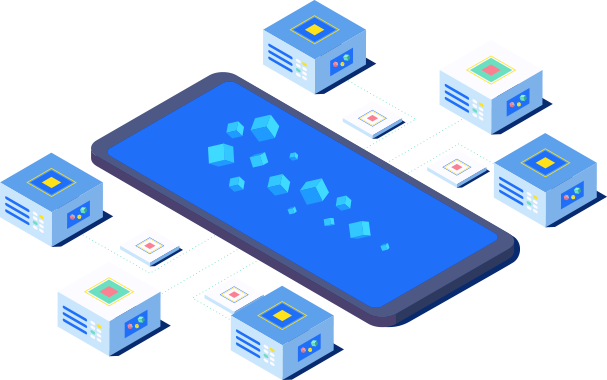
Illustration: Hosting Captain's Approach to AI-Era Hosting: What We're BuildingAI-Optimized Server Stacks: Engineering Infrastructure for the Machine Learning Era
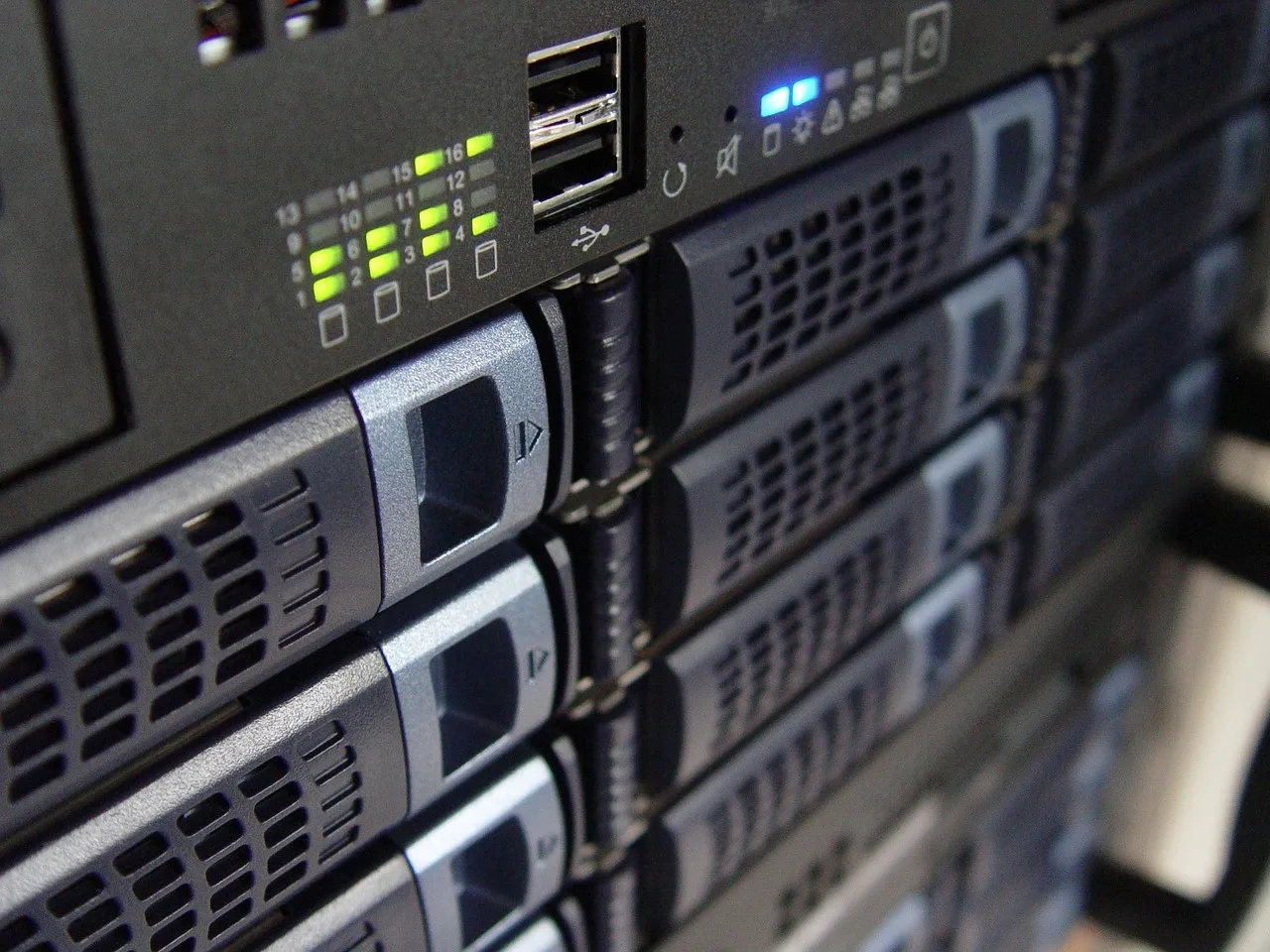
The server stacks that power Hosting Captain's AI-era infrastructure are not generic Linux installations with a GPU driver installed as an afterthought. They are purpose-configured environments where every layer of the software stack — from the kernel parameters governing NUMA memory allocation and PCIe bus configuration, through the CUDA toolkit version and GPU driver compatibility matrix, to the container runtime's GPU passthrough configuration and the model-serving framework's dynamic batching policies — is tuned for the specific demands of machine learning inference and training workloads. This level of integration matters because the performance differential between a well-configured AI hosting stack and a commodity stack with the same hardware can exceed fifty percent — the difference between a model serving responses in 80 milliseconds versus 120 milliseconds, or between a training job completing in four days versus six. In the economics of AI hosting, where GPU-hours are the dominant cost driver, that performance differential translates directly into customer value: faster responses for end users, lower inference costs per request, and the ability to serve more traffic on the same hardware investment.
Our server stack design philosophy at Hosting Captain is guided by three principles that we believe distinguish genuine AI hosting from the AI-washed alternatives. First, we specify hardware configurations based on workload profiling rather than marketing checklists — we do not select a GPU because its teraflop number looks impressive on a pricing page; we select it because we have benchmarked it against the specific model architectures, batch sizes, and latency targets that our customers' applications require, and we have confirmed that it delivers the right intersection of performance, memory capacity, and cost for those workloads. Second, we treat the entire server as an integrated system rather than as a collection of independently spec'd components — the CPU, GPU, memory, storage, and networking are co-optimized so that no single subsystem becomes the bottleneck that starves the others of data, because a GPU waiting on a slow storage array is wasted silicon regardless of how many teraflops it can theoretically produce. Third, we version-control our entire server stack configuration and treat infrastructure changes with the same rigor that software teams apply to application code — every kernel parameter change, driver update, and container runtime configuration adjustment is tested in staging, validated against benchmark suites, and deployed through controlled rollouts with automated rollback triggers. For customers who are evaluating the fundamental infrastructure tiers that underpin AI hosting — whether you are deploying on dedicated hardware or virtualized environments — our complete guide to VPS hosting provides the foundational context for understanding how resource isolation and allocation work at the infrastructure level.
Intelligent Resource Allocation: Giving Every Application What It Needs, When It Needs It
One of the hardest problems in multi-tenant hosting — the problem that has plagued shared hosting providers since the earliest days of cPanel — is the efficient allocation of finite physical resources across workloads with fundamentally different demand profiles. A WordPress blog experiences CPU demand in short bursts as it renders pages for visitors; an AI inference endpoint experiences sustained GPU utilization for the entire duration of each request, potentially queuing hundreds of concurrent inference calls that each require dedicated tensor core cycles and video memory allocations. Placing these workloads on the same physical infrastructure without intelligent resource allocation is a recipe for mutual performance degradation — the blog's traffic spikes steal CPU cycles that the inference workload needs, and the inference workload's sustained GPU consumption starves other tenants of accelerator access. The traditional hosting industry's solution to this problem has been crude: assign fixed resource quotas per tenant and let workloads fail when they hit their limits. At Hosting Captain, we are building something more sophisticated.
Our intelligent resource allocation layer — the system we call adaptive orchestration internally — monitors the real-time demand profile of every workload hosted on our infrastructure and dynamically adjusts resource assignments to maximize overall throughput while respecting the service level objectives of each tenant. When an e-commerce site experiences a traffic surge during a flash sale, the orchestration layer detects the spike in request latency and transiently shifts additional compute capacity toward the site's web server and database instances, drawing from a shared resource pool rather than from fixed per-tenant quotas that would force the site into throttling or failure at the worst possible moment. When an inference workload's GPU utilization drops during off-peak hours, the orchestration layer reallocates the idle accelerator cycles to batch inference jobs, model fine-tuning tasks, or other tenants whose workloads can benefit from the temporarily available capacity. The result is a hosting environment where resources flow to where they create the most value at each moment, rather than sitting idle in siloed allocations while other workloads starve. This is not a theoretical capability — it is a production system that we have been iterating on for over two years, and it embodies our conviction that AI-era hosting requires orchestration intelligence that matches the intelligence of the workloads being hosted.
AI-Powered Security: From Reactive Patching to Proactive Threat Detection
The security model that has protected web hosting environments for the past two decades is fundamentally reactive: deploy a Web Application Firewall with signature-based rules, run a malware scanner against known threat databases, apply security patches when vulnerabilities are disclosed, and hope that the gap between vulnerability discovery and patch deployment does not coincide with an active exploitation campaign. This model was already strained before AI entered the picture — the average time between vulnerability disclosure and active exploitation has shrunk from weeks to hours as automated attack tooling has matured — and it is entirely inadequate for the AI-era hosting environment, where the attack surface has expanded to include model inference endpoints vulnerable to prompt injection, training data pipelines susceptible to poisoning attacks, and model weight files that can conceal malicious code in serialized Python objects. At Hosting Captain, we are rebuilding our security architecture around proactive threat detection powered by machine learning models that learn the normal behavioral patterns of every hosted environment and flag deviations in real time, before they escalate into incidents that require reactive response.
Our AI security system operates continuously across four dimensions. First, network-level anomaly detection analyzes traffic patterns at the edge of our infrastructure, distinguishing between legitimate request surges and the early signatures of DDoS attacks, credential-stuffing campaigns, or vulnerability scanning by comparing current traffic against learned baselines for each hosted domain rather than against static thresholds that attackers can probe and evade. Second, file-system behavioral analysis monitors every file creation, modification, and execution attempt across our hosting environments, flagging anomalies such as a WordPress plugin file that suddenly contains obfuscated PHP code, a configuration file being modified by a process that has never previously accessed it, or a script beaconing to an IP address associated with known command-and-control infrastructure — signatures that would be invisible to traditional hash-based malware scanning. Third, model-endpoint protection specifically addresses the novel attack surfaces of AI hosting, including prompt injection detection that flags input sequences attempting to extract training data or override model behavior, and output filtering that prevents deployed models from generating content that violates acceptable-use policies. Fourth, automated containment and remediation integrates detection with response — when a threat is identified with high confidence, the system quarantines affected files, revokes compromised credentials, and restores clean configurations from backup without waiting for human intervention, then notifies our security operations team with a structured incident report. This security architecture is designed for a world where threats evolve faster than human response cycles can address, and where the cost of a breach — in customer trust, regulatory exposure, and business disruption — justifies investment in defensive capabilities that operate at machine speed.
Automated Performance Optimization: Infrastructure That Learns and Adapts
Traditional hosting performance optimization is a manual, episodic process: a website owner notices that their site is loading slowly, opens a support ticket, and waits for a system administrator to investigate, identify the bottleneck — typically a misconfigured cache policy, an unoptimized database query, or a resource contention issue — and apply a fix. The fix remains effective until the site's traffic patterns change, its content grows, or a plugin update introduces a new performance regression, at which point the cycle repeats. This model is economically inefficient for hosting providers, frustrating for customers, and fundamentally incompatible with the dynamic, high-intensity workloads that characterize AI-era hosting. At Hosting Captain, we are replacing this reactive model with automated performance optimization systems that continuously monitor, analyze, and tune the hosting environment without requiring human intervention for the vast majority of performance issues.
Our automated optimization engine operates on a continuous learning loop. During an observation phase lasting approximately two weeks after a new hosting environment is provisioned, the system builds a performance baseline by measuring request latency distributions, database query execution times, cache hit ratios, CPU and memory utilization patterns, and I/O throughput profiles across the full diurnal cycle — learning not just the average values but the expected variance at each hour of each day of the week. Once the baseline is established, the optimization engine begins making incremental adjustments — modifying PHP-FPM process manager settings, adjusting MySQL query cache sizes, tuning Nginx worker connections, reconfiguring object cache eviction policies, and shifting resource allocations between services — and measuring the impact of each adjustment against the performance baseline. Adjustments that improve performance are retained and compounded; adjustments that degrade performance are automatically reverted within minutes. Over weeks and months of operation, this continuous tuning produces a hosting environment that is progressively more optimized for the specific workload it serves, without ever requiring a customer to open a support ticket or a system administrator to manually investigate a performance complaint. The system also detects performance regressions caused by external changes — a WordPress plugin update that introduces a slow database query, a theme modification that increases page weight, a traffic pattern shift driven by a marketing campaign — and either automatically compensates or surfaces the regression to the customer with specific diagnostic information. This is what we mean when we say that our hosting infrastructure learns: it does not merely apply a static configuration and hope for the best; it observes, experiments, and improves continuously, and the hosting environment our customers experience twelve months after signing up is meaningfully faster and more stable than the one they started with.
AI-Powered Customer Support: Redefining the Help Experience
At Hosting Captain, we believe that the quality of customer support is the single most important differentiator between a hosting provider that earns long-term customer loyalty and one that churns customers through a cycle of frustration and departure. The traditional hosting support model — a ticket queue staffed by human agents working in shifts — has fundamental limitations that no amount of agent training or staffing investment can fully overcome: response times that stretch to hours during off-peak shifts, knowledge gaps between tier-one generalists and the specialized expertise required to diagnose complex issues, and the cognitive burden on agents who must context-switch between entirely different technical problems with every ticket they open. We are addressing these limitations by deploying an AI-powered support system that augments — not replaces — our human support team, creating a hybrid support architecture where AI handles routine diagnosis and resolution at instant speed while human agents focus their expertise on the complex, novel, and emotionally nuanced situations where human judgment is irreplaceable.
Our AI support system, which we have been training and refining on our internal knowledge base and historical support interactions, demonstrates three capabilities that distinguish it from the scripted chatbot experiences that hosting customers have learned to dread. First, it maintains genuine conversational context across the entire interaction — understanding that "it" in a customer's third message refers to the database connection error described in the first message, and that a customer who mentions their "WooCommerce store" in passing expects the system to proactively check whether the issue they are describing could affect payment processing or order fulfillment. Second, it accesses live system telemetry through secure internal APIs — server resource graphs, error logs, service status dashboards, recent configuration changes — and uses that data to diagnose issues without requiring the customer to provide system information they may not know how to access. When a customer writes "my site is slow," the AI support system does not respond with a generic troubleshooting checklist; it pulls the site's recent performance metrics, identifies that database query latency increased by a factor of four starting two hours ago, correlates that change with an automated plugin update that occurred at the same time, and presents the customer with a specific diagnosis and remediation steps. Third, when the AI encounters a problem that exceeds its competence boundary — and we have defined those boundaries conservatively, erring on the side of escalation rather than confident error — it executes a structured handoff to a human agent, transferring the full conversation context, the diagnostic data it has gathered, and its analysis so far, so the human agent can continue the interaction without asking the customer to repeat information. This hybrid model has reduced our average first-response time for routine inquiries to under thirty seconds while simultaneously improving the depth and quality of the human support interactions for complex issues, because our agents are no longer spending the majority of their time on password resets, DNS propagation checks, and other repetitive tasks that AI can handle faster and more accurately.
How We're Building Differently from Traditional Hosting Companies
The hosting industry's structural incentives reward a specific pattern of behavior: maximize the number of customers per physical server, minimize infrastructure investment relative to revenue, compete on introductory pricing while obscuring renewal rates, and differentiate through marketing language rather than engineering substance. The result is an industry where the median customer experience — on shared hosting plans in particular — is defined by resource contention that degrades performance, support interactions that feel like navigating a labyrinth designed to discourage resolution, and security postures that meet the minimum standard required to avoid liability rather than the standard required to actually protect customer data. At Hosting Captain, we are building against every one of these incentives, because we believe that the AI era will reward hosting providers who invest in infrastructure quality, support depth, and security sophistication, and will punish those who continue to compete on the same commoditized terms that have defined the industry for the past decade.
The most significant way we are building differently is in our approach to infrastructure investment. Traditional hosting companies treat server hardware as a cost to be minimized — selecting the cheapest CPUs, provisioning the minimum RAM per plan, and loading as many tenants onto each physical server as the hypervisor will tolerate. We treat infrastructure as our product, and we invest in it accordingly. Our server procurement specifications are designed around workload requirements, not budget targets. Our tenant density per physical server is capped below the level that would introduce meaningful resource contention, even during peak traffic periods. Our storage architecture uses enterprise NVMe drives with endurance ratings appropriate for sustained write-intensive workloads, not consumer SSDs that degrade under the continuous I/O pressure of multi-tenant hosting. Our network topology provides redundant paths and sufficient headroom to absorb DDoS attacks and traffic surges without degrading service for other tenants. These decisions cost more in the short term, and they mean that our introductory pricing will never match the lowest-cost providers in the market. We are comfortable with that tradeoff, because the customers who choose Hosting Captain are selecting us for the long-term quality and reliability of their hosting infrastructure, not for the lowest possible first-year promotional rate, and we would rather earn the trust of those customers than compete in a race to the bottom that ultimately serves no one.
The second dimension of differentiation is our commitment to technical transparency. When we describe a capability as "AI-powered," we are prepared to explain which specific models we are using, what data they were trained on, how they are evaluated, and what performance metrics they achieve. When we publish a product roadmap item, we are describing an engineering project with a defined scope, a technical architecture, and a deployment timeline — not a marketing aspiration that exists only on a pricing page. When a customer asks us a technical question about our infrastructure, our support team — both human and AI — is equipped to provide technically substantive answers rather than deflecting to marketing language. This commitment to transparency extends to areas where hosting companies traditionally obfuscate: we publish our server specifications in detail, we disclose our tenant density limits per plan tier, we explain our backup and disaster recovery architecture, and we provide clear documentation about how customer data is stored, protected, and isolated. We believe that the hosting providers who will earn and retain customer trust in the AI era are not the ones with the most impressive AI claims on their homepages, but the ones whose technical substance matches their marketing language and who are willing to prove it to anyone who asks.
The third dimension is our approach to the AI supply chain. Many hosting providers that market "AI-powered" features are integrating third-party APIs — OpenAI, Anthropic, Google — and presenting the integration as though it represents proprietary AI capability. We take a different approach: where we integrate third-party AI services, we disclose the integration transparently, explaining which provider's model powers which feature and what data flows between our infrastructure and the third-party API. Where we build AI capabilities in-house — our adaptive resource orchestration system, our behavioral security analytics, our performance optimization engine — we build them on our own infrastructure, trained on our own operational data, and deployed in ways that keep customer data within our environment rather than routing it through external services. This approach is more expensive and more engineering-intensive than the API-wrapper model that dominates the industry, but it is consistent with our commitment to building genuine AI capability rather than marketing AI branding, and it ensures that our customers' data is not being sent to third-party model providers without their explicit knowledge and consent. The W3C web standards community is actively developing specifications for data provenance and content authenticity in AI-augmented web services, and we are tracking those standards closely to ensure that our AI hosting architecture remains compliant with emerging best practices for transparency and user data protection.
Our Commitment to Transparent AI Hosting
Transparency in AI hosting is not merely a marketing value at Hosting Captain — it is an operational principle that shapes how we design, deploy, and communicate about every AI capability in our infrastructure. We have watched the hosting industry's collective pivot toward AI terminology with a mixture of optimism about the genuine technological progress being made and concern about the volume of AI-washing that is making it difficult for customers to distinguish between real capability and marketing fiction. Our commitment to transparency is our response to that concern: we will not describe a capability as AI-powered unless we can explain, in technically specific terms, what kind of AI is involved, what it was trained on, how it operates, and what outcomes it produces. We will not use AI terminology to describe static rules engines, threshold-based alerting, or template-based automation — technologies that have been standard in hosting for years and that do not become AI simply because the marketing department updates the website copy. We will not claim AI capabilities that we have not yet deployed to production, and when we describe capabilities on our product roadmap, we will distinguish clearly between what is available today, what is in active development with a defined release timeline, and what is a longer-term aspiration that depends on technology maturation or infrastructure investment that has not yet been committed.
This commitment extends to our pricing and plan structure. AI capabilities that require meaningful inference compute — our AI support system, our behavioral security analytics, our performance optimization engine — are included in our plan pricing at levels that reflect the actual cost of operating those systems, not gated behind premium tiers as artificial differentiators or offered on budget plans where the economics cannot support the claimed capability. We believe that AI features in hosting are following the same diffusion trajectory that SSL certificates, CDN integration, and SSD storage followed before them: initially premium, then differentiating, then standard, and eventually invisible infrastructure components that customers experience without needing to think about. Our pricing strategy is designed to accelerate that diffusion rather than resist it — to make AI capabilities standard on Hosting Captain plans rather than premium upsells — because we believe that AI-augmented hosting is the baseline that all professionally operated hosting should provide, not a luxury tier reserved for customers with the largest budgets.
Hosting Captain's Product Roadmap: What We're Building Next
The capabilities we have described in this article — AI-powered customer support, intelligent resource orchestration, behavioral security analytics, automated performance optimization — are not a future vision. They are production systems that are operating today on Hosting Captain infrastructure, serving real customers with measurable improvements in response times, security outcomes, and support satisfaction. But we are not pausing to admire what we have built, because the infrastructure demands of AI-era applications are evolving as fast as the models that power them, and a hosting provider that stops investing in its platform is a hosting provider whose customers will inevitably outgrow it. What follows is a candid description of what we are building next — not a speculative wishlist, but engineering projects that are in active development with committed resources and defined delivery timelines.
The most significant initiative on our near-term roadmap is our GPU-accelerated inference hosting platform, which will make Hosting Captain one of the first hosting providers outside the hyperscale cloud tier to offer integrated GPU compute for production AI inference workloads. This platform provisions NVIDIA L40S and H100 instances within the same hosting environment that serves our customers' web applications, databases, and storage — eliminating the architectural split that currently forces teams to host their web application on one provider and their AI inference endpoints on another, with all the networking complexity, data transfer costs, and operational fragmentation that split entails. The inference hosting platform includes a model deployment workflow that takes a trained model checkpoint — from PyTorch, TensorFlow, or ONNX — and deploys it to a production inference endpoint with automatic scaling, canary deployments, and A/B testing, reducing the engineering effort required to move from model experimentation to production serving from weeks to hours. For teams building retrieval-augmented generation applications — combining embedding models, vector databases, and language model inference into unified serving pipelines — we are designing specific infrastructure configurations that colocate these components within the same low-latency network fabric, an architecture that our analysis of RAG hosting considerations explores in technical depth.
Beyond GPU inference hosting, we are investing in three additional capabilities that we believe will define the hosting experience for AI-era applications. First, we are building automated model optimization pipelines that apply quantization, pruning, and hardware-specific compilation to customer-provided models, reducing inference latency and GPU memory consumption without requiring the customer to possess deep expertise in model optimization techniques. Second, we are building AI-native observability tooling that surfaces GPU-specific metrics — tensor core utilization, memory bandwidth saturation, NVLink throughput — alongside traditional server metrics in a unified dashboard, giving teams visibility into the full stack rather than forcing them to correlate GPU telemetry from one tool with web server metrics from another. Third, we are building multi-region inference deployment capabilities that distribute model serving endpoints across geographic regions and automatically route user requests to the nearest available endpoint, mirroring the CDN architecture that transformed static content delivery two decades ago and applying it to the latency-sensitive AI inference workloads that are becoming central to the web experience. For a broader perspective on how AI-driven interfaces are reshaping user expectations, our analysis of how voice search and AI assistants are changing hosting SEO examines one of the most consequential shifts in how users will interact with hosted applications over the next five years.
What Customers Can Expect from Hosting Captain in the AI Era
If there is one message we want current and prospective Hosting Captain customers to take from this article, it is this: the AI era in hosting is not a future event that you need to prepare for someday. It is happening now, in the infrastructure that serves your website, in the support system that answers your questions, in the security architecture that protects your data, and in the performance optimization that keeps your site fast as traffic patterns shift and content grows. At Hosting Captain, we are building for this era not by adding an AI label to a conventional hosting product and calling it innovation, but by fundamentally rethinking what a hosting platform should be when the workloads it serves are increasingly intelligent, dynamic, and demanding. The hosting plans our customers purchase today are not the ceiling of what we will deliver over the lifetime of their relationship with us — they are the floor, and our continuous investment in AI-augmented infrastructure means that the security, performance, support, and capability of their hosting environment will improve over time without requiring them to switch plans, renegotiate terms, or even notice the improvements happening in the background.
Concretely, here is what Hosting Captain customers can expect over the next twelve to twenty-four months. They can expect AI-powered support that responds to their inquiries in seconds rather than hours and that provides specific, technically informed answers rather than generic troubleshooting scripts. They can expect security monitoring that learns the normal behavior of their specific hosting environment and that detects anomalies — whether a compromised plugin, an unauthorized configuration change, or an emerging DDoS pattern — before those anomalies escalate into incidents that require emergency response. They can expect performance optimization that runs continuously in the background, tuning their server stack for their specific workload patterns and automatically compensating for the performance regressions that inevitably accumulate as websites grow, plugins update, and traffic patterns evolve. They can expect infrastructure that is provisioned with generous resource allocations, reasonable tenant density limits, and enterprise-grade hardware — not the absolute cheapest components that can technically be described as meeting the plan specifications. And they can expect transparent communication about what we are building, what AI capabilities we are deploying, and how those capabilities affect their hosting experience, because we believe that trust is earned through clarity and lost through obscurity, and we intend to earn it.
Frequently Asked Questions
What does Hosting Captain mean by "AI-era hosting"?
At Hosting Captain, we use the term "AI-era hosting" to describe infrastructure that is purpose-built for the specific demands of applications that embed machine learning inference into their core functionality — recommendation engines, personalized search, content generation, image processing, natural language interfaces, and fraud detection, among others. This is distinct from what the hosting industry broadly calls "AI-powered hosting," which is frequently a marketing label applied to conventional shared and VPS plans that have been augmented with basic chatbots or threshold-based monitoring. Our AI-era hosting platform combines GPU-accelerated inference infrastructure, AI-native security analytics, automated performance optimization that learns workload patterns and tunes the server stack accordingly, and AI-powered customer support that provides instant, context-aware assistance — all built on hardware and networking architectures designed from the ground up for sustained high-intensity compute rather than retrofitted onto commodity hosting platforms. For a technical deep-dive into the infrastructure that powers AI hosting, our guide to AI hosting fundamentals provides the full architectural picture.
How is Hosting Captain's AI customer support different from a regular chatbot?
Our AI support system is distinguished from the scripted chatbot experiences common across the hosting industry by three specific technical capabilities. First, it maintains genuine multi-turn conversational context — understanding references across messages, remembering details mentioned earlier in the interaction, and following the thread of a diagnostic conversation rather than treating each customer message as an isolated query to be pattern-matched against a script. Second, it accesses live system telemetry through secure internal APIs — pulling server resource graphs, error logs, service status, and recent configuration changes — to diagnose issues using actual infrastructure data rather than relying exclusively on what the customer types. Third, when it encounters a problem beyond its competence boundary, it executes a structured handoff to a human agent with the full conversation context and diagnostic data, so the customer never has to repeat information. This hybrid architecture delivers instant response for routine inquiries while ensuring that complex and novel issues receive the human expertise they require, without the frustrating experience of cycling through an automated system that cannot recognize its own limitations.
Will Hosting Captain offer GPU instances for running AI models?
Yes. GPU-accelerated inference hosting is the most significant initiative on our near-term product roadmap. We are building a platform that provisions NVIDIA L40S and H100 GPU instances within the same hosting environment that serves web applications, databases, and storage — eliminating the architectural fragmentation that forces teams to host their application and their AI inference endpoints on different providers. The platform will include model deployment workflows that automate the process of taking a trained model checkpoint to a production inference endpoint with automatic scaling, canary deployments, and monitoring. This capability is in active development with a defined delivery timeline, and we will announce specific availability dates and configuration options as we approach launch. In the interim, customers with immediate GPU hosting needs can contact our solutions engineering team for early-access discussions and workload profiling to determine the appropriate accelerator configuration for their specific model architectures and latency targets.
How does Hosting Captain ensure that AI features don't compromise customer data privacy?
Data privacy is a first-order design constraint in every AI system we build and deploy, not an afterthought addressed through privacy policies after the engineering is complete. For AI capabilities built in-house — our behavioral security analytics, adaptive resource orchestration, and performance optimization engines — all data processing occurs within our own infrastructure, and customer data never leaves our environment to be processed by third-party AI services. For AI capabilities that integrate third-party services, we disclose those integrations transparently and implement data minimization practices that limit the information shared to what is strictly necessary for the specific AI function. Our AI support system operates on our internal knowledge base and infrastructure telemetry, not on customer content or application data. Our security analytics analyze behavioral patterns and structural file characteristics, not the content of customer databases or application logic. Every AI capability we deploy is documented with a data flow specification that explains what data is accessed, for what purpose, where it is processed, and how long it is retained, and we make these specifications available to customers on request. We also track emerging standards from bodies like the W3C regarding AI data provenance and consent frameworks, and we commit to aligning our practices with those standards as they mature.
Does AI-era hosting cost more than traditional hosting?
The answer depends on what is being compared. Entry-level AI-era hosting plans from Hosting Captain are priced competitively with premium managed hosting plans from traditional providers — the fifteen-to-thirty-dollar-per-month range — because our AI capabilities (support, security monitoring, performance optimization) are built into our platform architecture and do not require per-customer inference compute that would make them uneconomical at those price points. GPU-accelerated inference hosting, which provisions dedicated NVIDIA L40S or H100 instances, is priced at a premium that reflects the cost of the underlying accelerator hardware — and at those tiers, we compete on workload-optimized configurations and integrated deployment workflows rather than on achieving the lowest possible per-GPU-hour price. We believe that the total cost of ownership comparison — factoring in the engineering time saved by automated optimization and deployment tooling, the incident reduction from proactive security monitoring, and the support responsiveness from AI-augmented assistance — favors AI-era hosting for the majority of use cases, even when the headline monthly price is higher than a basic shared or unmanaged VPS plan. For customers who want to understand the fundamental infrastructure tiers and their cost drivers, our complete guide to VPS hosting provides the foundational cost framework.
Is Hosting Captain building proprietary AI models or integrating third-party APIs?
We do both, and we are transparent about which is which. Where we build AI capabilities in-house — our adaptive resource orchestration system, our behavioral security analytics engine, and our performance optimization pipeline — we develop, train, and deploy our own machine learning models on our own infrastructure, using our own operational data. These are proprietary capabilities that represent genuine engineering investment and that differentiate our hosting platform. Where we integrate third-party AI services — for example, content generation assistance within our control panel — we disclose the integration transparently rather than implying that the underlying model is our proprietary technology. This hybrid approach lets us focus our in-house AI investment on the capabilities that are most differentiating for hosting infrastructure (resource management, security, performance) while leveraging the extraordinary progress being made by the broader AI research community for capabilities (natural language generation, image processing) where building proprietary models would duplicate work being done at massive scale by organizations with AI research budgets that no hosting company can match. The key principle is transparency: we tell you which is which, and we never present a third-party API integration as though it were Hosting Captain proprietary technology.
Arjun Mehta is a cloud infrastructure consultant specializing in bare-metal architectures, network routing, and high-traffic database clustering.
Frequently Asked Questions
This guide covers the practical decision points — pricing, performance, and when it makes sense for your situation — based on current 2026 data.
Pricing varies by provider and plan tier; see the cost breakdown section above for current ranges and what's actually included at each price point.
Look closely at uptime guarantees, renewal pricing (not just the first-year discount), and how responsive support actually is — all covered in detail in this article.
Hosting Captain has been exceptional for my e-commerce store in Pune. The NVMe SSD speed is
noticeable, and their support team responds within minutes. Highly recommended for any
Indian business!
Ryan John, Pune
Great Value for Money
Switched from a US-based host to Hosting Captain and my website loads 3x faster for Indian
visitors. The free SSL and cPanel are great, and the pricing is unbeatable. Very satisfied
customer!
Priya Mehta, Mumbai
Reliable VPS Hosting
I've been using their VPS plan for 2 years now. 99.9% uptime is not just a claim — it's
reality. My client projects run without interruption. The KVM virtualization gives me full
control I need.
Amit Kumar, Bangalore
Excellent 24/7 Support
The support team helped me migrate my entire WordPress site at 2 AM without any downtime.
This level of service is rare in Indian hosting. Worth every rupee!
Sunita Patel, Ahmedabad
Perfect for Startups
As a startup, budget matters. Hosting Captain's Business plan covers everything we need —
multiple websites, free SSL, daily backups — at a fraction of what international hosts
charge.
Vikram Singh, Delhi
Professional Dedicated Server
Our high-traffic news portal needed a dedicated server. Hosting Captain's DS Business plan
handles 100K+ daily visitors effortlessly. Their team provisioned everything within 4 hours!
Meena Krishnaswamy, Chennai
Trusted Technologies & Partners
Start Your Website with Hosting Captain
From personal blogs to enterprise solutions, we've got you covered!