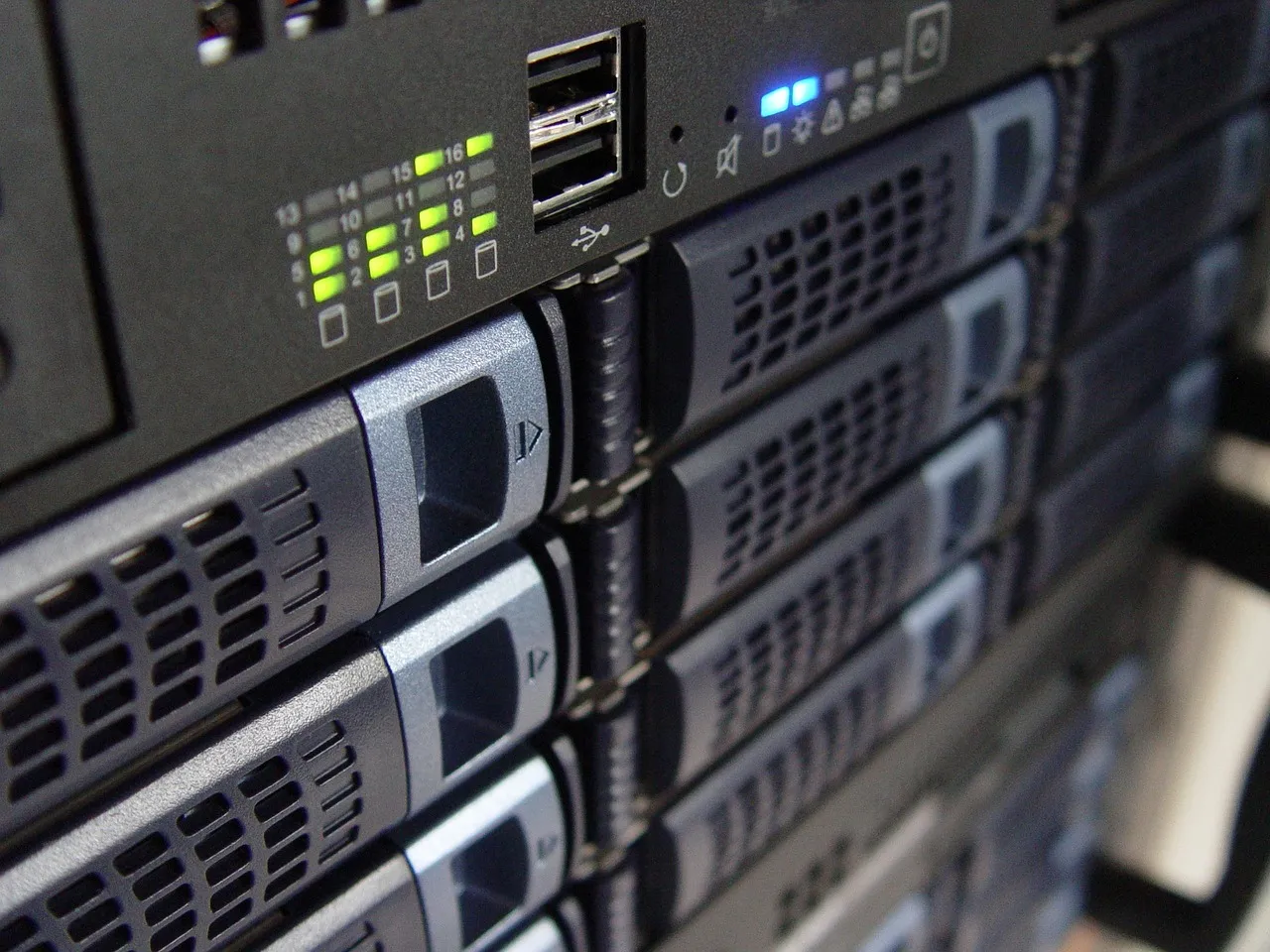
Artificial intelligence has reshaped industries at a pace few technologies have ever matched, but behind every inference request and every training run lies a physical infrastructure that consumes electricity on a scale that borders on industrial. The largest AI models now require more energy to train than a small city consumes in an entire year, and the aggregate demand from millions of daily inference calls adds a continuous, year-round draw on power grids. Data centre electricity consumption already accounts for approximately 1–2% of global energy use, and projections from the International Energy Agency suggest that AI workloads could double that share within a decade. For businesses deploying AI, the energy question is no longer an afterthought—it is a strategic variable that affects total cost of ownership, regulatory compliance, and brand reputation. This article examines the real energy cost of running AI models at scale and lays out practical, technically grounded strategies for reducing it through green AI hosting.
Understanding AI energy consumption requires distinguishing between the two principal phases of an AI model’s life cycle: training and inference. Training is the phase where a model learns patterns from massive datasets, typically requiring thousands of GPUs running continuously for weeks or months. Inference, by contrast, happens every time a user submits a prompt, every time a recommendation engine scores a product, and every time a fraud detection system evaluates a transaction—individually cheap, but collectively enormous. The hosting decisions that developers and operations teams make—which GPU to provision, which region to deploy in, and which provider to choose—directly shape both the carbon footprint and the dollar cost of AI workloads. HostingCaptain has tracked the evolution of AI hosting fundamentals for years, and the green energy dimension has become the fastest-moving part of the conversation.
Power consumption figures from the latest hardware generation put the scale into sharp relief. A single NVIDIA H100 GPU, the workhorse of modern AI training clusters, carries a thermal design power of 700 watts under load—roughly equivalent to running seven microwave ovens simultaneously. A training cluster containing 10,000 such GPUs draws seven megawatts for the GPUs alone, before accounting for CPUs, networking, storage, and cooling overhead, which can easily double the total facility draw. When these clusters operate for months at a time, the cumulative energy consumption becomes a material line item not just on the electricity bill but on the corporate sustainability ledger. Organisations that ignore these numbers risk underestimating the true cost of their AI investments by a wide margin.
GPT-4 Training: 50 GWh of Electricity
The most frequently cited benchmark for AI energy consumption comes from the training run of OpenAI’s GPT-4, which is estimated to have consumed approximately 50 gigawatt-hours of electricity. Fifty gigawatt-hours is enough to power roughly 4,500 average American homes for a full year, and it represents the output of a modestly sized solar farm operating for twelve months. That single training run spanned tens of thousands of GPUs running in a purpose-built Microsoft Azure supercomputing facility, and while the absolute number grabs headlines, the more instructive insight is the trend line: each successive generation of frontier models has increased training compute by a factor of five to ten times. If that trajectory holds, the next generation could push training energy into the hundreds of gigawatt-hours, raising urgent questions about the sustainability of scaling laws that have driven AI progress for a decade.
Training energy is not simply a function of model size; it is shaped by architecture choices, data quality, and training efficiency techniques that can vary power draw by 30% or more between otherwise comparable runs. The 50 GWh figure for GPT-4 emerged from a combination of researcher estimates based on GPU count, training duration, and the known power characteristics of the A100 and H100 GPUs used in the Azure deployment. Importantly, this figure covers only the final, successful training run and excludes the energy consumed during experimentation, hyperparameter tuning, ablation studies, and failed runs that precede any frontier model release. When the full research and development energy budget is included, the real number for a model like GPT-4 may be two to three times higher than the headline figure, a consideration that responsible AI organisations are beginning to disclose in model cards and environmental impact statements.
The conversation around training energy has evolved from one of pure amazement at the scale of compute to one of pragmatic concern about whether the AI industry can sustain its current trajectory without triggering regulatory intervention. The European Union’s AI Act and various proposed legislative frameworks in the United States include provisions that would require large model developers to report energy consumption and carbon emissions, creating compliance obligations that flow downstream to hosting providers and ultimately to the businesses that deploy AI workloads. Forward-thinking organisations are already building internal capacity to measure and report on these metrics, which makes the choice of a green hosting provider a compliance advantage as well as an environmental one.
Inference Costs: The Hidden Energy Drain
While training energy dominates headlines, inference energy is where the aggregate, ongoing cost of AI lives. Every ChatGPT conversation, every AI-generated image, and every code completion delivered by a coding assistant consumes electricity in a data centre somewhere, and the cumulative load from billions of daily inference requests across the global install base of AI-powered applications now rivals or exceeds the energy spent on training. Research from organisations including Hugging Face and the Allen Institute for AI has shown that for models deployed at scale, inference can account for 80% to 90% of lifetime energy consumption, a ratio that will only increase as models become more widely deployed and as training efficiency improvements outpace inference optimisation. For businesses building AI-native products, inference hosting costs and inference energy costs are two sides of the same coin.
The energy intensity of inference varies dramatically depending on the model architecture, the hardware it runs on, and the batching and scheduling strategies employed by the hosting infrastructure. A single query to a 175-billion-parameter dense transformer model may consume on the order of 0.1 to 1 watt-hour, which seems negligible in isolation. Multiplied by millions of queries per day across a user base, that figure becomes thousands of kilowatt-hours per month, placing inference hosting squarely in the category of energy-intensive workloads alongside high-performance computing and large-scale data analytics. Inference is also more geographically distributed than training, because latency-sensitive applications compel providers to place inference endpoints close to end users, spreading the energy footprint across dozens of data centre regions with widely varying grid carbon intensities.
HostingCaptain has observed a growing number of hosting providers respond to this reality by introducing inference-optimised instance types, GPU fractionalisation, and serverless inference endpoints that reduce idle power draw by sharing GPU resources across multiple tenants. These innovations address both the cost and the carbon side of the equation, because a GPU that sits idle between inference requests still draws a substantial fraction of its maximum power—often 40% or more—while contributing nothing to productive work. Efficient inference hosting is therefore not just a matter of choosing hardware with a lower TDP; it requires a holistic approach that considers scheduling, multi-tenancy, right-sizing, and the carbon intensity of the underlying grid at the time of execution.
Carbon Footprint of AI Workloads
Energy consumption is the input; carbon emissions are the output that matters for climate impact, and the two are connected by the carbon intensity of the electrical grid that powers the data centre. A kilowatt-hour consumed in a region where the grid is 80% coal-fired produces dramatically more CO₂ than the same kilowatt-hour consumed where hydroelectric or nuclear power dominates. This geographic variability means that two otherwise identical AI workloads, hosted by the same provider on the same hardware, can have carbon footprints that differ by a factor of ten or more depending on the data centre region selected during deployment. Understanding this relationship is fundamental to making informed green AI hosting decisions.
The carbon footprint of a specific AI workload can be estimated by multiplying the energy consumption of the GPUs, CPUs, networking, and cooling infrastructure by the grid carbon intensity factor for the data centre location, expressed in grams of CO₂ equivalent per kilowatt-hour. Several open-source tools, including CodeCarbon and ML CO₂ Impact, have emerged to help practitioners estimate these numbers, and major cloud providers have begun surfacing carbon footprint data directly in their consoles. For a typical fine-tuning run on a single eight-GPU H100 node running for one week, the carbon emissions can range from as little as 100 kilograms of CO₂ in a region like Québec, where hydroelectric power dominates, to well over 1,000 kilograms in a coal-heavy grid region. These are not abstract environmental numbers; they are increasingly scrutinised by investors, customers, and regulators.
The carbon accounting frameworks that apply to AI workloads are still maturing, and significant methodological debates remain about how to allocate emissions between training and inference, how to account for embodied carbon in GPU manufacturing, and whether renewable energy certificates or power purchase agreements should be counted as offsetting consumption or as separate instruments. The Greenhouse Gas Protocol, which serves as the foundation for most corporate carbon accounting, divides emissions into Scope 1 (direct), Scope 2 (purchased electricity), and Scope 3 (supply chain and downstream use). AI workloads sit primarily in Scope 2 for the hosting provider and Scope 3 for the end customer, creating a chain of reporting responsibility that requires data transparency from providers to flow all the way to businesses that consume AI infrastructure. The W3C web standards community has even begun exploring standardised formats for machine-readable carbon intensity data, reflecting the growing technical consensus that carbon-aware computing needs standard protocols.
Training vs. Inference: Emissions Breakdown
A full life-cycle carbon analysis of an AI model must account for the embodied carbon in the GPUs and servers themselves, the energy consumed during training, the energy consumed by inference over the model’s entire deployment lifetime, and the end-of-life disposal or recycling footprint. Embodied carbon—the emissions associated with manufacturing the hardware—is a significant and often overlooked component. Estimates suggest that manufacturing a single high-end GPU like the H100 produces several hundred kilograms of CO₂ equivalent, and for a training cluster with tens of thousands of GPUs, the upfront embodied carbon can rival the operational emissions from the training run itself. This insight is driving interest in extending hardware refresh cycles and in designing for hardware reuse, practices that green hosting providers are beginning to adopt.
For the typical business deploying an AI model rather than training a frontier model from scratch, the emissions profile is dominated by inference. A model fine-tuned on a few hundred GPU-hours and then served to millions of users over two years will see its inference emissions eclipse its training and fine-tuning emissions by a wide margin, often within the first month of deployment. This reality shifts the optimisation focus away from training efficiency and toward hosting infrastructure choices: selecting energy-efficient instance types, deploying in low-carbon regions, implementing request batching to increase GPU utilisation, and taking advantage of carbon-aware scheduling. The business case for these optimisations is unusually strong because they reduce both operating cost and carbon footprint in direct proportion, with no trade-off between the two objectives.
The inference emissions landscape is further complicated by the diversity of AI deployment patterns. Real-time inference for chatbots and search has hard latency constraints that force GPUs to remain powered and available at all times, leading to low average utilisation and high idle power draw. Batch inference for document processing, embeddings generation, and nightly model scoring can be scheduled during periods of low carbon intensity and high renewable energy availability, dramatically reducing the associated emissions. HostingCaptain’s analysis across client deployments shows that simply shifting non-latency-sensitive inference workloads from daytime to overnight hours in regions with significant solar generation can cut associated carbon emissions by 20% to 40%, a finding that underscores the power of carbon-aware operations.
Illustration: Green AI Hosting: Energy Costs of Running AI Models at ScaleGreen Data Center Certifications That Matter
Choosing a green AI hosting provider requires navigating a landscape of environmental certifications, each with different scope, rigour, and relevance to AI workloads. The most meaningful certifications for AI hosting fall into three tiers: building-level certifications that address the physical data centre structure, operational certifications that address energy management practices, and supply-chain certifications that address the broader ecosystem. Businesses evaluating hosting providers should understand what each certification measures, what it does not measure, and how to weigh certifications against direct evidence of renewable energy procurement and carbon performance.
Building-level certifications, including LEED (Leadership in Energy and Environmental Design) and BREEAM (Building Research Establishment Environmental Assessment Method), evaluate the physical construction and systems of a data centre. They consider factors such as energy-efficient cooling design, water usage, construction materials, and site ecology. A LEED Platinum data centre, for example, may employ advanced free-air cooling, on-site renewable energy generation, and water recycling systems that materially reduce the environmental impact of the facility. However, building certifications alone do not guarantee that the electricity powering the servers inside comes from renewable sources, because they focus on the building envelope rather than the energy supply contract. For a complete picture, building certifications must be combined with energy procurement certifications.
LEED, Energy Star, and ISO 14001 Explained
LEED certification, administered by the U.S. Green Building Council, rates data centres across categories including energy and atmosphere, water efficiency, materials and resources, and indoor environmental quality. Platinum is the highest tier, followed by Gold, Silver, and Certified. For AI hosting, the most relevant LEED credits are those addressing cooling system efficiency, because AI GPU clusters generate extreme heat densities that place extraordinary demands on cooling infrastructure. Direct-to-chip liquid cooling and immersion cooling, both increasingly common in AI-optimised data centre designs, can earn substantial LEED credits while simultaneously reducing the energy lost to cooling overhead by 30% to 60% compared to traditional air-cooled designs. When a hosting provider prominently displays a LEED Platinum certification for its AI data centre, it signals a genuine engineering investment in energy efficiency rather than a superficial marketing exercise.
Energy Star certification for data centres, administered by the U.S. Environmental Protection Agency, takes a more quantitative approach focused on Power Usage Effectiveness (PUE)—the ratio of total facility energy to IT equipment energy. An ideal PUE of 1.0 would mean every watt entering the data centre goes directly to compute equipment, though real-world facilities typically range from 1.1 for hyperscale AI-optimised facilities to 1.6 or higher for older enterprise data centres. Energy Star certification requires a data centre to score in the top 25% of energy performance among similar facilities, based on a statistical model that accounts for climate, workload type, and facility characteristics. For AI hosting, PUE is a particularly important metric because the extreme power density of GPU clusters means that even small improvements in cooling efficiency translate into large absolute energy savings. A difference of 0.2 in PUE on a multi-megawatt AI cluster can represent hundreds of thousands of dollars in annual electricity cost and a proportionally large carbon reduction.
ISO 14001, the international standard for environmental management systems, operates at a different level from LEED and Energy Star: it certifies the management processes that an organisation uses to identify, control, and reduce its environmental impacts, rather than certifying a specific building or performance outcome. An ISO 14001-certified hosting provider has documented procedures for setting environmental objectives, measuring performance, conducting audits, and driving continuous improvement. For businesses subject to their own ISO 14001 requirements or to supply chain sustainability reporting under standards like the EU Corporate Sustainability Reporting Directive, choosing an ISO 14001-certified hosting provider simplifies the compliance chain and provides assurance that environmental management is systematic rather than anecdotal. HostingCaptain recommends looking for all three certifications—LEED for the facility, Energy Star for operational efficiency, and ISO 14001 for management rigour—when evaluating the environmental credentials of an AI hosting provider.
Hosting Providers Using Renewable Energy for AI
The major public cloud providers have made headline commitments to renewable energy, but the details of how those commitments translate into actual carbon performance for AI workloads merit careful examination. The difference between a provider that purchases unbundled renewable energy certificates (RECs) to offset consumption from a coal-heavy grid and a provider that has executed power purchase agreements (PPAs) that physically add new renewable generation capacity to the grid is substantial. The former approach provides a financial incentive for renewable generation but does not change the physical carbon intensity of the electrons powering the data centre, while the latter approach directly displaces fossil fuel generation on the grid. For businesses with ambitious net-zero commitments, this distinction matters because it affects whether their AI workloads count as truly carbon-free under the most rigorous accounting standards.
Google Cloud, Amazon Web Services, and Microsoft Azure together account for the vast majority of AI training and inference workloads globally, and all three have set public targets for carbon-free or 100% renewable energy. Beneath the big three, a growing ecosystem of specialised AI hosting providers—including CoreWeave, Lambda Labs, and Crusoe Energy—are competing partly on environmental differentiation. Crusoe Energy, for example, has built a business model around colocating GPU clusters at natural gas flare sites and renewable energy generation sites that would otherwise be curtailed, converting otherwise wasted energy into AI compute. This kind of innovation suggests that the green AI hosting market is evolving beyond simple RECs and PPAs toward deeper integration of compute infrastructure with energy infrastructure, a trend that HostingCaptain expects to accelerate as AI energy demand grows.
Google Cloud: Carbon-Neutral AI Infrastructure
Google Cloud has held the position of the world’s largest corporate purchaser of renewable energy for several consecutive years, and since 2017 the company has matched 100% of its global electricity consumption with renewable energy purchases on an annual basis. For AI hosting customers, this means that workloads running on Google’s Tensor Processing Units (TPUs) and GPU instances are covered by a renewable energy commitment that has been validated through third-party audits. Google’s next target is more ambitious: to run on carbon-free energy 24 hours a day, seven days a week, on every grid where it operates, by 2030. Achieving 24/7 carbon-free energy requires matching consumption to carbon-free generation on an hourly basis rather than an annual basis, which is a far harder problem that demands advances in energy storage, grid management, and carbon-aware workload scheduling.
For AI developers and businesses running AI workloads, Google Cloud provides a Carbon Footprint dashboard that breaks down gross carbon emissions by project, region, and service, enabling teams to see the carbon impact of their specific AI training and inference jobs. The dashboard reveals, for example, that moving a training job from a region with a carbon intensity of 400 grams of CO₂ per kilowatt-hour to one with 50 grams per kilowatt-hour can reduce the associated emissions by nearly 90%, even on identical hardware. Google has also been a leader in developing and advocating for the broader carbon-aware computing movement through open-source tools like the Carbon-Aware SDK, which enables applications to query real-time grid carbon intensity data and schedule workloads accordingly. HostingCaptain views Google Cloud’s combination of renewable energy procurement, carbon data transparency, and carbon-aware scheduling tooling as the most comprehensive green AI hosting offering currently available.
AWS: 100% Renewable Energy Commitment
Amazon Web Services has committed to powering its operations with 100% renewable energy by 2025, a target that it reached ahead of schedule in 2023 according to the company’s own reporting, though the claim has attracted some scrutiny from environmental groups regarding the methodology used. AWS is the largest corporate purchaser of renewable energy globally by total contracted capacity, with more than 500 wind and solar projects across over 25 countries. For AI workloads running on AWS, the company’s renewable energy procurement provides broad coverage, but as with all providers, the carbon intensity experienced by a specific workload depends on the region selected. AWS data centres in Northern Virginia, for example, sit on a grid with a significantly higher carbon intensity than those in Oregon or Stockholm, even though both are covered by the company’s overall renewable energy commitment.
AWS has invested heavily in custom AI silicon, most notably the Trainium and Inferentia chips, which are designed from the ground up for energy efficiency on AI workloads. AWS claims that Trainium-based instances deliver up to 50% better energy efficiency per training operation than comparable GPU-based instances, and Inferentia-based instances similarly outperform GPUs on inference energy consumption. These custom chips are available through the AWS Nitro system, which offloads virtualisation overhead to dedicated hardware and further improves energy efficiency by reducing the compute resources consumed by the hypervisor layer. For businesses running large-scale AI workloads on AWS, the combination of green energy procurement and custom energy-efficient silicon provides a credible path to reducing both the cost and carbon footprint of AI, though HostingCaptain advises clients to verify the specific energy characteristics of their chosen instance types and regions rather than relying on the corporate-level commitment alone.
The Green Web Foundation Directory
While the large cloud providers offer comprehensive green energy programmes, a parallel and important resource is The Green Web Foundation, a non-profit organisation that maintains a public directory of hosting providers that have verifiably transitioned to green energy. The directory currently includes more than 500 providers globally, ranging from hyperscale clouds to small boutique hosts, and it serves as an independent verification layer that cuts through the marketing claims that can make green hosting comparisons difficult. Providers listed in the directory have submitted evidence of their renewable energy procurement, and the Green Web Foundation applies a consistent verification methodology that includes checks for the quality and additionality of the green energy sources. For businesses that want independent assurance beyond a provider’s own sustainability report, the Green Web Foundation directory is an essential reference point.
The Green Web Foundation also maintains an open-source API and browser-based checker tools that enable developers to programmatically verify whether a given website or API endpoint is hosted on green infrastructure. For AI-powered applications, integrating this check into the development pipeline provides a lightweight mechanism for ensuring that the hosting infrastructure meets a minimum green energy standard. The foundation’s work extends beyond the directory to include advocacy for fossil-free internet standards, research on digital sustainability, and collaboration with standards bodies on carbon-aware protocols. HostingCaptain recommends that businesses evaluating AI hosting providers cross-reference the Green Web Foundation directory alongside the provider’s own certifications and carbon reporting as part of a multi-source due diligence approach to green infrastructure selection.
How to Estimate Your AI Workload's Energy Cost
Estimating the energy cost of an AI workload before deployment is essential for budgeting, carbon accounting, and provider selection, but it requires a methodology that accounts for hardware power draw, utilisation rates, workload duration, and grid carbon intensity. The good news is that the necessary data is increasingly available from cloud providers, hardware manufacturers, and open-source tools. The bad news is that naive estimation approaches—such as simply multiplying the GPU’s TDP by the number of hours—typically overestimate energy consumption because GPUs rarely operate at their maximum power draw for sustained periods, and they underestimate total facility energy by ignoring cooling, networking, and power distribution losses. A practical estimation workflow that balances accuracy with simplicity is within reach for any engineering team willing to invest a modest amount of upfront work.
For training workloads, the estimation process begins with the number and model of GPUs allocated to the training job, multiplied by the average power draw of those GPUs during training, which can be obtained from the GPU manufacturer’s documentation or from published benchmarks for comparable workloads. To this base figure, a PUE multiplier—typically between 1.1 and 1.4 for modern cloud data centres—is applied to account for facility-level energy overhead. The resulting figure is multiplied by the expected training duration in hours to yield the total energy in kilowatt-hours. For inference workloads, the methodology shifts to a per-request or per-token basis, accounting for the average inference latency, the GPU’s idle power draw, and the expected request volume over the billing period. Several cloud providers now surface estimated energy consumption data within their billing consoles, reducing the need for teams to build custom estimation pipelines from scratch.
GPU TDP, and Usage Hours: A Simple Formula
A practical formula for estimating single-GPU energy consumption during AI training is: Energy (kWh) = (Average GPU Power Draw in watts × Training Hours × PUE Multiplier) divided by 1,000. For a concrete example, an H100 GPU drawing an average of 550 watts over a 100-hour fine-tuning run, hosted in a data centre with a PUE of 1.2, would consume (550 × 100 × 1.2) / 1,000 = 66 kilowatt-hours. If the same run uses eight GPUs, the energy consumption scales to approximately 528 kilowatt-hours. At an electricity rate of $0.10 per kilowatt-hour, this represents roughly $53 in energy cost for the eight-GPU run—a figure that may seem modest but that grows quickly when training runs extend to thousands of GPU-hours or when inference workloads accumulate hundreds of thousands of requests per day.
For inference, a more useful metric is energy per thousand tokens or energy per thousand inferences, which can be combined with usage projections to estimate monthly energy consumption. An inference workload serving a 70-billion-parameter model on an H100 GPU might consume approximately 0.3 watt-hours per thousand output tokens. At 10 million tokens generated per day, daily energy consumption lands at roughly 3 kilowatt-hours for the GPU alone, or approximately 90 kilowatt-hours per month before accounting for PUE and supporting infrastructure. Compared to the training figures, inference energy costs appear low on a per-unit basis, but they accrue continuously for as long as the model is deployed, making them the dominant component of lifetime energy consumption for any model used in production. Tools like NVIDIA’s Management Library (NVML) and cloud provider cost calculators that now include energy estimates make it easier to derive these numbers from actual measurements rather than data sheet values.
The most effective estimation workflows combine projected numbers with real measurement data collected during early-stage or small-scale runs. Running a five-hour representative workload, measuring actual GPU power draw using NVML or the cloud provider’s monitoring API, and then extrapolating to the full-scale deployment yields estimates that are typically accurate within 10% to 15%. Teams can further improve accuracy by measuring at different times of day and on different days to capture variability in data centre ambient temperature, which affects cooling load and thus PUE. HostingCaptain works with clients to establish these measurement baselines as part of a broader green AI hosting strategy that treats energy consumption as a first-class observability metric alongside latency, throughput, and error rate.
Strategies to Reduce AI Energy Consumption
Reducing the energy cost of AI workloads is a multi-faceted engineering challenge that spans model design, hardware selection, scheduling strategy, and hosting provider choice. The most impactful reductions come from addressing the largest sources of energy waste: idle GPU time, oversized hardware, untargeted model architectures, and workloads scheduled without regard to grid carbon intensity. The strategies described here are ordered roughly from highest impact-to-effort ratio to more involved interventions, enabling teams to prioritise actions that deliver meaningful reductions without requiring a complete overhaul of their AI infrastructure stack.
The foundational principle underlying all AI energy optimisation is that every FLOP that does not contribute to useful model output is wasted energy. Idle GPUs waiting for data loading, GPUs running inference on unnecessarily large models when a smaller model would suffice, and GPUs computing training iterations that do not improve model quality all fall into this category. The hosting industry has historically optimised for throughput and availability rather than for energy efficiency, but the convergence of rising energy prices, regulatory pressure, and corporate net-zero commitments is changing the optimisation landscape. Energy efficiency is rapidly becoming a competitive differentiator in AI hosting, and the providers that invest in it now will be positioned to offer lower costs and stronger sustainability credentials as energy constraints tighten.
The tools available for energy optimisation have matured significantly over the past two years. Cloud providers now offer energy-optimised instance types, carbon footprint dashboards, and APIs for querying grid carbon intensity. Open-source libraries such as CodeCarbon and experiment-impact-tracker enable teams to instrument their training and inference code with minimal changes. Orchestration frameworks including Kubernetes and Slurm can be configured for carbon-aware scheduling with community-maintained plugins and extensions. The barrier to implementing basic energy optimisations is lower than many engineering teams assume, and the savings—both in dollars and in carbon—typically pay back the implementation effort within a single billing cycle.
Model Quantization: Smaller Models, Less Power
Quantization is the technique of reducing the numerical precision of a model’s weights from the standard 32-bit or 16-bit floating point to 8-bit or even 4-bit integers, which reduces both the memory footprint and the computational cost of running the model. The energy savings from quantization are significant: an 8-bit quantized model typically requires roughly half the GPU memory and half the memory bandwidth of its 16-bit counterpart, and because memory access dominates the energy consumption of large language model inference, the energy savings are proportionally large. Research has shown that 4-bit quantized versions of 70-billion-parameter models can run on a single GPU that would otherwise require two, cutting inference energy per request by 40% to 60% with negligible loss in output quality for most use cases. Quantization is especially powerful when combined with efficient model architectures such as mixture-of-experts, which activate only a fraction of the model’s parameters for any given input.
Implementing quantization in a production inference pipeline has become straightforward thanks to mature tooling from the major frameworks. Hugging Face’s Transformers library supports multiple quantization backends, including bitsandbytes for 4-bit and 8-bit quantization and GPTQ for more aggressive compression with calibration data. NVIDIA’s TensorRT-LLM provides optimised kernels for quantized inference on NVIDIA GPUs, delivering additional energy efficiency through kernel fusion and memory optimisation. For businesses running inference at scale, investing a few engineering days in quantization evaluation and deployment can reduce the GPU fleet required to serve a given model by 30% to 50%, yielding proportional reductions in hosting cost and carbon footprint. HostingCaptain considers quantization to be the single highest-impact, lowest-effort optimisation available to most teams running large language models in production.
Right-Sizing GPU and Spot Instances in Green Regions
Right-sizing is the practice of matching the GPU instance type to the actual requirements of the workload, avoiding the all-too-common pattern of provisioning the most powerful GPU available because it is the default choice. A workload that processes 10 inference requests per second with a 200-millisecond latency target does not need an H100 if an L4 or A10 can meet the performance requirement at a fraction of the power draw. Cloud providers now offer a wide range of GPU instance types spanning multiple generations and power envelopes, and the energy cost difference between the largest and smallest GPU in a generation can be a factor of five or more. Right-sizing requires benchmarking the workload on candidate instance types and selecting the smallest GPU that meets throughput and latency requirements with an appropriate headroom margin, a practice that aligns energy efficiency with cost efficiency.
Spot instances and preemptible VMs introduce another dimension to energy cost optimisation by enabling workloads to run when and where energy is cheapest and greenest, rather than on a fixed schedule in a fixed region. Spot instances are spare cloud capacity offered at steep discounts—often 60% to 90% below on-demand pricing—and because cloud providers typically have surplus capacity in regions with lower demand, spot instances often land in regions with favourable carbon intensity profiles. By combining spot instance pricing with region selection based on grid carbon intensity data, teams can simultaneously reduce the cost and the carbon footprint of batch AI workloads such as training runs, fine-tuning jobs, and offline inference. Checkpointing and fault tolerance are prerequisites for spot-based training, but the engineering investment required is modest relative to the savings, and HostingCaptain has documented numerous client deployments where spot-based training in green regions reduced effective cost per GPU-hour by 70% or more while cutting carbon emissions by 50% or more, relative to on-demand instances in default regions.
Carbon-Aware Computing: Schedule When the Grid Is Greenest
Carbon-aware computing is an emerging operational paradigm that treats carbon intensity as a first-class scheduling signal alongside latency, throughput, and cost. The concept is simple: because the carbon intensity of grid electricity varies over time—falling when the sun shines and the wind blows, rising when fossil fuel plants ramp up to meet peak demand—shifting flexible AI workloads to periods of low carbon intensity reduces their emissions without requiring any changes to the hardware or the model. The concept has been validated in production by organisations including Google, which has demonstrated that shifting non-urgent compute workloads between data centres and across time can reduce carbon emissions by 20% to 40% compared to a carbon-unaware baseline.
Implementing carbon-aware scheduling requires two pieces of infrastructure: a source of real-time or forecast grid carbon intensity data for the data centre regions where workloads can run, and a scheduler that can delay, preempt, or relocate workloads based on carbon signals. The first piece is increasingly available through APIs such as Electricity Maps and WattTime, which provide granular, region-specific carbon intensity data with forecast horizons of up to 96 hours. The second piece can be implemented using Kubernetes custom schedulers, Slurm plugins, or cloud-native workflow orchestrators such as Argo Workflows and Prefect. For teams already using containerised AI training pipelines on Kubernetes, adding carbon awareness can be as simple as deploying a carbon-aware scheduler plugin that defers non-urgent jobs until grid carbon intensity drops below a configurable threshold.
The workloads best suited to carbon-aware scheduling are those with flexible timing requirements: periodic fine-tuning runs that can complete anytime within a 24-hour window, batch inference jobs that process overnight, and non-production experimentation and evaluation workloads that have no strict service-level objective. Real-time inference serving production traffic is typically not a candidate for temporal shifting, but it can benefit from spatial shifting—routing requests to inference endpoints in regions where the grid is currently greenest, provided that latency requirements permit cross-region routing. This spatial approach to carbon-aware inference is an active area of research and development, with several major AI hosting platforms exploring carbon-aware load balancing as part of their sustainability roadmaps. HostingCaptain anticipates that carbon-aware scheduling will become a standard feature of AI hosting platforms within the next two to three years, driven by both customer demand and regulatory pressure.
The Business Case for Green AI Hosting
Adopting green AI hosting practices is not simply an exercise in corporate social responsibility; it is a business decision grounded in measurable financial returns, risk reduction, and competitive positioning. The business case rests on four pillars: direct energy cost savings, regulatory compliance readiness, customer and investor demand for sustainability, and talent attraction and retention. Each pillar independently justifies at least a baseline investment in green AI hosting practices, and taken together they create a compelling case that green AI hosting is not a cost centre but a strategic enabler for businesses that depend on AI infrastructure.
Direct energy cost savings arise from the efficiency improvements that green AI hosting practices promote. Right-sizing GPU instances, implementing model quantization, adopting efficient architectures, and scheduling workloads for high utilisation directly reduce GPU-hour consumption, which is billed by the cloud provider. A team that reduces its GPU fleet by 30% through quantization and right-sizing saves 30% on its cloud GPU bill, and if it simultaneously shifts training workloads to spot instances in low-carbon regions, the effective cost per GPU-hour can drop by an additional 60% to 90%. These savings compound: a workload that originally cost $10,000 per month in GPU expense might drop to $2,800 per month or less after green-inspired optimisation, freeing budget for expanded AI capabilities, additional experimentation, or improved margins. The energy cost of AI is a direct input to the financial cost of AI, and optimising for one optimises for the other.
ROI of Sustainability: Customers, Compliance, and Cost Savings
The regulatory landscape for AI and for corporate sustainability reporting is tightening globally, and businesses that proactively adopt green AI hosting practices will face lower compliance costs and reduced regulatory risk as reporting requirements take effect. The EU Corporate Sustainability Reporting Directive now requires large companies operating in Europe to disclose detailed environmental impact data, including Scope 3 emissions that encompass cloud and hosting services. Similar requirements are advancing in California, Japan, and the United Kingdom, creating a global patchwork of mandatory sustainability reporting that affects any business with international operations. Choosing a green AI hosting provider with robust carbon reporting capabilities simplifies the compliance process by providing auditable data on the environmental impact of AI workloads, reducing the internal effort required to meet reporting obligations.
Customer and investor demand for sustainability has moved beyond preference and into purchasing criteria. Enterprise RFPs for AI services now routinely include sections on environmental impact, and institutional investors controlling trillions of dollars in assets under management apply environmental screening criteria that penalise companies with high or undisclosed carbon footprints. For AI-native startups seeking enterprise customers, green hosting credentials can be the deciding factor in competitive evaluations. For established enterprises, demonstrating a credible path to net-zero AI operations is increasingly necessary to maintain investor confidence and brand equity. The cost of inaction is rising: businesses that do not address the carbon footprint of their AI workloads face growing risk of exclusion from enterprise procurement, higher cost of capital, and reputational damage as public awareness of AI energy consumption grows.
Talent attraction and retention round out the business case. Software engineers, data scientists, and machine learning practitioners—particularly those in the younger cohorts that dominate the AI talent market—consistently rank environmental responsibility as an important factor in employer selection. A company that can point to specific, verifiable green AI hosting practices in its engineering blog and job postings has a measurable advantage in a talent market where competition for skilled AI practitioners remains intense. This advantage extends to retention: engineers who believe their work aligns with their values are measurably more engaged and less likely to leave. The talent dimension of the green AI business case is the hardest to quantify in a spreadsheet, but surveys of engineering leaders consistently rank it among the top three reasons for investing in sustainable infrastructure. HostingCaptain’s guidance to clients is straightforward: green AI hosting is not a tax on the AI budget; it is a competitive advantage that pays for itself through cost savings and strategic positioning, and the window for gaining early-mover advantage is open now.
Frequently Asked Questions
What is the energy cost of training a large AI model like GPT-4?
Training GPT-4 is estimated to have consumed approximately 50 gigawatt-hours of electricity, equivalent to the annual energy consumption of roughly 4,500 average American homes. This figure covers only the final successful training run and excludes the energy spent on experimentation, hyperparameter tuning, and failed runs, which may push the total research and development energy budget two to three times higher. The energy was consumed across tens of thousands of GPUs running continuously in a purpose-built Microsoft Azure supercomputing facility. Each successive generation of frontier AI models has increased training energy by a factor of five to ten, raising urgent questions about the sustainability of current scaling trajectories.
How does inference energy consumption compare to training energy?
For models deployed at scale, inference typically accounts for 80% to 90% of lifetime energy consumption, far exceeding training energy over the model’s deployment lifespan. A single inference query to a large language model consumes only 0.1 to 1 watt-hour, but when multiplied by millions of daily queries across a global user base, the aggregate energy draw rivals or exceeds the training budget. Real-time inference has hard latency constraints that keep GPUs powered continuously, leading to idle power draw that can represent 40% or more of the GPU’s maximum power consumption between requests.
Which green data center certifications are most relevant for AI hosting?
The three most relevant certifications for AI hosting are LEED, which evaluates the physical design and energy-efficiency features of the data centre building; Energy Star for data centres, which certifies operational energy performance based on Power Usage Effectiveness (PUE); and ISO 14001, which certifies the organisation’s environmental management system and continuous improvement processes. LEED and Energy Star address the facility and its energy performance, while ISO 14001 addresses management rigour. HostingCaptain recommends looking for all three certifications when evaluating the environmental credentials of an AI hosting provider.
Are Google Cloud and AWS truly powered by renewable energy for AI workloads?
Google Cloud has matched 100% of its global electricity consumption with renewable energy purchases since 2017 and has set a target of 24/7 carbon-free energy by 2030. AWS reached its 100% renewable energy target ahead of schedule in 2023 and has over 500 renewable energy projects globally. However, the carbon intensity experienced by a specific AI workload depends on the data centre region, because renewable energy commitments are typically met at a corporate aggregate level and the underlying grid carbon intensity varies by location. Teams running AI workloads should select regions with low grid carbon intensity and consult the Green Web Foundation directory for independent verification.
How can I reduce the energy consumption of my AI inference workloads?
The most effective strategies for reducing inference energy consumption are model quantization, which reduces numerical precision from 16-bit to 8-bit or 4-bit and can cut GPU energy per request by 40% to 60%; right-sizing GPU instances to match actual workload requirements rather than defaulting to the largest available GPU; and implementing request batching to increase GPU utilisation and reduce idle power draw. Deploying in data centre regions with low grid carbon intensity and, for flexible workloads, using carbon-aware scheduling to shift computation to periods when renewable energy is most available, can further reduce the carbon footprint of inference by 20% to 40%.
What is carbon-aware computing and how does it apply to AI hosting?
Carbon-aware computing is the practice of using real-time or forecast grid carbon intensity data as a scheduling signal for compute workloads, shifting flexible workloads to times and locations where the electricity grid is powered by a higher share of renewable or low-carbon sources. For AI hosting, this means scheduling training runs, fine-tuning jobs, and batch inference during periods of low carbon intensity and, where latency permits, routing inference traffic to data centre regions where the grid is currently greenest. Carbon-aware scheduling has been demonstrated to reduce the carbon footprint of flexible AI workloads by 20% to 40% without requiring any changes to hardware or model architecture.
Does green AI hosting cost more than conventional AI hosting?
Green AI hosting practices typically reduce total cost rather than increasing it. Strategies such as GPU right-sizing, model quantization, and spot instance usage in low-carbon regions directly reduce GPU-hour consumption and cloud bills, often by 30% to 60% or more. The renewable energy premiums that some providers charge are typically small and are more than offset by the efficiency gains that green hosting practices promote. HostingCaptain’s analysis across client deployments shows that adopting green AI hosting practices consistently produces net cost savings, making the business case for green AI hosting financially self-justifying independent of sustainability considerations.
What are the upcoming regulations affecting AI energy consumption and carbon reporting?
The EU Corporate Sustainability Reporting Directive now requires large companies to disclose Scope 3 emissions, which include cloud and hosting services, and the EU AI Act includes provisions that may require energy consumption and carbon reporting for large models. Similar requirements are advancing in California, Japan, and the United Kingdom. Businesses that proactively adopt green AI hosting with robust carbon reporting will face lower compliance costs and reduced regulatory risk as these requirements take effect. Choosing a hosting provider with ISO 14001 certification, transparent carbon data, and a verified renewable energy commitment simplifies compliance by providing auditable environmental impact data for AI workloads.
Arjun Mehta is a cloud infrastructure consultant specializing in bare-metal architectures, network routing, and high-traffic database clustering.
Frequently Asked Questions
This guide covers the practical decision points — pricing, performance, and when it makes sense for your situation — based on current 2026 data.
Pricing varies by provider and plan tier; see the cost breakdown section above for current ranges and what's actually included at each price point.
Look closely at uptime guarantees, renewal pricing (not just the first-year discount), and how responsive support actually is — all covered in detail in this article.
Hosting Captain has been exceptional for my e-commerce store in Pune. The NVMe SSD speed is
noticeable, and their support team responds within minutes. Highly recommended for any
Indian business!
Ryan John, Pune
Great Value for Money
Switched from a US-based host to Hosting Captain and my website loads 3x faster for Indian
visitors. The free SSL and cPanel are great, and the pricing is unbeatable. Very satisfied
customer!
Priya Mehta, Mumbai
Reliable VPS Hosting
I've been using their VPS plan for 2 years now. 99.9% uptime is not just a claim — it's
reality. My client projects run without interruption. The KVM virtualization gives me full
control I need.
Amit Kumar, Bangalore
Excellent 24/7 Support
The support team helped me migrate my entire WordPress site at 2 AM without any downtime.
This level of service is rare in Indian hosting. Worth every rupee!
Sunita Patel, Ahmedabad
Perfect for Startups
As a startup, budget matters. Hosting Captain's Business plan covers everything we need —
multiple websites, free SSL, daily backups — at a fraction of what international hosts
charge.
Vikram Singh, Delhi
Professional Dedicated Server
Our high-traffic news portal needed a dedicated server. Hosting Captain's DS Business plan
handles 100K+ daily visitors effortlessly. Their team provisioned everything within 4 hours!
Meena Krishnaswamy, Chennai
Trusted Technologies & Partners
Start Your Website with Hosting Captain
From personal blogs to enterprise solutions, we've got you covered!