When someone types google cloud vps into a search bar, they are usually standing at a crossroads that thousands of developers and business owners face every month: should I spin up a virtual machine on Google Cloud Compute Engine, or should I stick with a traditional VPS from a conventional hosting provider? The question looks simple on its surface — pick a provider, pick a plan, move on — but the answer ripples outward into your monthly hosting bill, your site's resilience during infrastructure failures, the learning curve your team needs to climb, and whether you will spend Saturday afternoons debugging IAM permission errors instead of shipping features. Google Cloud Platform (GCP) is not a hosting company in the traditional sense. It is a hyperscale public cloud operated by one of the largest technology companies on earth, and its Compute Engine product — the virtual machine service that most closely resembles a VPS — was built for enterprises deploying distributed systems across global regions, not for someone who wants to point a domain at a server and install WordPress. That does not mean Compute Engine is the wrong choice for smaller workloads; it means the evaluation criteria are different from what you would apply when comparing two traditional VPS providers like Hostinger and InterServer.
At Hosting Captain, we have provisioned and benchmarked Google Cloud Compute Engine instances alongside traditional VPS plans from a dozen providers, and the results contain genuine surprises that contradict the marketing narratives from both sides. Google Cloud's pricing is simultaneously more transparent and more likely to produce an unexpectedly large bill than any traditional VPS provider's pricing. Its performance is excellent in some dimensions and surprisingly constrained in others. Its free tier — the thing that pulls most people into the Google Cloud orbit in the first place — provides real, functional infrastructure at zero cost, but with limitations that make it unsuitable for production workloads in ways that the marketing pages conveniently omit. And the setup process, while extraordinarily powerful for teams that live in the terminal, introduces a steep initial cliff of complexity that traditional VPS control panels have spent two decades smoothing away. This article walks through every dimension that matters when comparing google cloud vps hosting to a traditional VPS, including pricing with real-world billing examples, performance benchmarks, the setup experience from both paths, use cases where Google Cloud is the obvious winner, and scenarios where a traditional VPS will save you money and frustration. If you are new to the concept of virtual private servers entirely, our VPS hosting guide for beginners covers the virtualization fundamentals — hypervisors, vCPUs, and storage allocation — that underpin everything discussed here. For readers evaluating VPS options specifically for SaaS workloads, our SaaS VPS guide examines the architectural requirements that startup founders should prioritize, many of which intersect directly with the Google Cloud vs. traditional VPS decision.
What Google Cloud Compute Engine Actually Is
Google Cloud Compute Engine is Google's infrastructure-as-a-service virtual machine offering, and it is important to understand what it is not before evaluating whether it fits your workload. It is not a VPS product in the hosting-industry sense of the term. A traditional VPS provider — Hostinger, KnownHost, InterServer — operates racks of servers running a hypervisor (typically KVM), partitions those servers into virtual machines, assigns fixed resource allocations, and sells those VMs through a web control panel with cPanel or Plesk optionally bundled on top. The provider manages the hypervisor, the hardware, the network uplinks, and (in managed plans) the operating system and software stack. The customer manages their website or application. The billing is a fixed monthly fee. The support is human and typically reachable through a ticketing system or live chat within minutes.
Google Cloud Compute Engine operates on a fundamentally different model. It is a self-service infrastructure platform where you — not Google — are responsible for everything above the hypervisor layer. You select a machine type from dozens of predefined configurations (or build a custom one with specific vCPU and memory ratios), choose a boot disk image from a library of Linux distributions and Windows Server editions, attach persistent SSD or balanced persistent disks, configure firewall rules through VPC firewall policies, manage SSH keys through OS Login or project-level metadata, and monitor everything through Cloud Monitoring dashboards that you configure yourself. Google does not provide cPanel, does not offer managed WordPress installations, does not have a support team that will log into your instance and debug a PHP configuration error, and does not send you an email when your disk is 95% full unless you explicitly configure an alerting policy to do so. The platform provides infrastructure primitives — virtual machines, block storage, networking, IAM — and expects you to assemble them into a hosting solution yourself, or to pay a third-party managed service provider to do it for you. The Wikipedia VPS article traces the evolution from single-server partitioning to the hyperscale cloud model, and the gap between those two approaches is the single most important thing to internalize before making this decision.
Under the hood, Compute Engine runs on the same physical infrastructure that powers Google Search, YouTube, and Gmail. The virtualization stack uses KVM with Google's own security-hardened hypervisor extensions, and the persistent disk storage layer writes data to Google's Colossus distributed file system, which replicates every write operation across multiple physical machines within the same zone before acknowledging the write as committed. This architecture means that your virtual machine's disk is not tied to the physical server running your VM — it exists as replicated blocks in a storage cluster, and if the physical host fails, Compute Engine can restart your VM on a different host using the same persistent disk with no data loss beyond whatever was in volatile memory at the moment of failure. This is the same distributed-storage advantage that cloud VPS platforms like DigitalOcean and Vultr provide, but backed by Google's private global network fabric rather than a provider-built Ceph cluster, and integrated with the broader GCP ecosystem of load balancers, Cloud CDN, Cloud SQL managed databases, and Cloud Storage object storage. For teams already using Google Workspace, Firebase, or BigQuery, the unified IAM model and consolidated billing are genuine operational advantages that no traditional VPS provider can match. For teams that just need a Linux box with root access and a public IP address, the GCP ecosystem is overhead that adds complexity without proportional benefit.
Architectural Differences: Google Cloud VPS vs Traditional VPS
The architectural gap between a Google Cloud Compute Engine instance and a traditional VPS is the same gap that separates all genuine cloud platforms from single-node VPS hosting, but with Google-specific characteristics that affect both reliability and operational complexity. On a traditional VPS, your virtual machine runs on one physical server with locally attached storage — NVMe or SSD drives connected directly to that server's PCIe bus. The hypervisor partitions the server's CPU, RAM, and disk among multiple tenants, and your VM's entire persistent state lives on that specific piece of hardware. If the server's power supply fails, every VM on that node goes offline simultaneously, and recovery depends on the provider restoring your VM from backup to a different physical server — a process that typically takes hours and requires human intervention to complete. This single-chassis failure domain is the defining characteristic of traditional VPS architecture, and it is the reason that traditional VPS uptime SLAs cluster around 99.9% — roughly 8.8 hours of permissible downtime per year — rather than the higher figures that distributed cloud platforms can sustain.
Google Cloud Compute Engine eliminates the single-chassis failure domain through the separation of compute and storage. Your persistent disk lives on Google's Colossus distributed storage system, replicated synchronously within the zone you selected. The compute instance — the virtual machine itself — can be live-migrated between physical hosts without any interruption to your workload, a process that Google uses for planned maintenance events and that the system can trigger automatically when hardware degradation is detected. During a live migration, Google's hypervisor copies the VM's memory pages from the source host to the destination host over the data center's internal network while the VM continues running, iteratively transferring only the pages that have changed since the last copy pass (a technique called dirty page tracking), until the remaining delta is small enough to transfer during a sub-second pause. The VM's persistent disk is simply reattached to the new host, since it was never physically attached to the old one to begin with. From the perspective of an application inside the VM, a live migration manifests as a brief latency spike, not a restart. Traditional VPS platforms cannot perform live migration because the VM's disk image is local to the source host; moving it would require copying the full disk over the network, which would take longer than the application can remain paused without timing out.
The networking layer differences are equally significant and often overlooked in comparisons that focus solely on vCPU and RAM specs. A traditional VPS typically sits behind a basic firewall with a public IP address bound to a single network interface. If you need a private network between multiple VPS instances — for separating your database server from your web server, for example — you either request private VLAN provisioning from the provider (if supported) or configure a software VPN overlay yourself. Google Cloud provides a global virtual private cloud (VPC) as a fundamental primitive: every instance launches into a VPC network with subnets, firewall rules defined at the network level rather than per-instance, and the ability to span multiple regions with a single private network fabric. Google's premium-tier network routes traffic over Google's private global backbone rather than the public internet for most of its path, reducing latency and packet loss compared to traditional VPS providers that rely on public internet transit and peering. For a single-server website, the VPC networking model is overkill. For a multi-tier application with separate web, application, and database tiers, or for a SaaS platform that needs to isolate customer environments, Google Cloud's networking model provides capabilities that would take days to approximate on traditional VPS infrastructure and would still fall short on performance and reliability.
Identity and Access Management is the dimension where Google Cloud's enterprise DNA is most visible and where traditional VPS users experience the steepest learning curve. On a traditional VPS, access control means SSH keys and root passwords — simple, universally understood, and sufficient for one person or a small team. Google Cloud implements a full IAM system with roles, service accounts, permissions, and policies that control who can create instances, modify firewall rules, attach disks, view logs, and access every other resource in the project. The power of this model is granularity: you can grant a contractor permission to view Cloud Monitoring dashboards without granting them the ability to create or delete instances. The cost is complexity: the IAM policy language, role hierarchy, and service account management constitute a non-trivial learning investment that has nothing to do with hosting a website and everything to do with operating enterprise cloud infrastructure. For teams with existing cloud expertise, this is familiar tooling. For someone whose previous hosting experience is a cPanel login page, it is a weeks-long detour into identity management before they can productively serve web traffic. Our SSH access guide for beginners covers the fundamental connection mechanics that apply regardless of whether your VPS is traditional or on Google Cloud, but be aware that Google Cloud adds OS Login, metadata-based SSH key management, and IAM-based access controls on top of standard SSH — layers that increase security at the cost of initial setup complexity.
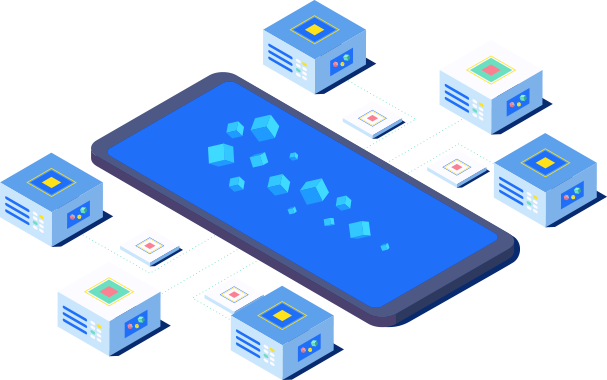
Illustration: Google Cloud VPS Compared to Traditional VPS HostingPricing Deep Dive: Free Tier, Sustained Discounts, and the Real Bill
Google Cloud pricing is more transparent than traditional VPS pricing in the sense that every resource is itemized and metered independently, and simultaneously more likely to produce a billing surprise for users accustomed to the all-inclusive fixed monthly price of traditional VPS plans. A traditional VPS plan at $30 per month includes vCPUs, RAM, SSD storage, a bandwidth allowance (typically 4 to 32 TB), a public IP address, and often a control panel license — one number, one bill, zero arithmetic. A Google Cloud Compute Engine instance at $30 per month is a starting point, not a total. The bill will include separate line items for the persistent disk (charged per GB-month of provisioned capacity, regardless of how much data you actually store), network egress (charged per GB of data sent from Google's network to the internet, after a modest free allowance), static IP addresses that are reserved but not attached to a running instance, and any additional services you enable — Cloud Monitoring beyond the free allotment, Cloud Logging beyond the free ingestion tier, snapshot storage for disk backups, and Cloud DNS zone hosting.
Let's construct a concrete comparison using a typical small-to-medium workload: a WordPress site with moderate traffic, a MySQL database, and about 500 GB of monthly data transfer. On a traditional VPS from a provider like InterServer, a plan with 4 vCPUs, 8 GB RAM, 200 GB NVMe storage, and 8 TB of monthly bandwidth costs approximately $30 to $45 per month — a single number on a single invoice. On Google Cloud Compute Engine, an e2-standard-4 instance (4 vCPUs, 16 GB RAM) in us-central1 costs approximately $97 per month at on-demand rates, or $62 per month with a one-year committed use discount. Add a 200 GB balanced persistent disk at $0.10 per GB-month: $20 per month. Add 500 GB of network egress at $0.12 per GB for standard-tier networking beyond the 1 GB free allowance: roughly $60 per month. Add a static external IP address at $7.30 per month while attached to a running instance (or $0.01 per hour when unattached): $7.30. The Google Cloud total: approximately $184 per month at on-demand rates, or $149 per month with committed use discounts. That is 3.3x to 4.9x the cost of the traditional VPS for a workload that fits comfortably within the traditional VPS's resource allocation. This is not a criticism of Google Cloud's pricing model — it is an honest description of what the model charges for, and the numbers are all publicly available on Google's pricing page — but it is a reality that must be modeled before entering a credit card number, not discovered on the first billing statement.
Sustained use discounts are Google Cloud's most interesting pricing feature and the one that most directly challenges the "cloud is always more expensive" narrative. Unlike AWS reserved instances (which require an upfront commitment) or traditional VPS fixed pricing (which charges the same regardless of utilization), Google Cloud automatically applies sustained use discounts to Compute Engine instances that run for a significant portion of the billing month. If your e2-standard-4 instance runs for the entire month, Google automatically applies a discount of approximately 20% to 30% off the on-demand price, without any reservation, upfront payment, or commitment from you. The discount scales with usage: instances running 25% of the month receive a smaller discount, instances running 100% of the month receive the full discount. This model rewards steady-state workloads with lower effective pricing without locking you into a term commitment, and it means that the sticker price you see on Google's machine type pricing page is not what you will actually pay if your instance runs continuously. However, the sustained use discount only applies to compute (vCPU and memory), not to persistent disks, network egress, or static IP addresses, and even with the full discount applied, the all-in cost for a modest instance typically remains higher than a traditional VPS with equivalent specs. The sustained use discount narrows the gap; it does not close it.
Data transfer pricing is the line item most likely to surprise Google Cloud newcomers, and it deserves an underscored warning. Traditional VPS providers build bandwidth into the plan — 4 TB, 8 TB, 32 TB, or unmetered — and the vast majority of customers never encounter a bandwidth overage charge. Google Cloud charges for network egress at rates that vary by destination and volume tier. Standard-tier internet egress from US regions costs $0.12 per GB for the first 1 TB, $0.11 per GB for the next 9 TB, and $0.08 per GB beyond 10 TB. Premium-tier egress (which routes over Google's private backbone for more of the path) costs $0.12 to $0.19 per GB. If your website serves 2 TB of content per month — a modest amount for a site with images and a few hundred daily visitors — your Google Cloud bandwidth bill will be approximately $240 per month on standard tier. The same bandwidth costs $0 on a traditional VPS with a 4 TB or larger allowance. This single line item is the most common reason we at Hosting Captain see clients migrate production websites off Google Cloud and onto traditional VPS or dedicated servers: they optimized compute costs but failed to model bandwidth costs, and the bandwidth bill alone exceeded what a fully-managed traditional VPS with inclusive bandwidth would have cost. Before choosing Google Cloud for a content-serving workload, calculate your expected monthly data transfer volume from your CDN logs or analytics, multiply by the applicable egress rate, and add that number to your budget. If the result is higher than a traditional VPS plan with inclusive bandwidth, you have found the economic reality that matters more than any performance benchmark.
Performance Benchmarks: Google Cloud vs Traditional VPS Hardware
Performance comparisons between Google Cloud and traditional VPS require nuance because both architectures have strengths in different dimensions, and the workload type matters more than any single synthetic benchmark number. On raw single-instance disk I/O, a traditional VPS with locally attached NVMe storage typically outperforms a Google Cloud Compute Engine instance with network-attached persistent disk by a measurable margin. A traditional VPS's virtio-blk driver talks to a local NVMe controller over PCIe, achieving random 4K read latencies in the 70-to-120-microsecond range and sequential read throughput of 3,000 to 7,000 MB/s on modern Gen4 hardware. Google Cloud's persistent disk — even the performance-optimized extreme persistent disk tier — traverses Google's internal storage network to the Colossus distributed file system, introducing 200 to 500 microseconds of additional latency per I/O operation and capping sequential read throughput at 1,200 to 3,000 MB/s depending on the disk type and instance size. For a database server processing thousands of small random reads per second — a typical OLTP workload — the traditional VPS's local NVMe path delivers consistently lower query latency and higher transaction throughput at a given price point. The trade-off is that the traditional VPS's performance is hostage to noisy-neighbor I/O contention: if another VM on the same physical host saturates the NVMe drives with a backup job or a log rotation storm, your disk latency degrades and you have no visibility into why. Google Cloud's distributed storage architecture spreads I/O load across a large storage cluster and enforces per-volume IOPS and throughput limits, reducing the frequency and severity of performance variance from multi-tenant contention.
CPU performance is the dimension where Google Cloud Compute Engine and traditional VPS are closest, with both delivering within 5% of bare-metal throughput for most workloads when using modern hardware and KVM-based virtualization. Google's E2 machine series uses dynamic resource management with CPU overcommit that can produce somewhat more variance than the dedicated-core plans some traditional VPS providers offer, but for the bursty, intermittent CPU demands typical of web hosting — PHP request processing, Python WSGI workers, Node.js event loops — the performance difference is undetectable in real-world usage. Google's N2 and C2 machine series use newer CPU platforms (Ice Lake and Cascade Lake Xeons) with higher clock speeds and larger per-core caches, and for CPU-bound workloads like video transcoding or compiled-language build pipelines, an N2-standard-4 instance can outperform an equally-priced traditional VPS running on older Xeon hardware. The traditional VPS advantage on CPU is not raw throughput but consistency at the low end of the price spectrum: a $6 per month traditional VPS with one dedicated CPU core delivers that one core predictably for the entire month, while a similarly priced Google Cloud shared-core instance (e2-micro or e2-small) provides a baseline of only 12.5% or 25% of a vCPU with short bursts above that baseline, a model that works for idle or lightly loaded servers but chokes under sustained load.
Network performance is where Google Cloud's infrastructure investments produce genuinely superior results that no traditional VPS provider can match at a comparable price. Google's premium-tier network routes traffic over Google's private global fiber backbone — the same network that carries YouTube video streams and Google Search queries — for the majority of the path between your instance and end users, only handing traffic off to the public internet at the peering edge closest to the user. This reduces round-trip latency, packet loss, and jitter compared to traditional VPS providers that rely on public internet transit and peering for most of the path. For a US-based website serving visitors in the US, the latency difference may be small (single-digit milliseconds). For a US-based website serving visitors in India, Southeast Asia, or South America, Google's network advantage can reduce round-trip latency by 30 to 80 milliseconds — a difference that directly affects page load times, mobile app responsiveness, and user engagement metrics. Google Cloud's global load balancer can distribute traffic to the closest available instance across multiple regions with a single anycast IP address, a capability that would require complex BGP configuration and multiple traditional VPS accounts across different providers to approximate. The network performance premium matters most for latency-sensitive applications — real-time communication, multiplayer gaming, financial trading — and for content with a global audience where edge proximity directly translates into user experience and conversion rates.
Ease of Use: Google Cloud Console vs Traditional VPS Control Panels
The ease-of-use comparison between Google Cloud and traditional VPS is not a matter of which interface is more polished — Google's Cloud Console is, objectively, one of the best-designed web interfaces in cloud infrastructure — but of which interface aligns with what you are actually trying to accomplish. A traditional VPS control panel (cPanel, Plesk, or a provider-built custom panel) is a purpose-built tool for managing websites on a server. It provides a structured workflow: create an account, add a domain, install WordPress from a one-click installer, set up email accounts, configure automatic backups, view visitor statistics. Each of these tasks requires one to three clicks in the control panel and zero knowledge of the Linux command line. The control panel abstracts the operating system entirely — you do not need to know what Apache or Nginx is, what a MySQL user is, or what file permissions are — because the panel manages these resources on your behalf through a graphical interface designed for website owners, not system administrators.
Google Cloud Console is not a hosting control panel. It is an infrastructure management dashboard designed for cloud engineers, DevOps practitioners, and developers who are comfortable with the primitives of cloud computing — virtual machines, virtual private clouds, firewall rules, IAM policies, and API enablement. Creating a functional website on Google Cloud through the console alone involves navigating at least six different product areas: Compute Engine (to create the VM instance), VPC Network (to configure firewall rules that allow HTTP and HTTPS traffic), IAM & Admin (to manage access if multiple people need to log in), Cloud DNS (to point your domain at the instance's IP address), Cloud Monitoring (to set up basic health checks and alerts), and potentially Cloud Storage or Filestore (if you need shared storage across multiple instances). Each of these areas has its own set of concepts, terminology, and configuration options that assume familiarity with cloud infrastructure. The learning curve from "I want to host a website" to "I have successfully configured a Google Cloud project to serve web traffic" is measured in days of documentation reading and experimentation, not minutes of clicking through a setup wizard. The SSH connection itself requires navigating Google's metadata-based key management or OS Login system, which is more secure than password authentication but also more complex to configure initially — a topic our SSH guide for beginners covers in detail, including how to connect to a Google Cloud instance through the Cloud Console's browser-based SSH client or through the gcloud command-line tool.
The gcloud CLI and Google Cloud SDK represent the power-user path that makes Google Cloud dramatically more productive than any traditional VPS control panel — once you have invested the time to learn them. With the gcloud command-line tool, creating a new VM instance with a specific machine type, boot disk image, and startup script is a single command: gcloud compute instances create my-server --machine-type=e2-standard-2 --image-family=ubuntu-2204-lts --image-project=ubuntu-os-cloud --boot-disk-size=50GB. Creating a firewall rule that allows HTTPS traffic is another single command. Snapshots, disk resizing, instance cloning, and region migration are all scriptable. The entire infrastructure definition can be captured in Terraform or Pulumi configuration files, version-controlled in Git, and deployed through a CI/CD pipeline — enabling infrastructure-as-code workflows that are simply not possible with a traditional VPS control panel. For teams with DevOps expertise, this programmability is the feature that justifies the complexity cost. For teams without it, the complexity is a barrier that delays getting a website online and introduces opportunities for misconfiguration that a purpose-built hosting control panel would prevent by design.
The Free Tier Reality: What $0/month Actually Buys You
Google Cloud's free tier is the most effective customer acquisition tool in cloud computing, and it works because it is genuinely useful — for a specific set of use cases that do not include production website hosting. The free tier provides one e2-micro instance per month in supported US regions (us-east1, us-west1, us-central1), plus 30 GB of standard persistent disk storage, 1 GB of network egress from North America to all region destinations (excluding China and Australia), and a set of additional free-tier-eligible services including Cloud Functions invocations, Cloud Storage bucket storage, and BigQuery queries. The e2-micro instance provides 0.25 vCPUs (shared core, burstable to 100% CPU for short periods) and 1 GB of RAM — enough to run a lightweight LAMP or LEMP stack, a personal development environment, or a small Node.js application with modest traffic. The 30 GB persistent disk is sufficient for the OS, a small database, and a modest collection of static assets. The 1 GB of network egress is sufficient for a personal site receiving a few hundred visitors per month, or a development instance that primarily serves traffic to you. The free tier is a legitimate, functional infrastructure offering that costs nothing, and for learning Google Cloud, testing deployment scripts, or running a low-traffic hobby project, it is excellent.
The limitations that make the free tier unsuitable for production are not hidden — they are documented in Google's free tier terms — but they are easy to overlook during the initial enthusiasm of discovering free cloud infrastructure. The e2-micro's 0.25 shared vCPU and 1 GB RAM are insufficient for any CMS under real traffic: a WordPress site with 5 to 10 simultaneous visitors will exhaust the available CPU and produce timeouts, and a MySQL database performing complex queries with joins across multiple tables will consume the entire 1 GB RAM allocation, triggering OOM kills that crash the database process. The 30 GB persistent disk fills quickly when the OS, web server logs, database files, and WordPress media uploads accumulate — and Google charges $0.04 to $0.10 per GB-month for storage beyond the free 30 GB, a cost that begins accumulating the moment you exceed the threshold. The 1 GB free egress allowance is exhausted by a single moderately-sized page load if your site serves uncompressed images or a JavaScript bundle, and beyond that threshold, every GB of egress costs $0.12 on standard tier. Critically, Google Cloud requires a billing account with a valid credit card or bank account to use the free tier, and any usage beyond the free limits is automatically charged to that payment method — there is no hard cap, no spending limit you can set that stops charges when you exceed the free tier. If a misconfiguration, a sudden traffic spike, or an automated script accidentally burns through the free allowances, you will be billed for the overage with no warning beyond any budget alerts you proactively configured yourself.
The most common free-tier regret pattern we see at Hosting Captain follows the same trajectory every time: someone reads about Google Cloud's free tier, signs up, provisions an e2-micro instance, installs WordPress or a Node.js application, points a domain at it, and enjoys a fully functional website at zero cost for the first month or two. Traffic grows modestly — maybe from 50 daily visitors to 200 — and suddenly the site is slow, frequently timing out, and generating $15 to $40 per month in overage charges for CPU bursting, storage beyond 30 GB, and egress beyond 1 GB. The user is now paying for an underpowered instance that delivers poor performance while requiring the same GCP complexity overhead as a production deployment. The economically rational alternative — a $5 to $12 per month traditional VPS with a dedicated CPU core, 1 to 2 GB of RAM, 25 to 50 GB of NVMe storage, and 1 to 4 TB of bandwidth — would have delivered better performance at a predictable, lower price from day one. The free tier is best understood as a Google Cloud trial environment, not a production hosting solution, and if your goal is to host a website that visitors actually use rather than to learn Google Cloud infrastructure, the free tier is a detour rather than a destination.
When Google Cloud VPS Is the Clear Winner
Google Cloud Compute Engine is the right choice when your infrastructure requirements extend beyond what a single-server traditional VPS can provide and your team has the cloud operations skills to operate Google Cloud Platform safely and cost-effectively. The most decisive use case is multi-region deployment: if your user base spans North America, Europe, and Asia, and you need low-latency response times in each region, Google Cloud's 40-plus regions and global load balancer provide a deployment capability that would require coordinating multiple traditional VPS providers across continents, each with different control panels, billing cycles, and support processes. A single Google Cloud project can deploy instances in us-central1, europe-west4, and asia-southeast1, front them with an anycast global load balancer that routes each user to the nearest healthy instance, and manage the entire topology through one Terraform configuration and one consolidated bill. The operational coherence of a single cloud platform across regions saves engineering time that rapidly exceeds the cloud premium for teams operating at multi-region scale.
Integration with Google's broader cloud ecosystem is the second decisive advantage. If your application already uses Firebase for authentication and real-time data, Cloud Storage for user uploads and static assets, BigQuery for analytics, or Google Workspace for email and collaboration, running your compute layer in Compute Engine consolidates authentication (single IAM model), networking (private VPC access to Cloud Storage and BigQuery, avoiding egress charges for inter-service traffic within the same project), and billing (one invoice, one set of cost management tools). The cost savings from avoiding egress charges on traffic between a traditional VPS and Google Cloud services alone can justify the Compute Engine premium for workloads with significant data flow into GCP services. For SaaS startups building on Google Cloud's platform, this integration advantage compounds over time as new services are adopted, and the initial complexity investment in learning GCP's IAM, networking, and operations model pays dividends across years of development. Our SaaS VPS guide covers the architectural decisions that SaaS founders face early on, many of which point toward or away from hyperscale cloud platforms depending on the specific requirements of the product.
Google Cloud is also the clear winner for workloads that benefit from elasticity that a fixed-resource traditional VPS cannot provide. If your application experiences sharp traffic spikes — a classroom management platform that goes from idle to thousands of concurrent users when a semester starts, or an event registration site that sees 90% of its monthly traffic in three days — Google Cloud's managed instance groups with autoscaling can automatically provision additional instances when CPU utilization or request rate crosses a threshold, then terminate them when demand subsides. You pay only for the compute resources consumed during the spike, rather than provisioning a traditional VPS sized for peak load that sits idle 90% of the time. Preemptible VM instances — Google's term for spare compute capacity sold at a 60% to 91% discount with the caveat that they can be terminated at any time with 30 seconds' notice — enable cost-optimized batch processing, rendering, and CI/CD pipelines that would be uneconomical on traditional VPS. These elasticity and spot-pricing capabilities are genuinely innovative and have no equivalent in the traditional VPS market. The catch is that they require significant engineering investment to implement correctly — autoscaling policies must be tuned, applications must handle preemption gracefully, and monitoring must detect when elastic infrastructure is behaving unexpectedly — and that engineering investment is only worth making when the workload genuinely demands elasticity.
When Traditional VPS Is the Smarter Choice
Traditional VPS is the smarter choice when predictability — of cost, of performance, of operational workflow — is the dominant requirement, and that describes the vast majority of website hosting use cases on the internet. A traditional VPS at $12 to $50 per month provides a known quantity: fixed resources at a fixed price, with control panel tools that handle the routine tasks of website management (domain configuration, email setup, SSL certificate installation, backup scheduling) without requiring cloud infrastructure expertise. The operational model matches the task: if you are running a WordPress site, a traditional VPS with cPanel lets you install WordPress through Softaculous or a similar one-click installer, manage file permissions through a file manager, configure email accounts through a mail administration interface, and set up automated backups through a backup wizard — all in a web browser, all documented with hosting-specific tutorials, and all supported by a help desk that understands what WordPress is and how to troubleshoot common WordPress issues. Google Cloud support will help you when Compute Engine's API returns an error; they will not help you when your WordPress site throws a 500 error because a plugin update introduced a PHP compatibility issue. The support scope reflects the product scope: Google Cloud provides infrastructure; traditional VPS providers provide hosting, which includes infrastructure plus the software and support layers that turn infrastructure into a usable website platform.
The bandwidth economics alone make traditional VPS the correct choice for content-serving workloads, and this is worth stating bluntly because Google Cloud's egress pricing renders many otherwise-reasonable workloads economically irrational. A website serving 5 TB of content per month — a photography portfolio, a podcast hosting site, a software download page, a blog with embedded video — will pay approximately $600 per month in Google Cloud egress charges at standard-tier rates after the 1 GB free allowance. A traditional VPS with 8 TB of inclusive bandwidth at $30 per month pays $0 in additional bandwidth charges for the same traffic. The $570 monthly difference, compounded over a year, is $6,840 — enough to pay for a dedicated server with far more compute power than the Google Cloud instance and enough budget left over for a CDN subscription that improves global performance beyond what either hosting option alone would deliver. Even if the Google Cloud instance had access to superior CPU hardware and Google's private network backbone, a 20x cost difference on the bandwidth line item overwhelms any marginal performance advantage. For any workload where data transfer volume is the dominant cost driver, the traditional VPS model wins on economics by a margin that no cloud optimization technique can close.
Traditional VPS is also the right choice when your team's operational capacity is better matched to a managed hosting experience than to cloud infrastructure self-service. If you are the sole developer and system administrator for your project — or if your team is composed of web developers who deploy via FTP and manage databases through phpMyAdmin rather than through infrastructure-as-code pipelines — the additional complexity of Google Cloud's IAM, VPC networking, and CLI-based provisioning represents overhead that slows your velocity rather than capabilities that accelerate it. The right infrastructure is the one that matches your team's current operational maturity, not the one that sounds most impressive in a hosting comparison article. Many of the most profitable small-to-medium web properties on the internet run on traditional VPS infrastructure that was set up in an afternoon, configured with reasonable security defaults, and maintained with monthly updates and periodic backup tests — and the owners spend their time on content, marketing, and customer relationships rather than on infrastructure optimization. The marginal improvement in reliability from Google Cloud's live migration and distributed storage does not translate into additional revenue for most small websites, because the baseline reliability of a well-managed traditional VPS (99.9% uptime, roughly 8.8 hours of downtime per year) is already sufficient for workloads where downtime is an inconvenience rather than a revenue emergency. If your business processes orders throughout the day and every hour of downtime costs measurable revenue, the cloud premium is worth paying for faster recovery from hardware failures. If your website generates leads through a contact form and occasional downtime means a few delayed inquiries, the cost of the cloud premium exceeds the value of the additional uptime. For a deeper analysis of when bare-metal infrastructure — the next step beyond VPS — becomes the economically rational choice, our dedicated server guide explores the thresholds where VPS of any type is superseded by dedicated hardware.
Setup Differences: Spinning Up Your First Instance
The setup experience reveals the philosophical gap between the two approaches more clearly than any specification sheet. On a traditional VPS, the setup flow typically takes 10 to 30 minutes from signup to serving web traffic. You select a plan, choose an operating system template (Ubuntu, CentOS, Debian, AlmaLinux), optionally add cPanel or Plesk, and submit the order. The provider's automated provisioning system creates the virtual machine on an available hypervisor host — typically in 2 to 10 minutes — and sends you an email containing the server's IP address, the root username, and the root password (or SSH key setup instructions). If you ordered cPanel, the control panel is pre-installed and accessible at the server's IP address on port 2083. From that point, you log into cPanel, use the WordPress installer, point your domain's DNS records at the server's IP, and your site is live. If you prefer SSH, you connect with the root credentials, run apt update && apt upgrade (or the equivalent for your distribution), install your web server and database, and configure your application. This workflow has been refined over two decades of hosting industry iteration, and it works reliably for millions of users who have never opened a terminal and never need to.
On Google Cloud, the setup flow begins with creating a Google Cloud account, which requires a Google account, a billing account with a valid payment method, and project creation — a conceptual step that has no equivalent in traditional hosting. A Google Cloud project is a container for all the resources you will create (instances, disks, firewall rules, IP addresses), and it has its own project ID, project number, billing association, and IAM policy. Once the project exists, you must enable the Compute Engine API for that project — a step that takes a few seconds but represents an architectural concept (APIs as individually enabled services) that is unique to cloud platforms. Only then can you create a VM instance, which involves navigating the machine type catalog (e2, n2, c2, n2d, t2d, m1, m2, each with different CPU platforms, memory ratios, and pricing), selecting a boot disk image and disk type (balanced persistent disk, SSD persistent disk, extreme persistent disk, each with different performance characteristics and costs), configuring the network interface with the correct VPC and subnet, and setting up firewall rules — through a separate VPC Network section of the console — that allow HTTP (port 80), HTTPS (port 443), and SSH (port 22) traffic. Google's browser-based SSH client in the Cloud Console is genuinely excellent — it opens a terminal session to your instance without requiring SSH key configuration, public IP assignment, or local terminal software — but the experience of getting to that terminal session involves navigating cloud infrastructure concepts that a traditional VPS setup wizard abstracts away entirely.
The divergence after initial setup is equally instructive. On a traditional VPS, ongoing management consists of periodic tasks — updating WordPress plugins, reviewing backup logs, checking disk space, renewing SSL certificates — performed through the control panel's graphical interface. The server's configuration drifts slowly over time as you tweak PHP settings through the control panel, add firewall rules, and install additional software packages, but the drift is manageable for a handful of servers because each server is a known entity managed through known tools. On Google Cloud, the cloud-native approach to ongoing management is to treat the server as immutable infrastructure: rather than SSH into a long-running instance to apply updates and tweak configurations, you build a new boot disk image with the updated configuration, create a new instance template, and roll out the update through a managed instance group that replaces old instances with new ones in a controlled manner. This approach eliminates configuration drift, makes rollbacks trivial (switch back to the previous instance template), and enables automated testing of infrastructure changes — but it also requires a build pipeline for machine images, infrastructure-as-code templates for the instance group and load balancer configuration, and a team that is comfortable with the operational model of replacing servers rather than updating them. For a single WordPress site, immutable infrastructure is absurd overengineering. For a SaaS platform with dozens of instances that must remain consistent, it is the operational model that prevents the platform from collapsing under the weight of accumulated ad-hoc configuration changes. Understanding which model applies to your workload is more important than understanding how to execute either one.
Making the Decision: A Practical Comparison Framework
After examining the architectural, pricing, performance, ease-of-use, and setup dimensions, a clear decision framework emerges that maps your specific requirements to the appropriate hosting choice. If your primary constraint is budget predictability and your workload fits within the resource envelope of a traditional VPS plan, a traditional VPS will almost always deliver better value — lower cost, simpler management, and adequate reliability for non-revenue-critical workloads. The bandwidth economics alone make this true for any content-serving website with more than a few hundred MB of monthly data transfer. If your workload requires multi-region deployment, integration with Google Cloud ecosystem services, elastic scaling in response to traffic spikes, or infrastructure-as-code workflows for team-based server management, Google Cloud Compute Engine's platform capabilities justify the cost and complexity premium. These two categories — predictable, fixed, budget-constrained workloads on one side; elastic, multi-region, integration-dependent workloads on the other — describe the vast majority of VPS use cases, and the framework maps cleanly onto them.
The edge cases are where judgment matters most. A SaaS startup with a single-server MVP may be better served by a traditional VPS during the pre-revenue phase — $30 per month vs. $150 per month matters when the runway is measured in months — but should build the application with an architecture that allows migration to Google Cloud when multi-region scaling becomes necessary, because the cost of an emergency cloud migration during a growth spike is far higher than the cost of building cloud-portability into the application from the start. Conversely, an established business with stable traffic that has been running on Google Cloud for years may discover, upon auditing their bill, that they are paying $500 per month for compute and egress that a $60 traditional VPS could handle, and that the migration savings would recover the migration engineering cost within 3 to 4 months. These edge cases are not hypothetical — they represent real situations we encounter in our consulting work at Hosting Captain — and they underscore the importance of periodically revisiting hosting decisions rather than treating them as permanent once made. Your hosting architecture should evolve as your traffic, team, and technical requirements evolve, and the right answer at one stage of your business may be the wrong answer two years later.
A practical evaluation checklist distills the decision into actionable questions. First: what is your expected monthly data transfer volume? Multiply your average page size by your expected monthly page views, add a 30% buffer for growth, and compare the result to traditional VPS bandwidth allowances versus Google Cloud egress rates. If bandwidth alone tilts the economics toward traditional VPS by more than 3x, the decision is effectively made — the other dimensions cannot overcome that cost delta. Second: does your application need to serve users in multiple continents with low latency? If yes, Google Cloud's global load balancer and multi-region footprint provide capabilities that traditional VPS providers cannot match without complex multi-provider coordination. Third: does your team's operational expertise include cloud infrastructure management — IAM, VPC networking, infrastructure-as-code, CI/CD pipelines — or is your team's strength in web development with a preference for managed hosting? The infrastructure you can operate safely and efficiently is always preferable to the infrastructure that looks best on a specification sheet. Fourth: are you integrating with Google Cloud services (Firebase, BigQuery, Cloud Storage, AI Platform) that would incur egress charges if accessed from an external traditional VPS? If the integration traffic is substantial, consolidating on Google Cloud may be cheaper even when the Compute Engine instance itself appears more expensive, because the inter-service egress savings offset the instance premium. Fifth and finally: what is your tolerance for unexpected bills? Traditional VPS gives you a fixed monthly price with no surprises. Google Cloud gives you itemized, metered billing that can spike unexpectedly if traffic surges, a script malfunctions, or a resource is left running unintentionally. If uncertainty about the monthly total is a source of financial stress, the traditional VPS's predictability is a feature worth paying for, even if Google Cloud's headline compute pricing appears lower.
At Hosting Captain, we have helped businesses navigate the Google Cloud vs. traditional VPS decision across hundreds of engagements, and the pattern that consistently produces the best outcomes is one of deliberate incrementalism: start with the simplest, most predictable infrastructure that meets your current requirements, instrument it thoroughly to gather real data about your resource consumption patterns, and only add complexity — cloud platforms, multi-region deployments, infrastructure-as-code tooling — when the data demonstrates that the simpler approach is constraining your business. The reverse approach — starting with the most sophisticated infrastructure available and hoping to grow into it — produces bills that erode runway, complexity that consumes engineering attention, and a platform that is optimized for problems you do not yet have. Google Cloud Compute Engine is a remarkable piece of infrastructure engineering, and for the workloads and teams it was designed to serve, it is the best option available. But for the majority of websites, applications, and businesses that need a reliable server at a predictable price with manageable operational overhead, a traditional VPS remains the economically rational and operationally appropriate choice — not because it is more technologically advanced, but because it is better aligned with what most hosting customers actually need.
Frequently Asked Questions
Is Google Cloud VPS really free?
Google Cloud offers a free tier that includes one e2-micro instance (0.25 vCPUs, 1 GB RAM), 30 GB of standard persistent disk, and 1 GB of network egress per month at no cost — but only if you stay within those limits and only in supported US regions. The free tier requires a valid billing account with a credit card or bank account on file, and any usage beyond the free allowances is automatically charged to that payment method. The e2-micro's limited resources are insufficient for production websites under real traffic; a WordPress site with more than a handful of simultaneous visitors will exhaust the available CPU and produce timeouts. Most users who start on the free tier with the intention of running a production website find themselves paying overage charges within 2 to 3 months as traffic grows beyond what the free instance can handle. The free tier is best used as a learning environment and a development sandbox, not as a permanent hosting solution for a live website.
Why is Google Cloud VPS more expensive than traditional VPS?
Google Cloud's pricing reflects the cost of the infrastructure underlying it: a globally distributed network of data centers connected by Google's private fiber backbone, persistent disk storage replicated synchronously across multiple physical machines within a zone, automated live migration that moves your VM between physical hosts without downtime, and the engineering investment required to build and maintain the orchestration layer that makes these capabilities possible. Traditional VPS providers avoid these costs by running VMs on single physical servers with locally attached storage, without distributed replication, automated failover, or global network fabrics. The capabilities Google Cloud provides are genuinely valuable for production workloads that require high availability and global distribution, but for a single-server website with predictable traffic and modest uptime requirements, those capabilities translate into costs that are not proportional to the value received. Additionally, Google Cloud bills separately for resources that are typically bundled into a traditional VPS plan — persistent disk storage per GB-month, network egress per GB, static IP addresses per hour — which means the total monthly cost is consistently higher than the compute instance price alone suggests.
Can I run WordPress on Google Cloud VPS?
Yes, WordPress runs on Google Cloud Compute Engine without any platform-specific limitations — it is a standard LAMP or LEMP stack application that works on any Linux virtual machine with a web server, PHP, and MySQL or MariaDB. Google Cloud Marketplace even offers one-click deployment of WordPress through pre-configured images that install WordPress, Apache or Nginx, MySQL, and PHP on a Compute Engine instance. However, the operational burden of managing WordPress on Google Cloud is significantly higher than on a traditional VPS with cPanel because Google Cloud does not provide a hosting control panel, automated WordPress updates, staging environments, or WordPress-specific support. You are responsible for operating system updates, PHP version management, database backups, SSL certificate provisioning and renewal, and WordPress plugin and core updates — all through SSH and the command line, or through third-party management tools you install and configure yourself. For users comfortable with Linux system administration, this is a manageable workload. For users whose previous WordPress experience is a managed hosting control panel, the operational jump is substantial and often frustrating. Several third-party tools — RunCloud, ServerPilot, Cloudways — provide a management layer on top of Google Cloud that approximates the traditional VPS control panel experience, but they add their own monthly cost on top of Google Cloud's infrastructure charges.
How does Google Cloud VPS compare to DigitalOcean or Vultr?
DigitalOcean, Vultr, and Linode are cloud VPS providers that occupy a middle ground between Google Cloud's enterprise platform and a traditional VPS's simplicity. They provide the same distributed storage and automated failover architecture that distinguishes cloud VPS from traditional VPS, but with a significantly simpler product surface — fewer services, less granular IAM, simpler networking, and control panels designed for developers rather than enterprise cloud architects. Their pricing is typically 30% to 50% lower than Google Cloud for equivalent compute specs, and their bandwidth allowances are more generous (1 to 5 TB of free transfer per month vs. Google Cloud's 1 GB before charges begin). Google Cloud's advantages over these providers are its global network (more regions, private backbone routing), its integration with the broader GCP ecosystem (BigQuery, Cloud Storage, AI Platform, Firebase), and the sophistication of its networking and IAM capabilities for complex multi-tier deployments. For most small-to-medium workloads, DigitalOcean, Vultr, or Linode provide a better balance of cloud reliability and cost-effectiveness than Google Cloud Compute Engine. Google Cloud becomes the better choice when you specifically need GCP ecosystem integration or when your deployment complexity exceeds what the simpler cloud VPS platforms can model.
How do I connect to a Google Cloud VPS instance via SSH?
Google Cloud offers multiple SSH connection methods, each with different setup requirements. The simplest is the browser-based SSH client accessible directly from the Google Cloud Console: navigate to Compute Engine, click the SSH button next to your instance, and a terminal window opens in your browser with no additional configuration required. For local terminal SSH access, you can use the gcloud command-line tool with the gcloud compute ssh command, which automatically manages SSH keys, handles OS Login authentication, and connects through Google's identity-aware proxy. For traditional SSH client connections (OpenSSH, PuTTY), you must either add your public SSH key to the instance's metadata or to your project's metadata (which applies the key to all instances in the project), or enable OS Login and manage SSH access through IAM roles rather than key metadata. The browser-based and gcloud methods add convenience layers on top of standard SSH, but they also add Google-specific steps that differ from the universal SSH workflow covered in our SSH guide for beginners — understanding the fundamentals of SSH key authentication will help you navigate Google Cloud's SSH options regardless of which method you ultimately choose.
Can I switch from a traditional VPS to Google Cloud later?
Migration from a traditional VPS to Google Cloud is technically straightforward but operationally requires planning for data transfer, DNS cutover, and a brief maintenance window. The standard approach involves provisioning a Compute Engine instance with the required specifications, installing your application stack to match the traditional VPS configuration, synchronizing your website files using rsync or scp, exporting your database from the traditional VPS and importing it into the new database instance on Google Cloud, testing the new environment thoroughly with a temporary hostname or IP address, and then updating your DNS records to point to the Google Cloud instance's static IP. Database-heavy applications benefit from using database replication: configure the Google Cloud database as a replica of the traditional VPS database, let replication catch up, then perform a brief maintenance window where you promote the replica to primary, update DNS, and decommission the old server. The migration engineering effort is typically 1 to 3 days for a standard LAMP/LEMP stack website, plus testing time. The cost of the migration should be compared against the ongoing cost difference between the two hosting options to determine whether the migration has a positive return on investment within a reasonable timeframe.
What happens if I exceed Google Cloud's free tier limits?
Google Cloud automatically charges your registered billing account for any usage beyond the free tier limits at standard on-demand rates. There is no hard cap, no spending limit by default, and no confirmation prompt before charges begin accruing. You will be billed for additional compute hours if you run an instance larger than the e2-micro, for additional persistent disk storage if your total provisioned disk space exceeds 30 GB, and for additional network egress if your outbound data transfer exceeds the 1 GB free allowance. Google Cloud provides budget alerts that you can configure to send email notifications when your spending reaches a specified threshold, but these are alerts — not spending limits — and they do not stop resource usage or prevent charges from accumulating beyond the threshold. The only way to set a hard limit on spending is to implement programmatic budget actions using Cloud Functions and Pub/Sub triggers, which requires additional configuration and scripting. Before using Google Cloud for any workload where unexpected charges would create financial stress, configure budget alerts with low thresholds and monitor your billing dashboard regularly during the first few months to understand your actual consumption patterns.
Is Google Cloud VPS suitable for a small business website?
Google Cloud Compute Engine can host a small business website, but it is rarely the most cost-effective or operationally appropriate choice for that use case. A small business website — a WordPress site, a static business page, a simple e-commerce store with modest traffic — typically needs 1 to 4 vCPUs, 2 to 8 GB of RAM, 30 to 100 GB of storage, and 1 to 5 TB of monthly bandwidth. A traditional VPS plan that provides these resources costs $12 to $50 per month with a control panel that handles WordPress management, email configuration, SSL certificates, and automated backups without requiring command-line expertise. An equivalent Google Cloud deployment will cost $50 to $150 per month when including persistent disk, network egress, and a static IP address, and will require manual setup and maintenance of every component that a traditional VPS control panel handles automatically. For a business whose website is a marketing asset rather than a technology product, the additional cost and complexity of Google Cloud do not translate into business value. The exceptions are small businesses that already use Google Workspace and need tight integration between their website and Google services, or businesses whose website traffic is extremely variable and would benefit from Compute Engine's ability to scale resources programmatically — but these are edge cases, not the typical small business hosting profile.
Emma Larsson is a lead systems developer and virtualization specialist with a decade of expertise in kernel configurations and hypervisor scaling.
Frequently Asked Questions
This guide covers the practical decision points — pricing, performance, and when it makes sense for your situation — based on current 2026 data.
Pricing varies by provider and plan tier; see the cost breakdown section above for current ranges and what's actually included at each price point.
Look closely at uptime guarantees, renewal pricing (not just the first-year discount), and how responsive support actually is — all covered in detail in this article.
Hosting Captain has been exceptional for my e-commerce store in Pune. The NVMe SSD speed is
noticeable, and their support team responds within minutes. Highly recommended for any
Indian business!
Ryan John, Pune
Great Value for Money
Switched from a US-based host to Hosting Captain and my website loads 3x faster for Indian
visitors. The free SSL and cPanel are great, and the pricing is unbeatable. Very satisfied
customer!
Priya Mehta, Mumbai
Reliable VPS Hosting
I've been using their VPS plan for 2 years now. 99.9% uptime is not just a claim — it's
reality. My client projects run without interruption. The KVM virtualization gives me full
control I need.
Amit Kumar, Bangalore
Excellent 24/7 Support
The support team helped me migrate my entire WordPress site at 2 AM without any downtime.
This level of service is rare in Indian hosting. Worth every rupee!
Sunita Patel, Ahmedabad
Perfect for Startups
As a startup, budget matters. Hosting Captain's Business plan covers everything we need —
multiple websites, free SSL, daily backups — at a fraction of what international hosts
charge.
Vikram Singh, Delhi
Professional Dedicated Server
Our high-traffic news portal needed a dedicated server. Hosting Captain's DS Business plan
handles 100K+ daily visitors effortlessly. Their team provisioned everything within 4 hours!
Meena Krishnaswamy, Chennai
Trusted Technologies & Partners
Start Your Website with Hosting Captain
From personal blogs to enterprise solutions, we've got you covered!