Every business that reaches the infrastructure level where shared hosting and VPS no longer suffice eventually faces a fork in the road: do you rent a dedicated server month to month from a hosting provider, or do you buy your own hardware and colocate it in a professional data center? The question seems straightforward until you begin unpacking the layers beneath the surface — capital expenditure versus operating expenditure, hardware depreciation schedules, remote hands fees, warranty logistics, and the compounding effect of a 3 AM power supply failure when your nearest technician is a four-hour drive from the data center. At Hosting Captain, we have advised hundreds of companies through this exact decision, and the pattern we observe is consistent: the right answer is never universal and depends far more on your specific scale, technical bandwidth, cash position, and growth trajectory than on any spreadsheet-friendly rule of thumb. This article provides the comprehensive, numbers-driven analysis you need to evaluate dedicated server colocation against renting with confidence, based on real 2025–2026 pricing data from Indian and global markets.
The dedicated server colocation vs renting debate has grown more nuanced in recent years as server hardware costs have declined, managed service offerings have matured, and the gap between CapEx-heavy ownership models and OpEx-friendly rental models has been reshaped by evolving tax codes and financing options. A business spending ₹40,000 per month on rented dedicated servers may discover that colocating identical hardware would break even within 18 to 24 months — or it may discover that after accounting for spare parts inventory, remote hands intervention, and the opportunity cost of managing hardware instead of building product, renting is actually the cheaper option when measured honestly. We have structured this guide to walk through every cost dimension, every risk factor, and every operational consideration that separates a successful colocation deployment from an expensive regret. If you are new to the dedicated server landscape, our dedicated server hosting guide provides the foundational knowledge that will make the comparisons in this article more meaningful.
The decision has particular urgency for Indian businesses in 2025, where the colocation market has matured significantly with Tier IV facilities from CtrlS, Netmagic (Anil Ambani-owned), Sify Technologies, and GPX India now offering carrier-neutral rack space across Mumbai, Chennai, Bengaluru, Hyderabad, and the NCR. Simultaneously, Indian dedicated server rental providers — including Hosting Captain's curated network of infrastructure partners — have driven monthly pricing down to levels that compete aggressively with the amortized cost of owned hardware. The sections that follow will give you the analytical framework to determine which path aligns with your organization's financial structure, technical capability, and three-to-five-year infrastructure roadmap.
What Colocation Actually Means vs Renting a Dedicated Server
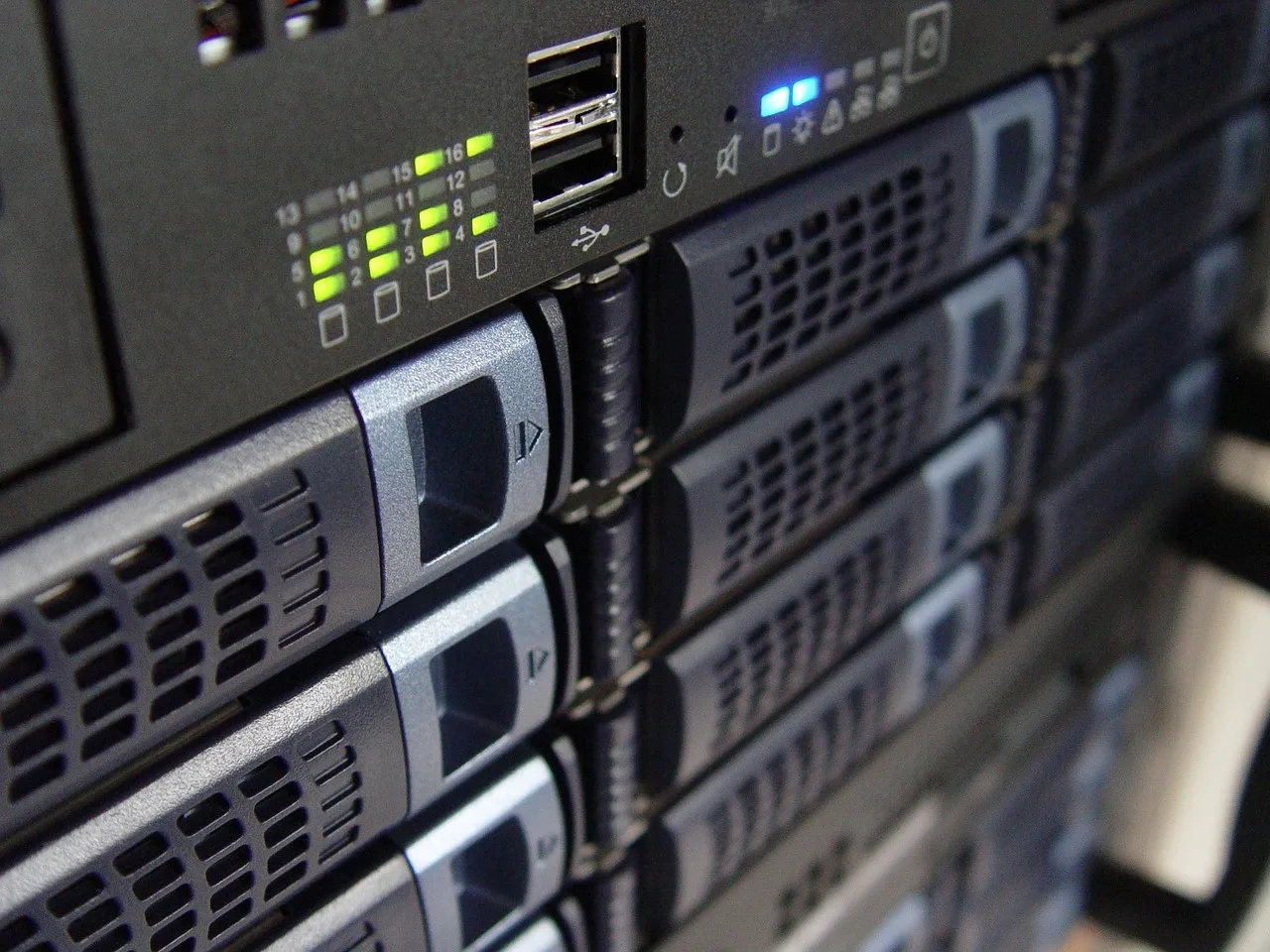
Colocation — often shortened to "colo" — is the practice of purchasing your own server hardware and physically housing it in a third-party data center facility. You own the server. You pay for the chassis, the processors, the memory modules, the storage drives, the network interface cards, and every other component inside the case. The colocation data center provides the physical infrastructure around that server: the rack space measured in rack units (U), the electrical power delivered through redundant A+B circuits, the cooling necessary to dissipate the server's heat output, the physical security including biometric access controls and 24/7 on-site guards, and the network connectivity — typically a cross-connect to an internet exchange or upstream transit provider that you contract separately or through the colocation facility's blended bandwidth offering. The division of responsibility is clean in theory: the data center is responsible for everything outside the server chassis; you are responsible for everything inside it.
Renting a dedicated server inverts this ownership model entirely. The hosting provider — such as HostingCaptain.com and its infrastructure partners — owns the hardware, deploys it in their data center cages or suites, and charges you a flat monthly fee that bundles the hardware, the rack space, the power, the cooling, the network connectivity, and often a management layer that covers operating system updates, security patching, monitoring, and backup configuration. You never touch the physical server. You never receive an invoice for a failed power supply. You never negotiate with Dell or Supermicro for next-business-day warranty service. The tradeoff is that the monthly rental cost, over a sufficiently long time horizon, exceeds the amortized cost of owning equivalent hardware — though as we will demonstrate in the break-even analysis below, "sufficiently long" can mean anywhere from 18 months to over 60 months depending on your configuration, your colocation provider's pricing, and how you value your own time.
The distinction between these two models reaches beyond cost into operational philosophy. Colocation suits organizations that treat infrastructure as a core competency — businesses with skilled hardware engineers on staff, existing supply chain relationships with server vendors, and a tolerance for the unpredictability that comes with hardware ownership. Renting suits organizations that treat infrastructure as a utility — businesses that want a server to run their application reliably without ever thinking about DIMM seating, RAID controller firmware versions, or the lead time on a replacement NVMe drive from a distributor. Hosting Captain's advisory process always begins by mapping the client's organizational DNA to the operational demands of each model, because a colocation deployment that saves ₹5 lakhs on paper but consumes 200 hours of executive and engineering time annually is not a savings — it is a misallocation of scarce leadership attention that would generate far higher returns if directed toward product development, sales, or customer success.
The Ownership Spectrum: Bare-Metal Cloud Enters the Conversation
Between pure colocation and pure monthly rental sits an increasingly popular middle ground: bare-metal cloud. Providers in this category provision physical dedicated servers through an API or control panel and bill them by the hour or by the month with no long-term contract and no hardware ownership transfer. The client gets dedicated hardware isolation — no hypervisor, no noisy neighbors, full access to the physical resources — without the capital expenditure of purchasing the hardware or the operational burden of managing hardware failure response. Bare-metal cloud offerings from companies like Equinix Metal, PhoenixNAP, and Leaseweb have grown substantially since 2023, and several Indian providers including Netmagic and CtrlS now offer bare-metal provisioning alongside traditional colocation and managed hosting. For businesses that need dedicated hardware isolation but value the flexibility of cloud-like provisioning and billing, bare-metal cloud represents a compelling third option that avoids the worst tradeoffs of both traditional models. The Cloudflare cloud computing overview provides useful context on how cloud infrastructure models map to different workload requirements, though it is worth noting that bare-metal cloud occupies a distinct position — physical isolation with cloud economics — that general cloud computing taxonomies do not always capture cleanly.
The Real Cost Breakdown: Buying Hardware vs Monthly Rental Payments
Any honest colocation vs renting analysis must begin with the raw numbers, and the variance is substantial enough that broad generalizations collapse under scrutiny. A brand-new server suitable for production workloads — think a single-socket AMD EPYC 4004 or Intel Xeon E-2400 series processor with 8 to 16 cores, 64 GB of DDR5 ECC RAM, dual 1 TB enterprise NVMe drives in RAID 1, a hardware RAID controller with battery-backed cache, redundant power supplies, and a remote management interface like iDRAC or iLO — will cost between $2,000 and $5,000 from a tier-one vendor like Dell, HPE, or Lenovo with a three-year next-business-day on-site warranty. That same specification, built from a white-box integrator using Supermicro components or purchased through a refurbished enterprise hardware vendor, can be assembled for $1,200 to $2,500, though the warranty coverage will be spottier and the component provenance harder to verify. At the high end, a dual-socket server with 32 physical cores per socket, 512 GB to 1 TB of DDR5 ECC memory, six to eight NVMe drives in RAID 10, and dual 25 Gbps SFP28 network interfaces will run $8,000 to $25,000+ depending on whether you spec Dell PowerEdge, HPE ProLiant, or Supermicro and how aggressively you configure the memory and storage options.
On the rental side, monthly pricing for a comparable entry-level dedicated server ranges from $80 to $150 per month at Hosting Captain and similar providers, typically including the hardware, rack space, power, network connectivity with 10–30 TB of bandwidth on a 1 Gbps port, and often a basic managed services layer covering OS installation and monitoring. A mid-range configuration with 16 cores, 128 GB RAM, dual NVMe RAID 1, and 20–50 TB bandwidth on a 1 Gbps or 10 Gbps port commands $200 to $500 per month depending on the provider, the data center tier, and the management inclusions. A high-end dual-socket configuration with 32+ cores, 512 GB RAM or more, enterprise NVMe RAID 10, and 10 Gbps unmetered connectivity can rent for $600 to $1,500+ per month. Critically, these rental figures are operating expenses that hit the monthly P&L without any upfront capital outlay — a distinction with meaningful tax and cash flow implications that we examine in a dedicated section below. Hosting Captain's transparent pricing model means that clients see the full monthly cost including bandwidth, power, and management, eliminating the surprise line items that make rental cost comparisons deceptively difficult.
The hardware cost spread — $2,000 to $25,000+ to buy versus $80 to $1,500+ per month to rent — is wide enough that the break-even point varies enormously based on which point in each range your deployment occupies. A business that needs a single entry-level server and can build it through a refurbished hardware vendor for $1,500 might break even on colocation within 12 to 15 months compared to renting at $120 per month — a clear win for colocation if the business has the technical capability to manage it. The same business needing a $20,000 dual-socket enterprise server colocated at a Tier IV facility charging premium rack rates might take 36 to 48 months to break even compared to an $800 per month rental with management included, and if the business's growth trajectory makes the current server specification obsolete within 24 months, the colocation path locks in CapEx that never fully amortizes before the hardware is decommissioned. These are the specific calculations that the break-even analysis section below walks through in detail, but the key principle is that there is no single break-even number — there is only the break-even number for your specific hardware specification, your specific colocation provider's pricing, and your specific management cost structure.
Illustration: Dedicated Server Colocation vs Renting: Which Saves More Long-Term?Colocation Facility Costs: Rack Space, Power, Bandwidth, and Remote Hands
First-time colocation buyers consistently underestimate the facility-side costs because they focus on the server purchase price and treat the monthly colocation fee as an afterthought. In practice, colocation facility charges can equal or exceed the amortized hardware cost over a three-year period, and they vary substantially by data center tier, location, power density, and connectivity requirements. Cabinet and rack space is the most visible line item: a full 42U cabinet in a Tier III data center in Mumbai or Bengaluru typically costs $400 to $900 per month depending on power density and the facility's brand premium — CtrlS and GPX command higher rates than smaller regional operators. Partial rack space is priced per rack unit (1U), with a single 1U or 2U server running $50 to $150 per month depending on whether the colocation provider imposes a minimum commit — many facilities require a minimum of a quarter-cabinet (approximately 10U) for new deployments, which makes colocating a single server uneconomical unless shared cabinet arrangements are available. For businesses deploying multiple servers, the per-U cost falls as you commit to more space, with a half-rack (21U) typically running $250 to $500 per month and a full cabinet providing the best per-U economics.
Power charges represent the single largest variable in colocation facility costs because modern server hardware draws substantially more electricity than the 1U servers of a decade ago. Colocation power is billed in one of two ways: metered power, where you pay for actual kilowatt-hour consumption measured at the rack PDU, or committed power, where you pay a fixed monthly rate for a specific amperage circuit regardless of how much of it you consume. A single 1U server with a mid-range processor, 64 GB RAM, and dual NVMe drives might draw 0.3 to 0.5 kW under load, translating to 220 to 365 kWh per month at continuous operation. At an Indian colocation rate of ₹8 to ₹14 per kWh (reflecting the higher commercial electricity tariffs in India compared to subsidized residential rates), that single server's power bill runs ₹1,760 to ₹5,110 per month — approximately $21 to $61 at current exchange rates. A fully populated quarter-cabinet with four to six servers, a top-of-rack switch, and a firewall appliance might draw 2 to 4 kW, pushing the monthly power bill into the $150 to $350 range. For businesses transitioning from renting where power is bundled into the monthly fee, this unbundled power cost is frequently the line item that disrupts the colocation business case.
Bandwidth pricing in colocation facilities operates differently from the bundled bandwidth included in dedicated server rental plans, and the differences can be either financially advantageous or punitive depending on your traffic patterns. Colocation facilities typically offer two connectivity models: a cross-connect to an upstream ISP or internet exchange that you contract directly, or blended bandwidth sold by the colocation provider itself on a per-Mbps committed data rate basis. A 1 Gbps port with a 100 Mbps committed data rate (95th percentile billing) in a Mumbai data center might run ₹3,000 to ₹8,000 per month ($36 to $96), while a full 1 Gbps burstable to 10 Gbps commit with a higher committed rate scales accordingly. For businesses serving substantial traffic — streaming platforms, SaaS applications with large API payloads, content-heavy e-commerce sites — the unbundled bandwidth model of colocation can be significantly cheaper than the bundled bandwidth of rental plans, because you pay for exactly the throughput you consume rather than a provider's blended rate that includes a margin on top. For lower-traffic deployments, however, the bundled bandwidth included in a $120 per month dedicated server rental (often 10–30 TB per transfer month) is nearly always cheaper than purchasing equivalent connectivity separately through a colocation cross-connect.
Remote hands services are the final facility cost category that catches colocation newcomers off guard. When your colocated server experiences a hardware issue — a failed drive that needs physical replacement, a hung system that requires a hard power cycle, a memory module that came unseated during shipping — you have two options: dispatch your own staff to the data center, or pay the facility's remote hands team to perform the physical work. Remote hands fees are nearly universal in colocation contracts and typically bill at $75 to $200 per hour with a one-hour minimum, sometimes with premium rates for after-hours or weekend dispatch. A single disk replacement, including the technician retrieving the spare from your on-site locker or cage inventory and physically swapping the drive, might take 30 minutes but will be billed at the one-hour minimum — $100 to $150 for what a staff member could do in 15 minutes if they were already on-site. If your server experiences two such incidents per year, remote hands adds $200 to $400 annually to the colocation cost. For businesses colocating in a facility more than a two-hour drive from their office, remote hands dependency is essentially mandatory, and this cost must be built into the TCO analysis from day one.
The Break-Even Analysis: 3-Year and 5-Year Total Cost of Ownership
A break-even analysis that treats only the hardware purchase price and the monthly rental fee as its inputs will produce a dangerously misleading result. The proper calculation must account for the full stack of costs on each side, aggregated over the expected useful life of the hardware — typically three to five years — and discounted to present value if you want the analysis to be financially rigorous. Let us construct two representative scenarios to illustrate the methodology, with the caveat that every business must substitute its own actual costs for the assumptions below. In each scenario, we assume the server is deployed in a Tier III data center in India and the rental comparison is against a managed dedicated server from a provider comparable to HostingCaptain.com's infrastructure partners. For additional context on how uptime commitments differ between deployment models, our cloud hosting uptime SLAs guide explains how 99.99% availability guarantees translate into real-world uptime expectations across different hosting architectures.
Scenario A: Single Mid-Range Server, 3-Year Horizon
Assume an entry-to-mid-range server: single-socket AMD EPYC 4004 with 8 cores, 64 GB DDR5 ECC RAM, dual 1 TB enterprise NVMe in RAID 1, redundant PSUs, and a three-year manufacturer warranty with next-business-day on-site service. Hardware purchase price from a tier-one vendor: $3,200, amortized over 36 months at $89 per month. Colocation costs: 2U of rack space at a mid-tier Mumbai facility at $80 per month, metered power at $35 per month for the server's ~0.35 kW draw, and 1 Gbps port with 50 Mbps committed data rate at $50 per month. Remote hands: one incident per year at $125 per incident, averaging $10 per month. Annual travel to the data center (four visits, assuming two-hour drive each way, ₹2,000 per trip in fuel and tolls): approximately $8 per month when converted and amortized. Total monthly colocation cost: $89 (amortized hardware) + $80 (rack) + $35 (power) + $50 (bandwidth) + $10 (remote hands) + $8 (travel) = $272 per month. The equivalent server rented with management from a provider comparable to Hosting Captain's partners: $180 to $250 per month. At the lower rental end of $180, the rented server saves $92 per month, or approximately $3,312 over three years — a clear rental win. At the higher rental end of $250, colocation breaks even at approximately month 33 of 36. The conclusion: for a single mid-range server, renting is nearly always cheaper when full colocation costs are accounted for honestly, unless you secure unusually low rack space rates or operate at a scale that reduces the per-server colocation overhead.
Scenario B: Half-Rack Deployment, 5-Year Horizon
Scale changes the equation dramatically. Assume a half-rack (21U) with eight servers: four mid-range application servers as described in Scenario A, two high-spec database servers (dual-socket, 128 GB RAM each, quad NVMe RAID 10, $8,000 each), one backup server (high-capacity SATA SSD storage, $2,500), and one management/firewall node ($2,000). Total hardware cost: (4 × $3,200) + (2 × $8,000) + $2,500 + $2,000 = $33,300, amortized over 60 months at $555 per month. Half-rack colocation at a Tier III Indian facility: $350 per month for the space. Power for the entire half-rack (estimated 6 kW combined draw): $500 per month. 10 Gbps port with 500 Mbps committed data rate: $250 per month. Remote hands: two incidents per year at $150 average = $25 per month. Travel: same $8 per month (the travel burden does not scale linearly because all servers are in one location). One part-time hardware engineer on staff, allocating 25% of their time to colocation management tasks at an assumed fully-loaded cost of $1,500 per month: $375 per month. Total monthly colocation cost: $555 + $350 + $500 + $250 + $25 + $8 + $375 = $2,063 per month. The equivalent eight servers rented with management: approximately $2,400 to $3,200 per month (eight mid-to-high-end rentals at $300–$400 each). At the lower rental end of $2,400, colocation saves $337 per month or $20,220 over five years. At the higher end of $3,200, colocation saves $1,137 per month or $68,220 over five years. The conclusion: colocation becomes cost-competitive at approximately four to six servers and definitively cheaper at eight or more, provided the business has or can hire the technical staff to manage the deployment.
The crucial variable that the Scenario A vs Scenario B comparison reveals is not hardware cost or rack space pricing — it is the overhead cost of the technical staff required to manage colocated hardware. In Scenario A, there is no dedicated staff allocation because the single server is assumed to be managed by existing team members, but the remote hands and travel costs still create enough friction to tilt the balance toward renting. In Scenario B, the staff cost of $375 per month is spread across eight servers, making the per-server overhead $47 per month — manageable and more than offset by the rental savings at scale. The break-even point, based on our client data at Hosting Captain, consistently falls between four and eight servers depending on colocation facility pricing and the rental rates negotiated with the provider. Below four servers, renting is nearly always the financially optimal path. Above eight servers, colocation delivers compelling savings that compound over a five-year horizon. Between four and eight servers is the genuine decision zone where the specifics of your hardware requirements, colocation facility options, and in-house technical capability determine the outcome.
When Colocation Saves Money (and When It Definitely Doesn't)
The break-even analysis provides the quantitative framework, but the qualitative factors that determine whether the theoretical savings actually materialize are equally important. Colocation saves money most reliably when four conditions are met simultaneously. First, the organization is deploying enough physical servers — typically six or more — that the per-server overhead of rack space, remote hands, and staff time amortizes to a manageable level. Second, the organization has existing hardware procurement and management expertise in-house, meaning the learning curve and the staffing cost of colocation are incremental rather than greenfield. Third, the workload's hardware requirements are stable or growing predictably, so that servers purchased today will remain useful for their full three-to-five-year depreciation period without being obsoleted by a sudden architectural change. Fourth, the organization has sufficient cash reserves or access to financing to absorb the upfront capital expenditure without constraining investment in growth initiatives — a condition that eliminates colocation for many early-stage and bootstrapped businesses regardless of the paper savings.
Colocation definitively does not save money — and often becomes more expensive than renting — when the organization is deploying one to three servers and lacks dedicated hardware engineering staff. In these scenarios, the combination of rack space minimums (quarter-cabinet commit), power charges that don't benefit from economies of scale, remote hands fees that apply a per-incident premium on every hardware event, and the hidden cost of diverting senior engineering talent from product work to component-level troubleshooting creates a total cost that exceeds even premium managed rental plans. We have observed this pattern at Hosting Captain with clients who colocated two servers expecting to save ₹15,000 per month, only to discover after a year that the true all-in cost — including the senior engineer's time spent diagnosing a RAID controller firmware bug and coordinating a warranty replacement with Dell — exceeded what a fully managed rental would have cost. The spreadsheet showed savings; the operational reality did not.
There is also a timing dimension to when colocation makes sense. A startup in its first two years of operation should almost never colocate. The capital that would be tied up in server hardware — $5,000 to $50,000 depending on scale — generates far higher returns when invested in product development, customer acquisition, and market validation. The operational distraction of managing physical infrastructure during the most fragile phase of a company's existence is a risk multiplier that no TCO spreadsheet can capture. Conversely, a profitable, stable business with five years of operating history, predictable infrastructure needs, and an experienced IT team is a strong colocation candidate because it can fund the CapEx without strain, absorb the operational overhead within existing team bandwidth, and capture the full five-year savings curve. The same analysis applies to SaaS businesses evaluating their architecture choices — our SaaS hosting architecture guide covers how infrastructure decisions connect to broader application design patterns, including the conditions under which colocated dedicated infrastructure outperforms cloud-native architectures for steady-state SaaS workloads.
The Hidden Costs of Colocation Nobody Talks About
Colocation brochures emphasize rack space rates, power density, and carrier neutrality. They do not mention that your carefully specced Supermicro server, shipped from a California integrator to a Mumbai data center, will arrive with a DIMM module unseated by the vibration of air freight — and that diagnosing the resulting intermittent memory errors will consume 12 hours of your senior engineer's time before the problem is traced to something that takes 30 seconds to physically reseat. This is not a hypothetical; it is the kind of operational reality that distinguishes colocation spreadsheet analysis from colocation lived experience. At Hosting Captain, our advisory work with clients considering the colocation transition always includes a detailed operational readiness assessment, because the hidden costs of colocation fall into predictable categories that experienced operators budget for and first-timers discover painfully.
Hardware failures and replacement parts inventory represent the largest and most consequential hidden cost category. Server components fail — power supplies, drives, DIMMs, RAID controller batteries, and occasionally motherboards — at rates that follow a bathtub curve: higher in the first few months (infant mortality) and after three to five years (wear-out), with a lower steady-state failure rate in between. A deployment of eight servers with an average of eight major components each (motherboard, two power supplies, two to eight drives, two to four DIMMs, RAID controller, network card) contains roughly 64 components, and at an aggressive AFR (annualized failure rate) assumption of 2% per component class, you will experience one to two component failures per year. Each failure requires a replacement part to be on-site in your colocation cage inventory — which means you must either pre-purchase and store spare drives, power supplies, and DIMMs (tying up $500 to $3,000 in spare parts that sit idle) or accept the downtime of overnight shipping every time something fails. Enterprise warranties with four-hour on-site service can reduce this burden, but four-hour warranties are expensive — often adding 15% to 25% to the server purchase price — and they do not cover failures caused by your own configuration changes or environmental factors.
Travel to the data center is the hidden cost that grates most persistently on colocation operators who work within a few hours' drive of their facility. A 200-kilometer round trip — not unusual for a team based in Pune colocating in Mumbai, or a team in Noida colocating in a NCR facility on the opposite side of the metropolitan area — costs four to five hours of staff time plus fuel, tolls, and vehicle wear. If hardware issues, upgrades, or installations require two visits per month, that is 8 to 10 person-hours per month consumed by travel — the equivalent of a full workday per month spent on a highway rather than on productive work. Add the psychological drag of the 2 AM drive to the data center when a monitoring alert fires and remote hands are unavailable or unaffordable, and the intangible cost of colocation begins to register in team morale and retention. This is the cost category that most often converts colocation-curious clients into satisfied rental customers at Hosting Captain: the moment they calculate the annual person-hours of data center travel against their senior engineer's fully-loaded hourly cost, the rental premium starts to look like a bargain.
A less obvious but equally real hidden cost is the depreciation risk of hardware obsolescence. A server purchased in 2025 with a current-generation processor will, by 2028, be two or three processor generations behind. Its DDR5 memory will still be current, but its PCIe 4.0 bus will have been superseded by PCIe 6.0 doubling available throughput. Its NVMe drives will have consumed some fraction of their write endurance. By year four or five, the server retains meaningful residual value only if you can repurpose it for less demanding workloads — development environments, internal tooling, backup targets — but at that point you are maintaining a heterogeneous fleet of aging hardware whose varying specifications complicate automation and standardization. Renting eliminates this deprecation risk entirely because the hosting provider absorbs it. When your rented server reaches end of life, you migrate to newer hardware and the provider decommissions the old chassis. Your monthly fee stays the same or adjusts modestly, and you never carry a balance-sheet liability for hardware whose market value is declining by 30% to 40% annually.
Managed Colocation vs Self-Managed: The Support Spectrum
The term "colocation" conjures images of a self-managed environment where your team handles everything inside the cabinet, but in practice, colocation support exists on a spectrum that ranges from fully self-managed to something approaching the managed dedicated server experience. Understanding where your deployment falls on this spectrum is essential for accurate cost modeling and for setting realistic expectations about the operational demands each option creates. Fully self-managed colocation means your team is responsible for every aspect of the server lifecycle: hardware procurement and shipping, racking and cabling, operating system installation and configuration, security hardening and patch management, monitoring and alerting, backup strategy and execution, component failure diagnosis and replacement, and ultimately hardware decommissioning and secure disposal. The only services the colocation facility provides are an operational rack with power and cooling, physical security, and a network cross-connect. This model offers maximum control and the lowest facility fee but demands the most from your team — and it is the model that most frequently produces the hidden cost overruns described in the previous section.
Partially managed colocation — sometimes marketed as "smart hands plus" or "colocation with monitoring" — adds layers of service that reduce the operational burden without reaching the full-service level of a managed rental. The colocation provider's remote hands team handles physical tasks beyond basic component swaps, such as racking new servers, recabling patch panels, and performing visual inspections for amber warning LEDs. Some providers offer infrastructure monitoring as an add-on service, where their NOC alerts your team when a server stops responding to ping or when a PDU circuit exceeds its amperage threshold. A few providers offer operating system installation services where they will mount an ISO, perform a base OS install, and configure IP addressing — essentially delivering a server that is network-accessible and ready for your configuration management tooling to take over. Each of these services adds monthly cost — typically $50 to $200 per server depending on the scope — but reduces the frequency of data center visits and the depth of hardware expertise your team must maintain in-house.
Fully managed colocation blurs the line between colocation and renting to the point where the distinction becomes semantic rather than substantive. In this model, you purchase the hardware and own it on your balance sheet, but the colocation provider (or a third-party managed services company operating within the facility) handles all operational management: OS updates, security patching, monitoring, backup, and hardware replacement using spares that either you own or the provider stocks on consignment. The monthly management fee for fully managed colocation typically runs $100 to $300 per server on top of the rack space and power charges, bringing the total monthly cost close to — and sometimes exceeding — the cost of an equivalent rented dedicated server from a provider like HostingCaptain.com's infrastructure partners. The residual advantage of this model is purely a balance-sheet and tax consideration: you own the hardware, you depreciate it, and you may benefit from CapEx treatment that a pure OpEx rental model does not provide. We examine those tax implications in the next section.
The managed colocation versus self-managed decision comes down to the same question that governs the colocation versus renting decision as a whole: do you want infrastructure to be a core competency or a utility? Self-managed colocation is for organizations where server hardware expertise is a strategic capability that differentiates the business — hosting companies themselves, managed service providers, SaaS platforms with highly specialized hardware requirements, and technology companies whose product runs on custom server configurations. For everyone else, the managed layer — whether delivered through a colocation provider's add-on services or through a fully managed dedicated server rental — is the difference between focusing on your product and focusing on a DIMM that failed POST at 3:00 AM. Hosting Captain's consultative approach helps clients map their organizational capabilities to the right point on this support spectrum, because the wrong choice in either direction — paying for management you don't need or skimping on management you desperately need — generates friction that compounds over the life of the deployment.
Tax Implications: CapEx vs OpEx in India and Beyond
The tax treatment of colocation versus renting is the dimension that most frequently tips the decision for businesses that are genuinely on the fence after analyzing the operational and financial factors. When you purchase server hardware for colocation, the expenditure is classified as capital expenditure (CapEx). Under Indian tax law (Income Tax Act, 1961, specifically Section 32 regarding depreciation), computer hardware including servers is eligible for depreciation at 40% per annum on a written-down value basis, allowing businesses to claim a significant tax deduction in the early years of the asset's life. This means a ₹5,00,000 server purchase generates a ₹2,00,000 depreciation deduction in year one, ₹1,20,000 in year two, and so on, reducing taxable income and the associated tax liability. Additionally, businesses registered under GST can claim input tax credit on the server purchase, effectively reducing the net hardware cost by the GST rate — currently 18% in India on most IT hardware. For profitable businesses in the 25% to 30% corporate tax bracket, the combined effect of depreciation deductions and input tax credit can reduce the after-tax cost of server hardware by 35% to 50% over the asset's depreciation life, materially improving the colocation business case compared to a pre-tax comparison.
Renting a dedicated server, by contrast, is treated as operating expenditure (OpEx). The full monthly rental cost — hardware, rack space, power, bandwidth, and management — is deductible as a business expense in the year it is incurred, with no depreciation schedule to track and no asset to manage on the balance sheet. This provides immediate tax relief rather than the multi-year deduction pattern of depreciation, which benefits businesses in early growth stages where minimizing current-year taxable income is more valuable than optimizing deductions over a three-to-five-year window. For startups and businesses with irregular profitability, the OpEx treatment of renting also avoids the complexity of carrying forward unabsorbed depreciation when the business is not generating sufficient profit to utilize the full depreciation deduction in a given year. The GST input tax credit also applies to server rental payments, though the credit is spread across each monthly invoice rather than captured upfront as it would be on a hardware purchase.
The CapEx vs OpEx distinction extends beyond tax treatment into financial reporting and business metrics that matter to investors, lenders, and acquirers. CapEx-heavy infrastructure increases the fixed asset base on the balance sheet, which can improve certain metrics — asset turnover ratios, for example — while depressing others like return on assets if the hardware is not fully utilized. OpEx-heavy rental models keep the balance sheet leaner and shift costs above the EBITDA line, which can affect valuation multiples in M&A scenarios where buyers evaluate the business on an EBITDA basis. For venture-backed or private-equity-owned businesses, the preference is almost universally for OpEx models because they preserve cash for growth initiatives, avoid diluting return metrics, and maintain the flexibility to scale infrastructure spend up or down in response to business performance. For established, profitable businesses with stable cash flows and a long-term orientation, the CapEx model's ability to reduce the ongoing OpEx burden through depreciation can make colocation the financially superior choice, provided the operational readiness conditions from the previous sections are satisfied.
It is worth noting that the tax landscape is jurisdiction-specific and subject to change. The analysis above reflects Indian tax law as of 2025, but businesses operating across multiple jurisdictions must evaluate the tax implications in each country where servers are deployed. The United States, for example, offers Section 179 expensing that allows certain hardware purchases to be fully deducted in the year of acquisition rather than depreciated over multiple years, which can make ownership even more attractive than the Indian depreciation model. European Union jurisdictions have varying depreciation schedules and VAT recovery rules that affect the after-tax comparison. Hosting Captain recommends that clients consult with their chartered accountant or tax advisor to model the specific after-tax cost of each option based on their corporate structure, jurisdiction, and current-year profitability, because the tax dimension alone can swing the net cost comparison by 15% to 30% in either direction depending on the specifics.
Real-World Scenarios Where Each Model Wins
General analytical frameworks are useful, but infrastructure decisions are ultimately made in the context of specific businesses with specific constraints. The scenarios below represent the most common patterns we encounter at Hosting Captain, drawn from actual client engagements, and while the company details have been anonymized, the decision logic and financial outcomes are representative of what you should expect when applying the frameworks from earlier sections to a real deployment. Each scenario illustrates a different combination of scale, technical capability, financial position, and workload profile that pushes the decision decisively toward one model or the other.
The Scaling SaaS Platform: Colocation Wins at Volume
A Bengaluru-based B2B SaaS company serves 300 enterprise customers with an application that processes large data sets and requires consistent, low-latency storage performance. After three years of renting dedicated servers from a provider, the company is running 12 servers — four database primaries, four application servers, two Elasticsearch nodes, one Redis server, and one CI/CD build server — at a combined monthly rental cost of approximately ₹4,80,000 ($5,760). The CTO, an experienced infrastructure engineer, models colocation: hardware purchase of ₹42,00,000 ($50,400) amortized over 60 months at ₹70,000 per month, half-rack colocation at a Tier III Bengaluru facility at ₹40,000 per month, power at ₹45,000 per month, bandwidth at ₹25,000 per month, remote hands and travel at ₹10,000 per month, and a dedicated DevOps engineer allocating 50% time to colocation management at ₹75,000 per month (₹1,50,000 fully-loaded monthly salary, half allocated). Total colocation: ₹2,65,000 per month ($3,180) versus ₹4,80,000 rental — a saving of ₹2,15,000 per month or ₹1,29,00,000 ($154,800) over five years. The company has the cash reserves to fund the hardware purchase and the CTO has the expertise to manage the transition. This is an unambiguous colocation win, and the company executes the migration over a three-month period, ultimately reducing infrastructure costs by 45% while gaining full control over hardware specifications and upgrade cycles.
The Bootstrapped E-Commerce Startup: Renting Eliminates Risk
A Mumbai-based D2C e-commerce brand is processing 50 to 100 orders per day on a WooCommerce platform hosted on two rented dedicated servers — one for the web application and database, one for staging and backups — at a combined monthly cost of ₹28,000 ($336). The founder, who is technical but not a hardware specialist, considers colocation: purchasing two servers for ₹5,00,000 ($6,000) and colocating them at a Mumbai facility for approximately ₹15,000 per month in combined rack space, power, and bandwidth. On paper, the colocation math shows break-even at roughly 22 months with savings thereafter. The founder ultimately rejects colocation for three reasons that the spreadsheet does not capture. First, the ₹5,00,000 capital outlay represents three months of the company's marketing budget — capital that directly drives customer acquisition and revenue growth. Second, the founder is the only technical person in the eight-person company, and spending even 10 hours per month on hardware management subtracts time from product improvements and conversion optimization. Third, the business is growing 8% month over month, and the server specification needed in 18 months is uncertain — locking in today's hardware risks purchasing capacity that will be inadequate or misconfigured for the business's future state. The founder renews the rental contract, invests the ₹5,00,000 capital in marketing, and revisits the colocation decision when the business reaches 20+ servers and hires a dedicated operations engineer — exactly the decision sequence that Hosting Captain advises for companies at this stage.
The AI/ML Startup with Specialized Hardware: Colocation Is the Only Option
A Pune-based computer vision startup needs GPU-equipped servers for model training and inference — specifically, servers with four NVIDIA L40S or A100 GPUs each, connected via NVLink, with high-memory configurations (512 GB+ RAM) and high-throughput NVMe storage for dataset I/O. These configurations are not available as standard rental options from most dedicated server providers because GPU servers are expensive, specialized, and have longer procurement lead times. The startup purchases three GPU servers at approximately $35,000 each ($105,000 total) and colocates them in a facility that can support the high power density — each GPU server draws 2 to 3 kW, requiring careful rack power planning. The monthly colocation cost for the three servers, including premium power rates for the high-density deployment, runs approximately $1,800 per month. The equivalent GPU cloud instances from hyperscalers would cost $12,000 to $18,000 per month for comparable GPU hours — a 6x to 10x premium over colocation that makes the capital expenditure recoverable within 8 to 12 months. For workloads that require specialized hardware configurations not available or not economical in the rental market, colocation is not a cost-optimization choice — it is a business-model prerequisite. Further context on GPU hosting economics and infrastructure requirements for AI workloads is available in our AI hosting infrastructure guide.
Top Colocation Providers in India: CtrlS, Netmagic, Sify, and GPX
The Indian colocation market has matured substantially since 2020, with several providers now operating facilities that meet Tier III and Tier IV standards and compete effectively with global data center operators on power reliability, network density, and compliance certifications. For businesses evaluating colocation in India, the following providers represent the most established options, though the specific facility, pricing, and availability vary by city and should be validated through direct engagement with each provider's sales team. Hosting Captain does not operate colocation facilities directly, but our advisory team maintains relationships with each of these providers and can help clients navigate the procurement and contracting process.
CtrlS is India's largest Tier IV-certified data center operator, with facilities in Mumbai, Hyderabad, Bengaluru, Noida, and Chennai, and additional campuses under construction in Kolkata and Lucknow. CtrlS's Tier IV certification from the Uptime Institute means every facility subsystem — power, cooling, network — is fully fault-tolerant with 2N+1 redundancy, targeting 99.995% availability. CtrlS offers colocation from single racks to dedicated cages to private suites, with power densities configurable from 5 kW to 50 kW+ per rack for high-performance computing workloads. Their Mumbai facility in Mahape is one of the most carrier-dense data centers in India, with cross-connects available to over 15 carriers and multiple internet exchanges including DE-CIX Mumbai and Extreme IX Mumbai. CtrlS pricing reflects the Tier IV premium: expect to pay 20% to 40% more per rack than a comparable Tier III facility, but for businesses where downtime is simply not acceptable — financial services, healthcare, large-scale e-commerce — the Uptime Institute certification and the operational rigor it represents justify the premium.
Netmagic, an NTT Communications company, operates nine carrier-neutral data centers across Mumbai, Bengaluru, Chennai, and Noida, with a total footprint exceeding 1.5 million square feet. Netmagic's facilities are primarily Tier III with some Tier III+ attributes including concurrently maintainable power paths and multiple fuel storage and generator configurations. Netmagic's particular strength is its network ecosystem: as an NTT company, Netmagic benefits from NTT's global IP backbone and provides direct cloud on-ramps to AWS Direct Connect, Azure ExpressRoute, Google Cloud Interconnect, and Oracle FastConnect from its major facilities. For businesses pursuing a hybrid architecture that combines colocated dedicated servers with hyperscaler cloud services, Netmagic's cloud interconnect density is a meaningful operational advantage that can reduce inter-site latency and data egress costs compared to routing cloud traffic over the public internet. Netmagic also offers a broad portfolio of managed services — from basic monitoring to fully managed infrastructure — allowing colocation clients to add or remove management layers as their team's capabilities and bandwidth evolve.
Sify Technologies operates one of India's largest data center networks with 12 facilities across six cities including Mumbai, Bengaluru, Chennai, Noida, Hyderabad, and Kolkata, with recent expansions adding capacity in tier-2 cities. Sify's facilities are primarily Tier III, and the company's strength lies in its integrated ICT portfolio: Sify provides the data center infrastructure, the network connectivity through its own pan-India MPLS backbone, and managed services that can span the full IT stack from the physical server layer up through application management. For enterprises that want a single vendor relationship covering colocation, connectivity, and managed operations, Sify's integrated model reduces the vendor management overhead that multi-provider colocation deployments require. Sify's network backbone, which connects its data centers across India with redundant fiber paths, enables multi-site active-active or disaster recovery architectures that would require separate connectivity contracts if built across multiple independent colocation providers.
GPX India operates two facilities in Mumbai — GPX Mumbai1 in Andheri and GPX Mumbai2 in Chandivali — both purpose-built as carrier-neutral data centers with a focus on network ecosystem density. GPX Mumbai1 hosts the Mumbai Internet Exchange (Mumbai-IX) and provides direct peering access to over 200 networks, making it one of the most interconnected facilities in South Asia for businesses that depend on low-latency connectivity to Indian ISPs, content delivery networks, and cloud providers. GPX is a Tier III+ facility with concurrently maintainable power and cooling infrastructure and has historically attracted a customer profile weighted toward telecommunications companies, content providers, CDN operators, and financial services firms that prioritize interconnection density over the broad managed services portfolio offered by operators like Sify or Netmagic. For a business whose primary colocation requirement is high-quality, low-latency, multi-carrier network access — a real-time ad exchange, a multiplayer game server cluster, a financial market data platform — GPX's interconnection density is a differentiating advantage that general-purpose colocation brochures do not always capture.
When evaluating colocation providers in India, Hosting Captain recommends focusing on five criteria beyond the base rack space rate. First, verify the Uptime Institute certification tier rather than relying on marketing descriptions of "Tier III equivalent" or "Tier III standard" — these phrases have no formal meaning and can mask single points of failure in the power or cooling architecture. Second, tour the facility in person; no SOC report or specification sheet substitutes for seeing the generator farm, the fuel storage capacity, the UPS battery room, and the general operational discipline visible in cable management and cage cleanliness. Third, request a reference from an existing client whose deployment size and industry are similar to yours — colocation relationships span years, and the provider's performance during incident response and capacity upgrades matters far more than the sales presentation. Fourth, understand the contract's service level agreement structure, including the financial remedies for power or cooling downtime and whether those remedies are limited to service credits (a fraction of the monthly fee) or extend to consequential damages coverage. Fifth, evaluate the remote hands SLA — response time, hourly rate, and whether there is a premium for after-hours dispatch — because remote hands performance is the single most determinative factor of colocation operational satisfaction for deployments smaller than a full cabinet.
Frequently Asked Questions
What is dedicated server colocation and how does it differ from renting a server?
Dedicated server colocation means purchasing your own server hardware and housing it in a third-party data center that provides the physical infrastructure — rack space, power, cooling, physical security, and network connectivity — while you retain responsibility for hardware management, repairs, and replacement. Renting a dedicated server means the hosting provider owns the hardware and charges a monthly fee that bundles the server, the infrastructure, and often management and support into a single operating expense. Colocation gives you full control and long-term cost savings at scale (typically six or more servers), but shifts hardware risk and operational burden onto your team. Renting provides predictable monthly costs with minimal operational responsibility but costs more over a three-to-five-year horizon for larger deployments. The right choice depends on your organization's scale, technical capability, cash position, and growth trajectory.
How much does a dedicated server cost to buy for colocation versus renting monthly?
Server hardware for colocation ranges from $2,000 to $5,000 for an entry-to-mid-range configuration with a single processor, 64 GB RAM, and dual NVMe drives from a tier-one vendor like Dell or HPE, up to $8,000 to $25,000+ for a high-end dual-socket server with 32+ cores, 512 GB+ RAM, and enterprise NVMe RAID arrays. Equivalent monthly rental pricing ranges from $80 to $150 for entry-level, $200 to $500 for mid-range, and $600 to $1,500+ for high-end configurations, with the variance driven by provider, data center tier, management inclusions, and bandwidth allocation. These ranges are as of September 2025 and should be validated against current pricing from your target providers.
What are the main colocation facility costs beyond rack space?
Beyond the base rack space charge (typically $50 to $150 per rack unit per month, or $400 to $900 for a full cabinet), colocation facility costs include metered power at commercial electricity rates ($30 to $500+ per month depending on server count and power density), bandwidth either through provider blended connectivity or a direct cross-connect ($50 to $500+ per month depending on committed data rate and port speed), and remote hands services for physical tasks like hardware replacement when you cannot travel to the facility ($75 to $200 per incident with a one-hour minimum). Travel costs to the data center for installations, upgrades, and troubleshooting add a variable expense that scales with distance and incident frequency. Each of these cost categories must be included in any honest total cost of ownership comparison against rental pricing.
When does colocation actually start saving money compared to renting?
Based on Hosting Captain's analysis of real client deployments, colocation typically becomes cost-competitive at approximately four to six servers and definitively cheaper at eight or more servers, provided the organization has or can hire the technical staff to manage the deployment. The break-even point is strongly influenced by colocation facility pricing in your target location, the hardware specification you require, and whether you can spread staff costs across multiple servers. Below four servers, renting is almost always cheaper when full colocation costs — including remote hands, travel, spare parts, and staff time — are accounted for honestly. The exact break-even must be calculated using your specific costs and server count rather than relying on general industry rules of thumb.
What hidden costs should I budget for with colocation?
The hidden costs most frequently omitted from colocation TCO calculations include spare parts inventory ($500 to $3,000 in drives, power supplies, and DIMMs that sit idle until a failure occurs), remote hands intervention for every hardware incident ($75 to $200 per occurrence), travel to the data center for installations and troubleshooting (which can consume one to two full workdays per month in person-hours when the facility is more than an hour away), hardware depreciation and obsolescence risk as servers age beyond the three-year warranty period, and the opportunity cost of diverting senior engineering talent from product development to component-level hardware troubleshooting. These costs collectively can erase the theoretical savings of colocation for deployments under six servers and must be modeled explicitly before committing.
What are the tax advantages of owning servers vs renting them?
Owning server hardware through colocation classifies the expenditure as capital expenditure (CapEx), which in India allows depreciation at 40% per annum on computer hardware under Section 32 of the Income Tax Act, reducing taxable income over the asset's useful life. GST input tax credit on the hardware purchase (18%) further reduces the net cost. Renting classifies server costs as operating expenditure (OpEx), fully deductible in the year incurred with GST input credit spread across monthly invoices. For profitable businesses in higher tax brackets, the CapEx depreciation benefits can make colocation materially cheaper after tax than renting. For startups and businesses with irregular profitability, the OpEx simplicity and immediate deductibility of renting often outweigh the long-term tax advantages of ownership.
Which colocation providers are best in India for dedicated server hosting?
The top colocation providers in India as of 2025 are CtrlS (India's largest Tier IV-certified operator with facilities in Mumbai, Hyderabad, Bengaluru, Noida, and Chennai), Netmagic (an NTT company with nine Tier III+ facilities and dense cloud interconnect options), Sify Technologies (12 facilities across six cities with an integrated ICT and managed services portfolio), and GPX India (carrier-neutral Tier III+ facilities in Mumbai with the highest interconnection density in the region, hosting the Mumbai Internet Exchange). The best choice depends on your specific requirements: CtrlS for maximum uptime guarantees, Netmagic for hybrid cloud connectivity, Sify for integrated managed services, and GPX for network ecosystem density and peering access.
Should a startup or small business ever choose colocation over renting?
In almost all cases, startups and small businesses should choose renting over colocation during their first two to three years of operation. The capital that colocation would tie up in hardware — $2,000 to $25,000+ per server — generates higher returns when invested in product development, customer acquisition, and market validation. The operational distraction of managing physical hardware during the most fragile phase of a company's existence creates risk that no TCO spreadsheet captures. The exception is startups whose core product requires specialized hardware configurations — GPU servers for AI/ML workloads, for example — that are not available or not economical through rental providers. For these companies, colocation is a business requirement rather than a cost-optimization choice, and the decision should be made with that understanding.
Arjun Mehta is a cloud infrastructure consultant specializing in bare-metal architectures, network routing, and high-traffic database clustering.
Frequently Asked Questions
This guide covers the practical decision points — pricing, performance, and when it makes sense for your situation — based on current 2026 data.
Pricing varies by provider and plan tier; see the cost breakdown section above for current ranges and what's actually included at each price point.
Look closely at uptime guarantees, renewal pricing (not just the first-year discount), and how responsive support actually is — all covered in detail in this article.
Hosting Captain has been exceptional for my e-commerce store in Pune. The NVMe SSD speed is
noticeable, and their support team responds within minutes. Highly recommended for any
Indian business!
Ryan John, Pune
Great Value for Money
Switched from a US-based host to Hosting Captain and my website loads 3x faster for Indian
visitors. The free SSL and cPanel are great, and the pricing is unbeatable. Very satisfied
customer!
Priya Mehta, Mumbai
Reliable VPS Hosting
I've been using their VPS plan for 2 years now. 99.9% uptime is not just a claim — it's
reality. My client projects run without interruption. The KVM virtualization gives me full
control I need.
Amit Kumar, Bangalore
Excellent 24/7 Support
The support team helped me migrate my entire WordPress site at 2 AM without any downtime.
This level of service is rare in Indian hosting. Worth every rupee!
Sunita Patel, Ahmedabad
Perfect for Startups
As a startup, budget matters. Hosting Captain's Business plan covers everything we need —
multiple websites, free SSL, daily backups — at a fraction of what international hosts
charge.
Vikram Singh, Delhi
Professional Dedicated Server
Our high-traffic news portal needed a dedicated server. Hosting Captain's DS Business plan
handles 100K+ daily visitors effortlessly. Their team provisioned everything within 4 hours!
Meena Krishnaswamy, Chennai
Trusted Technologies & Partners
Start Your Website with Hosting Captain
From personal blogs to enterprise solutions, we've got you covered!