Arjun Mehta
Dedicated Server SpecialistArjun Mehta is a cloud infrastructure consultant specializing in bare-metal architectures, network routing, and high-traffic database clustering.
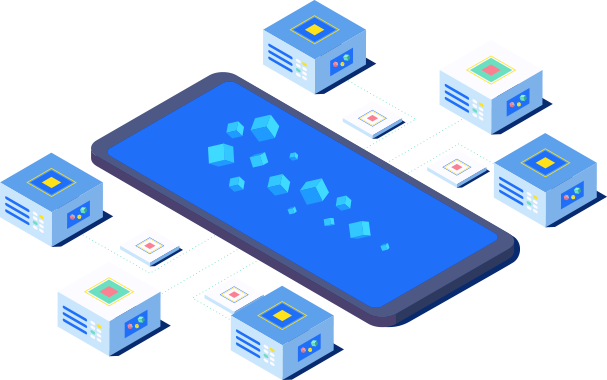

In an era when cloud computing and virtualization dominate the hosting conversation, the term bare metal server hosting describes the most straightforward infrastructure model that exists: a physical server — an actual machine occupying physical rack space in a data center, with real processors, real memory modules, real storage drives, and real network interfaces — dedicated entirely to a single customer with no hypervisor layer, no virtual machine abstraction, and no resource sharing with any other tenant. Your operating system installs directly onto the hardware, your applications execute directly on the physical CPU cores without a virtualization layer scheduling their execution, and the full performance envelope of the machine — every CPU cycle, every gigabyte of RAM bandwidth, every storage I/O operation per second — is available exclusively to your workloads. This model was the only model when the commercial internet began, and while virtualization and cloud computing have absorbed the vast majority of hosting workloads over the past two decades, bare metal servers persist — and in specific use cases, dominate — because there are workloads for which the virtualization tax, measured in latency, throughput, and predictability, is unacceptable.
The distinction between bare metal and the dedicated server plans that most hosting providers advertise is subtle but important. A dedicated server, in the most common usage, is a physical server rented by a single customer — and many dedicated servers are, in fact, bare metal installations where the operating system runs directly on the hardware. However, the term "dedicated server" can also refer to physical servers that run a hypervisor — VMware ESXi, Proxmox, or a proprietary virtualization platform — with a single large virtual machine allocated to the customer, creating a configuration that provides physical isolation of the hardware but still introduces a virtualization layer between the operating system and the physical resources. True bare metal means no hypervisor: the operating system kernel communicates directly with the CPU, the memory controller, the storage controller, and the network interface card, achieving the lowest possible latency and the highest possible throughput that the hardware is capable of delivering. Our complete dedicated server guide explores the full spectrum of physical server hosting options, from bare metal to virtualized dedicated configurations, and provides the evaluation framework for determining which model matches specific performance and isolation requirements.
Understanding where bare metal servers fit in the infrastructure landscape requires comparing them against the alternatives that have emerged over decades of hosting evolution. Each tier in the hierarchy trades some degree of raw performance and isolation for flexibility, scalability, or cost efficiency, and the optimal choice depends on whether the workload benefits more from the performance ceiling that bare metal raises or the operational flexibility that virtualization and cloud provide.
On a bare metal server, the operating system runs directly on the physical hardware. CPU instructions execute on physical cores without being intercepted, translated, or scheduled by a hypervisor. Memory access hits the physical RAM modules directly without an additional address translation layer. Storage I/O operations travel from the operating system's storage driver to the physical storage controller and to the physical drive — NVMe, SATA SSD, or HDD — without passing through a virtualized storage stack. Network packets traverse the physical network interface card queue without software-level switching or virtual network bridge processing. This direct path from application to hardware produces two measurable advantages: consistently lower latency for every operation, and predictably higher throughput because no other workload on the same physical machine competes for I/O bandwidth, memory bandwidth, or CPU cache space. For workloads where microseconds matter — high-frequency trading systems, real-time bidding platforms, latency-sensitive gaming servers, and certain database configurations where query latency directly affects application responsiveness — bare metal eliminates the virtualization noise that can make performance profiling and optimization difficult on virtualized or shared infrastructure.
A virtualized dedicated server runs on physical hardware dedicated to a single customer, but with a hypervisor layer between the hardware and the operating system. The hypervisor provides capabilities that bare metal does not: the ability to snapshot the entire running server state for point-in-time backups, live migration of the virtual machine to different physical hardware without downtime, and the ability to run multiple isolated virtual machines on the same physical hardware if the customer's workload benefits from separation of concerns — for example, separating the database server from the application server while keeping both on the same physical machine for latency reasons. The performance cost of the hypervisor layer — CPU overhead typically in the 2% to 5% range for modern Type-1 hypervisors, and storage I/O overhead that varies depending on the storage virtualization technology — is negligible for most workloads but becomes relevant for the most performance-sensitive applications. The decision between bare metal and virtualized dedicated is often driven by operational requirements — specifically, whether the snapshot, migration, and multi-VM flexibility of virtualization outweighs the marginal performance advantage of bare metal — rather than by raw performance comparisons that most applications will never perceive. For guidance on selecting the physical hardware specifications that matter most regardless of the virtualization choice, our dedicated server hardware guide provides the component-by-component analysis that informs intelligent hardware selection.
Cloud instances — the virtual machines provisioned by AWS EC2, Google Compute Engine, Azure Virtual Machines, and similar platforms — represent the furthest departure from bare metal. These instances run on physical hardware shared among multiple customers, with the cloud provider's hypervisor and orchestration layer managing resource allocation, scheduling, and isolation. The advantages are flexibility that no physical server model can match: instances can be provisioned in seconds, terminated when no longer needed, resized to add or remove CPU and RAM on demand, and programmatically controlled through APIs that enable auto-scaling, infrastructure-as-code, and continuous deployment pipelines. The trade-offs are the "noisy neighbor" problem — another customer's workload on the same physical host can consume cache, memory bandwidth, and storage I/O in ways that affect your instance's performance — and the inability to achieve the hardware-level determinism that bare metal provides. For most web applications, SaaS platforms, and business workloads, the cloud flexibility advantage far outweighs the performance predictability disadvantage. For the specific workloads discussed in the next section — high-frequency trading, large-scale databases, real-time analytics, and latency-critical gaming — the balance tips in the opposite direction, and bare metal becomes the infrastructure that the workload demands.
Bare metal servers persist in the hosting market not because of nostalgia for the pre-cloud era but because specific workload categories encounter measurable, consequential limitations when forced through a virtualization layer. These use cases share common characteristics: they are sensitive to latency measured in microseconds rather than milliseconds, they consume I/O bandwidth at rates that saturate virtualized storage stacks, they require hardware-level access to specific PCIe devices — GPUs, FPGAs, high-speed network adapters — that do not virtualize cleanly, or they operate under compliance regimes that mandate physical isolation of hardware. Understanding these use cases clarifies when the premium for bare metal infrastructure — which is typically 30% to 100% more expensive than equivalent virtualized configurations — is a business requirement rather than an engineering preference.
Databases — particularly relational databases running MySQL, PostgreSQL, or Oracle at scale — are among the workloads most sensitive to the storage I/O latency and throughput degradation that virtualization introduces. A database server processing thousands of queries per second depends on storage that can deliver consistent, low-latency random reads and writes, because every query that touches data not already cached in RAM must wait for storage to respond. On virtualized infrastructure, the storage I/O path passes through the hypervisor's storage stack, which introduces queuing, scheduling, and translation overhead that adds tens to hundreds of microseconds to every I/O operation. On bare metal, the database communicates directly with the NVMe drives through the PCIe bus, achieving the sub-100-microsecond read latencies that modern NVMe storage is capable of delivering. For a database processing a million queries per hour, the cumulative latency difference between bare metal and virtualized storage can translate into measurably slower application response times, lower transaction throughput, and — in the worst case — cascading performance degradation when query queues back up behind storage operations that are taking longer than the application's timeout thresholds expect. Organizations subject to compliance requirements — financial services, healthcare, government — often mandate bare metal or physically isolated hardware specifically because the data residency and data protection standards they operate under require demonstrable control over where data physically resides and which systems have access to it, a requirement explored in detail in our financial services compliance hosting guide.
GPU-accelerated computing workloads — AI model training, scientific simulation, video rendering, and cryptocurrency mining — represent a category where bare metal access to physical GPU hardware delivers performance that virtualized GPU instances, which rely on GPU virtualization and partitioning technologies like NVIDIA vGPU or MIG (Multi-Instance GPU), cannot match for the most demanding deployments. Training a large language model or a computer vision model requires sustained, uninterrupted access to GPU compute cores, GPU memory bandwidth, and — critically — the high-speed interconnects (NVLink, NVSwitch) that allow multiple GPUs to communicate at hundreds of gigabytes per second. These interconnects do not virtualize cleanly, and the performance penalty of routing GPU-to-GPU communication through a hypervisor layer can extend training times from days to weeks for the largest models. Bare metal GPU servers provide exclusive access to the full PCIe bandwidth, the full GPU memory capacity, and the full GPU-to-GPU interconnect bandwidth, achieving the linear scaling across multiple GPUs that deep learning frameworks assume when they distribute training across devices. Our AI hosting guide explores the full spectrum of infrastructure options for AI workloads, from bare metal GPU clusters to cloud-based AI platforms, and provides the decision framework for matching infrastructure to model size, training budget, and inference latency requirements.
Multiplayer game servers — hosting Minecraft, Counter-Strike, ARK: Survival Evolved, Valheim, or any title where dozens or hundreds of players interact in a shared, persistent world — are uniquely sensitive to the performance consistency that bare metal provides. Game server software typically runs as a single-threaded or lightly-threaded process that depends on consistently fast CPU clock speeds, because the game tick — the loop that updates the game state, processes player actions, and sends updated state to all connected clients — must complete within a fixed time budget (typically 20 to 50 milliseconds) to maintain a smooth player experience. On virtualized infrastructure, a hypervisor scheduling decision that delays the game server process for even a few milliseconds can cause a tick to exceed its budget, manifesting to players as rubber-banding, hit registration failures, or objects teleporting across the game world. On bare metal, the game server process owns a physical CPU core — or is pinned to one — and executes without interference from a hypervisor scheduler or from other virtual machines competing for the same physical core's execution time. For game server hosting providers and for communities that operate their own dedicated servers, bare metal delivers the consistent tick rates that determine whether players describe the server as "smooth" or "laggy" — and whether they continue playing on it or find another server.
Regulatory frameworks — including GDPR in Europe, HIPAA in the United States healthcare sector, PCI DSS for payment card data, and various national data sovereignty laws — may require or strongly incentivize physical isolation of hardware for workloads processing protected data. When a virtual machine shares physical hardware with other tenants, the theoretical possibility of side-channel attacks (like Spectre and Meltdown, the CPU vulnerabilities that demonstrated information leakage across virtual machine boundaries), the practical difficulty of proving to auditors that multi-tenant isolation is effective, and the regulatory preference for demonstrable, auditable physical separation all push compliance-sensitive workloads toward bare metal or dedicated physical servers. For organizations in financial services, healthcare, government, and legal sectors, the additional cost of bare metal infrastructure is a compliance cost — analogous to the cost of physical security, background checks, and audit procedures — that is factored into the overall cost of operating in a regulated industry rather than evaluated purely on infrastructure performance grounds.
The bare metal hosting market in 2026 spans from traditional dedicated server providers who have offered physical hardware for decades to cloud providers who have added bare metal instances to their portfolios in response to customer demand for virtualization-free performance. The providers below represent the spectrum of options available, from self-service cloud-style bare metal provisioning to fully managed enterprise bare metal deployments.
OVHcloud, the French hosting giant with data centers across Europe, North America, and Asia-Pacific, has built its reputation on bare metal server offerings that span from entry-level configurations suitable for game servers and small databases to multi-GPU configurations for AI training and high-performance computing. Their Rise, Advance, and Scale server lines provide increasing levels of hardware specification — from Intel Xeon E-2300 series processors with 32 GB RAM and NVMe storage starting around $50 per month, up to dual AMD EPYC processors with 512 GB RAM, multiple NVIDIA GPUs, and 10 Gbps network connectivity costing several thousand dollars per month. OVHcloud's provisioning model is notable for its speed: bare metal servers can be provisioned in under 120 seconds through their API or control panel, approaching the provisioning velocity of cloud instances while delivering the bare metal performance advantage. The trade-off is support: OVHcloud's standard support is ticket-based and English/French-language, and the unmanaged model means the customer is responsible for operating system installation, security hardening, and ongoing maintenance. For organizations that have in-house system administration expertise and value provisioning speed and global data center presence, OVHcloud delivers an excellent combination of bare metal performance and cloud-like operational flexibility.
Hetzner, operating data centers in Germany and Finland, has become the go-to bare metal provider for developers and small-to-medium businesses worldwide due to aggressive pricing that undercuts competitors by 30% to 50% for equivalent hardware specifications. Their Server Auction platform — where customers bid on previously leased servers that have been returned and refurbished — offers bare metal configurations starting as low as €35 per month, with the full hardware specification, remaining warranty, and Hetzner's network infrastructure included. Their standard dedicated server line starts at approximately €40 per month for configurations with consumer-grade Intel Core i5 or AMD Ryzen processors and scales up to enterprise-grade dual-Xeon and EPYC configurations. Hetzner's network — with 50+ Tbps of total capacity and peering at major European internet exchanges — delivers excellent connectivity within Europe and good connectivity to North America, though latency to Asia-Pacific and South America is higher than from providers with data centers in those regions. Hetzner's support is adequate but not enterprise-grade, and the provisioning process can take hours for custom configurations rather than the minutes that OVHcloud's automated provisioning achieves. For European-hosted workloads and for price-sensitive deployments that do not require managed support, Hetzner's bare metal value is difficult to match.
Hosting Captain's managed bare metal server plans occupy the premium tier of the market: fully managed physical servers where the customer specifies the hardware configuration and the application requirements, and Hosting Captain's engineering team provisions, hardens, monitors, and maintains the server as an ongoing service. The managed model is particularly valuable for bare metal deployments because the administrative responsibility of a physical server — BIOS updates, firmware patching for storage controllers and network adapters, hardware health monitoring via IPMI and SMART diagnostics, operating system installation and security hardening, proactive replacement of drives showing predictive failure signs — is significant, and organizations that lack in-house data center operations expertise benefit from outsourcing these responsibilities to a team that performs them daily. Hosting Captain's bare metal servers include cPanel or Plesk licensing, automated daily backups with configurable retention, 24/7 monitoring and incident response, and support for compliance-sensitive configurations including HIPAA and PCI DSS. The managed service premium over unmanaged bare metal is substantial — typically 30% to 50% of the base hardware cost — but for organizations where server administration is not a core competency and where downtime has direct revenue consequences, the premium is an operational insurance policy that pays for itself the first time a potential outage is prevented by proactive monitoring rather than discovered by customers.
A: A dedicated server is any physical server rented exclusively by a single customer, but the term "dedicated" does not specify whether a hypervisor layer exists between the operating system and the hardware. Many dedicated servers are, in fact, bare metal — the operating system installs directly onto the physical hardware. However, some providers offer "dedicated servers" that actually run a hypervisor with a single virtual machine allocated to the customer, which introduces a virtualization layer that bare metal eliminates. When evaluating a dedicated server offering, verify with the provider whether the operating system runs directly on hardware (bare metal) or on a hypervisor, as this determines whether you receive the zero-virtualization-overhead performance that bare metal is chosen to provide.
A: Yes — for the vast majority of business websites, e-commerce stores, content management systems, and SaaS applications, the performance of a well-configured VPS or cloud instance is entirely sufficient, and the additional cost and operational complexity of bare metal provides no measurable benefit to visitors or to the business. Bare metal becomes the right choice when the workload is demonstrably limited by virtualization overhead — as evidenced by I/O latency benchmarks, database query profiling, or application performance testing that shows hypervisor-related degradation — or when compliance requirements mandate physical hardware isolation. For most small and medium business hosting requirements, shared hosting, VPS hosting, or cloud instances deliver the appropriate balance of performance, cost, and operational simplicity without the bare metal premium.
A: Provisioning time varies dramatically by provider. Cloud-integrated bare metal offerings from OVHcloud, Equinix Metal, and AWS (through EC2 bare metal instances) provision in minutes through automated systems that select available hardware, install the selected operating system image, and deliver credentials as soon as the installation completes. Traditional dedicated server providers with manual provisioning workflows may require hours to days — the server must be physically located, the operating system manually installed or imaged, the network configuration applied, and the credentials delivered through a support ticket process rather than through an automated portal. If provisioning speed matters for your deployment — for example, if you need to scale bare metal capacity in response to variable demand — verify the provider's typical provisioning time before committing, as a provider that excels in hardware value may disappoint in operational velocity.
A: Within the limits of hardware compatibility, yes — bare metal servers provide the same operating system installation flexibility as any physical computer. Linux distributions (Ubuntu, Debian, CentOS, AlmaLinux, Rocky Linux, and others), Windows Server, VMware ESXi (to run your own hypervisor), Proxmox VE, and FreeBSD are all commonly installed on bare metal servers. The provider typically offers a selection of pre-configured operating system images that can be automatically installed during provisioning, and most also support custom ISO installation for operating systems not available in their standard image library. The hardware compatibility consideration is that some operating systems may lack drivers for specific server components — particularly for the RAID controllers, network adapters, and out-of-band management interfaces used in enterprise server hardware — and it is worth verifying driver availability for your chosen operating system before committing to a hardware configuration whose components it may not fully support.
A: Hardware failure response is a critical differentiator between bare metal providers. Enterprise-grade providers — including Hosting Captain, OVHcloud's higher-tier offerings, and managed hosting companies — provide hardware replacement SLAs that specify response and replacement times: typically 1 to 4 hours for critical components (power supplies, storage drives in RAID arrays, RAM modules) identified during business hours. The provider monitors hardware health through IPMI, SMART, and other out-of-band management interfaces, and in many cases the provider's monitoring detects a failing component — a drive with increasing SMART errors, a memory module producing correctable ECC errors — and proactively replaces it before it fails completely. For unmanaged bare metal servers, the customer is often responsible for detecting hardware issues and opening a support ticket, and replacement timelines may extend to next-business-day or longer. If your deployment cannot tolerate extended hardware downtime, verify the provider's hardware replacement SLA and whether proactive monitoring is included before committing, and factor the cost of any necessary redundancy — RAID configurations, dual power supplies, spare servers in hot-standby configurations — into the total infrastructure budget.

Arjun Mehta is a cloud infrastructure consultant specializing in bare-metal architectures, network routing, and high-traffic database clustering.

Hosting Captain has been exceptional for my e-commerce store in Pune. The NVMe SSD speed is noticeable, and their support team responds within minutes. Highly recommended for any Indian business!
Switched from a US-based host to Hosting Captain and my website loads 3x faster for Indian visitors. The free SSL and cPanel are great, and the pricing is unbeatable. Very satisfied customer!
I've been using their VPS plan for 2 years now. 99.9% uptime is not just a claim — it's reality. My client projects run without interruption. The KVM virtualization gives me full control I need.
The support team helped me migrate my entire WordPress site at 2 AM without any downtime. This level of service is rare in Indian hosting. Worth every rupee!
As a startup, budget matters. Hosting Captain's Business plan covers everything we need — multiple websites, free SSL, daily backups — at a fraction of what international hosts charge.
Our high-traffic news portal needed a dedicated server. Hosting Captain's DS Business plan handles 100K+ daily visitors effortlessly. Their team provisioned everything within 4 hours!








From personal blogs to enterprise solutions, we've got you covered!
© 2026 Hosting Captain. All Rights Reserved by 'Apollo Hosting'.